TL;DR

Get garden gear delivered free with Prime
- Fast, free delivery on millions of items
- Prime Video, Amazon Music and more included
- Member-only deals all year
A Gardening Know How report describes a “bottoms up” soak for potted chrysanthemums with healthy buds dropping before they flower. The method is intended to rehydrate dry, compacted roots, followed by a top watering to flush accumulated fertilizer salts; it is advice from the report, not a guaranteed fix.
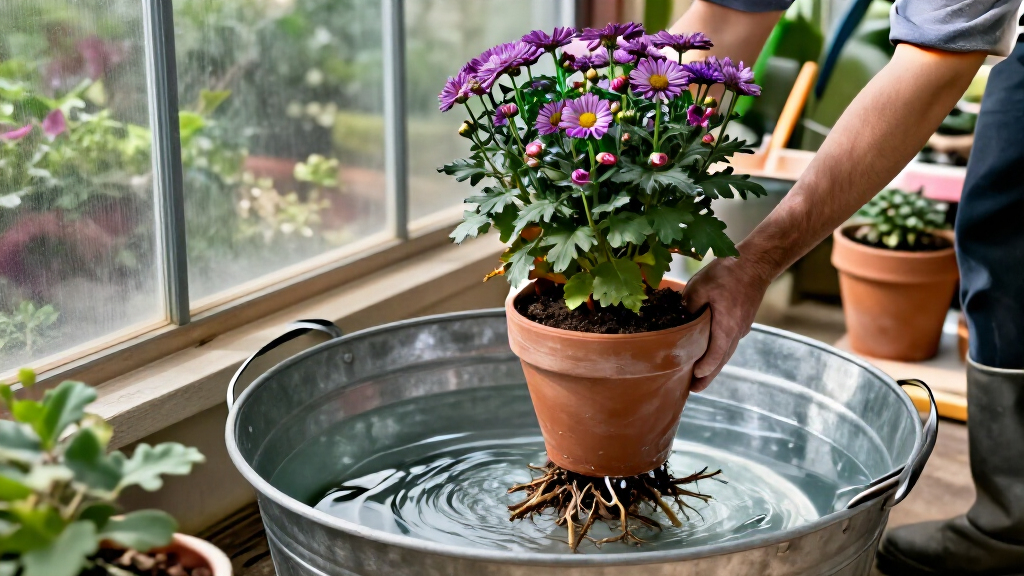
Gardening Know How recommends a two-step watering method for potted chrysanthemums that shed unopened buds: soak the pot from the bottom, then flush the potting mix from the top. The report links bud drop to dehydrated, tightly packed roots and possible fertilizer-salt buildup, while noting that the approach will not help plants with poor drainage or root rot.
The report says florist mums are often sold in small plastic pots after growing into dense root systems. When roots fill the container, the plant can struggle to take up water. The problem may worsen after a move to a sunny or windy porch, where the potting mix can dry quickly. The report also describes fertilizer salts accumulating in the mix during nursery production; concentrated salts can make it harder for roots to absorb moisture.
Before soaking, lift the pot and check its weight. A very light pot may be severely dry, while a heavy pot with water around the rim of the container may point to poor drainage or root rot. The report advises removing decorative foil sleeves, which can hold water against the pot. For a dry plant, set the nursery pot in 3 to 4 inches of room-temperature water, submerging its lower half for about 15 to 20 minutes. The source says a badly shrunken pot may need up to 30 minutes; the soil surface should feel damp and cool before the pot is removed to drain.
The second step is to water slowly over the soil until water runs from the drainage holes, pause for a couple of minutes, then repeat. The report says this top flush helps carry dissolved salts out of the pot. It cautions against leaving the mum in runoff, which could be taken back up by the roots. Buds that are already crisp, dark brown or dry are unlikely to recover, according to the report; it suggests removing them while leaving plump green buds in place.
A Two-Step Fix for Dry Roots
For gardeners who have just brought home a mum, the advice offers a way to distinguish a thirsty plant from one that may be suffering from excess water or damaged roots. Bottom watering can help rehydrate peat-based mix if it has shrunk from the sides of the pot and water poured on top runs straight through without wetting the root ball.
The follow-up flush matters to the report’s explanation: soaking alone may restore moisture but does not remove salts from the mix. Still, this is practical gardening guidance, not evidence from a controlled trial. Results will depend on the plant’s condition, its drainage and the cause of the bud loss. A plant already affected by rot is unlikely to benefit from more soaking.
As an affiliate, we earn on qualifying purchases.
Why Buds Can Fall Before Bloom
The source describes bud drop as a possible response to water stress. A mum with dry roots may shed developing buds while retaining moisture for its stems. Root crowding, heat, wind and bright exposure can compound the problem, while fertilizer salts may further impede water uptake. These are explanations offered by Gardening Know How; the source does not establish that they account for every case of buds dropping.
Bud loss can have other causes, and the report warns that a heavy pot with poor drainage should not be treated as a thirsty one. It also says to remove dry, damaged buds to reduce the chance they will host gray mold. Its recommendation is to avoid synthetic fertilizer for the rest of the season after flushing, but it does not provide a broader diagnostic guide for other causes of bud drop.
““bottoms up” soak”
— Gardening Know How report
As an affiliate, we earn on qualifying purchases.
When Soaking May Not Help
The report does not provide trial data showing how often the method saves mums, how many buds might recover or how long a plant will take to flower afterward. It also does not give a publication date, identify a named horticultural expert or rule out other causes of bud drop, such as disease or pest damage. The diagnosis is not certain from bud loss alone.
Gardeners should not soak a pot that feels waterlogged or appears to drain poorly, since the source says those signs may point to root rot. The report also does not specify how much flushing water to use; its direction is to water until runoff emerges, then repeat after a short pause.
As an affiliate, we earn on qualifying purchases.
Check the Pot Before Watering
The immediate next step is to inspect the pot’s weight and drainage, remove any foil cover and assess whether the soil is dry before choosing a watering approach. If the plant is light and dry, the report’s sequence is bottom soak, free drainage, then a top flush. Do not leave the pot standing in drained water.
Afterward, watch the remaining green buds and the condition of the plant rather than assuming the treatment will restore those already dried out. The source recommends withholding synthetic fertilizer for the rest of the season after flushing. It gives no follow-up timetable or threshold for replacing a mum that continues to decline.
As an affiliate, we earn on qualifying purchases.
Key Questions
Why are my potted mums dropping unopened buds?
Gardening Know How points to water stress as one possible cause: crowded roots may have trouble taking up moisture, especially if the mix has dried out or accumulated fertilizer salts. Bud drop can have other causes, so it is not a certain diagnosis.
How long should I soak a mum from the bottom?
The report recommends placing the lower half of the pot in 3 to 4 inches of room-temperature water for about 15 to 20 minutes. It says a severely shrunken pot may need up to 30 minutes, until the soil surface feels damp and cool.
Why water the soil from the top after soaking?
The report says the second watering flushes dissolved fertilizer salts out through the drainage holes. It advises repeating the flush after a couple of minutes and not leaving the pot in the runoff.
Should I soak a heavy mum pot?
Not based on this advice. The report says a heavy pot, especially one with water around the rim or poor drainage, may indicate excess moisture or root rot. Bottom soaking is intended for a very light, dry pot.
Can brown buds still be saved?
The source says buds that are crisp, dry or dark brown are unlikely to recover and can be pinched off or cut away. It recommends leaving plump, green buds on the plant.
Source: rss
Halloween Picks
halloween
As an affiliate, we earn on qualifying purchases.