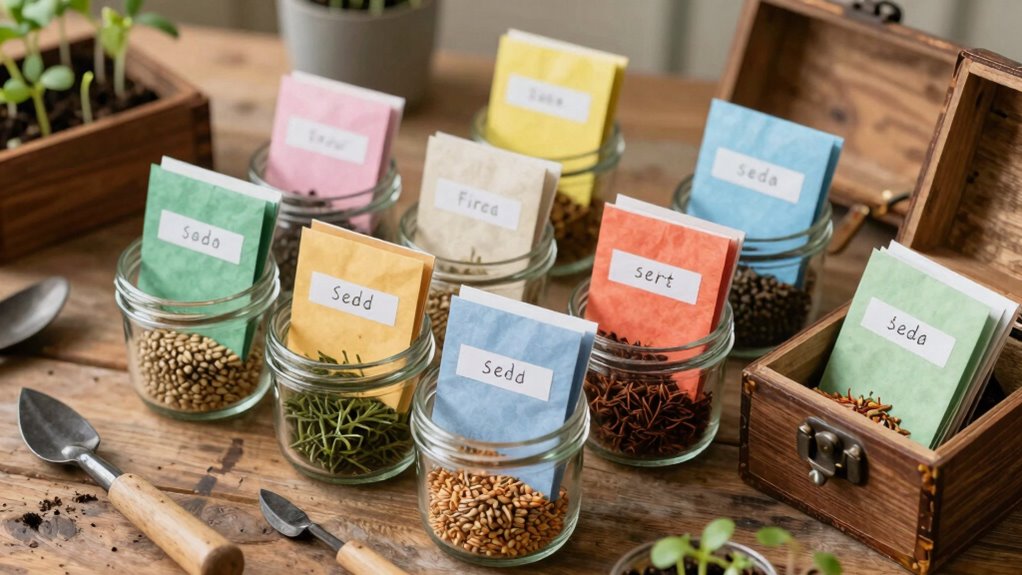

To organize your seeds before spring, sort them by type—vegetables, herbs, and flowers—and label each container clearly with the seed name and expiration date. Store them in airtight containers in a cool, dark, and dry place to keep seeds viable. Use a dedicated storage space like shelves or bins and keep a planting calendar with sowing times. Staying organized now helps prevent last-minute scrambling and sets you up for a successful garden season—keep going to learn more!
Key Takeaways
- Sort seeds by type (vegetables, herbs, flowers) and label containers with seed type and expiration date.
- Store seeds in airtight, cool, dark, and dry containers to preserve viability.
- Create a planting calendar indicating optimal sowing times for each seed type.
- Designate a dedicated storage space for all seed packets and supplies for easy access.
- Regularly review seed inventory, update planting schedules, and discard expired or non-viable seeds.
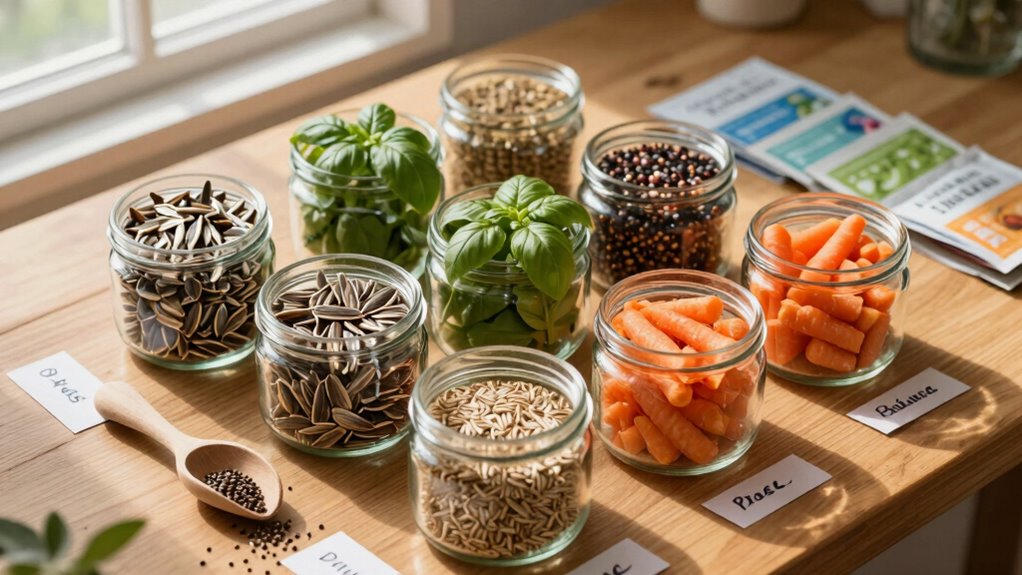
Getting your seeds organized before spring planting can save you time and reduce stress when the busy season arrives. Proper preparation means you’ll be able to start planting promptly and avoid last-minute scrambling for supplies or missing key dates. The first step is to sort your seeds by type—vegetables, herbs, flowers—and guarantee you have enough for your garden plans. Once sorted, think about how you’ll store your seeds. Using airtight containers or seed packets kept in a cool, dark, and dry place helps preserve their viability. Label each container clearly with the seed type and expiration date so you don’t waste time searching through clutter when planting time comes.
Organize seeds by type and store in cool, dark, dry containers with clear labels to save time and reduce stress.
A well-thought-out seed storage system also involves organizing your seeds according to your planting calendar. Creating a planting calendar that indicates the ideal sowing times for each seed type gives you a clear roadmap. This way, you can prioritize what to start indoors and what to direct sow outdoors, ensuring you’re planting at the perfect moments for germination and growth. Referencing your planting calendar regularly keeps you on track and prevents premature or delayed sowing, which can affect your garden’s success. Additionally, understanding seed viability and how it impacts germination rates helps you make informed decisions about which seeds to use this season. Keeping track of seed storage conditions is essential for maintaining their quality over time and maximizing your success.
To keep your seed organization effective, consider using a dedicated space—like a labeled drawer, shelf, or bin—where all your seed packets and related supplies stay together. Keep a list or chart nearby that details the planting dates, germination times, and any special instructions for each seed type. This not only simplifies planning but also helps you track what you’ve already planted and what’s upcoming. When it’s time to start sowing, you’ll appreciate having everything in one accessible place, rather than searching through unorganized storage.
As spring approaches, review your seed inventory and update your planting calendar if needed. Cross-check seed packets for expiration dates, and discard any that are too old or unlikely to germinate. Having a clear overview of your seed stock and schedule minimizes surprises and helps you allocate your gardening resources efficiently. Being organized now also means you’ll be ready for unexpected weather changes or last-minute planting opportunities, so you won’t miss out on prime planting windows.
seed storage containers airtight
As an affiliate, we earn on qualifying purchases.
As an affiliate, we earn on qualifying purchases.
Frequently Asked Questions
How Long Can Seed Storage Last Without Losing Viability?
Seed longevity varies based on storage conditions, but generally, seeds can last from one to five years without losing viability. To maximize their lifespan, keep seeds in a cool, dry, and dark environment. Proper storage conditions slow down deterioration, ensuring your seeds stay viable longer. Regularly check for signs of mold or damage, and consider labeling your seeds to keep track of their age and viability.
What’s the Best Way to Label Mixed Seed Packets?
Oh, because nothing says “organized” like deciphering a jungle of mixed seed packets, right? Use clear seed labeling techniques like waterproof markers and durable labels, or try labeling tools and supplies like seed tape or tags. Be specific—include plant type, variety, and date. This way, you’ll avoid the chaos of guessing what’s what when spring arrives, saving you time and preventing plant mix-ups.
How Do I Prevent Seed Mold During Storage?
To prevent seed mold during storage, you should focus on seed drying and proper storage containers. Make certain seeds are thoroughly dried before storing to reduce moisture that causes mold. Use airtight storage containers, like glass jars or plastic bins with sealed lids, to keep humidity out. Store them in a cool, dark place with stable temperatures. Regularly check your seeds for any signs of mold and remove affected packets promptly to protect your entire seed collection.
Can I Organize Seeds by Planting Date?
Yes, you can organize seeds by planting date. Start by sorting your seeds based on when you plan to plant them, which helps streamline your planting schedule. Use clear containers or seed organizer trays to keep seeds separated by date, making it easy to access the right ones at the right time. Label each container with the planting date to stay organized and avoid confusion when spring arrives.
What’s the Ideal Temperature for Seed Storage?
Did you know that seeds stored at the right temperature can stay viable for years? The ideal temperature for seed storage is between 32°F and 41°F (0°C to 5°C). Maintaining these perfect storage conditions helps preserve seed viability, preventing premature aging and damage. Keep seeds in a cool, dark, airtight container, and you’ll guarantee they stay healthy and ready to sprout when spring arrives.
seed labeling markers
As an affiliate, we earn on qualifying purchases.
As an affiliate, we earn on qualifying purchases.
Conclusion
Getting your seeds organized is like preparing a well-tuned orchestra—each piece in its place, ready to create harmony. When you sort and store your seeds properly, spring planting becomes a smooth symphony rather than a chaotic mess. Take the time now to set everything in order; this small step sets the stage for a vibrant garden. With your seeds in perfect harmony, you’ll be ready to welcome spring’s bloom with confidence and ease.
seed organizer shelf or bin
As an affiliate, we earn on qualifying purchases.
As an affiliate, we earn on qualifying purchases.
planting calendar for seeds
As an affiliate, we earn on qualifying purchases.
As an affiliate, we earn on qualifying purchases.