
UV sterilizers are great for disinfecting water by using light to deactivate harmful microorganisms, but they don’t substitute good hygiene habits. You still need to clean water containers, handle water properly, and keep surfaces tidy to prevent recontamination. Remember, UV treatment only works on water at the moment of disinfection and doesn’t filter out dirt or chemicals. To guarantee safe water, you should combine UV sterilizers with proper water handling—more helpful tips are just ahead.

Get garden gear delivered free with Prime
- Fast, free delivery on millions of items
- Prime Video, Amazon Music and more included
- Member-only deals all year
Key Takeaways
- UV sterilizers deactivate microorganisms but do not remove dirt, debris, or chemical pollutants from water.
- Proper hygiene, such as handwashing and cleaning storage containers, is essential alongside UV treatment.
- UV devices only disinfect water at the point of treatment; they don’t prevent contamination during storage or handling.
- Pre-treat water to reduce cloudiness and sediments for effective UV sterilization.
- Combining UV sterilization with good hygiene practices ensures comprehensive household water safety.
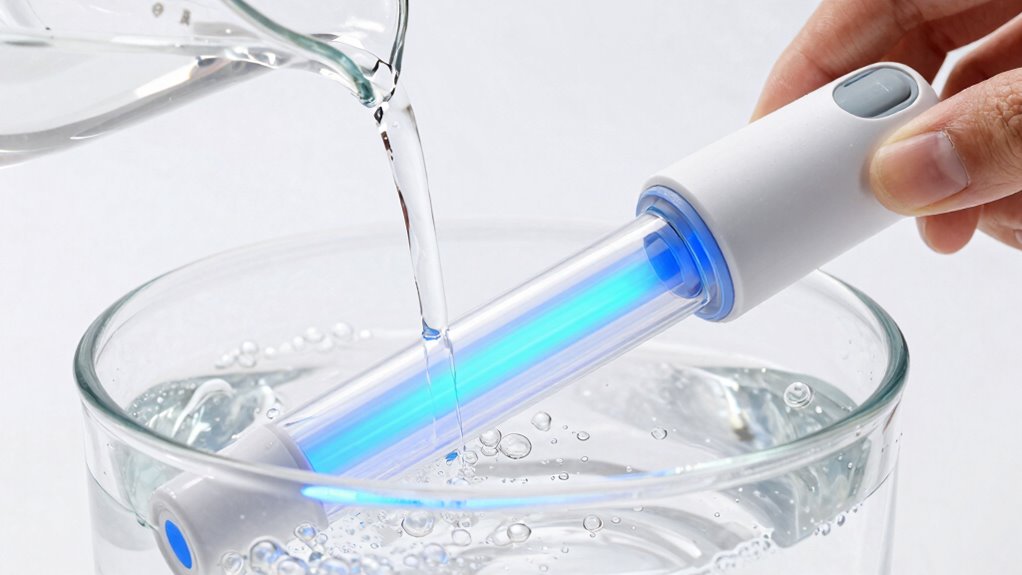
Have you ever wondered how UV sterilizers effectively disinfect water without the use of chemicals? It’s pretty impressive how they use ultraviolet light to target and deactivate harmful microorganisms. When you run water through a UV sterilizer, the UV rays penetrate the cell walls of waterborne pathogens, like bacteria, viruses, and protozoa, disrupting their DNA. This prevents these microbes from reproducing and causing infections. Because of this process, UV sterilizers are increasingly popular for maintaining household hygiene, especially when you want to guarantee your drinking water is safe and free from harmful germs.
However, while UV sterilizers do an excellent job of disinfecting water, they aren’t a magic solution that replaces good habits. They are just one part of a thorough approach to household hygiene. For example, if you neglect proper water storage or cleaning of your water containers, contaminants can still find their way into your water. Imagine you leave dirty dishes or unwashed utensils in the sink—the bacteria and other microorganisms can multiply and eventually contaminate the water supply. UV sterilizers won’t prevent that. Instead, they work best when combined with regular cleaning routines, like washing your hands, cleaning surfaces, and keeping your water storage areas tidy.
It’s also important to remember that UV sterilizers only disinfect water at the point of treatment. They don’t remove physical debris, dirt, or chemical pollutants. So, if your water is cloudy or contains sediments, you should filter or pre-treat it before using a UV sterilizer. Otherwise, the UV light may not penetrate effectively, reducing the sterilization process’s efficiency. Proper household hygiene involves consistently washing your hands, cleaning kitchen surfaces, and maintaining sanitary water containers. These habits help prevent the buildup of germs and keep waterborne pathogens at bay, reducing the risk of illness.
Using a UV sterilizer is a smart move for ensuring safe drinking water, but it’s not a substitute for good habits. Relying solely on UV sterilization can give you a false sense of security. It’s essential to maintain regular cleaning routines and handle water carefully. Additionally, understanding the importance of water treatment methods can help you make more informed choices about your household water safety. Recognizing the limitations of UV sterilizers helps set realistic expectations for their role in water purification. Remember, UV sterilizers are a helpful tool—one that supports your efforts to keep your household safe and hygienic. When you combine their use with good hygiene practices, you create a more extensive shield against waterborne pathogens and maintain a healthier home environment.
UV water sterilizer for household
As an affiliate, we earn on qualifying purchases.
As an affiliate, we earn on qualifying purchases.
Frequently Asked Questions
Can UV Sterilizers Remove Chemical Contaminants From Water?
UV sterilizers can’t eliminate chemical contaminants from water, including chemicals, heavy metals, or other pollutants. They primarily disinfect by killing bacteria and viruses through ultraviolet light. For chemical filtration and heavy metal removal, you need specialized filters like activated carbon or reverse osmosis systems. Combining UV sterilizers with these filtration methods ensures your water is not only safe from microbes but also free of harmful chemical contaminants.
How Often Should I Replace the UV Bulb?
You should replace your UV bulb every 12 months to maintain proper UV sterilizer performance. The UV bulb lifespan typically ranges from 9 to 12 months, depending on usage and water quality. Regular replacement guarantees effective microbial control. Keep an eye on the manufacturer’s recommendations, and if you notice reduced water clarity or a dimmer UV light, it’s time for a replacement. Consistent maintenance assures your water stays clean and safe.
Are UV Sterilizers Effective Against All Bacteria and Viruses?
Are UV sterilizers effective against all bacteria and viruses? Not entirely, because microbial resistance can sometimes limit their effectiveness. While they kill many pathogens effectively, some viruses and bacteria might survive if the water isn’t properly treated or if the UV exposure isn’t sufficient. Also, UV safety is vital—you should avoid direct exposure to UV light to prevent harm. So, use them as part of a thorough water treatment plan, not the sole solution.
Do UV Sterilizers Improve Water Taste or Odor?
UV sterilizers mainly improve water clarity by killing bacteria and viruses, but they don’t substantially affect taste or odor. You might notice little change in these aspects because UV treatment doesn’t remove minerals or dissolved substances that influence flavor and smell. For better-tasting water, consider additional filtration options. Keep in mind that UV sterilizers focus on sterilization, so maintaining good habits like regular filter changes is essential for ideal water quality.
Can UV Sterilizers Be Used for Outdoor Water Sources?
You can use UV sterilizers for outdoor water sources, but outdoor installation requires extra precautions for wildlife safety. While UV systems effectively disinfect water, they aren’t designed to handle large debris or biological contaminants common outdoors. Protect local wildlife by preventing accidental exposure, and consider combining UV sterilization with other filtration methods. Remember, UV sterilizers are a helpful tool, but they’re just one part of an all-encompassing outdoor water safety plan.
water filter pre-treatment for UV sterilization
As an affiliate, we earn on qualifying purchases.
As an affiliate, we earn on qualifying purchases.
Conclusion
While UV sterilizers are a handy tool to keep your water clean, they shouldn’t be your only line of defense. Think of them as the cherry on top, not the whole sundae. Good habits like regular water testing, proper storage, and maintaining your system are essential. Don’t put all your eggs in one basket—use UV sterilizers as an extra layer of protection, but remember, a stitch in time saves nine. Stay vigilant and keep your water safe!
water storage container cleaning supplies
As an affiliate, we earn on qualifying purchases.
As an affiliate, we earn on qualifying purchases.
household water purification system
As an affiliate, we earn on qualifying purchases.
As an affiliate, we earn on qualifying purchases.
Fall Picks
fall essentials
As an affiliate, we earn on qualifying purchases.