
In continuous pH monitoring, your main focus should be on timing rather than perfect sensor precision. Accurate timing ensures you capture meaningful data points, especially during rapid pH changes, which are critical in health scenarios. Properly calibrated sensors are important, but if measurement intervals aren’t consistent, the data becomes less reliable. Pay attention to when you measure, not just how accurate your sensors are—maintaining this in mind can lead to better health insights and responses. Keep exploring to learn more.
Key Takeaways
- Accurate timing ensures meaningful data points, capturing rapid pH changes critical in health monitoring.
- Proper synchronization enables early detection of pH fluctuations, improving timely medical interventions.
- Consistent measurement intervals provide reliable trend analysis over time, regardless of sensor precision.
- Focus on timing helps differentiate normal variations from concerning trends for better decision-making.
- Overall data reliability depends more on measurement timing than on sensor accuracy alone.
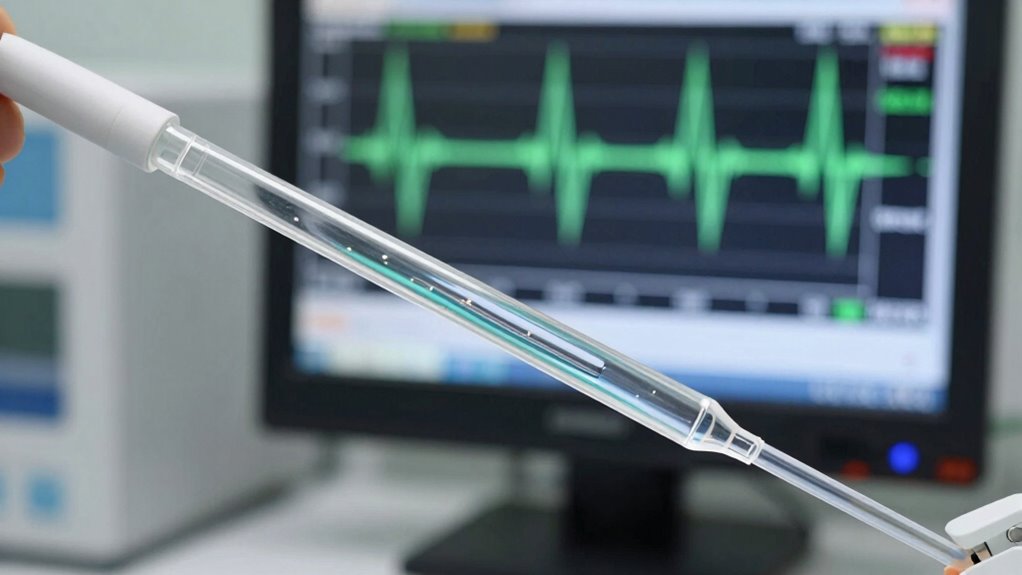
Have you ever wondered how healthcare providers keep a close eye on your body’s pH levels in real-time? It’s not just about having the most precise sensor; it’s about guaranteeing the timing of measurements is accurate and reliable. Continuous pH monitoring relies on sensors that need regular calibration to deliver meaningful data. Sensor calibration is fundamental because it adjusts the device to guarantee readings reflect the true pH levels in your body. Without proper calibration, data interpretation becomes challenging, and decisions based on those readings could be flawed. The focus isn’t solely on the sensor’s inherent precision but on maintaining the correct timing of measurements so healthcare providers can respond swiftly to changes.
Accurate timing of pH measurements is crucial for reliable, real-time health monitoring and prompt medical intervention.
When your healthcare team uses continuous pH monitoring, they’re not just looking for a single, perfect reading. Instead, they need a series of data points collected over time to observe trends and patterns. The timing of these measurements is imperative because pH levels can fluctuate rapidly, especially in critical care settings. If data collection falls behind or is inconsistent, the overall picture becomes muddled, and timely intervention might be delayed. This is why properly calibrated sensors that deliver data at precise intervals are indispensable. They guarantee that the healthcare team can interpret the data accurately and act promptly when pH shifts occur.
Data interpretation is the next essential piece. Even with well-calibrated sensors, the real challenge lies in analyzing the data correctly. The emphasis is on understanding *when* changes happen, not just *how* accurate each individual measurement is. It’s about recognizing patterns, detecting early warning signs, and knowing the significance of slight pH variations over time. The timing of your measurements influences the interpretation, allowing for proactive treatment rather than reactive responses. Additionally, understanding the importance of sensor calibration helps ensure that the data collected is both accurate and reliable over time. Proper calibration also involves understanding the timing of measurements, which is critical to capturing meaningful trends and avoiding misleading data.
In essence, continuous pH monitoring is less about having the most advanced sensor technology and more about how well you can keep that technology synchronized with the body’s dynamic environment. When calibration is done properly and data is collected at appropriate intervals, healthcare providers gain a clearer, more actionable understanding of your condition. This approach enables them to intervene sooner, improving outcomes. So, it’s not just the precision of your pH sensor that matters but making sure the measurements happen when they need to — because timing can be everything in critical health monitoring.

EZTOCH pH Monitor Hydroponic Continuous 7 in 1 EC pH TDS CF ORP Monitor, WiFi Continuous Monitoring pH EC PPM Humidity Temp Meter of Aquaponic, DWC Hydroponic System, Aeroponic Garden
7-in-1 Multifunctional Continuous Monitor: EZTOCH ph monitor hydroponics provides accurate readings for pH, EC, TDS, ORP, CF, humidity,…
As an affiliate, we earn on qualifying purchases.
As an affiliate, we earn on qualifying purchases.
Frequently Asked Questions
How Often Should pH Monitors Be Calibrated?
You should calibrate your pH monitor at least once a week to account for sensor drift and maintain accurate readings. Regular calibration ensures that the sensor stays precise, especially since drift can cause deviations over time. If you’re monitoring in critical applications, consider calibrating more frequently, like daily, to catch any issues early. Consistent calibration helps you trust your data and respond promptly to pH changes.
What Are Common Errors in pH Measurement Timing?
You might encounter errors in pH measurement timing due to sensor drift, which causes readings to become inaccurate over time. If you don’t adjust your sampling frequency appropriately, you risk missing quick pH changes or over-monitoring, leading to unnecessary data. To minimize these errors, guarantee your sampling frequency aligns with the process dynamics, and regularly check for sensor drift to maintain reliable timing in your measurements.
How Does pH Variability Affect Treatment Decisions?
You might think pH variability isn’t essential, but it considerably impacts treatment decisions. When pH stability fluctuates, it can signal the need for prompt treatment adjustment to prevent complications. Recognizing these variations helps you respond timely, ensuring therapies are tailored accurately. Ignoring pH shifts risks ineffective management, so monitoring variability is critical for effective patient outcomes and intervention, especially when timing is everything.
Are There Best Times of Day for pH Monitoring?
You should monitor your pH during times when diurnal fluctuations are most evident, typically after meals and during sleep, as environmental influences like diet and activity levels impact pH levels. These periods help capture significant variations, providing better insights into your condition. Avoid monitoring during inconsistent routines or extreme environmental changes, because they can skew results. Consistent timing guarantees you get a clearer picture of your pH patterns over time.
What Are the Limitations of Continuous pH Sensors?
Like a fragile bridge, continuous pH sensors face limitations. You might find sensor durability wanes over time, risking breakdowns, and data consistency can falter due to biofouling or calibration drift. These issues challenge long-term accuracy, making it vital to monitor and maintain sensors regularly. While they offer real-time insights, understanding their constraints helps you interpret data wisely and guarantees reliable readings for better decision-making.

Professional Grade PH Sensor Kit For Arduino With Wide Concentration Range(pH kit)
【Wide Detection Range】The PH Sensor Kit is capable of detecting a wide concentration range from PH0 to PH14,…
As an affiliate, we earn on qualifying purchases.
As an affiliate, we earn on qualifying purchases.
Conclusion
Remember, continuous pH monitoring isn’t about pinpoint accuracy; it’s about catching the rhythm of your body’s whispers. Think of it as tuning into a delicate melody, where timing matters more than perfect pitch. When you listen closely, you can dance in harmony with your health’s natural flow. Embrace the journey, trust the process, and let each moment reveal what your body’s trying to tell you—because understanding the timing can make all the difference.

Teyleten Robot PH Value Data Detection and Acquisition Sensor Module Acidity and Alkalinity Sensor Monitoring and Control ph0-14 for Arduino
Heating voltage: 5 plusmn 0.2V (AC middot DC)
As an affiliate, we earn on qualifying purchases.
As an affiliate, we earn on qualifying purchases.
EZTOCH pH Monitor Hydroponic Continuous 7 in 1 EC pH TDS CF ORP Monitor, WiFi Continuous Monitoring pH EC PPM Humidity Temp Meter of Aquaponic, DWC Hydroponic System, Aeroponic Garden
7-in-1 Multifunctional Continuous Monitor: EZTOCH ph monitor hydroponics provides accurate readings for pH, EC, TDS, ORP, CF, humidity,…
As an affiliate, we earn on qualifying purchases.
As an affiliate, we earn on qualifying purchases.