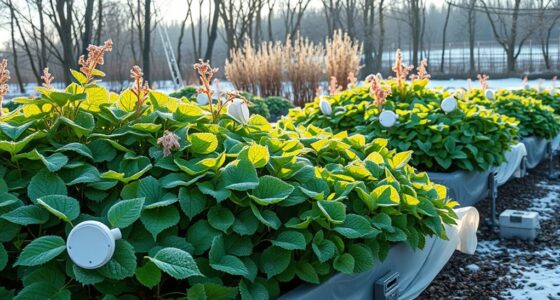
To improve crop rotation in your indoor garden, focus on planning your plant cycles based on soil needs and pest cycles. Use containers that can be easily moved to switch up plant families, preventing disease and pest buildup. Incorporate organic amendments and cover crops between rotations to boost soil health. Keep detailed logs of plant performance to refine your approach over time. Following these steps can help you create a thriving, sustainable indoor garden—discover more effective strategies as you continue.
Key Takeaways
- Plan crop sequences based on nutrient needs and plant family compatibility to prevent pest and disease buildup.
- Rotate crops using labeled containers or beds for easy repositioning and effective soil management.
- Incorporate organic amendments and cover crops between rotations to restore soil nutrients naturally.
- Maintain detailed logs of plantings, pest occurrences, and soil health for continuous improvement.
- Diversify plant selections to reduce monoculture risks and support a resilient indoor ecosystem.

Rotating crops in your indoor garden is vital for maintaining healthy soil and optimizing plant growth, but traditional methods often fall short in small, controlled environments. Unlike outdoor gardens, where crop rotation can be naturally integrated into larger landscapes, indoor systems require more deliberate planning. Proper crop rotation helps preserve soil health, preventing nutrient depletion and reducing the risk of disease buildup. It also plays a key role in pest management, as rotating plants disrupts pest life cycles and minimizes infestations.
Indoor crop rotation preserves soil health, prevents diseases, and disrupts pest cycles for a thriving garden.
In an indoor setting, soil health is especially vulnerable because you often reuse the same soil or growing medium. Over time, nutrients become depleted, and pathogens or pests may establish themselves, making your plants more susceptible to problems. To combat this, you need a rotation plan that considers the specific needs of each crop and how they impact soil nutrients. For example, leafy greens like lettuce and spinach draw different nutrients than fruiting plants like tomatoes or peppers. By rotating crops based on their nutrient requirements, you can maintain a more balanced soil ecosystem and reduce the need for synthetic fertilizers.
Pest management is another vital aspect of crop rotation in your indoor garden. Many pests are host-specific, meaning they thrive on particular plant types. When you plant the same crop repeatedly in the same spot, pests and diseases tend to build up, creating a cycle that’s hard to break. Rotating crops interrupts this cycle, making it harder for pests to establish a foothold. For instance, if you notice aphids on your basil, switching to a different plant family the next grow cycle can help keep pests at bay. Additionally, combining crop rotation with biological controls like beneficial insects or organic pest barriers can further enhance pest management efforts.
A better way to rotate crops indoors involves strategic planning. Keep a detailed log of what you plant and when, noting how different crops affect soil health and pest presence. Use containers or beds that are easy to reposition so you can change plant locations regularly. Incorporate soil amendments or organic compost to restore nutrients between rotations, especially if you notice signs of nutrient deficiency. Also, consider integrating cover crops or green manure crops periodically to enrich the soil and suppress weeds and pests naturally. Utilizing soil health practices such as crop rotation can significantly improve your indoor gardening success. Incorporating pest-resistant plants into your rotation schedule can be another effective method to naturally deter common pests. Furthermore, maintaining proper plant diversity can help prevent monocultures that attract pests and diseases. Additionally, using soil testing periodically can help you better understand nutrient levels and tailor your amendments accordingly. Being mindful of crop compatibility can also help prevent certain pests and diseases from spreading across your garden.

Ultimate Gardening (Gardening Know How)
As an affiliate, we earn on qualifying purchases.
As an affiliate, we earn on qualifying purchases.
Frequently Asked Questions
How Often Should Crop Rotation Be Done Indoors?
You should rotate crops indoors every 4 to 6 weeks to prevent soil depletion and manage pests. When doing so, consider compost management to enrich your soil naturally. Also, pay attention to light requirements for each crop, adjusting your grow lights accordingly. Regular rotation helps maintain healthy plants, reduces disease risk, and guarantees your indoor garden stays productive and balanced.
What Are the Signs of Poor Soil Health Indoors?
You’ll notice poor soil health indoors when plants show stunted growth, yellowing leaves, or wilt despite proper watering. Soil nutrient depletion causes these issues, and indoor soil contamination can lead to unusual plant discoloration or mold. If you see a foul smell or persistent pests, it’s a sign your soil isn’t healthy. Regularly check soil condition, and refresh or amend it to maintain ideal plant growth indoors.
Can Crop Rotation Prevent Pest Problems Inside?
Yes, crop rotation can dramatically reduce pest problems indoors, almost like magic! By rotating crops and practicing companion planting, you confuse pests and break their life cycles. Plus, using soil amendments helps maintain healthy soil, making pests less likely to invade. This dynamic approach keeps your indoor garden thriving and pest-free, transforming your space into an unstoppable fortress of healthy plants and bountiful harvests.
What Crops Are Best for Beginner Indoor Gardeners?
As a beginner indoor gardener, start with easy-to-grow crops like lettuce, herbs, and radishes. These plants thrive with minimal fuss and are perfect for learning. Use companion planting to improve growth and pest control, and incorporate soil amendments like compost to keep your soil healthy. This approach simplifies gardening, boosts your success rate, and creates a vibrant, productive indoor garden.
How Do I Track Crop Rotation Schedules Effectively?
To track your crop rotation schedules effectively, create a simple chart or use a gardening app to log planting dates, crop types, and harvests. Incorporate compost management by adding fresh compost between rotations to enrich soil. Regularly test soil nutrients to identify deficiencies, ensuring your crops get the right nutrients. This organized approach helps maintain healthy soil, prevents disease buildup, and optimizes your indoor garden’s productivity.

Riare 2 Quarts Organic Perlite for Plants – Horticultural Perlite Soil Amendment for Plants Potting Mix, Natural Chunky Perlite Soil Additive Conditioner Improve Root Growth, Drainage and Ventilation
Organic Pearlite: You will get 2 qts horticultural perlite, great soil amendment for indoor or outdoor gardens, has…
As an affiliate, we earn on qualifying purchases.
As an affiliate, we earn on qualifying purchases.
Conclusion
By rotating your crops thoughtfully, you protect your soil, prevent pests, and promote healthy growth. Rotation keeps your indoor garden vibrant, your plants thriving, and your efforts rewarding. When you switch crops wisely, you break pest cycles, improve soil health, and enhance yields. Embrace crop rotation as a routine, as a practice, as a way to nurture your indoor garden. Because a well-rotated garden is a garden that flourishes, a garden that endures, a garden that satisfies.

Mighty Mint Peppermint Oil Plant Protection Spray – Insect & Pest Control for Gnats, Spider Mites & Aphids – Plant-Based, Easy-to-Use – 16 oz
Plant-Based Pest Protection: Helps protect plants from common pests including gnats, spider mites, aphids, fungus issues, and other…
As an affiliate, we earn on qualifying purchases.
As an affiliate, we earn on qualifying purchases.

Rapitest Soil Test Kit for Gardens, Vegetables, Flowers and Lawns. USA designed and assembled soil tester completely, quickly and accurately measures/analyzes soil pH acidity and garden nutrients.
Quick, at home results for Soil pH, Nitrogen, Phosphorous and Potash Innovative and inexpensive soil test kit features…
As an affiliate, we earn on qualifying purchases.
As an affiliate, we earn on qualifying purchases.