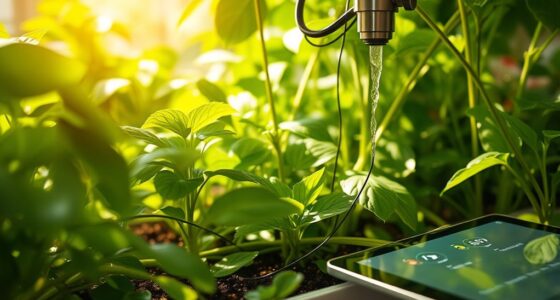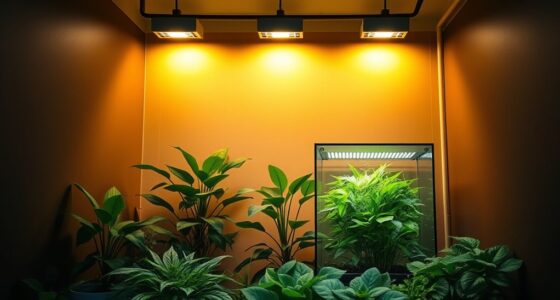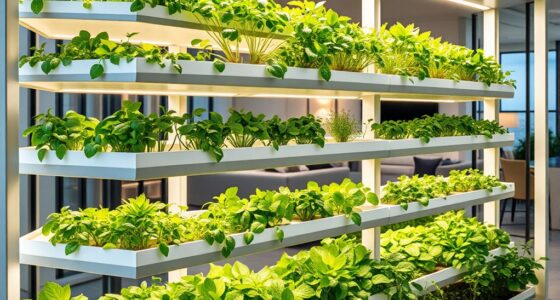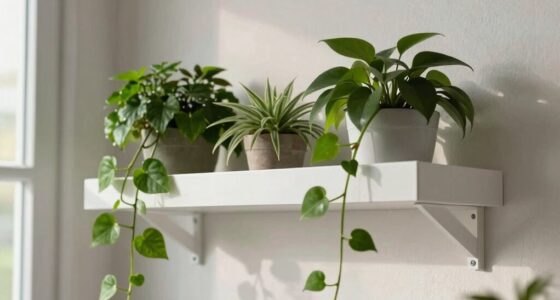
To prevent instant buyer’s remorse, follow the Countertop Garden Rule: keep your garden organized, accessible, and easy to maintain. Arrange plants where you can reach and see them easily, and group plants with similar care needs. Position them for ideal light and airflow, and establish a consistent watering routine. This way, your plants stay healthy and your space remains enjoyable. If you keep these tips in mind, you’ll discover more ways to create a thriving, stress-free garden.
Key Takeaways
- Arrange plants for easy access and visibility to simplify maintenance and reduce frustration.
- Place plants where they receive appropriate light and airflow to promote healthy growth.
- Establish a consistent watering routine tailored to each plant’s needs.
- Keep frequently used herbs at the front or within reach to encourage regular care.
- Organize the garden to prevent overcrowding and ensure optimal conditions for plant health.
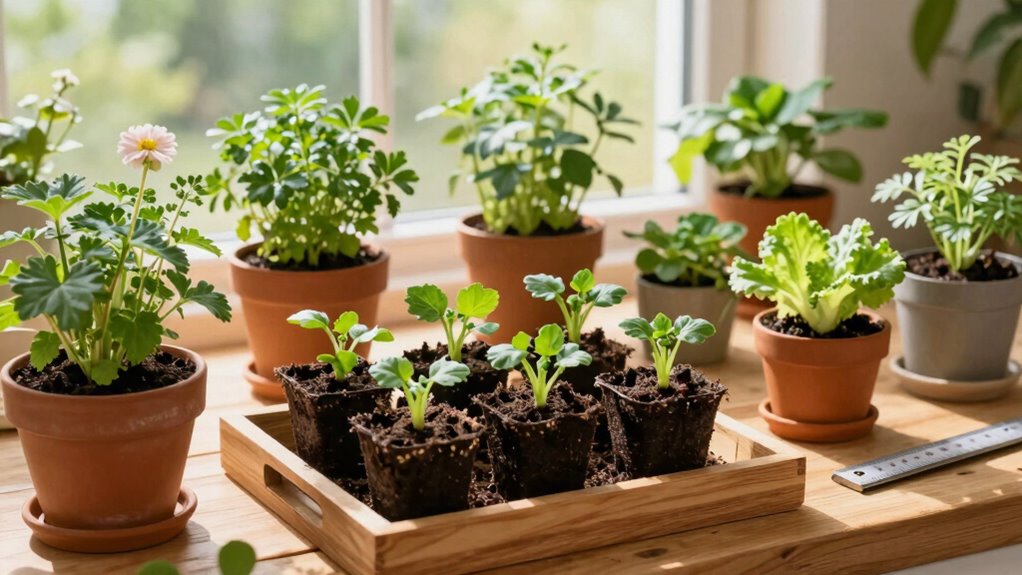
A countertop garden can transform your space into a lush, vibrant oasis, but to keep it thriving, you need to follow a simple rule: prioritize accessibility and proper care. This means paying close attention to how you arrange your plants and establishing a consistent watering schedule. When it comes to plant placement, you should position your herbs, vegetables, or flowers where they’re easy to reach and see. Avoid stacking them too high or placing them behind other objects, which can make watering and maintenance a hassle. Keep your most frequently used herbs at the front or within arm’s reach, so you’re more likely to tend to them regularly. Proper plant placement isn’t just about convenience; it’s about creating an environment where your plants can flourish because they’re easy to care for. Additionally, choosing plants with compatible care needs can simplify maintenance and improve overall success.
Next, your watering schedule is equally important. Overwatering can lead to root rot, while underwatering causes plants to wilt and die. To prevent this, establish a routine—you might water every morning or every other day, depending on your plants’ needs and the ambient humidity. Using a small watering can or spray bottle can help you control the amount of water you give each plant. Keep in mind that different plants have different water requirements, so learn what each one needs. For instance, herbs like basil and mint enjoy consistent moisture, while succulents prefer drier soil. Setting a schedule ensures you don’t forget to water or do it arbitrarily, which can stress your plants and stunt their growth. Remember, understanding plant care fundamentals can make all the difference in maintaining a healthy garden. Incorporating proper placement techniques can also help optimize your plants’ access to sunlight and airflow, which are crucial for their health.
Beyond just knowing when and how to water, be mindful of your plant placement in relation to sunlight and airflow. Proper placement ensures your plants get enough light without being scorched or neglected. If some plants need more direct sunlight, position them accordingly, while shade-loving plants should be placed in spots with indirect light. Good airflow helps prevent mold and pests, so avoid crowding your plants too tightly. These small adjustments make a big difference in maintaining a healthy, thriving countertop garden. Being aware of the specific light requirements for each plant can further enhance their growth and overall health.
Ultimately, your success hinges on making your garden accessible and easy to maintain. When you organize your plants thoughtfully and stick to a reliable watering schedule, you’re less likely to make impulsive decisions based on neglect or frustration. This simple rule keeps your garden manageable and beautiful, preventing costly mistakes and instant buyer’s remorse. It’s about creating a sustainable routine that encourages growth and enjoyment, making your countertop garden a true extension of your living space.

Ahopegarden Indoor Garden Hydroponics Growing System: 10 Pods Plant Germination Kit Herb Vegetable Growth Lamp Countertop with LED Grow Light – Hydrophonic Planter Grower Harvest Lettuce
High planting efficiency: Start an indoor herb garden with the Ahopegarden hydroponic growing system, which includes a water…
As an affiliate, we earn on qualifying purchases.
As an affiliate, we earn on qualifying purchases.
Frequently Asked Questions
How Long Does It Take for Plants to Grow in a Countertop Garden?
Plant growth in a countertop garden varies depending on the plant type and container suitability, but most herbs sprout within 7 to 14 days. Leafy greens like lettuce may take 2-3 weeks, while microgreens can grow in just a week. To guarantee healthy growth, choose containers with proper drainage and provide adequate light. Regular watering and monitoring your plant growth timeline will help you enjoy fresh herbs in no time.
Can I Use Any Container for My Countertop Garden?
You shouldn’t use any container for your countertop garden; instead, choose containers made from materials like ceramic, plastic, or glass that provide proper drainage. Make certain the container size suits your plant selection, giving roots enough room to grow. Avoid containers that aren’t food-safe or lack drainage holes, as they can cause waterlogging and harm your plants. Picking the right container material and plant selection helps your garden thrive and prevents future regrets.
What Are the Best Plants for Small Countertop Gardens?
Think of your small countertop garden as a tiny oasis—herb varieties like basil, thyme, and parsley bring fresh flavors, while succulent types like aloe and echeveria add resilience and visual charm. These plants symbolize practicality and beauty in harmony, perfect for limited space. They thrive in bright, sunny spots and require minimal care, making them ideal choices. Your garden becomes a living proof to simplicity and freshness, right on your countertop.
How Often Should I Water My Countertop Garden?
You should water your countertop garden when the soil moisture feels dry about an inch deep. Typically, this means watering once or twice a week, but it depends on your environment. Keep an eye on pest control by checking for pests regularly, as overwatering can encourage them. Guarantee proper drainage to prevent waterlogged soil, which helps maintain healthy plants and reduces the risk of pests.
Is Special Lighting Needed for Indoor Countertop Gardens?
Like a lighthouse guiding ships, grow lights illuminate your indoor garden, so special lighting isn’t always necessary. If your countertop garden gets plenty of natural sunlight, you can skip artificial lighting. However, for darker spaces or winter months, invest in quality grow lights to guarantee your plants thrive. This way, you prevent disappointment and keep your garden lush, turning your space into a vibrant oasis.

Watering Can for Indoor and Outdoor Plants – Long Spout Water Can for Garden, Flower, House Plants – 1.8L/1/2 Gallon (Green)
Customizable Water Flow: Watering can with a detachable shower nozzle, easily switch between a steady stream or gentle…
As an affiliate, we earn on qualifying purchases.
As an affiliate, we earn on qualifying purchases.
Conclusion
Follow the Countertop Garden Rule, and you’ll avoid rushing into impulsive buys that leave you regretting your choices. But what if there’s a secret twist to this rule—something that could change everything? Stay tuned, because the real game-changer might be just around the corner, waiting to transform how you shop, garden, and make decisions. Are you ready to discover the unexpected and finally conquer buyer’s remorse for good? The next step could be the most important one you take.

VUWEZ Plant Saucer Growing Tray, Seed Starter Tray Rectangular, Heavy Sturdy Plastic Plant Drainage Saucers, Plant Drip Trays for Pots, Seed Starter Growing Trays (11 x 9 inch, 2 Pack)
PLANT TRAY VALUE – Plant drainage tray, 2 packs plant tray saucers rectangular, Plant Saucers for Indoors, inner…
As an affiliate, we earn on qualifying purchases.
As an affiliate, we earn on qualifying purchases.

FUYHE Terracotta Pots, 6.5+5+4.4 Inch Plant Pots with Drainage Hole- Floral Pattern, Black Boho Ceramic Planters for Indoor Plants, Flower Pots Indoor Succulents, Herbs Plants,Set of 3
Handmade Art:This boho plant pots has hand-painted white floral pattern (subtle vines, small blooms) on the surface that…
As an affiliate, we earn on qualifying purchases.
As an affiliate, we earn on qualifying purchases.