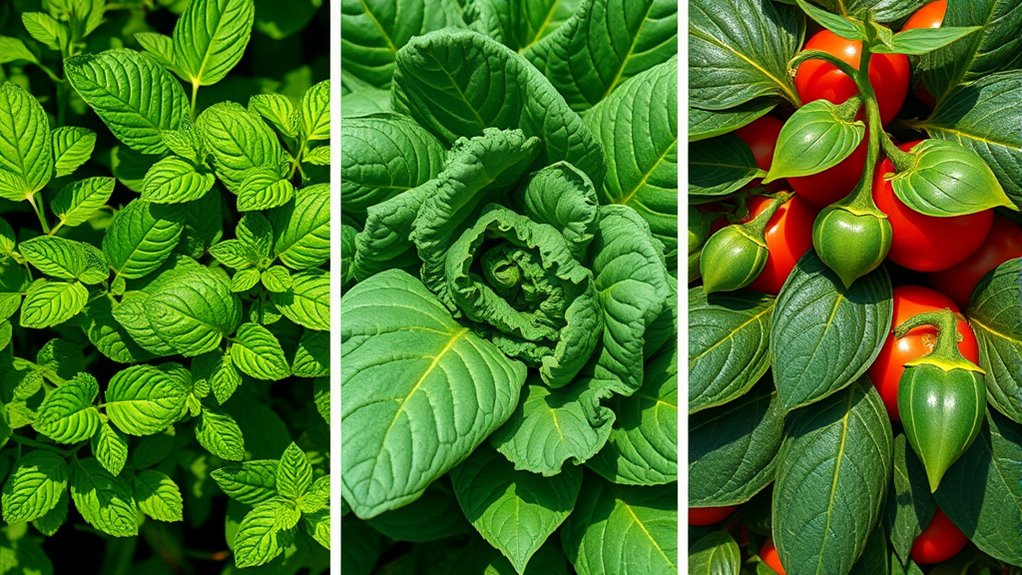

Herbs typically have shallow roots and absorb nutrients quickly from surface soil, mainly relying on mobile nutrients like nitrogen and potassium. Leafy greens also depend on these mobile nutrients but need a steady supply for rapid growth. Fruit-producing plants develop deeper roots, accessing nutrients at various soil depths, including less mobile ones like calcium. Understanding these differences in root structure and nutrient mobility helps optimize your fertilization strategies. Keep exploring to learn more about supporting each plant type effectively.
Key Takeaways
- Herbs have shallow roots, primarily absorbing surface nutrients, and thrive with quick-absorbing soluble fertilizers.
- Leafy greens require steady access to mobile nutrients in the root zone for rapid, continuous growth.
- Fruiting plants develop deeper root systems, accessing nutrients at various soil depths, including less mobile elements.
- Mobile nutrients like nitrogen and potassium are absorbed quickly, while less mobile nutrients like calcium need proximity to sources.
- Root structure and soil conditions influence nutrient uptake efficiency differently among herbs, greens, and fruiting plants.

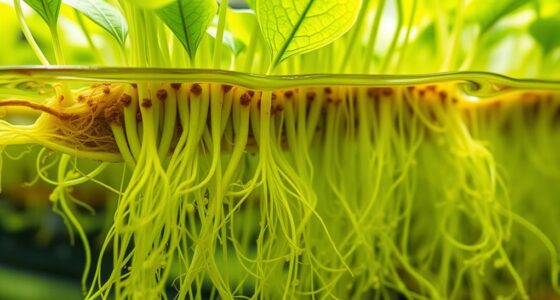
Understanding how plants absorb nutrients is essential for optimizing growth and health. When you think about how plants take in essential minerals and elements, root absorption plays a pivotal role. Roots are the primary interface between the plant and its soil environment, acting as the gateway for nutrients to enter the plant’s system. The efficiency of this process depends heavily on root structure, soil conditions, and the chemistry of the nutrients themselves. Nutrient mobility within the soil influences how readily these elements can be accessed and absorbed by roots. Mobile nutrients, such as nitrogen, phosphorus, and potassium, tend to move freely through the soil, making them easier for roots to uptake. Less mobile nutrients, like calcium and magnesium, often require roots to grow close to the source or for the plant to have a more extensive root system to access them effectively.
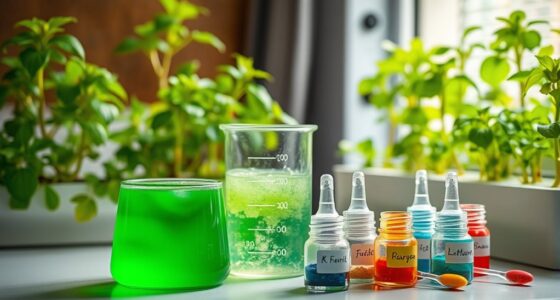
If you’re cultivating herbs, you’ll notice that their roots are often shallow and highly responsive to surface nutrients. They rely on quick absorption of mobile nutrients and tend to flourish when these nutrients are readily available in the topsoil. Since herbs are typically grown in containers or loose soil, you can optimize their nutrient uptake by maintaining consistent moisture levels and supplementing with soluble fertilizers. In contrast, leafy greens like spinach or lettuce have a somewhat different approach. Their root systems are usually more extensive but still primarily rely on the mobility of nutrients within the soil. Leafy greens demand a steady supply of nutrients to support rapid leaf growth, so ensuring that mobile nutrients are accessible throughout the root zone is key. You might notice that they respond quickly to fertilization because of their high nutrient demand and the ease with which nutrients move in the soil.
Fruiting plants, such as tomatoes or peppers, have more complex root systems that often extend deeper into the soil. These plants need a balanced supply of both mobile and less mobile nutrients. Because their roots can access nutrients at various soil depths, they are better equipped to handle nutrients that have lower mobility. This means you need to provide a consistent supply of nutrients, sometimes through deep watering or slow-release fertilizers that allow nutrients to migrate downward and become accessible to roots. Understanding how root absorption works in conjunction with nutrient mobility helps you tailor your fertilization strategies, ensuring each plant type gets what it needs for healthy growth and abundant yields. Whether you’re growing herbs, leafy greens, or fruiting plants, recognizing these differences allows you to optimize your approach and promote thriving, resilient plants.
Frequently Asked Questions
How Do Soil Ph Levels Affect Nutrient Absorption in These Plants?
Soil pH levels substantially influence nutrient absorption for your plants. When pH is too low or high, it hampers nutrient availability, affecting growth. To optimize absorption, you should use soil amendment strategies like adding lime or sulfur to balance pH. Employ pH balancing techniques regularly, testing soil often, and adjusting as needed. This way, herbs, leafy greens, and fruiting plants can efficiently uptake nutrients, promoting healthier, more productive growth.
What Role Do Root Structures Play in Nutrient Uptake Efficiency?
Like a well-designed city, your root structures determine how efficiently nutrients are delivered. You play a vital role through root architecture, which spreads out to explore soil, and root hair density, increasing surface area for absorption. These features act as your plant’s underground highways, optimizing nutrient uptake. By developing extensive and dense root hairs, you guarantee your plants get the nutrients they need to thrive, just as a city thrives on its infrastructure.
How Does Plant Maturity Influence Nutrient Absorption Rates?
As your plants mature, you’ll notice maturity-related nutrient shifts that affect absorption rates. During early developmental stages, plants focus on rapid growth, absorbing more nitrogen and phosphorus. As they reach maturity, nutrient uptake shifts toward elements like potassium and calcium to support flowering and fruiting. Developmental stage influences which nutrients are prioritized, so adjusting fertilization accordingly guarantees your plants stay healthy and productive throughout their growth cycle.
Are There Specific Nutrients That Herbs Preferentially Absorb?
Herbs tend to preferentially absorb herb-specific nutrients like essential oils, certain minerals like magnesium and potassium, and trace elements such as zinc. While leafy greens often prefer nitrogen for lush leaves, herbs focus on nutrients that enhance flavor and aroma. You’ll notice this in their growth, as herbs optimize nutrient uptake for their unique metabolic needs, making it important to tailor fertilization to support their specific preferences.
How Does Environmental Stress Impact Nutrient Uptake in Different Plant Types?
Environmental stress can markedly impact nutrient uptake, but herb resilience often helps them adapt better than leafy greens. You might think all plants respond similarly, yet leafy green adaptation varies under stress, making them more vulnerable to nutrient deficiencies. Stress conditions like drought or poor soil reduce nutrient absorption, but herbs typically maintain better uptake due to their hardy nature. Recognize that understanding these differences guides you to optimize your plant care effectively.
Conclusion
Understanding how herbs, leafy greens, and fruiting plants absorb nutrients reveals that each has its own subtle preferences. By paying close attention to these gentle differences, you can nurture your garden’s unique needs more thoughtfully. Remember, nature whispers its secrets softly—sometimes, it’s in the quiet adjustments that the greatest growth occurs. Embrace these nuances, and your plants will flourish in ways that speak quietly but profoundly to your nurturing touch.