
TL;DR
A workforce-development article argues that community colleges and controlled environment agriculture employers should jointly prepare greenhouse technicians for increasingly technology-driven jobs. The case cites federal labor projections and a 2026 USDA grant program, but it does not announce a new CEA training initiative or provide evidence of a specific partnership’s results.
A workforce-development proposal is urging community colleges and controlled environment agriculture (CEA) employers to jointly train greenhouse technicians, arguing that modern facilities need workers who can combine crop knowledge with technical skills. The proposal points to labor demand and a 2026 U.S. Department of Agriculture grant program, but describes an opportunity rather than announcing a new CEA program or partnership.

Get garden gear delivered free with Prime
- Fast, free delivery on millions of items
- Prime Video, Amazon Music and more included
- Member-only deals all year
Greenhouse workers may need to understand plant physiology and crop production while operating environmental controls, fertigation and irrigation equipment, sensors, lighting, hydroponic systems and automated machinery. The article argues that a four-year degree is not necessary for every commercial greenhouse position, while informal on-the-job training alone may not prepare employees for increasingly complex systems. It calls this gap the CEA workforce’s “missing middle.”
The labor figures cited in the source point to demand for related technical occupations, not a CEA-specific job count. The U.S. Bureau of Labor Statistics projects 5% employment growth for agricultural and food science technicians from 2025 to 2035, compared with about 3% across all occupations, and estimates roughly 5,900 openings a year in that group. BLS identifies greenhouses as one setting where these technicians work.
The article also cites $3 million in USDA grants awarded in 2026 to six projects through the National Institute of Food and Agriculture’s Agricultural Workforce Training at Community Colleges program. The program emphasizes experiential learning tied to jobs, industry-accepted credentials and occupational competencies. The source does not say that any of the funded projects specifically focus on CEA.
Building the greenhouse workforce together
Community colleges and CEA employers could jointly prepare greenhouse technicians for jobs that combine crop knowledge with technology skills. The article proposes collaboration; it does not announce a new program.
The skills gap
Modern greenhouse roles can require workers to understand both plants and complex systems.
Grow and troubleshoot
Crop production, plant knowledge, scouting and sanitation support daily greenhouse work.
Operate connected systems
Irrigation, fertigation, environmental controls, sensors, lighting and hydroponics are among the skills cited.
Train for the “missing middle”
College-based technical preparation could offer a path into greenhouse work without a four-year degree.
A shared training model
The proposal calls for employers and educators to shape practical learning together.
Colleges consult growers and suppliers about entry-level tasks and competencies.
Partners could contribute equipment demonstrations, workshops, facility visits and supervised practice.
Ongoing employer input can help coursework keep pace with changing technology and production practices.
What the evidence says
The cited figures show broader agricultural technician demand, not CEA-specific job counts.
- BLS lists greenhouses among work settings for agricultural and food science technicians.
- USDA awarded grants to six community-college workforce projects in 2026.
- No funded project is identified as CEA-focused.
- No CEA partnership, launch date or training outcome is reported.
Building Skills for Modern Greenhouses
If the proposed approach takes hold, it could give employers a larger pool of entry-level candidates with practical familiarity in both growing systems and greenhouse technology. For students, college-based training could offer a route into technical agricultural work without requiring a four-year degree. For employers, it could help address the difficulty of finding workers comfortable with both plants and equipment.
The proposal also has implications for how training is designed. A college course can teach principles, but facilities and technologies change quickly, and a teaching greenhouse may not match a commercial operation. Growers and suppliers can help colleges identify useful competencies, provide access to equipment or software, offer technical instruction and arrange facility visits. The article presents these as possible partnership activities, not commitments already made.
Such collaboration could make credentials and coursework more relevant to actual entry-level tasks, including crop scouting, sanitation, irrigation troubleshooting and basic greenhouse data interpretation. Whether it improves hiring or retention would depend on program design and employer participation; the source provides no outcome data from a CEA-specific training program.
Products Worth Considering

Rachio 3 Smart Sprinkler Controller, 16-Zone

Blackstone 2363 20 x 14-Inch Camping Griddle

Blackstone 1814 17-Inch Portable Propane Gas Griddle
As an affiliate, we earn on qualifying purchases.
Colleges and Growers as Partners
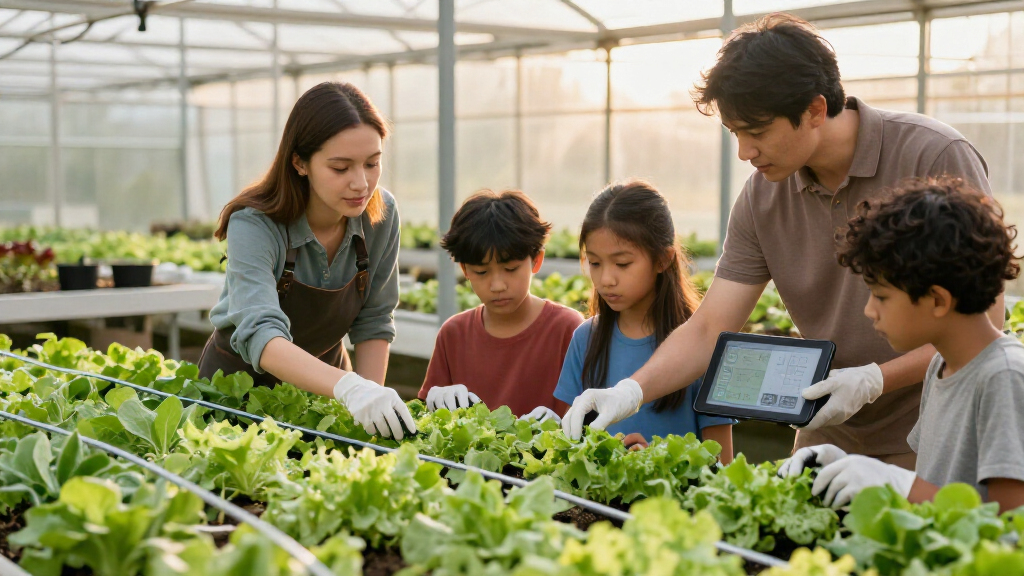
The source’s author describes teaching agriculture at Collin College in North Texas, including greenhouse crop production, horticulture, agricultural construction and small farming. Students use greenhouses and growing spaces to propagate plants, manage crops, work with nutrient solutions and irrigation, observe environmental conditions and troubleshoot production problems. The college is also beginning to expose students to hydroponic methods such as Bato bucket production.
The classroom experience illustrates both the value and limits of college training, according to the author. Teaching facilities can provide hands-on practice, but they may lack the scale, equipment and infrastructure of commercial greenhouses. Technology also changes faster than curricula can always follow, and instructors cannot independently predict every employer’s future needs.
The proposal therefore goes beyond internships. It suggests that growers advise on curriculum and that technology suppliers help with demonstrations, software access, guest instruction, faculty training, workshops or tours. The central idea is for colleges and industry to develop training together, rather than for colleges to design programs in isolation.
““missing middle””
— The article’s author, an agriculture professor at Collin College
No CEA Program Is Announced
The source presents a case for closer collaboration but does not report a new CEA-specific certificate, funding award or employer-college partnership. It does not identify growers or suppliers that have committed to participate, nor does it name a timetable for launching a program.
The USDA grants cited went to six community-college projects, but the source does not establish whether any address controlled environment agriculture. The BLS projections cover agricultural and food science technicians broadly, not greenhouse technicians alone. The number of CEA jobs that could be filled through community-college training, the competencies employers would prioritize and the costs of expanding facilities remain unspecified.
Turning the Proposal Into Training
The next step described by the proposal is for colleges to consult growers and suppliers about the skills needed in entry-level roles, then translate those needs into course content and hands-on experience. That could include advisory committees, equipment demonstrations, technical workshops, facility tours and supervised practice with systems used in commercial greenhouses.
Any resulting program would need continuing employer input as technology and production practices change. The source does not report a scheduled launch or identify a next decision date. Readers should watch for specific partnerships, funding details, credentials and measurable evidence of student placement or employer uptake before judging whether the proposed model is being implemented.
Key Questions
Is a new CEA community-college program being launched?
No launch is reported. The source argues for college-industry collaboration but does not announce a specific program, partnership or start date.
What skills would greenhouse technician training cover?
The proposed skill set includes crop production and plant knowledge, along with irrigation, fertigation, environmental controls, sensors, lighting, hydroponics and basic data interpretation. The exact curriculum would depend on employer input.
What labor data supports the proposal?
The source cites BLS projections of 5% growth from 2025 to 2035 for agricultural and food science technicians, versus about 3% for all occupations, with an estimated 5,900 annual openings in that occupational group. These figures are not specific to CEA jobs.
Do the 2026 USDA grants fund CEA training?
The source says USDA awarded $3 million to six community-college projects through an agricultural workforce training program. It does not say whether any of those projects focus on controlled environment agriculture.
Source: greenhousegrower.com