TL;DR
Solar-powered outdoor string lights use a photovoltaic panel to charge a rechargeable battery, which powers LED bulbs after dark. Choose a set with a panel you can place in direct sun, check runtime at the brightness setting you plan to use, and confirm that the lights and battery components are rated for your outdoor conditions.
A patio can be ready for dinner, with plates on the table and the grill hissing, then lose its charm when the sun drops and the corners disappear into darkness. Solar-powered outdoor string lights offer a way to add a warm glow without dragging an extension cord across the yard.

Get garden gear delivered free with Prime
- Fast, free delivery on millions of items
- Prime Video, Amazon Music and more included
- Member-only deals all year
They work through a simple chain: a small panel turns daylight into electricity, which is stored in a rechargeable battery and used to power the lights after dark. That means no outdoor outlet is needed—but the lights still depend on sunlight, battery capacity, and setup.
This guide gives you key facts for choosing a set, positioning its panel, and setting expectations for brightness and runtime. You’ll also learn what weather ratings, replaceable batteries, and control features can tell you before a box of lights arrives at your door.
Place the panel where it gets direct daylight; a separate cable-connected panel can serve a shaded patio.
Compare runtime at the brightness mode you plan to use, since longer runtimes may reflect dimmer settings.
Check outdoor ratings for the lights, panel, and battery compartment, and follow the manufacturer’s weather guidance.
Confirm whether bulbs and batteries can be replaced if you want easier repairs over time.
If the lights stay off, check panel shade and nearby artificial light before assuming the string has failed.
How do solar string lights turn daylight into evening light?
Solar-powered outdoor string lights turn daylight into evening light by collecting energy with a photovoltaic panel, storing it in a rechargeable battery, and using that stored power to run LED bulbs after dark. The panel converts daylight into electricity, which is stored in the battery; a light sensor commonly switches the bulbs on when the surroundings get dark.
Think of the setup like filling a small water tank during the day and opening a tap at night. The panel is the pump, the battery is the tank, and the bulbs draw from what you’ve stored. If the tank fills only partway because a tree shades the panel, the lights may run for less time or look dimmer.
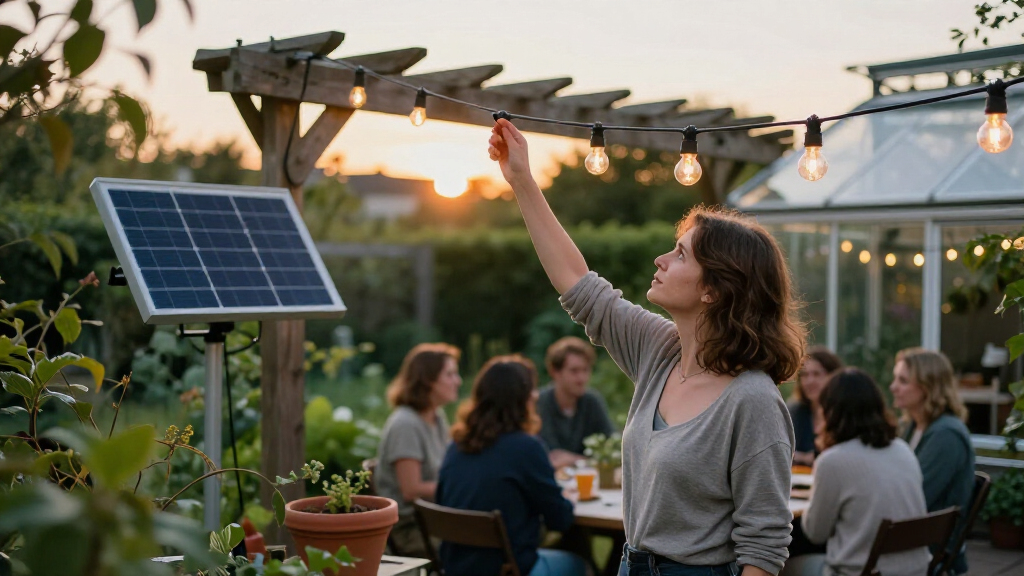
There are two common arrangements. Some lights combine small panels with the string itself, while others use a separate panel on a stake or mounting bracket and connect it to the bulbs with a cable. For instance, if your deck sits beneath a pergola but the garden border gets afternoon sun, a separate panel can sit in the sunny border while the string hangs above the table.
Many sets switch on automatically, but nearby porch lights or a panel facing a bright window can affect the sensor. Check the instructions for first charging and automatic operation. These lights are usually designed for ambient, decorative illumination, not necessarily for lighting every step or replacing a bright security fixture.
Products Worth Considering

EGO POWER+ LB7654 Cordless Electric Leaf Blower with 5.0Ah Battery

EGO Power+ SNT2122 21-Inch Single-Stage Snow Blower with Two 4.0Ah Batteries and 320W Charger

Greenworks 40V Cordless Chainsaw Kit with 12-Inch Bar, 2Ah Battery and Charger
As an affiliate, we earn on qualifying purchases.
How much sun and runtime should you expect?
Solar string lights work best when their panel receives plenty of direct sunlight, and their runtime depends on the charge they collect, battery condition, and brightness setting. A sheltered, shaded patio may still suit the lights, but the panel may need to sit elsewhere in a brighter spot, connected by its cable.
Runtime claims need context. A product may advertise a long evening glow at a low-power setting, while its full-brightness mode uses the battery faster. Before you buy, check whether the manufacturer gives a runtime for each mode and what charging conditions the figure assumes. A set that lasts until midnight on dim mode may not do the same on its brightest setting.
Imagine two neighbors using identical strings: one puts the panel on a sunny fence, the other leaves it beneath a leafy maple. The first may get a longer, steadier evening; the second may see the bulbs fade earlier, especially after cloudy weather. Winter’s short days, low sun, and cold conditions can also reduce charging or runtime.
- Watch the panel through the day: nearby buildings and branches can cast moving shade.
- Check brightness modes: compare runtime at the setting you’ll actually use.
- Look for a USB backup: some models include one for stretches of poor sunlight.
When sunlight is limited, a separate panel or backup charging option can be more useful than extra bulbs. Treat advertised runtime as a guide, not a promise for every garden.
Which features are worth checking before you buy?
The best solar string lights for your space match their panel placement, brightness, weather protection, and repair options to how you’ll use them. Check the complete product specifications rather than relying on a product photo: two strings that look alike can differ in cable length, bulb spacing, controls, battery type, and outdoor rating.
Start with the bulb style and the job you need the lights to do. Warm-white bulbs often give a softer, candlelike feel for dinner, while cool-white bulbs can look brighter or more task-oriented. Globe-shaped bulbs may make a patio feel like a small café; tiny decorative LEDs can be subtler around a balcony railing. If you need to see a step clearly, check the lumen rating when available instead of judging brightness by the picture alone.
| Feature | What to check | Why it matters |
|---|---|---|
| Panel | Separate or built-in; cable length | Helps you reach a sunnier position |
| Brightness and runtime | Modes and stated hours for each | Shows the tradeoff between glow and duration |
| Weather rating | Outdoor suitability and IP details | Clarifies limits for rain and moisture |
| Repairability | Replaceable bulbs and battery | Can affect service life and upkeep |
| Controls | Sensor, timer, remote, or app | Shapes how easily you manage the lights |
For example, a renter on a shaded balcony may value a panel that clips to a sunny rail more than color-changing modes. A homeowner planning a long pergola run may care more about bulb spacing and cable length. Recent designs may add timers, remotes, or app controls, but those features and battery specifications vary by product—check the manufacturer’s current documentation.
How can you install the lights for a steady glow?
To get a steadier glow, place the solar panel in the sunniest practical spot, secure the string without stressing its wire, and test the automatic sensor before settling on a final layout. A little planning now can spare you from moving clips, untangling bulbs, or wondering why the lights stay dark.
- Map the route: Measure the fence, railing, or pergola edge and note where the string will end. Check the product’s total length and bulb spacing.
- Find the sun: Observe where direct sunlight reaches during the day. If the hanging area stays shaded, place a separate panel somewhere sunnier within cable reach.
- Mount securely: Use the product’s clips or suitable outdoor fasteners, and leave gentle slack rather than pulling the wire tight. Keep the panel stable and follow the maker’s mounting instructions.
- Test at dusk: Turn on the set as instructed and check that the sensor responds. Move the panel if nearby artificial light stops the lights from switching on.
- Adjust the atmosphere: Try a lower brightness setting if you want longer runtime or a softer dinner-table glow.
For instance, along a six-foot balcony rail, you might start with the panel clipped to the sunny outer corner, then drape the bulbs in a shallow curve rather than pulling them taut. That gives the wire a relaxed line and keeps the panel exposed.
Do not connect multiple strings unless the manufacturer explicitly supports it. A solar panel and battery have limited capacity; adding more bulbs may cut runtime or cause problems. Treat the instructions as the plan for your particular set, especially for mounting and charging.
How do you keep the lights working through rain and seasons?
Outdoor solar string lights can stay outside only when the manufacturer rates them for outdoor use and its instructions allow your intended exposure. Check the stated ingress-protection rating for the string, panel, and battery compartment; weather resistance does not mean a product can handle immersion, long periods of standing water, or every severe storm.
Consider a typical change in weather: a clear evening becomes a night of hard rain, and water pools on a flat ledge beneath the panel. Even an outdoor-rated set can be vulnerable if you install it contrary to its instructions or leave a component sitting in water. Mount the panel securely, keep connectors arranged as directed, and follow any guidance about taking the set down during severe conditions.
Battery capacity declines over time, so check the battery type and whether you can replace it before buying. If your lights become noticeably dimmer after a season, the battery may have lost capacity, or the panel may no longer receive enough sun. Clean and store the set only as the manufacturer directs; seasonal storage instructions can help protect the battery.
LEDs generally use relatively little power compared with incandescent bulbs, but the string’s construction still matters. Some bulbs can be replaced, while sealed designs may be difficult to repair. For example, if one globe cracks on a busy walkway, replaceability can make the difference between a simple fix and replacing the whole set. Keep strings and small parts away from young children and pets, and never let anyone chew on the cable or bulbs.
What should you do when the lights look dim or won’t turn on?
If solar string lights fail to turn on or fade early, check the panel’s sunlight, the switch setting, and the sensor before assuming the bulbs are broken. Many apparent faults come from shade, a low charge, or a nearby light confusing the automatic dusk sensor.
Try a simple check after a dim evening. Move the panel away from a porch lamp, wipe away visible dirt using the manufacturer’s recommended method, and place it in a sunnier position for the next charging period. Then test the lights at dusk, when the sensor can respond to natural darkness.
- They never switch on: Confirm the power switch and mode, then check whether the panel receives enough daylight.
- They switch on but fade quickly: Try a lower brightness mode and allow more direct sunlight to reach the panel.
- They stay off at dusk: Move the panel away from artificial light and check the sensor instructions.
- They perform poorly all season: Review battery condition, replacement options, and the product’s storage guidance.
For example, a set mounted below a bright porch sconce may think it is still daytime and never switch on. Shifting the panel just a few feet beyond the sconce’s glow could solve the problem. If you’ve checked placement and controls but the lights still fail, use the manufacturer’s troubleshooting steps rather than opening sealed electrical parts.
Think of troubleshooting as checking the path from sunlight to bulb, one link at a time: panel, battery, sensor, then string. That’s usually more helpful than immediately replacing the whole set.
Frequently Asked Questions
Do solar-powered string lights need direct sunlight?
Direct sunlight usually charges the battery more effectively, though some sets can charge in bright shade. If your patio is shaded, choose a model with a separate panel and place it in a sunnier spot within cable reach.
How long do solar string lights stay on after charging?
Runtime varies with sunlight, battery condition, product design, and brightness setting. Check whether the manufacturer lists hours at full brightness or a lower-power mode before comparing products.
Can I leave solar string lights outside in the rain?
Only if the manufacturer rates the product for outdoor use and its instructions allow that exposure. Check the weather or IP information for the string, panel, and battery compartment; outdoor-rated does not mean suitable for immersion or standing water.
Will solar string lights work in winter or on cloudy days?
They may work, but short days, low sun, clouds, and cold conditions can reduce charging or runtime. A USB backup can help if the product includes one; otherwise, use the manufacturer’s seasonal guidance and keep the panel as exposed to daylight as practical.
Can I replace the bulbs or battery?
It depends on the design. Check the product specifications for replaceable bulbs, battery type, and available replacement parts before buying, since sealed strings may be difficult to repair.
Conclusion
Pick solar-powered outdoor string lights by starting with the place they’ll hang and the place their panel can charge. Then check real product details—brightness modes, runtime, weather rating, and replaceable parts—so your expectations match your patio.
Give the panel a sunny perch, and a once-dark railing can turn into a soft ribbon of evening light, no extension cord trailing through the garden.