
TL;DR

Get garden gear delivered free with Prime
- Fast, free delivery on millions of items
- Prime Video, Amazon Music and more included
- Member-only deals all year
A Homes & Gardens gardening report recommends six October tasks for mint: prune stems to about 2 inches, clear debris, protect plants from severe cold, divide crowded clumps, pot a section indoors and preserve the final harvest. The advice is seasonal guidance, not a report of new research; local temperatures and growing conditions affect what protection is needed.
Homes & Gardens has outlined six October tasks for gardeners growing mint: cut back the stems, remove surrounding debris, protect plants from severe cold, divide congested plants, bring a section indoors and use the final harvest. The advice is aimed at helping mint enter winter in good condition, while preserving leaves for later use.
The report recommends cutting outdoor mint stems back to about 2 inches (5 centimeters) above the soil as the plant approaches dormancy. It advises using clean, sharp pruners and keeping the cuttings rather than discarding them, since the leaves and stems can be dried. The guide also suggests clearing fallen leaves, weeds and old mulch from around the plant, saying garden debris can shelter overwintering pests and fungal spores.
Cold-weather steps depend on the plant’s location and local climate. The article says most mint varieties are hardy to around 5°F (-15°C), but recommends adding a 2–4-inch layer of mulch where temperatures are expected to fall lower. Mint grown in pots may need extra protection because container roots are more exposed: the report suggests wrapping the pot in horticultural fleece or bubble wrap, or moving it to a greenhouse or sheltered spot.
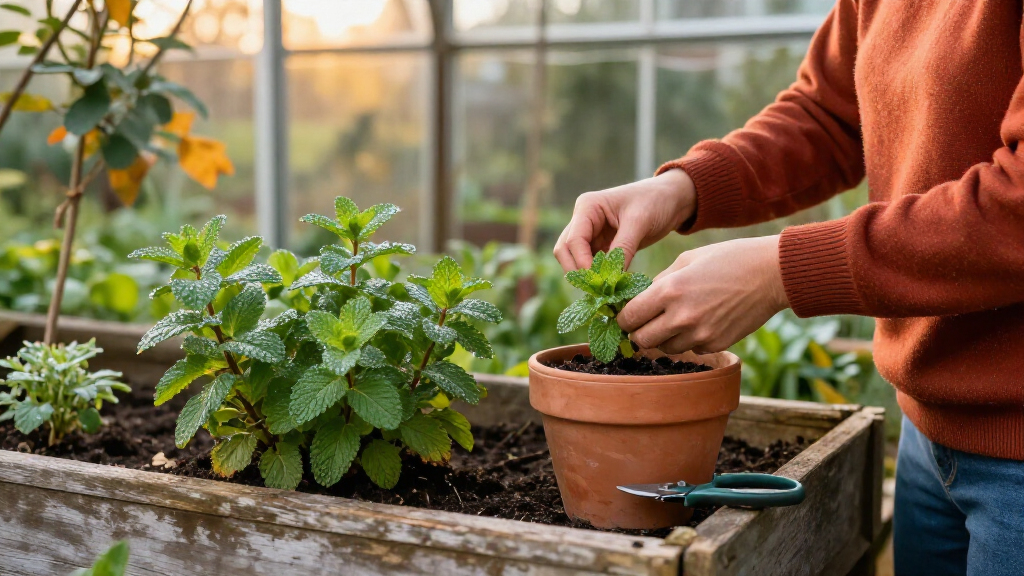
For crowded plants, the guide proposes dividing the root mass in October and replanting the sections in fresh pots or suitable growing space. It also recommends bringing one or two sections indoors in potting compost, placing them in a bright position and keeping the compost damp, not waterlogged. For the remaining harvest, it advises washing and drying the leaves, then spreading them in a single layer in a cool place out of direct sunlight. The article estimates seven to 10 days for air-drying, with leaves ready when they crumble when crushed.
Prepare Mint for Winter
These jobs give gardeners a way to manage mint at the point when outdoor growth is slowing. Pruning and clearing debris reduce the amount of foliage and decaying material left around the plant, while cold protection can help limit damage to exposed roots, particularly in containers. Dividing congested plants creates separate sections that can be replanted, and keeping one indoors may provide leaves during colder months.
The recommendations also make use of the final outdoor harvest rather than treating seasonal pruning as a reason to waste it. Drying mint can preserve leaves for tea and cooking, though results depend on drying them fully and storing them appropriately. The guide is practical horticultural advice; it does not report controlled trials or promise that every plant will respond in the same way.
Products Worth Considering

Garvee 6 x 10 ft Polycarbonate Greenhouse with Aluminum Frame

EGO POWER+ HT2600 26-Inch Cordless Hedge Trimmer (Battery and Charger Not Included)

EVERECO Polycarbonate Greenhouse Panels, 8 ft × 4 ft × 0.24 in, 6-Pack
As an affiliate, we earn on qualifying purchases.
Why October Is a Mint Checkpoint
Mint is a perennial herb that commonly slows or stops above-ground growth as colder weather arrives. The Homes & Gardens report describes October as a useful time to prepare plants for dormancy, when cutting back or dividing them is less likely to interrupt active growth. Its advice covers both garden beds and containers, which face different exposure to cold.
Mint can spread vigorously, so some gardeners grow it in pots or in nursery containers sunk into the ground to limit its spread through a bed. The report’s division advice is directed at plants that have become congested in their available space. Its indoor-potting suggestion offers another option for maintaining access to fresh leaves when outdoor growth has slowed. These are seasonal practices, rather than evidence of a new change in gardening guidance.
““cut back all of the stems to around 2in (5cm) from the soil.””
— Homes & Gardens report
Local Cold Changes the Advice
The report offers general temperature thresholds and care steps, but local weather, variety and growing conditions may affect how much protection a plant needs. It does not specify a forecast or region for which the advice is intended, nor does it provide comparative trial data for pruning, mulching or division. Gardeners should judge protection against their own expected winter conditions and the exposure of their plants.
The article also does not set out detailed instructions for storing dried mint after the leaves become crisp, or provide a precise indoor light level. Its timing estimate for drying is approximate; humidity, airflow and leaf thickness can affect how long the process takes. The report’s recommendations should not be read as a guarantee of fresh indoor growth or survival through every winter.
Tasks Before the First Frost
Gardeners following the guide can start by pruning and cleaning around outdoor plants, then assess whether their mint is crowded or exposed to severe cold. Container plants may need moving or wrapping before freezing weather arrives. Any sections brought indoors should be placed in a bright spot and checked so the compost stays moist without becoming waterlogged.
The final cuttings can be washed, dried and left to air-dry until crisp. The next practical checkpoint is the onset of colder weather: gardeners can adjust mulch and container protection to local conditions, then watch for new growth as the plant resumes growth in spring. The report gives no fixed date for that return, which will vary with climate and growing conditions.
Key Questions
How far should mint be cut back in October?
The Homes & Gardens guide recommends cutting stems to about 2 inches (5 centimeters) above the soil, using clean, sharp pruners.
Does mint need winter protection?
The report says most varieties tolerate temperatures down to about 5°F (-15°C). Where colder conditions are expected, it suggests 2–4 inches of mulch. Potted mint may need insulation or shelter because its roots are more exposed.
Can mint be divided in October?
Yes. The article recommends dividing plants that have become congested as they enter dormancy, then replanting the sections. It notes that mint is hardy, but local conditions can affect how well divisions establish.
How do you dry the last mint leaves?
Wash the leaves and stems, remove as much water as possible, then spread them in a single layer in a cool place away from direct sunlight. The guide estimates seven to 10 days; the leaves should crumble when crushed.
Source: homesandgardens.com