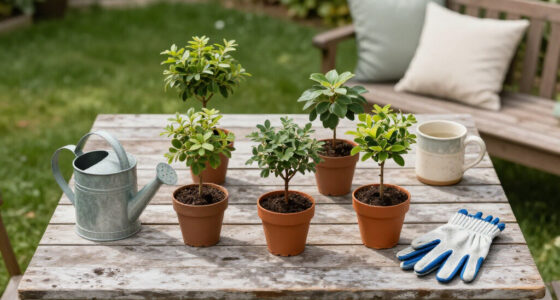
When searching for the best bird friendly plants, it’s important to consider how well they attract local wildlife and fit your garden’s climate. The Perfect Plants Nanho Butterfly Shrub stands out for its vibrant purple flowers that attract hummingbirds and butterflies, making it an excellent all-rounder. For those seeking easy-to-grow options, the Home Grown Heavenly Blue Morning Glory offers abundant blooms that lure pollinators and birds alike. However, tradeoffs include maintenance and specific climate needs, which can influence your choice. Keep reading for a detailed breakdown of each option to find the perfect fit for your garden goals.

Get garden gear delivered free with Prime
- Fast, free delivery on millions of items
- Prime Video, Amazon Music and more included
- Member-only deals all year
Key Takeaways
- The top picks balance attractiveness to birds with ease of cultivation and climate adaptability.
- Native plants often outperform non-native options in supporting local bird populations.
- Seeds mixes provide broad coverage but require more effort to establish compared to established plants.
- Exotic tropical plants like Bird of Paradise attract specific bird species but need warmer climates.
- Pollinator attractants like native wildflower mixes can enhance overall garden biodiversity.


More Details on Our Top Picks
Perfect Plants Nanho Butterfly Shrub 1 Gallon | Live Bush for Outdoor Planting | Attracting Pollinators Like Butterflies, Bees, and Hummingbirds | Gorgeous Purple Flowers in Spring
The Nanho Butterfly Bush stands out as the best choice for gardeners seeking a low-maintenance, pollinator-friendly shrub that blooms vibrantly in summer. Compared with the Home Grown Heavenly Blue Morning Glory, which offers rapid vertical growth and seasonal color, this shrub provides a consistent, fragrant display of purple flowers over a longer period, attracting butterflies, bees, and hummingbirds. Its drought-tolerance and hardy zone range make it suitable for Southern gardens, though it does require full sun to flourish. A key tradeoff is that it can grow quite tall—up to 10 feet—and needs space, which might not suit smaller gardens. This pick makes the most sense for those wanting a durable, attractive, pollinator magnet that requires minimal upkeep and adds immediate visual color.
Pros:- Fast-growing with vibrant purple flowers
- Highly drought-tolerant once established
- Fragrant blooms attract butterflies, bees, and hummingbirds
- Hardy in zones 5-9, suitable for many southern climates
Cons:- Can reach 6-10 feet tall, requiring ample space
- Does not ship to CA, AZ, or WA, limiting availability in some regions
Best for: Gardeners wanting a hardy, drought-tolerant shrub that attracts a variety of pollinators with minimal maintenance
Not ideal for: Small-space gardeners or those preferring container plants, as it grows tall and wide and isn’t suited for limited spaces
- USDA Hardiness Zone:5-9
- Growth Height:6-10 feet
- Bloom Period:Spring to Fall
- Sunlight Needs:Full Sun
- Water Needs:Moderate, drought tolerant
- Plant Type:Perennial shrub
Bottom line: Ideal for experienced gardeners seeking a reliable, fragrant shrub that draws pollinators and needs little attention.
HOME GROWN Heavenly Blue Morning Glory – 150 Heirloom Seeds for Planting, Ideal for a Flower Garden that Attracts Pollinators and Birds (Ipomoea Tricolor)
This Morning Glory offers a lively, fast-growing climbing vine that provides continuous blue blooms perfect for vertical spaces, making it a top choice for gardeners wanting to create living screens. Unlike the Nanho Butterfly Bush, which is a shrub, this vine excels in small spaces like balconies or fences, adding a burst of color daily. Its high germination rate and ease of seed starting make it accessible for beginners, though it requires sturdy support and full sun for best performance. A noticeable tradeoff is its single-day bloom, which means you need a continuous succession of flowers to maintain visual interest. This seed pack is perfect for those who want quick coverage and vibrant, pollinator-attracting flowers that soften garden structures and add seasonal charm.
Pros:- Bright, vivid sky-blue flowers with luminous effect
- Rapid climbing growth covers fences and trellises quickly
- Excellent for creating living shade and privacy screens
- Ideal for containers, balconies, and vertical gardens
Cons:- Flowers last just one day, requiring continuous succession
- Requires sturdy support and full sun for optimal growth
- Annual seeds, so not a perennial option
Best for: Home gardeners with limited space seeking vibrant, fast-growing climbers that attract pollinators
Not ideal for: Gardeners preferring perennial plants or low-maintenance, long-lasting blooms, as this vine blooms only one day per flower and needs support
- Germination Rate:95-99%
- Bloom Color:Sky-blue
- Bloom Duration:One day
- Plant Type:Vine
- Growth Habit:Fast climber
- Sunlight Needs:Full Sun
Bottom line: Perfect for quick, colorful vertical coverage that attracts pollinators, especially in small or urban gardens.
Live Bird of Paradise Plants (4-Pack) in 2″ Pots – Exotic Tropical Decor with White Flowers, 6-10″ Height
The Bird of Paradise offers a striking, exotic addition to indoor or outdoor spaces, with elegant white flowers and glossy foliage. Compared to the Nanho Butterfly Bush or Morning Glory, this plant provides a tropical aesthetic that can be maintained indoors, making it ideal for those in colder zones or limited outdoor space. Its air-purifying qualities and visual appeal make it a favorite for creating a lush, tropical vibe. However, it requires repotting into larger containers as it grows and may need time to acclimate outside, which could be a drawback for busy gardeners. Its blooming period from fall to spring makes it versatile but somewhat seasonal in appearance. This pick is best for those wanting a manageable, decorative tropical plant with pollinator-friendly qualities.
Pros:- Exotic white flowers with striking blue ‘tongue’ accents
- Ideal for indoor and outdoor use in suitable zones
- Adds tropical flair and air-purifying benefits
- Comes in a 4-pack for versatile placement
Cons:- Requires repotting into larger containers as it matures
- Limited blooming period, primarily fall to spring
- Needs full sun and moderate watering to thrive
Best for: Indoor plant enthusiasts or gardeners in zones 9-11 seeking tropical decor and air purification
Not ideal for: Gardening newcomers or those in colder zones needing hardy, perennial outdoor plants, as it needs specific conditions and repotting
- Pot Size:2 inches
- Plant Height:6-10 inches (initial)
- Blooming Period:Fall to Spring
- USDA Hardiness Zone:9-11
- Sunlight Needs:Full Sun
- Watering:Moderate
Bottom line: A wonderful tropical accent for indoor spaces or suitable outdoor zones, with added air-purifying benefits.
Bringing Nature Home: How You Can Sustain Wildlife with Native Plants, Updated and Expanded
This comprehensive guide, Bringing Nature Home, serves as an essential resource for gardeners interested in establishing native plant landscapes that support local wildlife, including birds and pollinators. Unlike the specific plant suggestions in the other products, this book offers a broad understanding of native plants’ ecological roles and detailed strategies for designing sustainable gardens. It’s particularly valuable for gardeners who want to make informed decisions and create habitats that attract and sustain native birds. The tradeoff is that it doesn’t specify particular plants or provide plant care instructions, so it’s better suited as a reference rather than a planting guide. This book makes sense for those committed to ecological gardening and seeking long-term, wildlife-friendly landscapes.
Pros:- In-depth ecological and conservation insights
- Guides on designing wildlife-friendly landscapes
- Updated and expanded content for modern native gardening
- Focuses on supporting local birds, bees, and butterflies
Cons:- Lacks specific plant lists or care instructions
- More theoretical, requiring additional research for planting
- Not a practical step-by-step planting manual
Best for: Gardeners interested in ecological, wildlife-supporting native plant gardens and educational resources
Not ideal for: Gardeners seeking specific plant recommendations or immediate planting guides, as it focuses on principles and strategies
Bottom line: Ideal for eco-conscious gardeners wanting a thorough understanding of native plants’ role in supporting wildlife.
Native Plant Gardening for Birds, Bees & Butterflies: Northeast (Nature-Friendly Gardens)
This regional guide is tailored for gardeners in the Northeast aiming to craft gardens that support native birds, bees, and butterflies. Unlike the more general Bringing Nature Home, which covers broad principles, this book offers specific plant recommendations, planting schedules, and regional tips suited for the Northeast climate. It’s a perfect resource for hobbyist gardeners who want a clear, region-specific approach to native planting, which makes it easier to select species that will thrive and attract local wildlife. However, this focus on one region means it’s less useful for gardeners outside the Northeast. Tradeoffs include less universal applicability and a reliance on regional plant availability. This guide makes sense for those committed to regional native gardening with wildlife benefits.
Pros:- Region-specific plant recommendations
- Detailed planting schedules and regional tips
- Focus on attracting native birds, bees, and butterflies
- Suits hobbyist gardeners wanting clear guidance
Cons:- Less useful outside the Northeast region
- Limited coverage of non-native or adaptable species
- Requires regional plant availability for best results
Best for: Northeastern gardeners seeking region-specific native plant ideas to attract local birds and pollinators
Not ideal for: Gardeners outside the Northeast or those seeking a general, non-regional native planting guide, as it’s tailored to a specific climate and flora
Bottom line: An excellent regional resource for Northeast gardeners dedicated to native, wildlife-friendly landscapes.
1000 Columbine Seeds (Aquilegia) – Perennial Non-GMO Flower Seeds That Attract Hummingbirds, Bees & Butterflies for Gardens, Borders, Cut Flowers & Pollinator Beds
This pick stands out for its combination of beauty and practicality, offering a perennial that reliably returns year after year while drawing hummingbirds, bees, and butterflies. Compared with the Butterfly and Hummingbird Wildflower Mix, which provides a broader but shorter-lived bloom season, the Columbine offers a more structured and elegant vertical element to a garden, especially in shaded or semi-shaded spots. Its adaptability to USDA zones 3-9 makes it a versatile choice for many climates, but it requires well-drained soil and full to partial sun to thrive. The delicate, spurred blooms add not only visual interest but also serve as a nectar source, making it a garden centerpiece for wildlife enthusiasts. The main tradeoff is that it takes a couple of seasons to establish fully, and its more upright growth means it may need staking in windy locations.
Pros:- Long-lasting perennial that returns annually, reducing replanting costs
- Vertical growth adds height and structure to garden beds
- Highly attractive to hummingbirds, bees, and butterflies, increasing biodiversity
Cons:- Requires patience during the first two seasons for full establishment
- Needs well-drained soil and some protection from strong winds
Best for: Gardeners seeking a perennial with lasting visual appeal and reliable pollinator attraction, especially those with shaded or partly shaded spots.
Not ideal for: Beginners expecting instant results or those with very heavy or poorly drained soils, since it needs specific conditions to flourish.
- Height:18-36 inches
- Spread:10-18 inches
- Growth Habit:Perennial
- Soil:Well-drained
- Light:Full sun to partial shade
- USDA Zones:3-9
Bottom line: This perennial is ideal for garden owners who want reliable, elegant blooms that support local pollinators over multiple years.
Butterfly and Hummingbird Wildflower Mix – 30,000+ Seeds – 1 oz Bulk Extra Large Resealable Packet – Non-GMO Open Pollinated Wildflower Seeds
This wildflower mix excels in providing an immediate and vibrant splash of color, with over 30,000 seeds covering up to 100 square feet, ideal for creating a broad pollinator habitat quickly. Unlike the Columbine, which offers a more refined, perennial presence, this mix is designed for ease of planting and ongoing blooms from summer to frost, supporting hummingbirds, butterflies, and bees over several months. Its adaptability to most soils and climates makes it perfect for new gardeners or those wanting rapid results without complicated maintenance. However, the wildflower mix is less structured, which means it doesn’t provide the vertical interest or long-term presence of perennials. Its annual nature also requires re-seeding after a couple of seasons, making it less suitable for gardeners seeking a permanent feature.
Pros:- Huge coverage area with over 30,000 seeds, excellent value
- Long bloom period from summer to frost, ensuring months of nectar sources
- Easy to grow in most soils and climates, ideal for novice gardeners
Cons:- Wildflower mix is annual or short-lived, requiring re-seeding
- Lacks the vertical height and structure of perennial options like Columbine
Best for: Beginners or those wanting an instant, colorful pollinator garden with minimal effort and maintenance.
Not ideal for: Gardeners seeking long-term, perennial plants or a more controlled, structured garden design.
- Seeds:Over 30,000
- Coverage:Up to 100 sq ft
- Bloom Season:Summer to frost
- Soil:Most soils
- Light:Full sun
- Seed Type:Non-GMO, open-pollinated
Bottom line: This seed mix provides an excellent, low-effort way to establish a vibrant, pollinator-friendly garden quickly, especially suited for those new to gardening or seeking rapid visual impact.
How We Picked
Products were evaluated based on their ability to attract and sustain local bird populations, ease of planting and maintenance, and adaptability to various climates. Preference was given to native or well-adapted plants that support pollinators, especially hummingbirds and songbirds. We considered user reviews for real-world performance and durability, as well as the ecological value of each plant or seed mix. The ranking reflects a balance between attractiveness to birds, ease of growth, and overall garden compatibility, with top picks offering the best combination of these factors.Factors to Consider When Choosing Best Bird Friendly Plants
Choosing the best bird friendly plants involves more than just selecting pretty flowers. Consider your local climate, the specific bird species you want to attract, and your gardening experience. The right plant can turn your garden into a thriving wildlife sanctuary, but mismatched choices may lead to disappointment or maintenance issues. Here are key factors to keep in mind before making your purchase.Native vs. Non-Native Plants
Native plants are often the most effective at supporting local bird populations because they have evolved alongside the local insects and climate. They tend to require less maintenance and are more resilient over time. Non-native plants can still attract birds, but they may not provide the same ecological benefits or long-term sustainability. Selecting native species is generally recommended for a self-sustaining, wildlife-friendly garden.
Plant Type and Growth Habit
Consider whether you want flowering shrubs, vines, or ground covers. Shrubs like the Nanho Butterfly Shrub provide shelter and food, while vines like Morning Glories can cover fences and attract hummingbirds. The growth habit affects not just aesthetics but also how much space and maintenance the plant requires. For smaller gardens, compact varieties or seed mixes might be more suitable, while larger spaces can support bigger, more complex plants.
Climate and Hardiness
Matching plants to your local climate is essential for success. Tropical plants like Bird of Paradise need warmer zones, whereas native wildflower mixes often include species adaptable to a wide range of conditions. Check the plant’s USDA hardiness zone and your local weather patterns to ensure your chosen plants will thrive without excessive effort or supplemental heating or watering.
Maintenance and Longevity
Some plants, particularly established shrubs, may require seasonal pruning or watering, while seed mixes need initial care but can be highly rewarding once established. Consider your willingness to perform ongoing maintenance and choose accordingly. Native perennials and seed mixes generally offer long-term benefits with less upkeep, whereas exotic plants may need special care to flourish.
Attractiveness to Specific Birds
Different plants appeal to different bird species. Hummingbirds are drawn to tubular flowers like the Bird of Paradise and Morning Glory, while seed-producing plants like Columbine attract songbirds. Think about which bird species you want to support, and select plants that provide their preferred food sources. Mixing plant types can diversify your garden’s wildlife and create a bustling bird habitat.
Frequently Asked Questions
Can I plant bird friendly plants in containers?
Absolutely. Many bird friendly plants, especially flowering vines like Morning Glory or small shrubs, can thrive in containers with proper drainage and regular watering. Container planting allows flexibility in placement and can be particularly beneficial for gardeners with limited space or those in colder climates where overwintering plants indoors is possible. Just be sure to choose appropriately sized containers and provide adequate nutrients to support healthy growth and attract birds.
Are seed mixes as effective as established plants for attracting birds?
Seed mixes can be highly effective for attracting birds once they establish, especially native wildflower blends that support local pollinators and insects. They require some patience during germination and early growth but can provide extensive food sources over time. Established plants like shrubs or flowering vines offer immediate visual appeal and attract birds right away, but seed mixes are a cost-effective and eco-friendly long-term option if you’re willing to invest in initial care.
How much maintenance do native plants usually require?
Native plants generally demand less maintenance than non-native or exotic species because they are adapted to local conditions. They often need minimal watering once established, occasional pruning, and may be resistant to pests and diseases. This makes them a good choice for gardeners seeking low-effort, sustainable options that reliably attract and support local bird populations.
What should I avoid when choosing bird friendly plants?
Avoid plants that are invasive or non-native without proven ecological benefits, as they can harm local ecosystems. Also, steer clear of plants treated with pesticides or chemicals, which can be harmful to birds and insects. Be cautious about plants that require excessive watering or fertilizers, as they can increase your garden’s maintenance burden and may not support local wildlife as effectively as native, organically grown options.
Is it better to plant a variety of species or focus on one type?
Mixing different types of bird friendly plants generally yields better results, creating a diverse habitat that attracts multiple bird species and supports various stages of their life cycle. A variety of flowering plants, shrubs, and seed-producing species ensures year-round food and shelter. Relying on a single type can limit the diversity of visiting birds and may reduce your garden’s ecological resilience.
Conclusion
For gardeners seeking an all-around excellent choice, the Perfect Plants Nanho Butterfly Shrub offers a reliable, attractive option that supports a wide range of pollinators and birds. Those on a budget or just starting out will appreciate the simplicity and effectiveness of native seed mixes like the Butterfly and Hummingbird Wildflower Mix. If you prefer a low-maintenance, long-term investment and have a larger space, native perennials such as Columbine are worth considering. For tropical garden enthusiasts, the Bird of Paradise adds a striking visual element and attracts specific bird species but requires a warmer climate. Tailor your choice based on your local environment, gardening skills, and the bird species you aim to support.
Halloween Picks
halloween
As an affiliate, we earn on qualifying purchases.