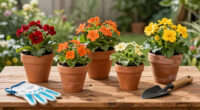
When selecting the best drought-tolerant container plants, durability and water efficiency are key. The Waterwise Plants for Sustainable Gardens stands out for its extensive variety, making it ideal for versatile garden designs. The Lantana Flowers offers vibrant color and resilience, perfect for adding visual interest with minimal water. A main challenge in this category is balancing drought tolerance with aesthetic appeal; some plants are hardy but less visually striking. Conversely, more colorful options may require slightly more water or maintenance. Continue reading for a detailed breakdown of these top choices and what makes them ideal for dry conditions.

Get garden gear delivered free with Prime
- Fast, free delivery on millions of items
- Prime Video, Amazon Music and more included
- Member-only deals all year
Key Takeaways
- The top picks balance drought tolerance with visual vibrancy, making them suitable for decorative container gardens.
- Variety in plant types—from flowering shrubs to grasses—ensures options for different garden styles and zones.
- Tradeoffs often include a slight compromise between water savings and color intensity or foliage density.
- Choosing plants suited to your climate zone and container size is crucial for long-term success.
- Most top-rated choices offer low maintenance but require proper soil and placement considerations.


More Details on Our Top Picks
Drought-Tolerant Plants: Waterwise Gardening for Every Climate
This comprehensive guide stands out for its broad coverage of water conservation strategies suitable for diverse climates, making it ideal for gardeners seeking a sustainable approach. Unlike the more plant-specific Waterwise Plants for Sustainable Gardens, it emphasizes practical techniques alongside plant selection, though it may lack the depth some experts desire. Its strength lies in offering accessible advice that benefits both beginners and seasoned gardeners interested in reducing water use across various regions. However, the book’s limited regional focus means it might not provide detailed plant choices for highly specific zones, and its general approach might leave advanced horticulturists wanting more technical insights.Pros:- Covers water conservation techniques applicable to many climates
- Includes practical advice for both beginners and seasoned gardeners
- Promotes sustainable landscaping solutions
Cons:- Limited focus on specific regional plant species
- May lack detailed technical information for experts
Best for: Gardeners looking for a broad, sustainable gardening resource suitable for multiple climates, especially beginners
Not ideal for: Experienced landscapers seeking region-specific plant data or advanced technical horticultural information
- Format:Print book
Bottom line: This guide makes the most sense for those seeking a broad, practical overview of drought-tolerant gardening with sustainability in mind.
Drought-Tolerant Plants: A Guide for Choosing, Water Conservation, and Garden Maintenance in Dry Conditions
This guide excels at providing actionable advice for reducing water use and maintaining drought-resistant gardens, especially for those new to xeriscaping. Compared with the broader scope of the first book, it offers more tailored guidance on plant selection and garden care specific to dry conditions. Its straightforward, text-based format makes it accessible, but it lacks the visual aids that some gardeners find helpful for plant identification or landscape planning. While it covers the essentials well, experienced gardeners may find it missing deeper technical details or creative landscaping ideas.Pros:- Provides practical advice for water conservation
- Covers plant selection tailored to dry climates
- Includes maintenance strategies for drought-resistant gardening
Cons:- Limited technical depth for advanced gardeners
- Primarily text-based with minimal visual content
Best for: Beginners or homeowners in arid regions wanting straightforward, practical guidance on drought-tolerant gardening
Not ideal for: Experienced horticulturists seeking detailed plant profiles or advanced landscape design techniques
- Format:Book
Bottom line: This book makes the most sense for newcomers looking for clear, easy-to-follow drought gardening advice.
Waterwise Plants for Sustainable Gardens: 200 Drought-Tolerant Choices for All Climates
This guide is notable for its extensive list of 200 drought-tolerant plants, making it a strong pick for those wanting variety and adaptability. Compared to the more general guides, it offers a broad spectrum of species suitable for all climates, promoting water conservation through plant diversity. Its main limitation is the absence of visual plant illustrations, which can hinder identification and selection. As a text-heavy resource, it’s better suited for motivated gardeners who already have some familiarity with drought-resistant plants and want a comprehensive catalog rather than a step-by-step manual.Pros:- Covers 200 drought-resistant plant species
- Offers adaptable recommendations for all climate zones
- Strong focus on reducing water use in landscaping
Cons:- No visual plant illustrations included
- Primarily text-based with limited practical tools
Best for: Gardeners seeking a wide selection of drought-tolerant plants to diversify their landscape in any climate
Not ideal for: Beginners or those needing visual guidance to identify plants easily
- Number of plants:200
Bottom line: This resource makes the most sense for experienced gardeners who want a broad, detailed plant reference for sustainable landscaping.
Multicolor Lantana Flowers (4 Pack)
These lantana flowers excel at providing vibrant color and attracting pollinators, making them ideal for container gardening in sunny spots. Compared to the plant guides, they offer immediate visual appeal and pollinator benefits, especially in frost-free zones like Zone 10. They are drought- and heat-tolerant once established, but their requirement for full sun and deep watering can be a challenge in shadier or less accessible locations. Their tendency to spread if not contained also limits their use in smaller or formal gardens, but for lively, wildlife-friendly containers, they shine.Pros:- Attracts hummingbirds, bees, and butterflies
- Drought- and heat-tolerant once established
- Vibrant, extended bloom season (late spring to fall)
- Versatile for containers and slopes
Cons:- Requires full sun exposure
- Needs deep watering infrequently; may be difficult to manage in containers with limited watering access
- Can spread in garden beds if not contained
Best for: Homeowners wanting lively, pollinator-attracting containers in full sun and frost-free zones
Not ideal for: Gardens with limited sunlight or gardeners seeking non-spreading, low-maintenance plants
- Usage:Outdoor
- Blooming Period:Late Spring to Fall
- Sunlight:Full Sun
- Hardiness Zone:10°F/32°F (Zone 10)
- Soil Type:Sandy
- Watering Needs:Moderate (deep but infrequent)
- Growth Size:3 ft. high and wide
Bottom line: This pick makes the most sense for gardeners in warm, frost-free areas looking for colorful, pollinator-friendly container plants.
Lomandra Platinum Beauty Ornamental Grass in 1 Gallon Pot – Variegated, Drought Tolerant (Zones 8-10)
The Lomandra Platinum Beauty offers striking variegated foliage that maintains visual interest year-round with minimal effort. Compared to the flowering lantana, it provides a more subdued but elegant aesthetic suitable for formal or modern landscapes. Its drought tolerance after establishment makes it a reliable choice for low-water gardens, yet it’s limited to USDA Zones 8-10 and does not ship to colder regions, which restricts its versatility. Its evergreen nature and low-maintenance profile make it ideal for gardeners seeking a resilient, sculptural plant, though those outside its zone must look for alternatives.Pros:- Drought-tolerant once established
- Low-maintenance evergreen foliage
- Variegated leaves add visual interest
- Adaptable to coastal and challenging environments
Cons:- Does not ship to California or Arizona
- Not suitable for colder climates outside Zones 8-10
Best for: Gardeners in Zones 8-10 wanting a low-maintenance, evergreen container plant with visual interest
Not ideal for: Cold climate gardeners outside Zones 8-10 or those needing seasonal flowering
- Size:2–3 feet tall and wide
- Pot Size:1 gallon
- Hardiness Zones:8–10
- Soil Type:Well-drained (sandy/loamy)
- Sunlight:Full sun to partial shade
Bottom line: This pick makes the most sense for gardeners in Zones 8-10 seeking a durable, attractive evergreen for containers or gardens.
Costa Farms Ruellia Purple Showers Mexican Petunia, Live Outdoor Plant in 10-Inch Pot
This Ruellia plant stands out for its vibrant violet blooms that provide continuous color from spring through fall, making it a striking choice for adding vertical interest in drought-tolerant containers. Unlike Lantana, which offers multicolor flowers but less vertical height, the Ruellia’s rapid growth up to 3 feet creates a lush, eye-catching display. It attracts hummingbirds and butterflies, enhancing garden biodiversity, but unlike Lomandra, which is more grass-like and drought-hardy, the Ruellia requires more frequent watering initially and must be brought indoors in freezing climates. Its drought tolerance kicks in once established, but it needs careful placement to avoid frost damage. Compared to other perennials, it offers a longer flowering season, though it demands more seasonal care in colder zones.
Pros:- Continuous year-round purple blooms that brighten containers
- Attracts hummingbirds and butterflies, supporting local pollinators
- Fast-growing with vertical growth, adding structure to gardens
- Drought-tolerant once established, reducing water needs
Cons:- Requires indoor relocation during freezing temperatures, adding seasonal effort
- May need extra watering in its first year until established
- Less suited for shaded or colder zones without winter protection
Best for: Gardeners seeking a colorful, pollinator-friendly plant that adds height and vibrancy to drought-tolerant containers in warm climates.
Not ideal for: Cold climate gardeners or those looking for a low-maintenance, evergreen ground cover, since the Ruellia needs seasonal indoor protection and isn’t evergreen.
- Pot Size:10-Inch Grower Pot
- Height:2-3 Feet Tall
- Plant Type:Drought-Tolerant Perennial
- Flower Color:Violet/Purple
- Growth Rate:Fast
- Pollinator Attraction:Yes
- Drought Tolerance:After establishment
- Climate Suitability:Warm, frost-sensitive
Bottom line: This plant is ideal for gardeners in warmer climates looking for vibrant color and pollinator support in drought-resistant containers.

How We Picked
Our evaluation focused on key factors like drought tolerance, growth habit, aesthetic appeal, and adaptability to container gardening. We prioritized plants with proven resilience in dry conditions across multiple climate zones and considered their maintenance needs. Cost-effectiveness and availability also played roles, ensuring selections are accessible for a wide range of gardeners. Plants were ranked based on overall durability, visual impact, and ease of care, with a conscious effort to include options suitable for beginners and experienced growers alike.Factors to Consider When Choosing Best Drought-tolerant Container Plants
Choosing the best drought-tolerant container plants involves considering several important factors beyond just drought resistance. First, evaluate your climate zone to select plants suited to your specific weather patterns. Next, consider the size and growth habit of the plant to ensure it fits well in your chosen container and complements your space. Drought-tolerant plants vary in their aesthetic appeal—from flowering varieties to grasses—so align your choice with your visual goals. Additionally, pay attention to soil requirements and whether the plant needs occasional supplemental watering or fertilizing. Finally, factor in your level of gardening experience; some plants demand more attentive care to thrive in containers.Climate Compatibility and Zone Suitability
Understanding your local climate zone is essential before choosing drought-tolerant plants. Some species perform well only in warmer zones, while others can handle cooler temperatures. Selecting plants that match your zone reduces the risk of failure and minimizes water needs. Be cautious of plants that are marginally hardy in your area, as they might require extra protection or care. Properly matching plants to your climate ensures healthier growth and sustained drought tolerance over time.
Container Size and Growth Habit
Choosing the right container size is vital for supporting the plant’s root system and overall health. Overly small containers can restrict growth and cause stress, reducing drought resilience. Conversely, very large containers may require more water initially but can support larger plants. Consider the plant’s mature size and growth habit—compact plants are easier to manage in small containers, while sprawling varieties need more space. Proper container selection supports both aesthetic goals and plant vitality.
Aesthetic and Functional Goals
Identify whether your priority is flowering display, foliage interest, or a combination of both. Some drought-tolerant plants like lantanas and mexican petunias offer vibrant blooms, ideal for adding color. Others, such as ornamental grasses, provide texture and movement, enhancing visual diversity. Matching the plant’s appearance with your garden theme ensures the container complements your overall landscape. Remember, plants with striking colors or unusual foliage might require minimal watering but could need deadheading or pruning to maintain appearance.
Soil and Maintenance Needs
Most drought-tolerant plants prefer well-draining soil to prevent root rot and conserve moisture. Using a specialized cactus or succulent mix can improve drainage, reducing watering frequency. While many of these plants are low maintenance, some may need occasional fertilization or pruning to stay healthy and look their best. Be aware of each plant’s specific soil and care requirements to avoid common mistakes like overwatering or neglecting soil quality, which can undermine drought tolerance.
Gardening Experience and Plant Selection
Beginners should focus on hardy, low-maintenance options that tolerate neglect and require minimal watering once established. More experienced gardeners might experiment with a wider range of flowering varieties that, while more demanding, offer greater visual impact. Consider your willingness to prune, fertilize, or adjust watering schedules. Selecting plants that match your gardening skill level ensures a more rewarding experience and better long-term success in container drought-tolerance.
Frequently Asked Questions
How often do drought-tolerant container plants need watering?
Most drought-tolerant plants in containers need watering only when the soil is completely dry, which can range from once a week to once every few weeks depending on the climate, container size, and plant type. Once established, many of these plants develop deep root systems that help them retain moisture, reducing watering frequency. Still, it’s important to monitor soil moisture regularly and avoid letting containers dry out completely, especially during extreme heat or dry spells.
Can I combine different drought-tolerant plants in the same container?
Yes, mixing drought-tolerant plants can create visually appealing containers with varied textures and colors. However, it’s important to choose plants with similar water and light requirements to prevent over- or under-watering individual species. Combining plants with overlapping needs ensures that you can maintain a low-water regime without risking plant health. Proper spacing and soil preparation will also support healthy growth and ease maintenance.
Are flowering plants more drought-tolerant than foliage-only varieties?
Flowering plants often have a reputation for being less drought-tolerant because they may require more nutrients and water to produce blooms. However, many drought-tolerant flowering species like lantanas and Mexican petunias have evolved to thrive in dry conditions. Foliage-only plants, such as ornamental grasses, are typically very drought-resistant but might lack the visual impact some gardeners desire. Balancing bloom and foliage preferences with drought resilience is key to a successful container garden.
What soil mix is best for drought-tolerant container plants?
Using a well-draining soil mix is essential for drought-tolerant plants in containers. A blend that includes sand, perlite, or small gravel along with organic matter helps prevent water retention that can lead to root rot. Commercial cactus or succulent mixes are also effective, especially for plants with very low water needs. Proper soil prevents overwatering and encourages healthy root development, maximizing drought tolerance.
Is it necessary to fertilize drought-tolerant container plants?
While many drought-tolerant plants are adapted to low-nutrient conditions, occasional fertilization can promote healthier growth and more vibrant blooms. Use a balanced, diluted fertilizer during the growing season, typically once a month. Over-fertilizing can encourage lush, water-loving growth that compromises drought resilience, so moderation is key. Monitoring plant health will guide you on whether additional feeding is needed.
Conclusion
The best overall choice for most gardeners is the Waterwise Plants for Sustainable Gardens because of its broad variety and proven drought tolerance. Those seeking the best value might prefer the Multicolor Lantana Flowers for vibrant color at an affordable price. For beginners, the Costa Farms Ruellia offers easy care and reliable performance. Gardeners with specific aesthetic goals, like ornamental grasses, should consider the Lomandra Platinum Beauty for texture and structure. Ultimately, selecting the right plant depends on your climate, container size, and personal style—use these recommendations to guide your choices for a thriving, low-water garden.
As an affiliate, we earn on qualifying purchases.Halloween Picks
halloween