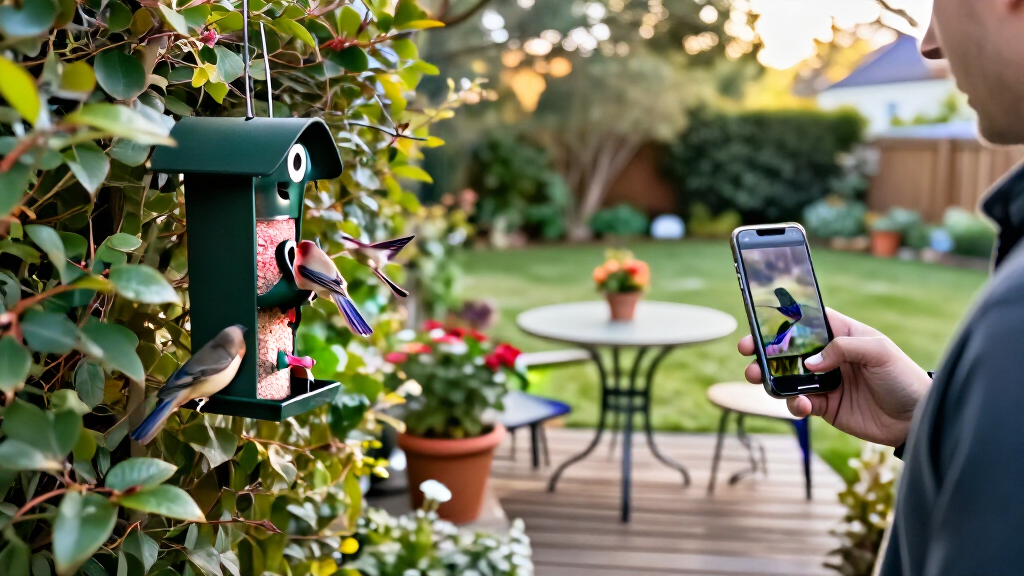

The best AI bird feeders pair useful bird identification with a camera and feeder design that suit your yard. My best overall pick is the Kiwibit Bird Feeder 2 Pro with 4K Camera and Solar Power, which brings together high-resolution video and solar charging. The HARYMOR Solar-Powered Smart Bird Feeder is a strong alternative for shoppers who prefer 2K capture, while the Bird Buddy Pro Solar Smart Bird Feeder stands out as another option to compare for a more guided birdwatching experience. The main tradeoffs are image detail versus power and upkeep, along with how much you value AI identification over a simpler camera setup. Read on for the full breakdown of all 15 models and help matching one to your priorities.
Complete the kit


Key Takeaways
- 4K models lead on image detail in this lineup, but a sharper image is most useful when the camera angle and light let you see the bird clearly.
- Solar power appears across many of the picks, yet panel placement and yard shade still affect how much charging attention a feeder may need.
- AI identification is a feature, not a guarantee; buyers should treat labels as helpful clues and check whether the camera captures enough detail for a confident ID.
- Hanging and standard feeder designs solve different placement problems, so mounting options can matter more than resolution for balconies, small yards, or crowded feeding areas.
- The strongest fit depends on the buyer’s priority: high-resolution capture, easier setup, solar support, or a more compact placement may point to different models rather than one universal winner.
| Kiwibit Bird Feeder 2 Pro with 4K Camera and Solar Power |  | Best for Detailed Video | Model: BW513 | Camera: 4K HDR with autofocus | Slow-motion recording: 1080p at 60 fps or 120 fps | VIEW LATEST PRICE | See Our Full Breakdown |
| HARYMOR Solar-Powered Smart Bird Feeder with 2K Camera |  | Best for Shared Household Viewing | Model: Q8 | Camera resolution: 2K HD | Viewing angle: 120° | VIEW LATEST PRICE | See Our Full Breakdown |
| Kiwibit 4K Bird Feeder with Camera, Solar Powered |  | Best for a Wide Camera View | Camera: 4K livestream; 8MP photos | Field of view: 132° | Bird identification: More than 10,000 species | VIEW LATEST PRICE | See Our Full Breakdown |
| Birdfy Solar-Powered Smart Bird Feeder with Camera |  | Best Metal-Bodied Option | Camera resolution: 1080p HD | Night vision: Full-color | Battery: 9000mAh | VIEW LATEST PRICE | See Our Full Breakdown |
| 4K Smart Bird Feeder with Camera, Solar Power, and AI Bird Identification |  | Best for Subscription-Free AI | Video: 4K at 30fps; 1080p slow motion at 120fps | Photos: 8MP HDR | Bird identification: AI identification for more than 10,000 species | VIEW LATEST PRICE | See Our Full Breakdown |
| Kiwibit Solar-Powered Smart Bird Feeder with 4K Camera |  | Best for High-Detail Video | Model: BW514 | Video: 4K UHD; 1080p at 60 FPS playback | Photo resolution: 8MP | VIEW LATEST PRICE | See Our Full Breakdown |
| NETVUE Birdfy Smart Bird Feeder with Camera and Solar Panel |  | Best for a Wide Viewing Angle | Model: Birdfy AI N12 | Camera resolution: 1080p | Field of view: 155° | VIEW LATEST PRICE | See Our Full Breakdown |
| Birdfy Smart Bird Feeder with Solar-Powered Camera |  | Best for Subscription-Free AI | Material: Natural fir wood | Video: 1080p; 60 fps capture | Night vision: Full-color | VIEW LATEST PRICE | See Our Full Breakdown |
| BirdSnap Smart Bird Feeder with Camera, Solar Powered, 2K Video |  | Best for Attracting Different Species | Capacity: 1.8L | Camera: 2K video; 155° wide-angle view; night vision | Power: Rechargeable battery with 3W adjustable solar panel | VIEW LATEST PRICE | See Our Full Breakdown |
| Solar-Powered Smart Bird Feeder with 2K Camera and AI Bird Identification |  | Best for Shared Live Viewing | Camera resolution: 2K HD | Power: Built-in solar panel; wired power also supported | AI identification: Recognizes over 10,000 species | VIEW LATEST PRICE | See Our Full Breakdown |
| NETVUE by Birdfy Smart Bird Feeder with Camera |  | Best for Easy Everyday Bird Alerts | Model: N12 | Camera resolution: 1080p | Night vision: Color | VIEW LATEST PRICE | See Our Full Breakdown |
| Birdfy Smart Solar-Powered Hanging Bird Feeder with Camera |  | Best for Seed-and-Suet Variety | Construction: All-metal body | Seed capacity: 1.7 L | Feeding options: Seed and suet | VIEW LATEST PRICE | See Our Full Breakdown |
| HARYMOR Smart Bird Feeder with 2K Camera and Dual Solar Panels |  | Best for Flexible Viewing and Storage | Model: Q8 | Seed capacity: 2 L | Video resolution: 2K | VIEW LATEST PRICE | See Our Full Breakdown |
| Bird Buddy Pro Solar Smart Bird Feeder with Camera |  | Best Compact Pick | Model: BBG1003BAD | Camera: 2K video, 5MP photos, HDR | Sensor: 1/2.7-inch | VIEW LATEST PRICE | See Our Full Breakdown |
| Kiwibit Solar Smart Bird Feeder with 4K Camera and AI Bird Identification |  | Best for Maximum Video Detail | Model: BW512 | Camera: 8MP photos; 4K Ultra HD video with HDR | Lens: 132° ultra-wide | VIEW LATEST PRICE | See Our Full Breakdown |
| AI bird feeder | Weather resistance | Model |
|---|---|---|
| Kiwibit Bird Feeder 2 Pro with | IP65 | BW513 |
| HARYMOR Solar-Powered Smart Bi | IP65 | Q8 |
| Kiwibit 4K Bird Feeder with Ca | IP65 | — |
| Birdfy Solar-Powered Smart Bir | — | — |
| 4K Smart Bird Feeder with Came | — | — |
| Kiwibit Solar-Powered Smart Bi | IP65 | BW514 |
| NETVUE Birdfy Smart Bird Feede | IP65 | Birdfy AI N12 |
| Birdfy Smart Bird Feeder with | — | — |
| BirdSnap Smart Bird Feeder wit | IP65 | — |
| Solar-Powered Smart Bird Feede | — | — |
| NETVUE by Birdfy Smart Bird Fe | IP65 | N12 |
| Birdfy Smart Solar-Powered Han | — | — |
| HARYMOR Smart Bird Feeder with | IP65 | Q8 |
| Bird Buddy Pro Solar Smart Bir | — | BBG1003BAD |
| Kiwibit Solar Smart Bird Feede | IP65 | BW512 |
More Details on Our Top Picks
Kiwibit Bird Feeder 2 Pro with 4K Camera and Solar Power
I’d pick the Kiwibit Bird Feeder 2 Pro for buyers who care most about clear, flexible footage. Its 4K HDR autofocus camera is a step up from the HARYMOR Q8’s 2K camera, while slow-motion recording can show wing movement at 60 or 120 frames per second. Dual-band Wi-Fi also gives it a connectivity advantage over the older Kiwibit 4K Bird Feeder, which supports only 2.4 GHz. The detachable battery and 5W solar panel help reduce charging interruptions, and removable feeder parts make cleanup more manageable. The tradeoff is that FeatherPal AI requires a subscription after its 30-day trial, so the sharpest footage does not mean ongoing AI identification is included. Solar charging also depends on sunlight, and its 1.7L capacity is not especially large.
Pros:- 4K HDR autofocus video with 1080p slow motion at up to 120 fps
- 5W solar panel works alongside a detachable 5200mAh battery
- Dual-band 2.4GHz and 5GHz Wi-Fi supports more network setups than the older Kiwibit 4K model
- Detachable hopper and tray simplify cleaning
Cons:- FeatherPal AI requires a subscription after the 30-day trial
- Solar charging output depends on available sunlight
- 1.7L seed capacity means more frequent refills than a larger feeder may need
Best for: Birders who want high-resolution, slow-motion footage, dual-band Wi-Fi, and a detachable battery for easier upkeep
Not ideal for: Buyers who want AI identification without recurring fees or who need reliable solar charging in a shaded location
- Model:BW513
- Camera:4K HDR with autofocus
- Slow-motion recording:1080p at 60 fps or 120 fps
- Solar panel:Built-in 5W
- Battery:Detachable 5200mAh
- Seed bin capacity:1.7L
- Wi-Fi:2.4GHz and 5GHz
- Weather resistance:IP65
- AI access:30-day trial; subscription required afterward
Our verdict“Choose this Kiwibit if detailed 4K and slow-motion footage matter more than avoiding an ongoing AI subscription.”
HARYMOR Solar-Powered Smart Bird Feeder with 2K Camera
The HARYMOR Q8 is the practical pick for a household that wants to watch visits together without prioritizing the highest resolution. Its 2K camera and 120° view cover a broad area, while shared viewing supports up to four people. That makes it easier to include family members than the Kiwibit 4K Bird Feeder, whose live sharing is limited to three people. Solar power and included squirrel deterrents add useful outdoor basics, and footage can go to a separately purchased memory card or cloud storage with a two-year trial. The main compromise is the AI model: bird identification requires a subscription. Local storage also adds a separate card purchase, and the mounting pole is not included, so buyers may need extra hardware to install it as planned.
Pros:- 2K camera with a 120° viewing angle captures a wide area
- Shared live viewing supports up to four people
- Solar power and IP65 weather resistance suit outdoor installation
- Squirrel deterrents and mounting accessories are included
Cons:- AI bird identification requires a subscription
- Memory card is sold separately, and the mounting pole is not included
- 2K video is less detailed than the 4K footage from the Kiwibit Bird Feeder 2 Pro
Best for: Households that want several people to receive bird alerts and view activity from one feeder
Not ideal for: Birders seeking subscription-free identification, included local storage, or a complete pole-mount setup
- Model:Q8
- Camera resolution:2K HD
- Viewing angle:120°
- Seed capacity:1.5L
- Power:Solar-powered
- Weather resistance:IP65
- Local storage:Memory card up to 128GB; card sold separately
- Cloud storage:Two-year trial with 3-day loop recording
- Device sharing:Up to four people
Our verdict“Pick the HARYMOR Q8 for shared household viewing and a wide 2K field of view, but plan for separate storage and paid AI.”
Kiwibit 4K Bird Feeder with Camera, Solar Powered
I’d choose this Kiwibit 4K Bird Feeder when framing matters as much as resolution. Its 132° field of view is wider than the HARYMOR Q8’s 120° view, making it better suited to a perch where birds may arrive from different angles. It also combines 4K livestreaming, 8MP photos, night vision, and AI identification covering more than 10,000 species. Compared with the Kiwibit Bird Feeder 2 Pro, this model lists a 3W panel rather than 5W, but it offers a dual-compartment 1.5L hopper and family sharing for recorded moments with up to 20 people. The tradeoffs are a 2.4GHz-only connection and a microSD card that is not included. Its AI premium features also require a subscription after the trial.
Pros:- 4K livestream, 8MP photos, HDR, and night vision
- 132° field of view captures a wider area than the HARYMOR Q8
- AI identification covers more than 10,000 species
- Local microSD storage supports cards up to 512GB, with extensive recorded-moment sharing
Cons:- Supports 2.4GHz Wi-Fi only
- MicroSD card is not included, and cloud history is limited to a free one-day rolling period
- Premium AI features require a subscription after the 30-day trial
Best for: Birders with a broad feeder approach who want 4K footage, night vision, and recorded clips to share with extended family
Not ideal for: Homes relying on 5GHz Wi-Fi or buyers who want AI features and storage ready without extra purchases or subscriptions
- Camera:4K livestream; 8MP photos
- Field of view:132°
- Bird identification:More than 10,000 species
- Solar panel:Adjustable 3W
- Battery:5200mAh rechargeable
- Seed hopper:1.5L, dual-compartment
- Wi-Fi:2.4GHz; 5GHz not supported
- Local storage:MicroSD up to 512GB; card not included
- Weather resistance:IP65
Our verdict“Choose this model for its especially wide 4K camera view, provided your network supports 2.4GHz and you are comfortable arranging storage and AI access.”
Birdfy Solar-Powered Smart Bird Feeder with Camera
The Birdfy Solar-Powered Smart Bird Feeder stands out for its metal construction, a useful distinction for buyers who prefer a metal body over the plastic build implied by many camera-feeder designs. Its 9,000mAh rechargeable battery pairs with an included solar panel, and the 1080p camera adds full-color night vision for viewing activity after dark. Compared with the 4K Smart Bird Feeder with Camera, this Birdfy gives up sharpness and the supplied information does not specify local storage or subscription terms; in return, it offers a large stated battery capacity and includes a mounting kit, retractable perch, and seed guard. The limitation is a 2.4GHz-only Wi-Fi connection, and 1080p provides less detail for cropping or close inspection than the 4K options in this roundup.
Pros:- Metal construction is described as weather-resistant
- 1080p camera includes full-color night vision
- 9,000mAh battery pairs with the included solar panel
- Mounting kit, retractable perch, and seed guard are included
Cons:- Connects over 2.4GHz Wi-Fi only
- 1080p resolution captures less detail than the 4K models in this roundup
- Product details do not specify storage arrangements or AI subscription terms
Best for: Buyers who prioritize a metal feeder body, color night vision, and an included mounting kit over 4K footage
Not ideal for: Birders who need 5GHz Wi-Fi, detailed 4K clips, or clearly specified subscription-free AI and storage
- Camera resolution:1080p HD
- Night vision:Full-color
- Battery:9000mAh
- Power:Solar panel and rechargeable battery
- Connectivity:2.4GHz Wi-Fi
- Material:Metal
- Color:Green
- Included components:Mounting kit, retractable perch, seed guard, and solar panel
Our verdict“Choose this Birdfy if a metal body and full-color night vision matter more than 4K detail or dual-band Wi-Fi.”
4K Smart Bird Feeder with Camera, Solar Power, and AI Bird Identification
This 4K feeder is the clearest choice for buyers who want AI identification without a recurring subscription. Unlike the Kiwibit Bird Feeder 2 Pro, which requires a subscription for FeatherPal AI after its trial, this model includes AI identification and 32GB of local storage without a subscription. It records 4K video at 30fps, takes 8MP HDR photos, and adds 1080p slow motion at 120fps. Dual-band Wi-Fi and a removable camera make network setup and cleaning more flexible, while the metal body and 1.8L capacity round out the practical features. The tradeoff is that fixed local storage can fill up, and connected app features still require Wi-Fi. Its 3W solar panel helps maintain power, but it does not remove dependence on suitable sunlight.
Pros:- AI identification and included 32GB local storage do not require a subscription
- 4K 30fps video, 8MP HDR photos, and 1080p slow motion at 120fps
- Dual-band Wi-Fi and a removable camera aid setup and upkeep
- Metal construction, 1.8L seed capacity, and bird-safe feeding ports
Cons:- 32GB of local storage may limit how much footage can be retained
- Connected features require Wi-Fi
- The 3W solar panel’s charging contribution depends on sunlight
Best for: Birders who want 4K footage and AI identification with included local storage and no AI subscription
Not ideal for: People without usable Wi-Fi or buyers who need large, expandable storage for long-term video archives
- Video:4K at 30fps; 1080p slow motion at 120fps
- Photos:8MP HDR
- Bird identification:AI identification for more than 10,000 species
- Storage:32GB local storage
- Wi-Fi:2.4GHz and 5GHz
- Solar panel:3W
- Seed capacity:1.8L
- Material:Metal
- Dimensions and weight:6.3 x 6.5 x 9.8 in; 3.5 lb
Our verdict“Choose this feeder if you want 4K and AI without recurring fees and can manage a fixed 32GB local archive.”
Kiwibit Solar-Powered Smart Bird Feeder with 4K Camera
The Kiwibit Solar-Powered Smart Bird Feeder suits birders who want to inspect fine feather detail: its 4K video, 8MP photos, and 132° view offer more image detail than the 1080p NETVUE Birdfy Smart Bird Feeder. Infrared night vision, motion notifications, and live app viewing extend its usefulness beyond daytime visits, while the solar roof can supplement power rather than eliminate charging needs. Its 1L seed capacity is smaller than the BirdSnap’s 1.8L hopper, so it may need refilling more often at busy feeding stations. The main catch for AI-focused buyers is that bird identification requires a Premium subscription after a 30-day trial. Local Micro SD storage up to 512GB gives more control over clips, but the card is not included, and the feeder requires 2.4GHz Wi-Fi.
Pros:- 4K video and 8MP photos capture more detail than the 1080p NETVUE Birdfy model.
- Solar roof supplements power for outdoor use.
- Supports local Micro SD storage up to 512GB.
- IP65-rated housing and a removable camera module.
Cons:- AI bird identification requires a Premium subscription after the 30-day trial.
- Micro SD card is not included.
- The 1L container is smaller than the BirdSnap’s 1.8L capacity, and app features require 2.4GHz Wi-Fi.
Best for: Birders who prioritize high-resolution footage and want to store clips locally on a Micro SD card.
Not ideal for: Buyers seeking subscription-free AI identification or a large seed hopper; AI identification becomes paid after the trial, and capacity is 1L.
- Model:BW514
- Video:4K UHD; 1080p at 60 FPS playback
- Photo resolution:8MP
- Field of view:132°
- Night vision:Infrared
- Seed capacity:1L
- Weather resistance:IP65
- Local storage:Micro SD card up to 512GB; card not included
- Connectivity and AI:2.4GHz Wi-Fi; Kiwibit Premium subscription required for AI identification after a 30-day trial
Our verdict“Choose this Kiwibit if detailed 4K footage and local storage matter more than subscription-free AI or a larger seed supply.”
NETVUE Birdfy Smart Bird Feeder with Camera and Solar Panel
The NETVUE Birdfy AI N12 is a straightforward choice for buyers who want broad coverage of the feeding area without stepping up to 2K or 4K video. Its 155° view is wider than the Kiwibit 4K feeder’s 132° field, helping keep more of a perch or landing zone in frame, while 1080p video and infrared night vision cover everyday viewing. A 1.5-liter hopper also holds more seed than the Kiwibit’s 1L container. The included solar panel can assist battery power, and the app offers live viewing, AI identification, and three months of cloud storage. That storage window is a limit for anyone who wants a lasting archive, and connected features depend on outdoor Wi-Fi. Compared with the BirdSnap, this model has a simpler stated camera setup and fewer included species-attracting accessories.
Pros:- 155° wide-angle view captures more of the feeding area than the Kiwibit 4K model’s 132° view.
- 1.5-liter capacity is larger than the Kiwibit’s 1L container.
- Includes a 3W Type-C solar panel and mounting hardware.
- AI identification, live viewing, infrared night vision, and three months of cloud storage are included in the listed feature set.
Cons:- 1080p resolution offers less image detail than the 2K BirdSnap and 4K Kiwibit options.
- Cloud video storage is limited to three months.
- Connected features require outdoor Wi-Fi.
Best for: Birders who want a broad camera view, solar-assisted power, and included cloud clip storage for routine monitoring.
Not ideal for: Buyers who need 2K or 4K detail, a long-term cloud archive, or connected viewing in a yard without Wi-Fi.
- Model:Birdfy AI N12
- Camera resolution:1080p
- Field of view:155°
- Seed capacity:1.5 liters
- Night vision:Infrared
- Power:Battery and solar powered; 3W Type-C solar panel included
- Weather resistance:IP65
- Cloud storage:Three months
- Dimensions and weight:8 x 7 x 11 inches; 4.2 pounds
Our verdict“Pick the NETVUE Birdfy if a wide view and included short-term cloud storage matter more than higher-resolution footage or a permanent clip archive.”
Birdfy Smart Bird Feeder with Solar-Powered Camera
For buyers who want AI identification without adding a recurring service, this Birdfy Smart Bird Feeder has a clear advantage: its listed bird recognition is lifetime free, with free cloud clips retained for 30 days. That makes it a more direct fit for subscription-averse households than the Kiwibit 4K feeder, whose AI identification requires Premium after its trial. The camera records 1080p video at 60 fps, useful for smoother slow-motion views of quick visits, and offers full-color night vision. A 5200mAh battery paired with a built-in solar panel supports outdoor operation, while tool-free cleaning reduces upkeep. The tradeoff is resolution: the BirdSnap provides 2K video and a larger 1.8L seed capacity. This Birdfy also relies on 2.4GHz Wi-Fi for app features, and its cloud retention is limited to 30 days.
Pros:- Lifetime-free AI bird identification avoids the paid AI plan required by the Kiwibit 4K feeder.
- 1080p capture at 60 fps supports smoother slow-motion viewing.
- Full-color night vision and a 5200mAh rechargeable battery with built-in solar panel.
- Tool-free cleaning and wall, pole, or tree mounting.
Cons:- 1080p resolution is lower than the BirdSnap’s 2K video.
- Free cloud video retention is limited to 30 days.
- App features require a 2.4GHz Wi-Fi connection.
Best for: Birdwatchers who want AI identification without a required subscription and value simple feeder cleaning.
Not ideal for: Buyers who want higher-resolution footage, a larger seed capacity, or cloud clips retained beyond 30 days.
- Material:Natural fir wood
- Video:1080p; 60 fps capture
- Night vision:Full-color
- Battery:5200mAh rechargeable battery with built-in solar panel
- Connectivity:2.4GHz Wi-Fi
- Camera weather protection:IP66
- AI identification:Lifetime free; recognizes 6000+ species
- Cloud storage:Free, with 30-day video retention
- Mounting and cleaning:Wall, pole, or tree mounting; tool-free cleaning
Our verdict“Choose this Birdfy if avoiding AI subscription fees and keeping feeder maintenance simple matter more than 2K footage or a long video archive.”
BirdSnap Smart Bird Feeder with Camera, Solar Powered, 2K Video
The BirdSnap Smart Bird Feeder is the most flexible choice here for shaping what visits: its included fruit fork, hummingbird feeder, and jelly box give buyers more ways to attract different birds than the standard setup of the NETVUE Birdfy. It also pairs a 1.8L capacity with 2K video, night vision, and a 155° view, making it a stronger fit for a busy feeding station than the smaller 1L Kiwibit. AI recognition does not require a subscription, and an adjustable 3W solar panel can reduce manual charging. Storage details are less clear: the listing names a 32GB card among included components but also describes microSD storage as sold separately. Buyers should verify what is supplied; cloud storage is optional. Like the other Wi-Fi models, app features require 2.4GHz connectivity.
Pros:- 2K video, night vision, and a 155° wide-angle view.
- 1.8L capacity is larger than the NETVUE Birdfy’s 1.5-liter hopper.
- AI bird recognition is available without a required subscription.
- Includes a fruit fork, hummingbird feeder, jelly box, and mounting kit.
Cons:- Storage information is inconsistent: a 32GB card is listed as included, while the description also says microSD storage is sold separately.
- Cloud storage is optional rather than specified as included.
- App connectivity requires 2.4GHz Wi-Fi.
Best for: Birders who want a larger-capacity feeder with add-ons for attracting hummingbirds, fruit-eating birds, and other visitors.
Not ideal for: Buyers who need unambiguous storage terms, a guaranteed cloud archive, or app access where 2.4GHz Wi-Fi is unavailable.
- Capacity:1.8L
- Camera:2K video; 155° wide-angle view; night vision
- Power:Rechargeable battery with 3W adjustable solar panel
- Connectivity:2.4GHz Wi-Fi
- Weather resistance:IP65
- AI recognition:Available without a required subscription
- Included accessories:Fruit fork, hummingbird feeder, jelly box, mounting kit
- Storage:Optional cloud storage; listing conflicts on whether a 32GB card is included
- Color and target species:Blue; Cardinal
Our verdict“Choose the BirdSnap if you want a roomy feeder and varied food options, but confirm the memory-card arrangement before relying on local recording.”
Solar-Powered Smart Bird Feeder with 2K Camera and AI Bird Identification
This solar-powered 2K feeder is a practical pick for households that want to watch the same visit together: two people can view live footage at once, and clips can be shared with unlimited people. That sharing setup gives it a different appeal from the BirdSnap, which stands out more for its larger seed capacity and species-attracting accessories. Here, the main draw is live app access, motion alerts, and AI identification said to cover over 10,000 species. Solar power can reduce charging work, and the feeder supports tree, pole, or wall mounting. The significant compromise is ongoing AI access: identification is included for a one-month trial, then requires a monthly or yearly subscription. The two-viewer limit also applies to simultaneous live viewing, so larger groups may need to take turns.
Pros:- 2K live video and motion alerts through the app.
- Solar power with wired power also supported.
- Tree, pole, and wall mounting options.
- Clips can be shared with unlimited people.
Cons:- AI identification requires a subscription after the one-month free trial.
- Only two users can view live footage simultaneously.
- No seed capacity, local storage, or cloud-retention details are provided.
Best for: Households that want to share bird clips widely and have up to two people watch live footage at the same time.
Not ideal for: Subscription-averse buyers or larger households expecting more than two simultaneous live viewers.
- Camera resolution:2K HD
- Power:Built-in solar panel; wired power also supported
- AI identification:Recognizes over 10,000 species
- AI service:One-month free trial; monthly or yearly subscription available afterward
- Mounting:Tree, pole, or wall
- Weather protection:Rainproof, snow-resistant, and heat-tolerant
- Simultaneous live viewers:2
- Clip sharing:Unlimited people
- Color:Red
Our verdict“Pick this model if shared clip access and two-person live viewing suit your household, and you are comfortable paying for AI after the trial.”
NETVUE by Birdfy Smart Bird Feeder with Camera
I’d choose this NETVUE Birdfy for a straightforward way to catch feeder visits as they happen. Its 1080p camera sends app alerts and records close-up video, while color night vision can capture activity in dim conditions. The 50 oz container holds more seed than the Bird Buddy Pro’s 0.9-liter feeder, so it can mean fewer refills. Its optional AI recognition covers over 6,000 species, but the free trial lasts only seven days; continued access requires a subscription or one-time purchase. Compared with the Kiwibit BW512, this model gives up 4K video, a wider lens, and two-way audio. I’d favor it for alerts and capacity rather than detailed footage. It also requires 2.4 GHz Wi-Fi, which rules it out for networks that only offer 5 GHz.
Pros:- Real-time app alerts capture visits as they happen
- Color night vision and close-up 1080p video
- 50 oz capacity reduces how often the feeder needs refilling
- IP65 weather resistance and app sharing with cloud storage
Cons:- Does not support 5 GHz Wi-Fi
- AI identification requires a subscription or one-time purchase after the seven-day trial
Best for: Bird watchers who want real-time visit alerts, a larger seed supply, and optional species identification without needing 4K footage.
Not ideal for: Buyers with 5 GHz-only Wi-Fi or anyone who wants ongoing AI identification without paying after the seven-day trial.
- Model:N12
- Camera resolution:1080p
- Night vision:Color
- Wi-Fi:2.4 GHz; 5 GHz not supported
- Weather resistance:IP65
- Capacity:50 oz (1.5 L)
- AI identification:Over 6,000 bird species; paid access after a seven-day free trial
- Warranty:1 year
Our verdict“Choose this NETVUE Birdfy if you value timely alerts and a generous hopper more than 4K detail or subscription-free AI.”
Birdfy Smart Solar-Powered Hanging Bird Feeder with Camera
This hanging Birdfy has a distinct advantage for anyone trying to attract more than seed-eating visitors: side suet cages let you offer suet alongside the 1.7 L seed supply. Its all-metal body also sets it apart from the ABS-plastic Bird Buddy Pro, though the available data does not specify how either feeder handles particular wildlife or weather beyond its listed construction. A 3 W solar panel works with a 5200 mAh rechargeable battery to reduce routine charging, and the camera adds 1080p video, species recognition, phone alerts, and 60 FPS slow-motion playback. That slow-motion option is a useful extra for watching quick movements, but the HARYMOR Q8 is the stronger pick if sharper 2K footage and a wider view matter more. This Birdfy is limited to 2.4 GHz Wi-Fi, and no weather-resistance rating is specified.
Pros:- Side suet cages complement the 1.7 L seed container
- All-metal construction
- 3 W solar panel paired with a 5200 mAh rechargeable battery
- 1080p video with 60 FPS slow-motion playback and phone alerts
Cons:- Supports 2.4 GHz Wi-Fi only
- No weather-resistance rating is specified in the product data
Best for: Backyard bird watchers who want to offer both seed and suet and prefer a metal feeder with solar-assisted power.
Not ideal for: Buyers who need 5 GHz Wi-Fi, a stated weather-resistance rating, or 2K footage and a wide-angle view.
- Construction:All-metal body
- Seed capacity:1.7 L
- Feeding options:Seed and suet
- Camera resolution:1080p
- Slow-motion playback:60 FPS
- Wi-Fi:2.4 GHz only
- Solar panel:3 W
- Battery:5200 mAh rechargeable
Our verdict“Pick this Birdfy if offering both seed and suet matters more than 2K video or broad Wi-Fi compatibility.”
HARYMOR Smart Bird Feeder with 2K Camera and Dual Solar Panels
The HARYMOR Q8 makes sense for bird watchers who want both a roomy hopper and flexibility over how footage is framed and saved. Its 2K camera pairs a 120° lens with 3× magnification, giving you a broad view with the option to inspect more distant activity. Two 3 W solar panels—one built in and one external—can reduce charging interruptions compared with a feeder that relies on a single panel. For clips you want to keep, the Q8 supports a memory card up to 128GB as well as a three-day cloud loop, though the card is not included. Its AI covers over 10,000 species, but detailed identification requires an app subscription. The Kiwibit BW512 offers 4K video and two-way audio; the HARYMOR counters with local storage support and a 2 L capacity. It still needs 2.4 GHz Wi-Fi.
Pros:- 2K video with a 120° lens and 3× magnification
- Two 3 W solar panels can reduce charging frequency
- 2 L seed capacity
- Supports three-day cloud-loop recording or a memory card up to 128GB
Cons:- Detailed AI identification information requires an app subscription
- Only supports 2.4 GHz Wi-Fi
- Memory card is not included
Best for: Bird watchers who want a large-capacity feeder, flexible camera framing, and the choice of cloud or memory-card recording.
Not ideal for: Buyers seeking 4K footage, included local storage, 5 GHz Wi-Fi, or detailed AI information without a subscription.
- Model:Q8
- Seed capacity:2 L
- Video resolution:2K
- Lens and magnification:120° wide angle; 3× magnification
- Solar panels:Two 3 W panels, one built in and one external
- Wi-Fi:2.4 GHz; 5 GHz not supported
- Weather resistance:IP65
- Storage:Three-day cloud loop; supports memory cards up to 128GB (not included)
- AI identification:Over 10,000 species; detailed information requires an app subscription
Our verdict“Choose the HARYMOR Q8 if you want flexible framing and storage options, and can accept 2.4 GHz Wi-Fi and paid detailed AI.”
Bird Buddy Pro Solar Smart Bird Feeder with Camera
With a listed capacity of 0.9 liters and dimensions of 6.89 × 6.3 × 9 inches, the Bird Buddy Pro is the compact choice in this group. Its camera still delivers 2K video, 5MP photos, and HDR, while a larger 1/2.7-inch sensor is designed to improve low-light performance. That mix makes it more appealing for close, detailed captures than the 1080p NETVUE Birdfy, though the NETVUE holds more seed at 50 oz. Power options are flexible: charge by USB-C or use the included solar roof. The included hanger and universal pole mount also offer more placement options than a feeder supplied only with a hanger. Bird identification and visit alerts are available through the app, but advanced features require a paid subscription. Its smaller hopper means more frequent refills, and 2.4 GHz Wi-Fi is required.
Pros:- 2K video, 5MP photos, and HDR
- Larger 1/2.7-inch sensor designed for improved low-light performance
- Can be powered by USB-C or solar
- Includes both a metal hanger and universal pole mount
Cons:- 0.9 L capacity means more frequent refills than the NETVUE Birdfy
- Advanced app features require a paid subscription
- Requires 2.4 GHz Wi-Fi; wall mount is not included
Best for: Bird watchers with limited mounting space who want high-resolution photos, HDR video, and a choice of hanger or pole mounting.
Not ideal for: Buyers who want a large seed supply, wall mounting, or advanced app features without a paid subscription.
- Model:BBG1003BAD
- Camera:2K video, 5MP photos, HDR
- Sensor:1/2.7-inch
- Capacity:0.9 L
- Dimensions:6.89 × 6.3 × 9 inches
- Power:Rechargeable battery; USB-C charging or solar
- Connectivity:2.4 GHz Wi-Fi and Bluetooth
- Material:ABS plastic
- Mounting options:Included hanger and universal pole mount; wall mount not included
Our verdict“Choose the Bird Buddy Pro when compact size and flexible mounting matter more than hopper capacity or subscription-free app features.”
Kiwibit Solar Smart Bird Feeder with 4K Camera and AI Bird Identification
If seeing fine detail in recorded visits is the priority, I’d put the Kiwibit BW512 ahead of the other four options here. It captures 4K HDR video and 8MP photos, while its 132° lens covers a broad area; night vision and two-way audio add options beyond basic recording. AI identification spans over 10,000 species, matching the HARYMOR Q8’s stated coverage, but Kiwibit’s standout is image detail rather than the HARYMOR’s 2K camera and dual 3 W panels. A detachable 1.5 L dual-seed hopper is practical for refilling and cleaning, and dual solar panels pair with a 5200 mAh battery. The tradeoff is paid AI access after a 30-day trial, plus 2.4 GHz-only Wi-Fi. Buyers who don’t need 4K may find the more modest Birdfy options sufficient.
Pros:- 4K HDR video and 8MP photos with night vision
- 132° ultra-wide lens and two-way audio
- Dual solar panels and a 5200 mAh rechargeable battery
- Detachable 1.5 L dual-seed hopper supports easier refilling and cleaning
Cons:- AI features require a paid subscription after the 30-day free trial
- Requires 2.4 GHz Wi-Fi for streaming and alerts
Best for: Bird watchers who want high-detail 4K footage, broad coverage, night vision, and a removable dual-seed hopper.
Not ideal for: Buyers who want AI identification without an ongoing fee, need 5 GHz Wi-Fi, or do not need 4K video.
- Model:BW512
- Camera:8MP photos; 4K Ultra HD video with HDR
- Lens:132° ultra-wide
- AI identification:Over 10,000 bird species
- Battery:5200 mAh rechargeable
- Solar charging:Dual solar panels
- Wi-Fi:2.4 GHz
- Hopper capacity:1.5 L; detachable dual-seed container
- Weather resistance:IP65
Our verdict“Choose the Kiwibit BW512 for the most detailed footage in this group, provided you’re comfortable with paid AI access and 2.4 GHz Wi-Fi.”

How We Picked
I compared these feeders around the jobs buyers actually need them to do: capture usable bird footage, support identification, stay powered in a real yard, and remain practical to fill and clean. Camera resolution, AI identification claims, solar setup, feeder format, and the likely demands of installation and ongoing care all informed the comparison. I treated a feature as valuable only when it could improve the viewing or maintenance experience, rather than as a spec to reward on its own.
The ranking gives the most weight to a balanced feature set and broad usefulness, which puts the Kiwibit Bird Feeder 2 Pro first. Other positions reflect more specific strengths, such as 2K capture, hanging placement, or a distinct brand-led birdwatching experience. Similar-looking models are not interchangeable: camera resolution, solar hardware, and feeder format can change which one makes sense for a particular yard. Since product configurations and app features can vary, I recommend confirming current specifications and any subscription requirements before buying.
Factors to Consider When Choosing Best AI Bird Feeders
The product list makes one thing clear: an impressive camera spec does not automatically make a feeder the right choice. I would start with your yard, the way you plan to watch birds, and the maintenance you are willing to handle, then weigh AI and video features against those needs.
Choose Resolution for Your Viewing Conditions
Higher resolution can preserve feather detail and make clips more satisfying to review, but it cannot fix a poor camera angle or heavy shade. Think about where birds will perch and whether branches, a roof, or glare may block the view. A 2K camera may be a sensible fit if you mainly want to recognize visits and share clips, while 4K is more appealing if fine detail is a priority. Do not choose by resolution alone: check how the camera is positioned relative to the feeding ports and whether the product provides the viewing angle you want. A feeder aimed at an awkward angle can produce less useful footage than a lower-resolution camera placed well. Match image quality to the conditions where you can actually mount the feeder.
Treat AI Identification as a Helpful Starting Point
Bird identification features can make it easier to learn which species visit, but an automated label should not be treated as a certain identification. Similar-looking species, brief visits, motion, and partial views can all make recognition harder. Look for clear information about which identification features are included and whether they depend on an app plan or other ongoing service. Consider whether you want occasional suggestions or a record of repeat visitors; those are different uses, and the app experience may matter as much as the camera. If learning bird identification is your main goal, keep a field guide or trusted birding resource nearby to check uncertain labels. Buy AI as a learning aid, not a promise that every clip will be identified correctly.
Plan Solar Placement Before You Buy
Solar support can reduce charging chores, but the panel still needs access to useful daylight. A shaded garden, north-facing wall, or position under an eave may limit its benefit, depending on panel placement and conditions. Before choosing a feeder, decide whether the camera and panel can sit where birds will visit without sacrificing sun exposure. Check whether the solar panel is integrated or separate and whether the setup allows you to place it in a brighter spot. Buyers who cannot provide suitable light should be ready to charge the camera another way if the product supports it. Solar is most valuable when the yard layout cooperates; it is not a substitute for planning power.
Match Feeder Style to Your Mounting Space
A feeder that works on a post may be inconvenient on a balcony, while a hanging design may swing or be harder to reach for cleaning. Measure the intended spot and consider how you will refill the feeder and remove the camera before settling on a format. Keep enough clearance for birds to approach and for you to access the feeder safely. If squirrels or other animals are a concern, consider whether your chosen mounting position leaves room for a separate barrier or pole setup. A compact or hanging model is not automatically easier if it ends up out of reach. The best design is the one that fits your mounting options and normal maintenance routine.
Account for Cleaning, Weather, and Ongoing Costs
Seed residue, droppings, and rain can make a feeder unpleasant or less useful if it is difficult to take apart and clean. Check how the seed compartment opens and whether the camera can be removed without disturbing the whole installation. Look for clear manufacturer guidance on weather exposure rather than assuming every electronic part can stay outdoors in every condition. Also check app access, storage limits, and subscription terms before buying, since a camera may work differently from what you expect if key features require a plan. An easy-to-maintain feeder is more likely to stay in use through changing seasons. Factor those routine tasks into your choice alongside image quality and AI features.
Pay More Only for Features You Will Use
Premium camera resolution and richer app tools make most sense when you will review clips often, share footage, or actively learn species. If you mainly want to know when birds visit, a simpler camera setup may cover your needs without extra complexity. Think through who will use the feeder: a beginner may benefit more from straightforward setup and clear app guidance than a long list of camera settings. Frequent birdwatchers may place more value on detailed footage, while a small-space buyer may prioritize hanging or compact placement. Compare the full ownership picture, including charging, cleaning, and any service costs, instead of choosing the longest feature list. Spend on the features that change your daily experience, not on specs that will rarely affect it.
Frequently Asked Questions
Is a 4K AI bird feeder a better choice than a 2K model?
Not for every yard. A 4K camera can capture more image detail, which may help when you review feather patterns or crop a clip, but it cannot compensate for poor lighting, distance, or a blocked view. A 2K model may be a better fit if your main goal is checking visits and enjoying short clips. I would choose 4K when detailed footage is a priority and the camera can be positioned close to the feeding area. For identification, clear footage and a useful camera angle matter alongside resolution.
Do AI bird feeders identify every bird correctly?
No AI identification feature should be treated as infallible. A quick visit, an obstructed view, or similar-looking species can make a confident label difficult. Use the app’s identification as a clue, then verify uncertain results with a field guide or a trusted birding reference. Before buying, check what identification functions are included and whether they require a subscription. If dependable identification is your main reason for buying, prioritize camera placement and app details as much as the AI claim.
Will a solar-powered feeder work in a shaded yard?
Solar charging may be less effective when the panel receives little direct light, so a shaded yard can reduce its practical benefit. Check whether the panel can be positioned separately from the camera; that may let you keep the feeder in a bird-friendly spot while placing the panel in brighter light. If the product does not offer that flexibility, plan for occasional manual charging if supported. Think about seasonal changes too, since a spot with summer sun may receive less light in winter. Solar support reduces charging work most when your installation gets suitable daylight.
Should I choose a hanging feeder or a post-mounted design?
Choose based on the space where you can mount it and how easily you need to reach it for filling and cleaning. Hanging models can suit patios and locations without a post, but swinging and access may be concerns. A post-mounted setup may feel steadier and can be easier to position at a comfortable height, though it needs a suitable support. In either case, leave enough room for birds to approach and for you to remove or service the camera. Measuring the spot before ordering can prevent a format mismatch.
What should I check about subscriptions and video storage before ordering?
Confirm which features work without an ongoing plan, including AI identification, clip history, alerts, and cloud storage. A feeder can still record useful footage while limiting how long clips remain available or how many you can save, depending on its app and plan terms. Check whether local storage is supported if you prefer not to depend on cloud services. Also review whether the subscription is optional or tied to the features you specifically want. These details can shape the everyday experience more than a small difference in camera resolution.
Conclusion
For a balanced starting point, I recommend the Kiwibit Bird Feeder 2 Pro as the best overall pick, pairing 4K video with solar power. Shoppers focused on a different balance can compare the HARYMOR solar-powered 2K model as a value-oriented alternative, while the Bird Buddy Pro Solar is worth a closer look for buyers drawn to its birdwatching experience. For beginners, I would prioritize a straightforward setup, accessible app features, and an easy-to-clean design over the longest spec list. Buyers with limited mounting space should consider the hanging Birdfy model, while those who want finer image detail can focus on the 4K Kiwibit options. Before choosing, confirm the current AI, storage, charging, and app terms for the exact model; the best feeder is the one that fits your yard and the way you will use it.