
Choosing the best water test meter for indoor farms requires balancing accuracy, ease of use, and durability. The Antonki 2 Pack Soil Moisture Meter stands out for its straightforward, battery-free design and instant readings, making it ideal for routine monitoring. However, it’s limited to soil moisture, so if you need comprehensive water quality testing, other options might suit better. On the other hand, more advanced meters offer multi-parameter testing but often come with higher costs and complexity. Here, I’ll compare these leading picks to help you find the best fit for your indoor farming setup.
Key Takeaways
- The Antonki 2 Pack offers simple, instant soil moisture readings without batteries, perfect for routine plant watering control.
- More advanced meters include multiple testing parameters but tend to be more complex and expensive.
- Ease of use and durability are key for indoor farm environments, where frequent testing occurs.
- Accuracy varies; digital meters with electronic sensors often provide more precise water quality data than simple soil moisture tools.
- Consider your specific needs—soil moisture only, or comprehensive water analysis—when choosing a meter.
| Antonki 2 Pack Soil Moisture Meter, Plant Water Meter for Gardening, Farming, Soil Tester Hygrometer Sensor for Indoor Outdoor House Plants, Flower, Lawn – No Battery Required |  | Best for simple, routine soil moisture monitoring | Measurement Range: Moisture levels with color zones | Probe Length: 7.6 inches | Power: Battery-free | VIEW LATEST PRICE | See Our Full Breakdown |
More Details on Our Top Picks
Antonki 2 Pack Soil Moisture Meter, Plant Water Meter for Gardening, Farming, Soil Tester Hygrometer Sensor for Indoor Outdoor House Plants, Flower, Lawn – No Battery Required
This meter stands out for its simplicity and immediate readings, making it a strong choice for indoor farms focused on soil moisture management. Its single-probe design minimizes root disturbance, and the color-coded dial is easy to interpret. Compared with electronic meters, it doesn’t require batteries, which reduces maintenance and potential malfunction. However, it only measures soil moisture, so if your operation needs comprehensive water quality data, it falls short. The 10-scale dial offers quick insights but isn’t as precise as digital sensors. This pick is ideal for growers who prioritize ease and speed over detailed analysis.
Pros:- No batteries needed, always ready to use
- Simple, quick moisture readings with color-coded dial
- Long probe reaches deep roots effectively
- Two-pack offers good value for multiple plants
Cons:- Limited to soil moisture, no water quality testing
- Dial precision is limited to 10 scales, less detailed than digital options
- Single probe might be less suitable for larger beds or containers
Best for: Indoor farms needing quick, reliable soil moisture checks without added complexity
Not ideal for: Farms requiring detailed water quality analysis beyond soil moisture
- Measurement Range:Moisture levels with color zones
- Probe Length:7.6 inches
- Power:Battery-free
- Number of Probes:1
- Material:Plastic and metal
- Display Type:Dial with color zones
Bottom line: A reliable, straightforward tool perfect for routine soil moisture monitoring in indoor farms, especially where simplicity and quick results are valued.
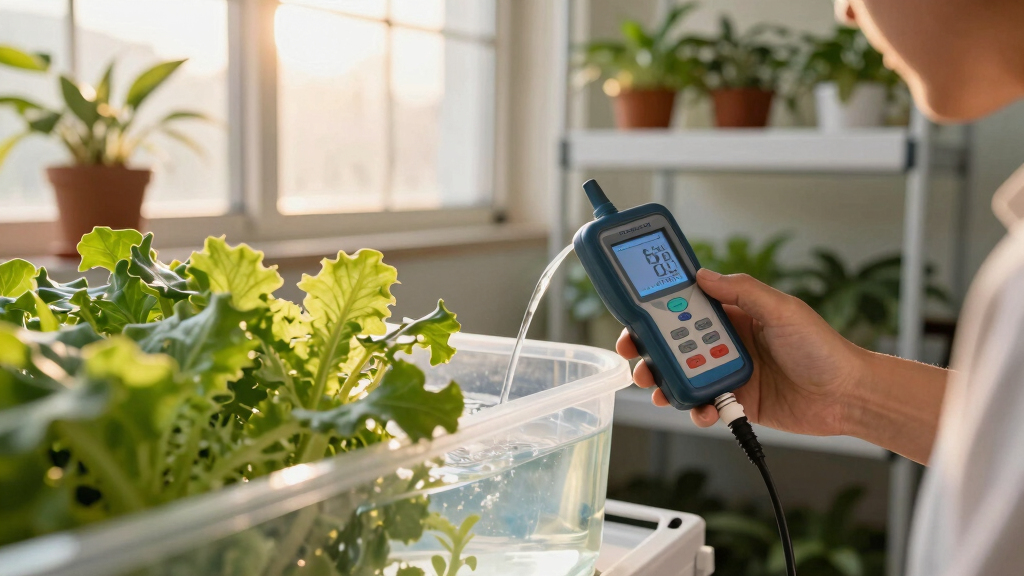
How We Picked
Our selection process focused on meters that balance accuracy, ease of use, durability, and value for indoor farming environments. We prioritized products that offer quick, reliable readings with minimal maintenance, especially for routine soil moisture checks. For more complex water testing, we included meters that measure multiple parameters, weighing their cost and ease of use. Each product was assessed based on user reviews, technical specs, and suitability for indoor farm conditions, ensuring recommendations cater to different scales and needs.
Factors to Consider When Choosing Best Commercial Water Test Meter For Indoor Farms
Selecting the right water test meter for your indoor farm hinges on understanding your specific needs: whether you require simple soil moisture checks or comprehensive water quality analysis. Factors such as ease of use, accuracy, durability, and cost all play crucial roles. This guide will help clarify what to look for and how to match features to your operation’s scale and complexity.Understanding Your Testing Needs
First, define whether you primarily need to monitor soil moisture levels or if you require detailed water quality metrics like pH, EC, or contaminants. Simpler meters are often more intuitive and faster, suitable for routine checks, while more advanced devices serve analytical purposes for optimized crop health and compliance.
Key Features to Consider
Accuracy and precision are vital for making informed decisions. Digital meters with electronic sensors typically provide more precise data, but they can be costly and require calibration. Durability is also important, especially if you test frequently; look for waterproof or rugged designs. Ease of use and maintenance, such as battery life or sensor longevity, can save time and reduce frustration.
Cost and Value
Budget constraints influence options significantly. Basic soil moisture meters like the Antonki are affordable and straightforward but limited in scope. Multi-parameter meters, while more expensive, may justify their cost through comprehensive data collection, improving overall farm management. Always balance features against your operational scale and goals.
Frequently Asked Questions
What is the main difference between soil moisture meters and water quality testers?
Soil moisture meters measure the water content within soil, helping you determine when to water plants, which is essential for healthy root development. Water quality testers, on the other hand, analyze parameters like pH, electrical conductivity, and contaminants in water, providing insights into whether water is suitable for irrigation or hydroponics. The choice depends on whether your focus is on soil hydration or overall water safety and nutrient levels.
Can I use a soil moisture meter for water testing?
No, soil moisture meters are designed specifically to measure water content in soil, not water quality. They do not assess chemical parameters or contaminants in water, so if you need data on water purity or nutrient levels, a dedicated water quality tester is necessary.
How often should I test water and soil in an indoor farm?
The frequency depends on your crop type and growth stage. Typically, soil moisture should be checked daily during active growth to prevent over- or underwatering. Water quality testing might be needed weekly or bi-weekly, especially if you’re using recycled or untreated water sources, to ensure nutrient levels and contaminants stay within safe ranges.
Are digital water testers more accurate than manual ones?
Generally, digital testers tend to provide more precise and consistent readings, especially for parameters like pH and electrical conductivity. Manual soil moisture meters are simple and quick but less precise, offering a good indication rather than exact measurements. For detailed water analysis, investing in digital meters with multiple parameters is often worth the extra cost.
What maintenance do water test meters require?
Most meters need regular cleaning, especially probes and sensors, to prevent buildup or corrosion. Digital meters may require calibration to maintain accuracy over time, and batteries should be replaced or recharged as needed. Manual soil moisture meters, like the Antonki, are low-maintenance, needing only occasional wiping and cleaning after use.
Conclusion
For indoor farms focusing on routine soil moisture management, the Antonki 2 Pack offers an excellent balance of simplicity, affordability, and effectiveness. Growers seeking detailed water quality analysis or comprehensive data should consider investing in multi-parameter digital meters, despite their higher cost and complexity. Small-scale growers with a focus on plant watering can benefit most from manual options, while larger operations might justify digital solutions for precision and efficiency.