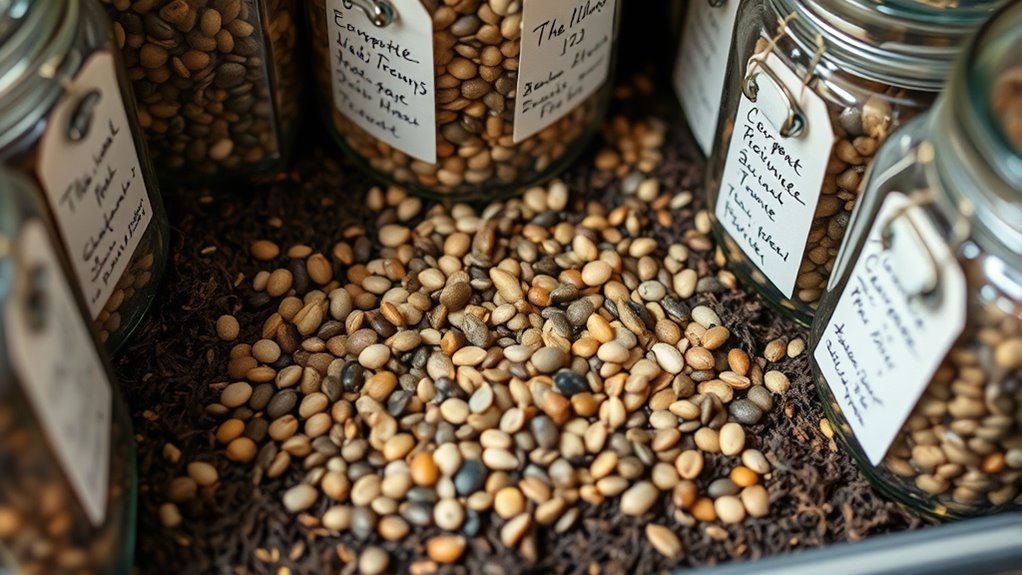
To keep seeds viable for hydroponics, store them in a cool, dark, and dry place with moisture content between 5-8%. Use airtight containers like glass jars or vacuum-sealed bags to prevent mold, pests, and environmental damage. Maintain a consistent temperature between 32°F and 41°F, ideally in a refrigerator or freezer. Regularly check for mold or pests and test germination rates to ensure your seeds stay healthy and ready for planting. If you keep these tips in mind, you’ll be better equipped to preserve seed quality over time.

Get garden gear delivered free with Prime
- Fast, free delivery on millions of items
- Prime Video, Amazon Music and more included
- Member-only deals all year
Key Takeaways
- Store seeds in airtight, opaque containers to control moisture and protect from light deterioration.
- Maintain storage temperatures between 32°F and 41°F (0°C to 5°C) for optimal seed longevity.
- Keep seed moisture content at 5-8% to prevent mold growth and seed brittleness.
- Label containers with seed type and storage date for effective inventory management.
- Regularly inspect seeds for mold, pests, and germination viability to ensure seed quality.

Have you ever wondered how farmers and gardeners keep seeds viable for future planting? Maintaining seed viability is essential to guarantee healthy plant growth and successful crops, especially when preparing for hydroponic systems. When it comes to seed storage, the key lies in understanding the right storage techniques. These techniques are designed to preserve the seed’s ability to germinate over extended periods, preventing deterioration caused by environmental factors like moisture, temperature, and pests.
One of the most important aspects of seed storage is controlling moisture levels. Excess moisture can lead to mold growth and accelerate seed aging, while very dry conditions can cause seeds to become brittle and lose their germination potential. To strike the right balance, you should aim for a seed moisture content of around 5-8%, depending on the seed type. Using airtight containers, such as glass jars with tight-fitting lids or vacuum-sealed bags, helps maintain consistent moisture levels and keeps out humidity, which is essential for preserving seed viability.
Controlling moisture at 5-8% with airtight containers preserves seed viability and prevents mold and brittleness.
Temperature control is equally critical. Seeds are best stored in cool environments, ideally between 32°F and 41°F (0°C to 5°C). Higher temperatures speed up metabolic processes that lead to seed aging, reducing their longevity. If you’re storing seeds for the long term, consider refrigeration or even freezing, but only after ensuring they are properly dried and sealed. Freezing can greatly extend seed life, but you should avoid repeated thawing and refreezing, as this can damage the seed’s structure. Additionally, understanding energy-efficient storage methods can help reduce utility costs while maintaining optimal conditions.
Light exposure is another factor to consider. Seeds should be kept in a dark place because light can trigger deterioration in some seed types. Store your seeds in opaque containers or in a dark cabinet to prevent light-induced damage. Additionally, labeling your storage containers with the seed type and date helps you keep track of their age, so you can use older seeds first and rotate your stock efficiently.
Finally, it’s helpful to periodically check your stored seeds. Look for signs of mold, pests, or moisture issues. Conduct germination tests on a small sample before planting to verify their viability. By applying these storage techniques, you can guarantee your seeds stay healthy and viable for your hydroponic projects, giving you a reliable supply of quality seeds whenever you need them. Proper seed storage isn’t just about keeping seeds; it’s about safeguarding your future harvests.
airtight seed storage containers
As an affiliate, we earn on qualifying purchases.
As an affiliate, we earn on qualifying purchases.
Frequently Asked Questions
How Long Can Seeds Be Stored Without Losing Viability?
You can typically store seeds for 1 to 5 years without losing viability, but this varies depending on seed dormancy and aging. To maximize freshness, keep seeds in a cool, dark, dry place, which slows seed aging and reduces dormancy breakage. Proper storage minimizes the risk of losing germination potential over time, so check seeds periodically and use them before viability declines markedly.
What Are the Best Containers for Seed Storage?
Like a treasure chest keeps precious jewels safe, your seeds need the right containers. Use airtight, opaque seed packaging like glass jars or vacuum-sealed bags to shield them from moisture and light. Store them at cool, consistent temperatures—around 40°F (4°C)—to maintain viability. These containers prevent deterioration and ensure your seeds stay healthy and ready for planting when you need them.
How Does Humidity Affect Seed Longevity?
Humidity substantially impacts seed longevity by affecting seed moisture levels. If humidity is too high, seeds absorb excess moisture, increasing the risk of mold and rotting, which shortens their viability. To keep seeds viable, you should store them in a cool, dry environment with low humidity, maintaining ideal storage temperature and seed moisture content. Proper control of these factors helps preserve seed quality for future hydroponic use.
Are There Specific Storage Methods for Organic Seeds?
For organic seed preservation, you should focus on natural storage techniques like storing seeds in airtight containers, cool, dark, and dry environments. Avoid synthetic chemicals and opt for biodegradable materials. Keep seeds away from humidity and direct sunlight to maintain viability. Regularly check for mold or pests. By using these natural storage methods, you guarantee your organic seeds stay healthy and ready for planting when needed.
Can Seed Storage Conditions Vary for Different Plant Species?
You should know that seed storage conditions do vary for different plant species, as each has unique needs. Think of it like fitting a key to a lock—you must match the seed dormancy and ideal storage temperature to keep seeds viable. Some seeds require cooler or even colder temperatures, while others need slightly warmer conditions. Adjusting these factors ensures your seeds stay healthy and ready for sprouting when you need them.
As an affiliate, we earn on qualifying purchases.
Conclusion
Think of seed storage as tending a delicate lighthouse, guiding potential life safely through turbulent waters. By preserving seeds properly, you’re ensuring they remain vibrant beacons ready to ignite new growth when the time is right. Like a lighthouse standing tall amidst storms, your careful storage keeps the promise of future harvests alive and shining bright. Handle your seeds with care, and they’ll illuminate your hydroponic journey for many seasons to come.
refrigerator seed storage for long-term
As an affiliate, we earn on qualifying purchases.
As an affiliate, we earn on qualifying purchases.
As an affiliate, we earn on qualifying purchases.
Halloween Picks
halloween
As an affiliate, we earn on qualifying purchases.