TL;DR
A home gardening tip outlines ways to reuse empty prescription and over-the-counter pill bottles as small seed-starting pots or drainage catchers. The containers need thorough cleaning and drainage planning, and the method is a household reuse idea, not a formally tested gardening product.
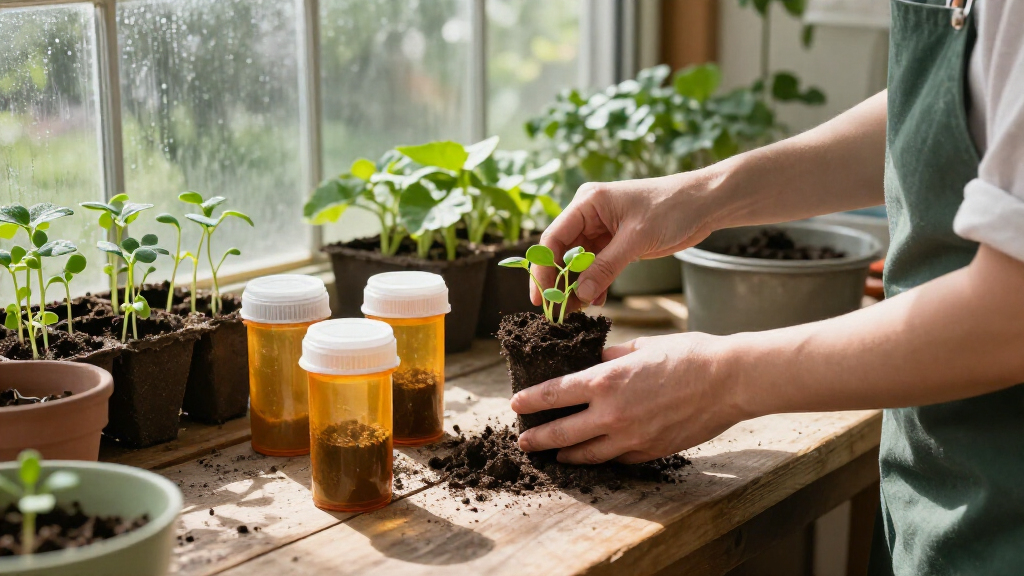
Empty prescription bottles can be repurposed as small pots for starting seeds at home, according to a gardening tip that describes adding drainage holes and using the bottles either upright or inverted. The approach offers an alternative to buying plastic seed trays, though the instructions call for cleaning each container thoroughly and adapting it to the way water will drain.

Get garden gear delivered free with Prime
- Fast, free delivery on millions of items
- Prime Video, Amazon Music and more included
- Member-only deals all year
The method uses the bottles as individual containers for seeds that need only a few inches of growing depth to germinate. Gardeners can gather several bottles in a shoebox or storage bin to keep them together, creating a simple substitute for a seed-starting tray. Empty bottles used for over-the-counter medication can also be adapted, according to the guidance.
Before planting, wash each bottle with hot water and soap to remove medication residue. The instructions say diluted bleach can be used for sanitizing after washing if residue is a concern. Remove labels if desired, then make several holes in the bottom so excess water can escape. A drill is suggested; using a hammer and nail may crack the plastic.
For a basic pot, fill the upright bottle with moist soil, plant and cover a seed, and use the bottle’s cap as a drainage dish. Other versions involve cutting off the screw-top section or removing the bottle’s bottom and turning the container upside down. Robbie, from the YouTube channel Robbie and Gary Gardening Easy, demonstrated the inverted setup as a pot that can also catch runoff from a paper cup holding soil and seeds. A small plastic bag placed over a pot is suggested as a way to help retain humidity. Once seedlings sprout, the guidance says to move them to the garden and wash the bottles for reuse.
Reuse pill bottles to start seeds at home
Clean empty prescription or over-the-counter bottles can serve as small seed pots or drainage catchers. This household reuse tip is not a formally tested gardening product.
Two ways to use bottles
Choose a setup based on whether the bottle holds soil or catches runoff.
- Add several drainage holes to the bottom.
- Fill upright with moist soil, sow a seed, and use the cap as a drainage dish.
- Use an inverted or modified bottle to catch runoff.
- A paper cup can hold the soil and seeds inside.
Prepare bottles safely
Clean each container before adding soil.
Use hot water and soap to remove medication residue.
For direct planting, make several bottom holes carefully; a hammer and nail may crack the plastic.
Keep bottles upright in a shoebox or storage bin, then add moist soil and seeds.
What the tip can and cannot tell you
Bottle size and growing conditions shape how useful this method will be.
Small seed starts
The bottles are intended for seeds that need only a few inches of depth to germinate.
A simple tray alternative
A group of bottles can organize a limited number of starts using containers already at home.
No universal schedule
The guidance gives no tested varieties, watering frequency, or set timing for moving seedlings.
A Second Use for Small Plastic Bottles
The idea addresses a familiar household problem: small plastic containers and purchased seed trays can become waste after a short period of use. Reusing pill bottles may give gardeners a low-cost way to start a limited number of seeds with materials already at home, while the bottle caps or modified containers can help manage water runoff.
The practical value depends on the gardener’s setup. The bottles are small, so they are suited to starting seeds rather than raising larger plants for an extended period. The tip also does not establish how the containers perform across different plant varieties, soil mixes or growing conditions. It is best understood as a simple reuse option, not evidence that pill bottles outperform purpose-made pots.
Products Worth Considering

Greenworks 48V Cordless Push Lawn Mower, 17-Inch, with Two 4.0Ah Batteries and Charger

EGO Power+ 56V Cordless Leaf Blower, 880 CFM, with Two 4.0Ah Batteries

Orbit B-hyve XR 8-Zone Indoor/Outdoor Smart Sprinkler Controller
As an affiliate, we earn on qualifying purchases.
How the Bottle Setups Work
Seed-starting containers need enough depth for germination and a way to prevent water from pooling around the roots. The instructions describe two approaches: planting directly in a bottle with holes and a cap beneath it, or using a cut and inverted bottle to create a small space for collected drainage. A cluster of bottles can be held in a larger box or bin to keep the individual pots upright and organized.
The inverted design is also described as an outer holder for a paper cup containing soil and seeds. In that arrangement, the cup holds the growing medium while the pill bottle catches water that drains from it. The gardening tip also suggests reusing bottles to store and organize seeds, extending their use beyond starting seedlings.
“The inverted bottles can serve as small pots and catch drainage from paper cups containing soil and seeds.”
— Robbie, from the YouTube channel Robbie and Gary Gardening Easy
Limits of the Home-Garden Method
The guidance does not provide controlled test results, specific seed varieties, or measurements for bottle dimensions, soil quantity or watering frequency. It also does not say how long seedlings can remain in the containers before they should be moved. Those details will vary with the plant and growing conditions, so gardeners may need to monitor moisture and growth rather than follow a universal timetable.
The instructions recommend washing and optionally sanitizing bottles, but they do not specify a bleach dilution or contact time. Anyone choosing that step should follow the product label for dilution and safe handling, then rinse the container thoroughly before adding soil. The tip also does not address whether every bottle’s plastic is suitable for repeated use or cutting; damaged or sharp-edged containers should not be used as pots.
Preparing Bottles Before Planting
Anyone trying the method can start by collecting empty bottles, washing them, and deciding whether to plant directly in them or use them as drainage holders. Add drainage holes with care, arrange the containers in a stable box, and fill them with moist soil before sowing. Monitor the soil and seedlings, and move plants when they are ready for the garden. Afterward, wash intact bottles for another round of seed starting or use them to organize stored seeds.
Source: rss
Key Questions
Can prescription bottles be used as seed-starting pots?
Yes. The gardening instructions describe using clean bottles as small pots, with drainage holes added to the bottom. Their compact size makes them suitable for starting seeds that do not need a deep container at germination.
How should pill bottles be cleaned before planting?
Wash them thoroughly with hot water and soap to remove residue. The guidance also mentions diluted bleach as an optional sanitizing step; follow the product label for safe dilution and handling, and rinse the container before planting.
Do pill bottle seed starters need drainage holes?
For direct planting in a bottle, the instructions call for several holes so excess water can drain. A bottle used as an outer catcher for a paper cup serves a different purpose: it collects runoff from the cup.
When should seedlings be moved out of the bottles?
The gardening tip says to relocate plants to the garden after they sprout, but it gives no specific schedule or plant-by-plant guidance. The right timing depends on the seedling and growing conditions.
Source: hunker.com