
To prevent pH drift, you should monitor your system regularly and use buffering agents or nutrient solutions with built-in buffers to resist pH changes. Managing nutrient balance is essential since plant or aquatic life absorption affects pH levels—nitrates tend to raise it, while ammonium lowers it. Implementing proper buffer management, making gradual pH adjustments, and understanding the influence of chemical, biological, and physical factors will help keep your system stable. Keep exploring to learn how to maintain ideal pH balance effectively.
Key Takeaways
- pH drift results from biological, chemical, and physical processes that alter acid-base balance over time.
- Buffer management, using buffering agents or solutions, helps resist pH fluctuations.
- Regular monitoring and incremental adjustments prevent sudden pH changes and maintain stability.
- Nutrient uptake patterns, like ammonium lowering pH and nitrate raising it, influence pH drift.
- Consistent maintenance, accurate testing, and environmental control are essential for preventing pH drift.

Have you ever wondered why the pH levels in your hydroponic or aquarium systems change over time? This phenomenon, known as pH drift, is a common challenge that can impact plant growth and aquatic health. Understanding what causes pH drift and how to manage it is crucial for maintaining a stable environment. At its core, pH drift occurs because of ongoing biological, chemical, and physical processes within your system. These processes alter the balance of acids and bases, leading to fluctuations that can throw off your nutrient or water chemistry.
To prevent pH drift, effective buffer management plays a crucial role. Buffers are substances that help stabilize pH by resisting changes when acids or bases are introduced. In hydroponic systems, using appropriate buffering agents or selecting nutrient solutions with built-in buffering capacity can markedly reduce pH swings. Similarly, in aquariums, adding buffering compounds like carbonate salts helps maintain a steady pH. Proper buffer management ensures that the system can absorb minor fluctuations without causing drastic shifts, keeping your environment more consistent.
Effective buffer management stabilizes pH and prevents drastic fluctuations in hydroponic and aquarium systems.
Nutrient balancing is another critical factor in controlling pH drift. As plants or aquatic organisms absorb nutrients, they often take up ions that influence pH. For example, the uptake of ammonium can lower pH, while nitrate absorption tends to raise it. If your nutrient solution isn’t properly balanced, these processes can accelerate pH fluctuations. Regularly adjusting nutrient concentrations and monitoring the types of nutrients you add help maintain equilibrium. This consistent nutrient balancing prevents sudden pH jumps and creates a more predictable environment for your plants or aquatic life.
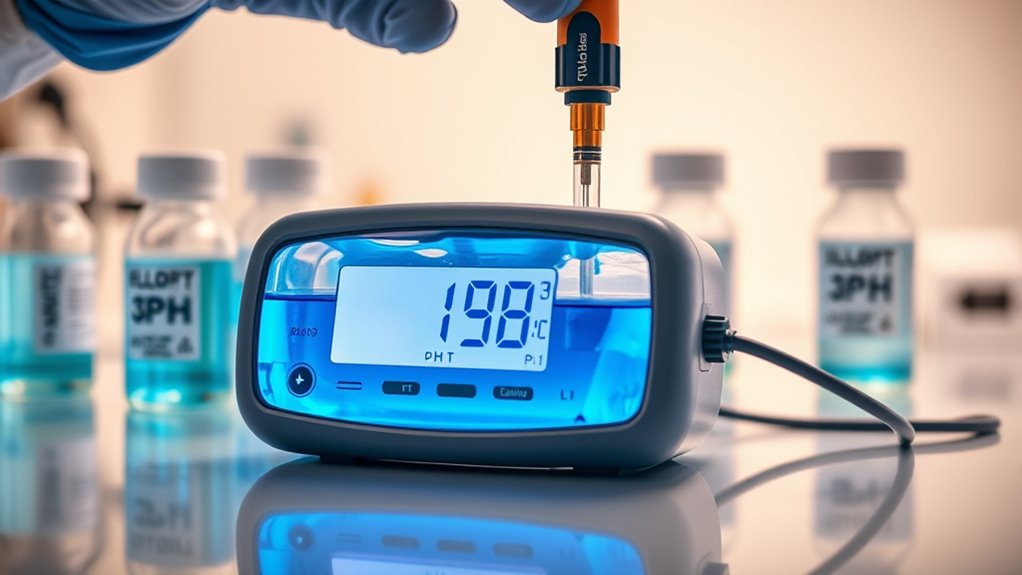
Monitoring your pH levels frequently is essential for catching drift early. Use reliable testing tools like digital pH meters or test kits to keep close tabs on your system’s pH. When you notice changes, make incremental adjustments rather than large swings, which can destabilize the system further. Incorporating buffer solutions or pH stabilizers during routine maintenance can also help keep pH within the ideal range. Additionally, understanding air purifiers can help ensure that your indoor environment remains free of pollutants that might indirectly influence pH stability.
Frequently Asked Questions
Can Ph Drift Occur in All Types of Water Systems?
Yes, pH drift can occur in all water systems because chemical interactions fluctuate with changes in water mineral content. When minerals like calcium or magnesium are present, they can react with other substances, causing pH levels to shift over time. You need to monitor your water regularly, especially if mineral content varies, to maintain stable pH levels and prevent undesirable changes that could affect system performance or water quality.
How Quickly Can Ph Drift Change Occur?
A pH drift can happen faster than lightning, sometimes within minutes, especially during rapid chemical interactions. You might see sudden changes if water chemistry shifts or if your equipment calibration isn’t accurate. Factors like temperature swings and contamination accelerate this process. To prevent unexpected pH shifts, regularly calibrate your equipment and monitor water chemistry closely, so you catch changes before they cause big problems.
Are There Specific Chemicals That Accelerate Ph Drift?
Yes, certain chemicals can accelerate pH drift by triggering chemical reactions that alter the solution’s acidity or alkalinity. For example, contaminants like heavy metals or organic compounds from contamination sources can catalyze reactions, causing rapid pH changes. Strong acids or bases also directly influence pH levels. To prevent this, regularly monitor your water and minimize exposure to potential contamination sources, which helps maintain stable pH levels.
Does Temperature Influence Ph Drift?
Yes, temperature fluctuations considerably influence pH drift because they affect chemical reactions in your solution. When temperature changes, it alters the equilibrium of acids and bases, causing pH levels to shift. Warmer temperatures generally accelerate chemical reactions, leading to more rapid pH changes, while cooler temperatures slow reactions down. To maintain stable pH, you should keep your solution at a consistent temperature and monitor it regularly, especially if conditions fluctuate.
Can Ph Drift Affect Aquatic Plant Health?
A sudden pH drift can devastate your aquatic plants like a tidal wave, severely affecting their health. When pH fluctuates, it causes nutrient imbalance, making essential nutrients either inaccessible or toxic. This stress hampers growth and can lead to plant death. To keep your aquatic plants thriving, monitor pH levels regularly, maintain stable water conditions, and prevent drastic pH changes that threaten their delicate balance.
Conclusion
To prevent pH drift and protect your plants, pay attention, plan proactively, and perform periodic pH checks. Consistent care creates a confident cultivation, combating chemical chaos and chaos-causing changes. Remember, maintaining mastery over your medium means more than mere monitoring — it’s about mindful management. By staying vigilant and valuing vigilant watering, you’ll foster a flourishing, faultless foundation. Keep calm, correct consistently, and cultivate confidence in your crop’s chemistry and cheerfulness.