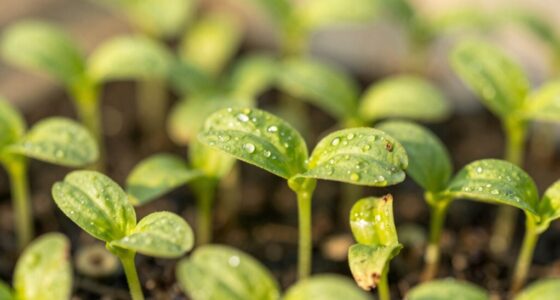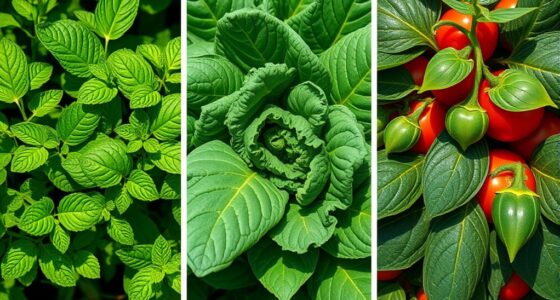
To balance nutrient solutions effectively, you need to maintain proper pH and EC levels for ideal plant health. Regularly test your solution with calibrated tools, adjusting pH gradually using acids or bases to keep it between 5.5 and 6.5. Monitor EC to avoid salt buildup or deficiencies, changing nutrient concentration as your plants grow. Understanding water quality and making small, consistent adjustments can make a big difference, and you’ll discover how further fine-tuning can boost your crop success.

Get garden gear delivered free — and shop member deals
- Fast, free delivery on millions of items
- Access to Prime Big Deal Days deals on October 6–7
- Prime Video, Amazon Music and more included
Key Takeaways
- Regularly test pH (5.5–6.5) and EC levels to monitor nutrient solution balance.
- Adjust pH gradually using appropriate acids or bases to prevent plant shock.
- Maintain optimal EC levels based on plant growth stage to avoid deficiencies or salt buildup.
- Pre-treat water quality issues, like hard water, to stabilize pH and EC before mixing nutrients.
- Use high-quality fertilizers and fine-tune nutrient concentrations for stable and balanced solutions.
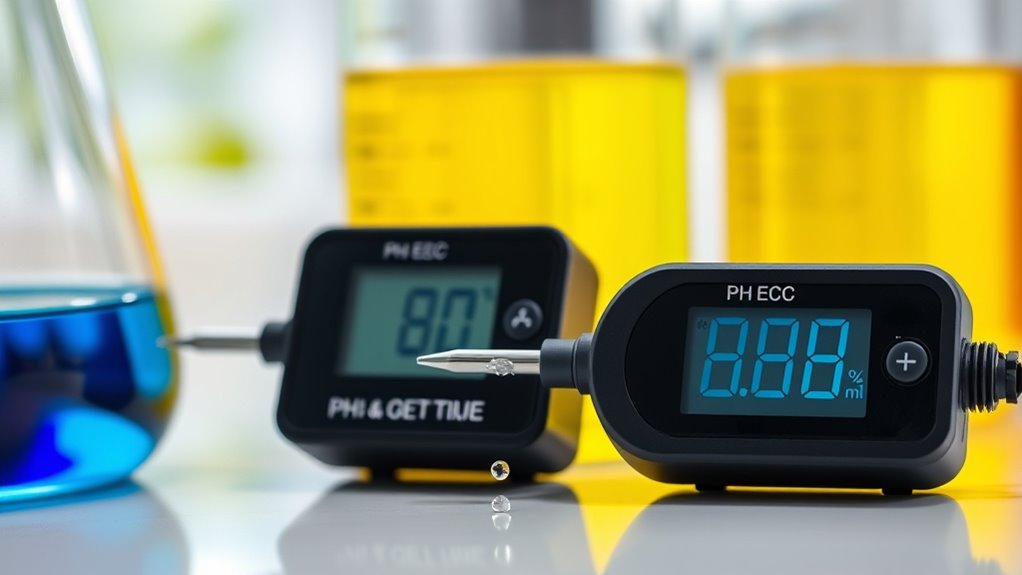
Maintaining a balanced nutrient solution is essential for healthy plant growth, as it guarantees plants receive the right mix of essential elements. One of the key factors in achieving this balance is managing pH stability. When the pH level fluctuates, it affects how plants absorb nutrients, often leading to deficiencies or toxic buildups. You want to keep the pH within an ideal range—typically between 5.5 and 6.5 for most plants—so that nutrients remain soluble and accessible. Regular testing with a reliable pH meter helps you monitor and adjust the solution promptly. If the pH drifts too high or low, adding pH adjusters like acids or bases can restore stability, ensuring plants continue to thrive without nutrient lockout.
Maintaining pH between 5.5 and 6.5 ensures nutrients stay soluble and plants thrive.
Alongside pH stability, EC optimization is equally crucial. Electrical conductivity (EC) measures the concentration of dissolved salts or nutrients in your solution. Too high an EC can cause salt buildup, leading to root burn and water stress, while too low an EC might indicate insufficient nutrient availability. You need to find the sweet spot where plants are receiving enough nutrients without risking toxicity. This involves regularly testing your nutrient solution’s EC and adjusting the concentration of fertilizers accordingly. For seedlings or sensitive plants, a lower EC is often preferable, while more mature plants might tolerate higher levels. Striking the right EC level helps promote vigorous growth and prevents issues caused by nutrient imbalances.
To enhance both pH stability and EC, you should adopt a consistent monitoring routine. Use calibrated instruments to check pH and EC daily or at least several times a week, especially during critical growth phases. When adjusting pH, do so gradually to avoid shocking your plants. Likewise, when modifying nutrient concentrations, do it in small increments, thoroughly mixing the solution each time. Remember, different growth stages may require different pH and EC settings, so stay informed about your particular plants’ needs and adjust accordingly. Additionally, understanding the effects of water quality on your solution can help optimize these parameters, since water composition influences both pH and EC levels.
Furthermore, consider the quality of your water and nutrients. Hard water contains minerals that can influence pH and EC, so you may need to pre-treat it before mixing your nutrient solution. Using high-quality, balanced fertilizers designed for hydroponics or similar systems can also make maintaining stable parameters easier. Ultimately, maintaining pH stability and EC optimization isn’t a one-time task but an ongoing process that demands attention and precision. By carefully monitoring and adjusting these parameters, you ensure your plants receive an ideal environment for thriving growth and health.
As an affiliate, we earn on qualifying purchases.
Frequently Asked Questions
How Often Should Ph and EC Levels Be Tested During Growth?
You should test pH and EC levels daily during growth to catch pH fluctuation early and maintain EC consistency. Regular testing helps you adjust nutrient solutions promptly, preventing deficiencies or toxicity. When plants are in rapid growth stages, more frequent checks—perhaps twice a day—are ideal. Consistent monitoring ensures your plants receive ideal nutrients, promoting healthy growth and high yields.
What Are Signs of Nutrient Imbalance Caused by Ph Issues?
Imagine your plants develop yellowing leaves and stunted growth, signaling a nutrient deficiency caused by pH fluctuation. Signs of nutrient imbalance due to pH issues include leaf discoloration, poor growth, and abnormal coloration. When pH drifts out of ideal range, it hampers nutrient uptake, leading to deficiencies despite adequate fertilizer. Regular pH checks help prevent these problems, ensuring your plants absorb nutrients efficiently and stay healthy.
Can Adjusting Ph Affect Nutrient Availability?
Adjusting pH directly affects nutrient availability by preventing pH fluctuations that cause nutrient lockout. When you raise or lower pH properly, you optimize the solubility of essential nutrients, making them easier for plants to absorb. Ignoring pH adjustments can lead to nutrient lockout, where plants struggle to uptake crucial elements, resulting in deficiencies. Thus, consistent pH management ensures your plants get the nutrients they need for healthy growth.
How Do Temperature and Light Influence Ph and EC?
Oh, sure, just ignore temperature effects and light influence — they’re tiny details, right? Actually, they dramatically impact pH and EC: higher temperatures increase EC by boosting ion activity, while light influences plant uptake and root activity, indirectly shifting pH. You’ll find that warm, well-lit environments can cause fluctuations, so keep an eye on temperature effects and light influence if you want your nutrient solution to stay perfectly balanced.
Are There Natural or Organic Methods to Stabilize Ph and EC?
Yes, you can use natural methods to stabilize pH and EC. Incorporate organic amendments like compost or peat moss, which act as natural buffers to maintain pH levels. Additionally, using natural buffering agents such as limestone or wood ash helps resist pH fluctuations. These organic approaches promote a healthier solution, reducing the need for chemical adjustments and supporting sustainable growth.
As an affiliate, we earn on qualifying purchases.
Conclusion
Just as a tightrope walker maintains balance with focus and skill, you must carefully manage pH and EC to maintain your nutrient solution in harmony. Remember, like a ship’s captain adjusting the sails to ensure a smooth voyage, monitoring these levels guides your plants safely to health and growth. Stay vigilant, fine-tuning as needed, and you’ll navigate the complexities of nutrient balancing with confidence—turning your garden into a thriving paradise, much like the legends of old.
As an affiliate, we earn on qualifying purchases.
plant nutrient solution pH adjusters
As an affiliate, we earn on qualifying purchases.
As an affiliate, we earn on qualifying purchases.
Fall yard work Picks
leaf blowers
As an affiliate, we earn on qualifying purchases.