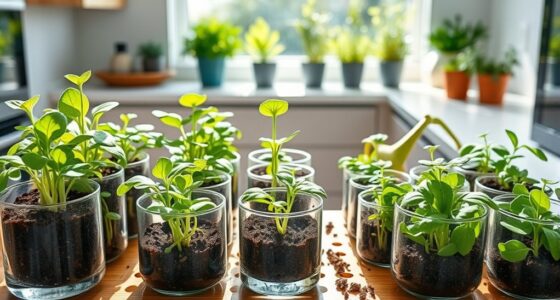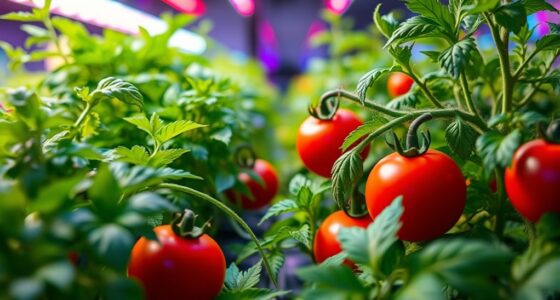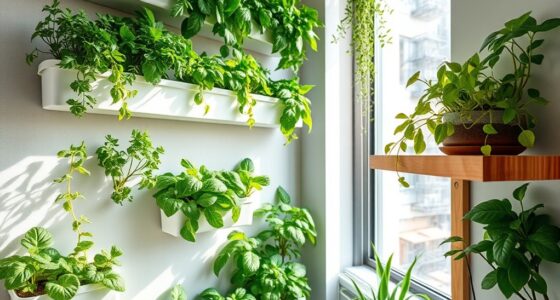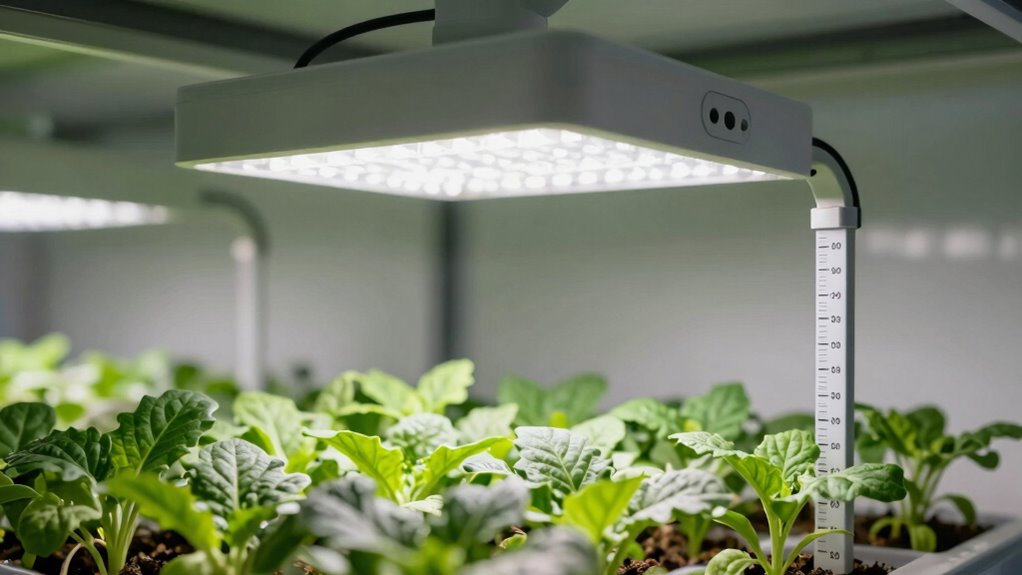

To prevent wasted power, keep your grow light at the ideal height suited for your plants’ growth stage. Too close, and you risk heat stress and unnecessary energy use; too far, and your plants won’t get enough light, leading to longer growth times and higher energy bills. Regularly adjust the height as your plants grow to maintain efficient light delivery. Stay tuned—there’s more to maximizing energy savings and healthy growth that you’ll find helpful.

Get garden gear delivered free — and shop member deals
- Fast, free delivery on millions of items
- Access to Prime Big Deal Days deals on October 6–7
- Prime Video, Amazon Music and more included
Key Takeaways
- Keep grow lights at an optimal height to ensure sufficient light intensity without energy waste.
- Adjust light distance as plants grow to maintain effective spectrum and prevent overuse.
- Position lights close enough for proper spectrum delivery but avoid excess heat and light burn.
- Regularly monitor plant response and modify light height accordingly for maximum efficiency.
- Use proper height guidelines tailored to growth stages to optimize energy use and plant health.

When setting up grow lights for your plants, understanding the right height is vital for ideal growth. The distance between the light source and your plants directly influences how effectively your plants receive light, which affects their overall health and yield. If the lights are too high, your plants won’t get enough light intensity, leading to slower growth and weaker stems. On the other hand, placing the lights too close can cause heat stress or light burn, damaging sensitive tissues. The key is to find a balance that maximizes growth without wasting power or risking plant health.
One essential aspect to consider is the light spectrum your grow lights emit. Different wavelengths of light impact plant processes like photosynthesis and flowering. When your lights are positioned at the best height, you guarantee that your plants receive the right spectrum at the right intensity. This not only promotes vigorous growth but also helps you make the most of your lighting setup, avoiding unnecessary energy expenditure on overly intense or poorly targeted light. Proper height adjustment helps you deliver an ideal light spectrum directly where it’s needed most, enhancing the efficiency of your entire grow operation.
Energy efficiency is a major concern when setting up grow lights. If your lights are too close, you might use more power than necessary to achieve the desired plant response, wasting energy and increasing costs. Conversely, if they’re too far away, your plants won’t receive enough light, forcing you to run your lights longer or at higher intensities, which again results in wasted power. The grow light height rule helps you find the perfect spot where your plants get sufficient light without excess energy use. By carefully adjusting the height, you optimize light distribution, ensuring the maximum light intensity reaches your plants with minimal energy consumption.
Maintaining the correct grow light height also guarantees your system remains energy-efficient over time. As your plants grow, they’ll need to be adjusted accordingly to keep the light at the best distance. This ongoing adjustment prevents light spillage and ensures each plant gets the right amount of light spectrum and intensity. When you follow the grow light height rule, you’re effectively reducing waste, lowering your electricity bills, and promoting healthy, vigorous plant development. It’s a simple but powerful strategy to get the most out of your grow lights while conserving energy and preventing unnecessary power drain. Additionally, understanding light spectrum helps you tailor your setup for different growth stages, maximizing efficiency throughout your grow cycle. Properly managing light distribution is essential for achieving optimal plant growth and energy savings, especially when considering the light spectrum emitted at various heights.
LED grow light height adjustment
As an affiliate, we earn on qualifying purchases.
As an affiliate, we earn on qualifying purchases.
Frequently Asked Questions
How Often Should I Adjust the Grow Light Height During Plant Growth?
You should adjust your grow light height weekly as your plants grow, ensuring they get best light without stretching. Keep an eye out for nutrient deficiencies, which can indicate your plants aren’t receiving enough light, and pests that may hide in dense foliage. Proper light height helps prevent issues like nutrient deficiencies and pest infestations, promoting healthy growth. Regular adjustments maintain perfect conditions, making your plants stronger and more resistant to problems.
Does Light Height Affect Only Plant Height or Overall Yield?
Light height impacts more than just plant height; it also influences overall yield. By adjusting the grow light height, you optimize light penetration, ensuring that all parts of your plant receive adequate light. This boosts photosynthesis efficiency, encouraging healthy growth and maximizing harvests. Keeping the light at the right height helps prevent light from being wasted on leaves or areas that don’t need it, ultimately improving your plant’s productivity.
Can Too High or Too Low Light Height Damage My Plants?
A word to the wise: don’t put all your eggs in one basket. Too high or too low light height can harm your plants, causing plant stress or even damage. When lights are too close, they can produce heat that burns leaves; too far, and plants stretch, weakening. Adjusting the light spectrum and height guarantees ideal growth, preventing stress and encouraging healthy development.
What Tools Can Help Measure the Optimal Grow Light Height?
You can use a light meter to measure light intensity, helping you find the ideal grow light height. A light meter provides precise measurement techniques to assess how much light your plants receive at different heights. Alternatively, you can observe plant responses, such as leaf color and growth, to adjust the light height accordingly. These tools and techniques guarantee your plants get the right amount of light without wasting energy.
Is the Height Rule Different for Various Types of Grow Lights?
You might think all grow lights follow the same height rule, but surprisingly, they don’t. Different types, like LED or HPS, need varied distances to optimize their light spectrum and reduce power consumption. Ironically, sticking to a generic height can waste energy or hinder growth. So, always tailor your light height to your specific grow light, ensuring you get the best spectrum and efficiency without wasting power.
As an affiliate, we earn on qualifying purchases.
Conclusion
By following the grow light height rule, you guarantee your plants receive ideal light without wasting energy. Keeping lights at the right distance can boost growth efficiency by up to 30%, saving you electricity costs. Remember, too close and you risk light burn; too far and your plants miss out on essential energy. Stick to this simple guideline, and you’ll grow healthier plants while keeping your power bills in check. It’s a smart move for any indoor gardener!
As an affiliate, we earn on qualifying purchases.
As an affiliate, we earn on qualifying purchases.
Fall yard work Picks
leaf blowers
As an affiliate, we earn on qualifying purchases.