Growing hydroponic nasturtiums, pansies, and calendula lets you enjoy vibrant, safe, and beautifully presented edible flowers year-round. You can control lighting, nutrients, and airflow to maximize color, size, and flavor while reducing pests and dirt, ensuring cleaner, healthier blooms. This sustainable approach enhances visual appeal and guarantees your flowers are pesticide-free. If you’re interested in creating stunning floral garnishes and optimizing flavor, you’ll find plenty of tips and details to explore further.

Get garden gear delivered free with Prime
- Fast, free delivery on millions of items
- Prime Video, Amazon Music and more included
- Member-only deals all year
Key Takeaways
- Nasturtiums, pansies, and calendula thrive in hydroponic systems, producing vibrant, edible flowers ideal for culinary and decorative use.
- Controlled hydroponic environments enhance flower size, color, and safety by reducing pests and contaminants.
- These flowers benefit from precise nutrient and pH management, promoting healthy blooms and extended harvesting periods.
- Hydroponic cultivation minimizes soil-borne pests, decreasing pesticide use and ensuring cleaner, safer edible flowers.
- The system allows year-round production of fresh, visually appealing edible flowers to elevate dishes and presentations.
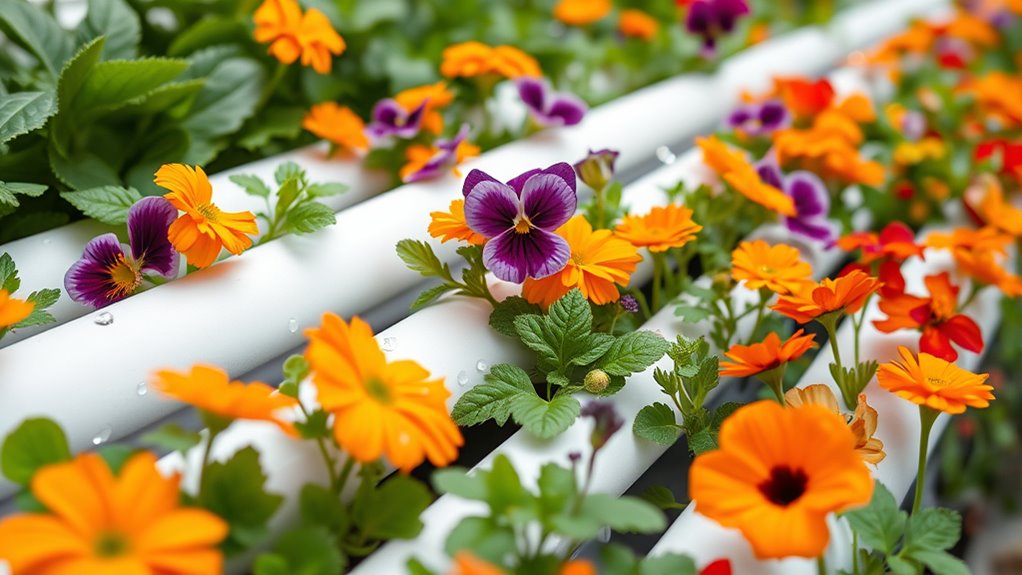
Hydroponic edible flowers are a vibrant and sustainable way to add flavor, color, and nutrition to your meals without soil. When you grow flowers like nasturtiums, pansies, and calendula hydroponically, you gain control over their environment, which enhances their overall appearance and health. The flower aesthetics become a key benefit, as hydroponic systems allow you to maximize lighting, nutrient delivery, and airflow, resulting in lush, vivid blooms. These flowers aren’t just pretty—they’re also functional, bringing visual appeal to salads, garnishes, and dishes. The clean environment reduces dirt and debris, making your flowers more appealing and safe to eat. Plus, with careful management, you can select specific varieties that match your desired color palette and size, elevating the presentation of your culinary creations.
Hydroponic edible flowers offer vibrant beauty, flavor, and safety in your culinary creations.
In addition to their beauty, pest management is considerably simplified in hydroponic setups. Since you’re growing plants in a soil-free environment, common soil-borne pests like aphids, mites, and fungus gnats are less likely to infest your flowers. This reduces the need for chemical pesticides, making your edible flowers safer and more organic. You can further prevent pests by maintaining proper air circulation and keeping the growing area clean. If pests do appear, they’re easier to spot and address quickly without risking damage to the entire crop. Integrated pest management strategies, such as introducing beneficial insects or using natural repellents, work well in hydroponic systems, maintaining the health of your flowers while minimizing chemical intervention.
Growing these edible flowers hydroponically also means you’re in control of their environment, which directly influences their flower aesthetics. You can adjust pH levels, nutrient concentration, and even photoperiod to encourage ideal blooming. This precision helps produce larger, more vibrant flowers that enhance your dishes’ visual appeal. For pest management, the controlled environment limits exposure to external pests and reduces disease risk, giving you peace of mind that your flowers are healthy and safe to consume. This method allows you to harvest fresh, beautiful blooms almost year-round, ensuring your meals are always topped with eye-catching and flavorful garnishes. Proper lighting and airflow are also crucial, as they support healthy growth and vibrant coloration, which are vital for flower aesthetics and overall quality.
Ultimately, hydroponic cultivation of nasturtiums, pansies, and calendula combines beauty with practicality. You get the advantage of striking, edible flowers that look as good as they taste, all while maintaining a pest-free, clean environment. It’s a sustainable way to incorporate nature’s artistry into your kitchen, boosting both the aesthetic appeal and safety of your edible flowers.
As an affiliate, we earn on qualifying purchases.
Frequently Asked Questions
What Are the Best Nutrient Solutions for Hydroponic Edible Flowers?
You should use a balanced nutrient solution with appropriate nutrient concentration to guarantee healthy growth. Incorporate organic supplements like compost teas or fish emulsions to boost nutrient levels naturally. Regularly monitor and adjust the solution to prevent deficiencies or excesses, which can harm your edible flowers. By maintaining proper nutrient balance and using organic options, you’ll promote vibrant blooms and ideal flavor in your hydroponic flowers.
How Do I Prevent Pests in a Hydroponic Flower System?
To prevent pests in your hydroponic flower system, you should introduce beneficial insects like ladybugs and predatory mites to naturally control pests. Additionally, employ organic pest control methods such as neem oil or insecticidal soaps to keep pests at bay without harming your plants. Regularly inspect your system, maintain cleanliness, and guarantee proper airflow. These steps help create a balanced environment that minimizes pest problems effectively.
Can I Grow These Flowers Year-Round Indoors?
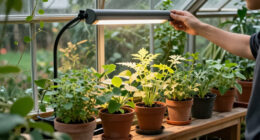
Yes, you can grow these flowers year-round indoors. Make sure to provide adequate lighting requirements, like grow lights that mimic natural sunlight, to keep them healthy. Use a suitable growing medium, such as coconut coir or rockwool, to support root development. Maintain consistent temperature and humidity levels, and guarantee your indoor setup offers good airflow. This way, you’ll enjoy vibrant blooms all year long.
What Is the Optimal Ph Level for Hydroponic Edible Flowers?
You should aim for a pH level between 5.8 and 6.5 for hydroponic edible flowers, as over 90% of nutrient uptake occurs within this range. Proper pH balancing ensures nutrient compatibility, preventing deficiencies or toxicities. Regularly monitor your water pH to maintain ideal conditions, helping your flowers thrive and produce vibrant blooms. Staying within this range maximizes growth and flavor, making your hydroponic setup truly successful.
How Do I Harvest and Store Hydroponic Edible Flowers Properly?
You should harvest your hydroponic edible flowers early in the morning when they’re at their peak freshness. Use sharp scissors to cut stems just above the base to guarantee flower preservation. Handle flowers gently to prevent damage. Store them in a breathable container in the refrigerator, ideally within a day of harvest, to maintain freshness. Proper harvest timing and careful handling will give you the best flavor and appearance for your edible flowers.
As an affiliate, we earn on qualifying purchases.
Conclusion
Growing hydroponic edible flowers like nasturtiums, pansies, and calendula offers a vibrant, sustainable way to enhance your meals. Did you know that hydroponic farming can produce up to 25% more yield than traditional methods? By choosing these colorful blooms, you not only add flavor and beauty to your dishes but also embrace eco-friendly practices. Start experimenting today and enjoy fresh, pesticide-free flowers right from your indoor or outdoor garden!
hydroponic nutrient solution for flowers
As an affiliate, we earn on qualifying purchases.
As an affiliate, we earn on qualifying purchases.
pest control for hydroponic plants
As an affiliate, we earn on qualifying purchases.
As an affiliate, we earn on qualifying purchases.
Fall yard work Picks
leaf blowers
As an affiliate, we earn on qualifying purchases.