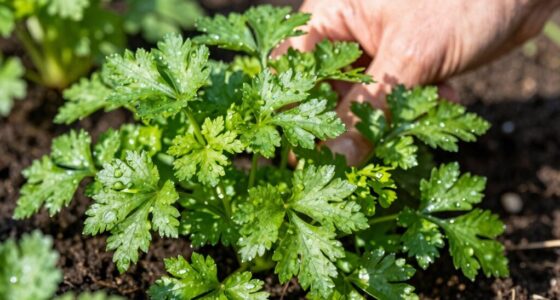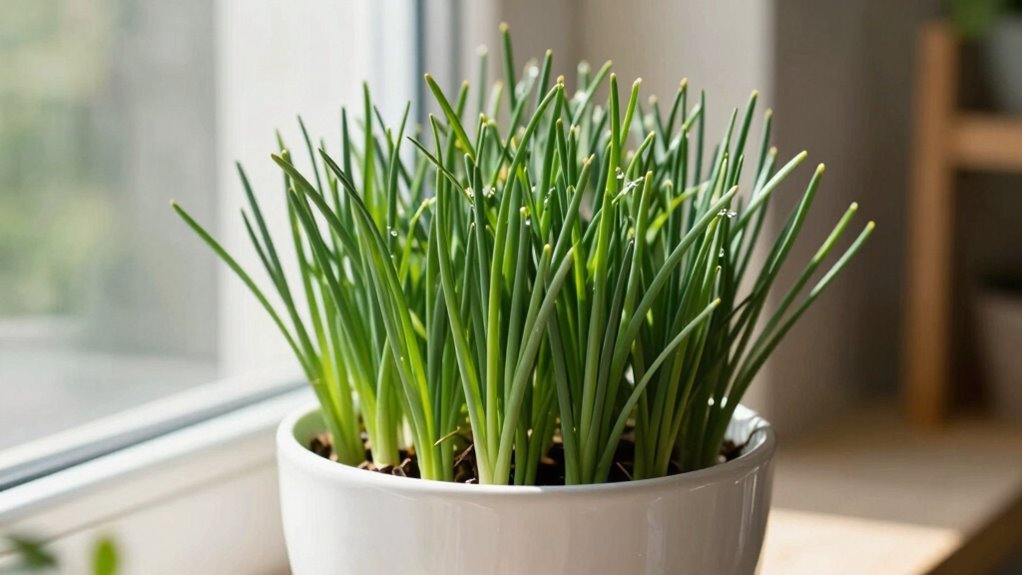

Growing chives indoors is an easy way to enjoy fresh herbs all year. You can keep harvesting by snipping the green tops regularly, which encourages new growth. Place your chives near a south or west window, or use LED grow lights if natural light is limited. Maintain a warm, humid environment and use well-draining soil in a pot about 6-8 inches wide. For more tips on growing chives successfully indoors, keep exploring how to turn your space into an herb haven.

Get garden gear delivered free with Prime
- Fast, free delivery on millions of items
- Prime Video, Amazon Music and more included
- Member-only deals all year
Key Takeaways
- Chives are easy to grow indoors and can be harvested repeatedly for fresh flavor.
- Proper container size and drainage are essential for healthy, vigorous chive growth.
- Ensure 6+ hours of natural sunlight or supplement with LED grow lights daily.
- Maintain temperatures between 60-70°F and moderate humidity for optimal growth.
- Regular harvesting encourages new growth, making chives a reliable, cut-and-come-again herb indoors.
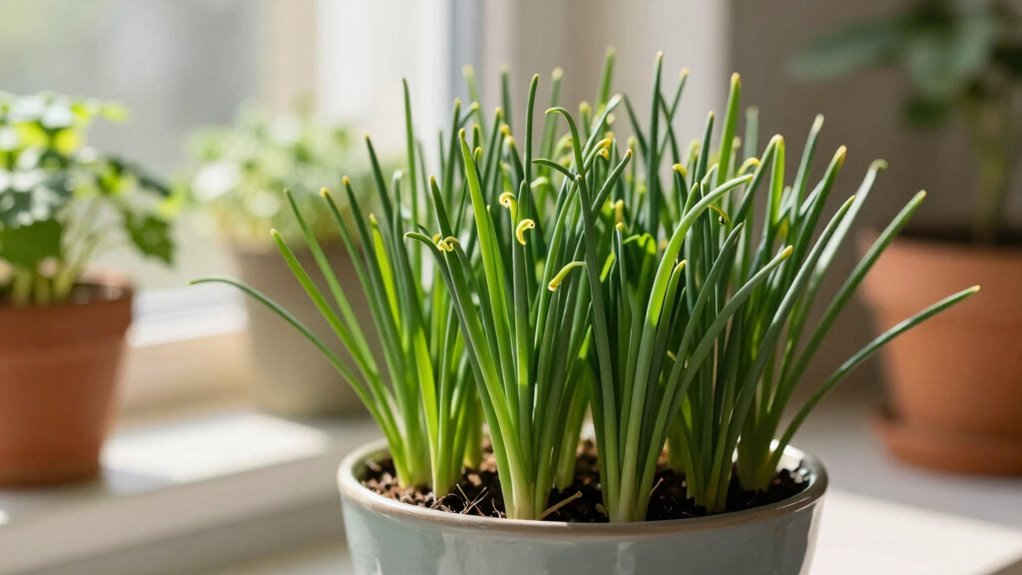
Growing chives indoors is a simple and rewarding way to add fresh, flavorful herbs to your kitchen year-round. Whether you’re an experienced gardener or just starting out, cultivating chives indoors gives you a constant supply of their mild onion flavor for salads, soups, and garnishes. To get started, you need to pay attention to a few key factors, especially herb container selection and indoor lighting needs.
Growing chives indoors provides fresh flavor year-round with simple care and proper lighting.
When choosing a container for your chives, opt for a pot with good drainage. Chives dislike sitting in water, so a container with holes at the bottom helps prevent root rot. You want a size that provides enough room for the roots to grow—about 6 to 8 inches in diameter is ideal for a small herb, but if you plan to harvest often, consider a slightly larger pot. Use quality potting soil that drains well, enriched with organic matter to support healthy growth. This setup guarantees your chives stay vigorous and productive.
Lighting is critical when growing chives indoors. They thrive in bright, indirect sunlight, so place your container near a south or west-facing window where they’ll get at least 6 hours of sunlight daily. If natural light is limited, supplement with grow lights. Full-spectrum LED grow lights work best because they mimic natural sunlight and promote healthy growth. Keep the lights on for about 12 to 16 hours a day, and position them a few inches above the plants to prevent stretching and ensure uniform light distribution. Additionally, monitoring light intensity can help optimize growth conditions.
You also need to take into account the temperature and humidity levels. Chives prefer a temperature range of 60-70°F (15-21°C). Avoid placing your herb near drafts, heating vents, or cold windowsills. Maintaining a consistent environment helps your chives stay healthy and grow densely. While they don’t require high humidity, occasional misting or placing a tray of water nearby can prevent the air from becoming too dry, especially in winter months when indoor heating is on.
As an affiliate, we earn on qualifying purchases.
Frequently Asked Questions
How Often Should I Harvest Chives Indoors for Continuous Growth?
You should harvest chives indoors every few days to maintain a steady growth cycle. The best harvest timing is when the leaves are about 6 inches long, ensuring you don’t cut too much at once. Regular harvesting encourages continuous growth, so pick the outer leaves first, leaving the inner ones intact. This approach helps your chives stay healthy, vibrant, and productive throughout the year.
Can Chives Survive Low-Light Indoor Environments?
Did you know that chives can survive with as little as 4-6 hours of sunlight daily? In low-light indoor environments, they’ll still grow but won’t thrive as much. To maintain their chive aroma and flavor, you need proper indoor chive care, which includes supplementing with artificial light if needed. While they adapt, make sure you harvest regularly to encourage healthy, continuous growth.
What Are Common Pests That Affect Indoor Chives?
You might notice pests like aphids, thrips, or spider mites on your indoor chives. Pest identification helps you catch these early, so you can act quickly. Use organic pest control methods like neem oil, insecticidal soap, or introducing beneficial insects. Regularly check your chives for any signs of pests, and keep your growing area clean to prevent infestations. This keeps your chives healthy and pest-free.
How Do I Prevent My Indoor Chives From Flowering Too Early?
Think of your indoor chives as a singer nearing their big debut; you want to delay their flowering triggers to keep their chive flavor fresh. To prevent early flowering, provide ample light—around 12-16 hours daily—and avoid over-fertilizing, which can rush blooming. Maintain consistent watering and pinch off flower buds as soon as they appear. This way, your chives stay in their leafy prime, ready to flavor your dishes.
Is It Necessary to Fertilize Chives Indoors Regularly?
Yes, you should fertilize your indoor chives regularly to keep them healthy and productive. Use a balanced, water-soluble fertilizer every few weeks, especially if your soil is acidic or your container is small, as nutrients can deplete quickly. Make certain your container provides enough space for root growth, which helps absorb nutrients better. Proper fertilization encourages lush, green chives and prolongs harvestability indoors.
As an affiliate, we earn on qualifying purchases.
Conclusion
So, if you’re looking to keep fresh flavors close at hand, chives are your best bet. They’re easy to grow indoors and keep coming back, making them a true crowd-pleaser. With a little care, you’ll find that they thrive and become a staple in your kitchen. Remember, patience is a virtue—soon enough, your chives will be as reliable as your morning coffee. Stick with it, and you’ll reap the fragrant rewards.
As an affiliate, we earn on qualifying purchases.
As an affiliate, we earn on qualifying purchases.
Halloween Picks
halloween
As an affiliate, we earn on qualifying purchases.