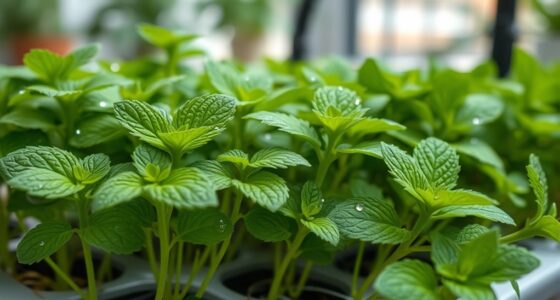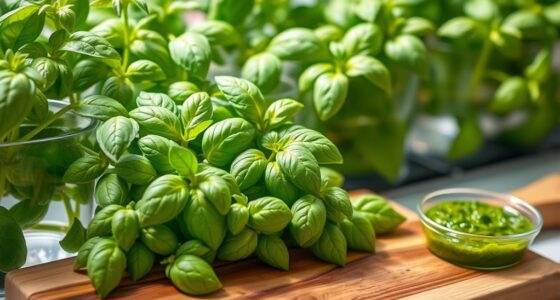
To grow better garnish crops indoors, harvest herbs at their peak flavor during the morning and snip stems above leaf nodes. Regularly inspect plants for pests like aphids or spider mites, and manage them naturally with neem oil or insecticidal soap. Keep your plants healthy by providing proper light, water, and airflow, and remove debris regularly. Consistent care boosts plant resilience, ensuring fresh, tasty garnishes for your daily meals—continue to discover more tips for thriving indoor herbs.

Get garden gear delivered free with Prime
- Fast, free delivery on millions of items
- Prime Video, Amazon Music and more included
- Member-only deals all year
Key Takeaways
- Harvest herbs at their peak flavor, in the morning, using sharp tools, and prune regularly to promote lush growth.
- Maintain proper lighting, watering, and nutrient levels to ensure healthy, vibrant herbs suited for garnishing.
- Regularly inspect plants for pests like aphids or whiteflies and address issues early with natural remedies.
- Keep the growing environment clean, avoid overcrowding, and ensure good airflow to prevent pests and diseases.
- Use high-quality, pest-resistant herb varieties and rotate crops to improve yield and flavor for daily meal garnishes.

Have you ever considered growing garnish crops indoors to add fresh flavor to your meals? If so, you’re taking a smart step toward elevating your cooking while enjoying the satisfaction of homegrown herbs. To do this effectively, understanding how to harvest your crops properly and manage pests is vital. These skills guarantee you get the most out of your indoor garden and keep your plants healthy and productive.
Growing indoor herbs boosts your cooking with fresh, homegrown flavor—master harvesting and pest management for success.
When it comes to harvesting techniques, timing is everything. You want to pick herbs and garnishes at their peak flavor, which typically means harvesting in the morning after dew has dried but before the sun gets too strong. Use sharp scissors or pruning shears to snip stems just above a leaf node, encouraging new growth and preventing damage to the plant. For leafy herbs like parsley or cilantro, harvest leaves gradually instead of cutting the entire plant, allowing it to continue growing. Regular harvesting not only provides fresh herbs for your meals but also promotes bushier growth, ensuring a continuous supply.
Pest management indoors requires vigilance but can be straightforward if you stay attentive. Common pests like aphids, spider mites, and whiteflies can invade your indoor garden, especially if you notice sticky residue, discolored leaves, or tiny webs. The key is to catch these issues early. Start by inspecting your plants regularly, especially the undersides of leaves, where pests often hide. If you spot pests, gently wipe them away with a damp cloth or use natural remedies such as neem oil or insecticidal soap, which are safe for edible plants. Keep humidity levels balanced and guarantee adequate airflow around your plants to discourage pest buildup. Additionally, understanding the importance of pest-resistant plants can help you select varieties that are naturally less susceptible to common pests. Implementing integrated pest management techniques can further reduce the need for chemical interventions and promote healthier plants. Incorporating natural pest control methods not only protects your herbs but also supports an eco-friendly gardening environment.
Additionally, maintaining a clean growing environment is vital. Remove fallen leaves and debris promptly, and avoid overcrowding your plants, which can create a breeding ground for pests and diseases. If a pest problem persists, consider isolating affected plants to prevent spread and treat them separately. Proper lighting, watering, and nutrient management are essential for healthy plant growth and pest resistance. Remember, healthy plants are more resistant to pests, so providing proper light, watering, and nutrients is just as important as pest control measures. Keeping an eye on your plants’ overall health will help you catch issues early before they become serious problems. Regularly rotating your plants and monitoring for signs of stress can also bolster their natural defenses. Strengthening your plant resilience through optimal care practices can make a significant difference in pest prevention.
Growing garnish crops indoors is a rewarding experience when you master the basics of harvesting and pest management. With careful attention to when and how you pick your herbs and how you keep pests at bay, you’ll enjoy an endless supply of fresh, flavorful garnishes. These small but mighty additions can truly transform your meals, making every dish feel more vibrant and personalized. Keep learning and adjusting your techniques, and soon, you’ll find indoor gardening becoming an integral part of your daily cooking routine.
As an affiliate, we earn on qualifying purchases.
Frequently Asked Questions
What Are the Best Lighting Conditions for Indoor Garnish Crops?
You should aim for bright, indirect light for indoor garnish crops, ideally using LED lighting. Keep the lights on for about 12 to 16 hours daily to mimic natural sunlight, which encourages healthy growth. Adjust the light duration based on the plant’s response, ensuring they don’t get too much or too little light. Consistent lighting conditions will help your garnish crops thrive and stay flavorful for your meals.
How Often Should I Water Indoor Garnish Plants?
You should water your indoor garnish plants when the top inch of soil feels dry, typically every 2-3 days, but adjust based on your watering schedule and moisture levels. Keep an eye on the plants for wilting or yellowing leaves, which indicate overwatering or underwatering. Consistently maintaining proper moisture levels helps prevent root rot and promotes healthy growth, ensuring your garnish crops stay vibrant and flavorful.
Can Garnish Crops Be Grown Without Soil?
Yes, you can grow garnish crops without soil through hydroponic gardening, a soil-free cultivation method. This technique uses nutrient-rich water solutions to feed your plants directly, making it ideal for indoor environments. You simply set up a hydroponic system, provide adequate light, and monitor the water and nutrient levels regularly. This approach allows for faster growth, cleaner harvesting, and less mess compared to traditional soil-based gardening.
What Pests Commonly Affect Indoor Garnish Crops?
Ever wonder what pests might invade your indoor garnish crops? Common culprits include aphids, spider mites, and whiteflies. To keep them at bay, pest identification is key, so you can target them effectively. Use organic pest control methods like neem oil or insecticidal soap, which are safe for your plants and home. Regularly inspecting your crops helps catch infestations early, ensuring your garnishes stay healthy and vibrant.
How Long Does It Take for Garnish Crops to Mature Indoors?
Garnish crops typically take 2 to 4 weeks to mature indoors, depending on the plant variety. To speed up growth, use companion planting—pairing plants that support each other—and follow precise harvesting tips, like snipping at the right time to encourage continued growth. Keep your indoor environment ideal with proper lighting and watering, ensuring your garnish crops develop quickly and stay healthy for your meals.
As an affiliate, we earn on qualifying purchases.
Conclusion
Growing garnish crops indoors is a simple way to elevate your everyday meals. With just a few pots and some sunlight, you can enjoy fresh herbs and greens year-round. Did you know that growing herbs indoors can boost your kitchen’s flavor profile and save you up to 30% on grocery bills? Start small, stay consistent, and you’ll soon reap the delicious benefits of your own indoor garden—making every meal more vibrant and flavorful.
natural pest control for indoor herbs
As an affiliate, we earn on qualifying purchases.
As an affiliate, we earn on qualifying purchases.
herb grow lights for indoor plants
As an affiliate, we earn on qualifying purchases.
As an affiliate, we earn on qualifying purchases.
Fall yard work Picks
leaf blowers
As an affiliate, we earn on qualifying purchases.