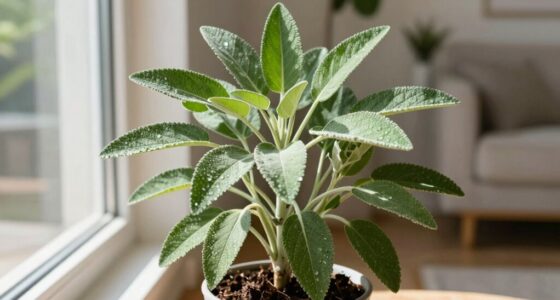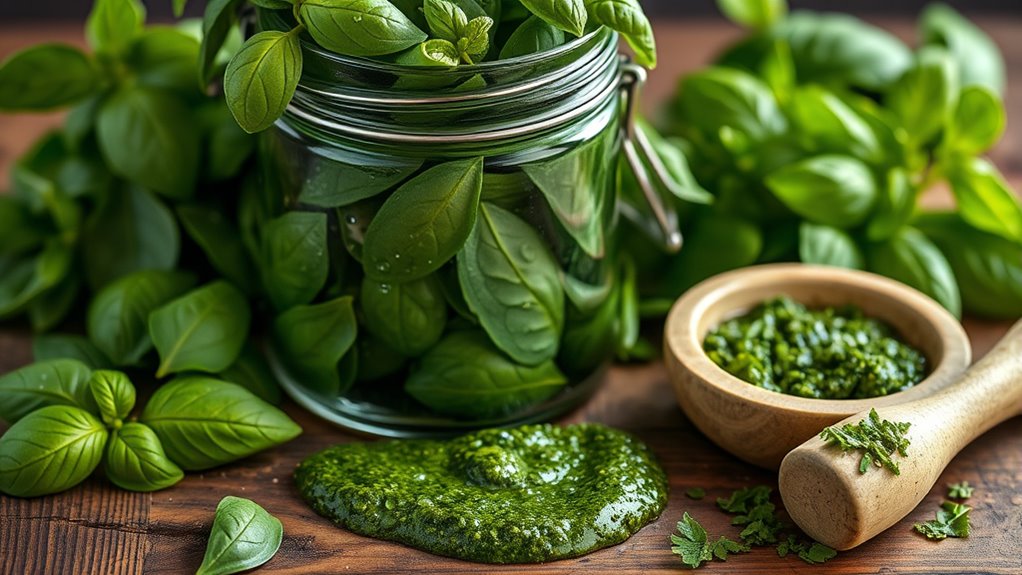

You can go beyond pesto by turning your indoor basil into soothing herbal teas, blending fresh leaves with hot water for a calming drink that helps digestion and relaxation. You can also infuse oils with basil to add flavor to salads and grilled dishes. Using basil as a garnish or in marinades enhances your meals with aromatic freshness. Keep exploring these creative ideas to make the most of your indoor harvest and elevate your culinary routine.
Key Takeaways
- Incorporate fresh basil into salads, marinades, and grilled vegetables for vibrant flavor beyond pesto.
- Brew basil tea for a calming, health-boosting beverage that supports digestion and relaxation.
- Create basil-infused oils to enhance salads, bread, and cooked dishes with aromatic herbal notes.
- Use basil leaves to flavor soups, add to homemade dressings, or garnish dishes creatively.
- Combine basil with home decor by using high-quality visuals or infused oils to elevate your culinary and wellness spaces.

Indoor basil isn’t just for cooking—it’s a versatile herb that can add flavor, aroma, and visual appeal to your home in unexpected ways. While many associate basil with pesto and salads, you can explore its full potential by using it to create soothing basil tea or fragrant basil infused oils. These options allow you to enjoy basil’s benefits beyond the kitchen, bringing a fresh, herbal touch to your daily routine.
Basil tea is one of the simplest and most delightful ways to use your indoor herb. To make it, pick a handful of fresh basil leaves and gently crush or tear them to release their essential oils. Steep these leaves in hot water for about 5-10 minutes, then strain and enjoy. Basil tea offers a calming, slightly sweet flavor with hints of mint and pepper, making it an excellent choice for relaxing evenings or when you need a digestive boost. It’s also believed to have anti-inflammatory properties and can help soothe headaches or cold symptoms. Incorporating basil tea into your daily ritual transforms your herb from a culinary staple into a wellness tonic, giving you a fresh, aromatic beverage that’s both comforting and healthful.
Basil infused oils are another creative application that elevates your home and culinary experiences. You can make your own by gently heating a neutral oil—such as olive or grapeseed—then adding a generous handful of fresh basil leaves. Allow the mixture to simmer on low heat for about 20 minutes to infuse the oil with basil’s fragrant oils. Once cooled, strain out the leaves and store the oil in a clean bottle. Basil infused oils are incredibly versatile—they enhance salads, marinades, or grilled vegetables, and can even be drizzled over bread or used as a finishing touch for soups. The infusion process captures basil’s aromatic essence, making the oil a flavorful and aromatic addition to your pantry. Additionally, using high-quality projectors can enhance your viewing experience when watching culinary videos or tutorials at home, combining visual appeal with your herb-centered lifestyle. The homemade touch adds a personal, fresh flavor that store-bought oils can’t match.
As an affiliate, we earn on qualifying purchases.
Frequently Asked Questions
How Long Does Indoor Basil Typically Stay Fresh After Harvest?
Indoor basil typically stays fresh for about 5 to 7 days after harvest if you follow proper storage tips. To maximize freshness, trim the stems and place them in a glass of water, covering loosely with a plastic bag. Keep them in a cool, bright spot, avoiding direct sunlight. Regularly change the water and check for any wilted leaves, ensuring your basil stays vibrant and flavorful longer.
Can Basil Be Grown Successfully Year-Round Indoors?
Yes, you can successfully grow basil indoors year-round. With proper indoor herb gardening and basil plant care, your plant thrives in consistent temperatures and plenty of light. Make sure to water it regularly, provide adequate airflow, and use well-draining soil. This way, you enjoy fresh basil anytime, regardless of the season, and can experiment with many culinary uses beyond pesto.
What Are Common Pests or Issues Affecting Indoor Basil Plants?
You might notice pests like aphids, spider mites, or whiteflies on your indoor basil. Pest identification helps you act quickly to prevent damage. Watch for yellowing leaves or weak growth, which could also indicate nutrient deficiencies. Regularly inspect your plant, keep humidity balanced, and make certain proper watering to prevent issues. If pests appear, treat with organic solutions like neem oil to keep your basil healthy and thriving indoors.
How Do I Prevent Basil From Flowering Indoors?
Think of your basil as a sun-loving artist, eager to bloom at the first sign of warmth. To prevent flowering indoors, you should practice regular pruning techniques, trimming off flower buds as they appear. This flower suppression keeps your basil lush and flavorful, encouraging continuous leaf growth. Consistent pruning not only prolongs harvest but also guarantees your indoor herb stays vibrant and productive, like an evergreen masterpiece in your kitchen.
Are There Specific Light Conditions Best for Indoor Basil Growth?
You want your indoor basil to thrive, so make certain you provide the right light conditions. Use artificial lighting with a full light spectrum, especially with red and blue wavelengths, to mimic natural sunlight. Place your basil where it gets about 12-16 hours of this ideal light daily. Adjust the light source closer if needed, but avoid overheating. Consistent, quality light helps prevent flowering and encourages lush, flavorful leaves.
As an affiliate, we earn on qualifying purchases.
Conclusion
Now that you’ve unlocked new ways to use your indoor basil, imagine it as a vibrant artist’s palette—each leaf a splash of flavor waiting to transform your dishes. When I first started experimenting, I realized my tiny herb garden was more than just decor; it became my culinary compass, guiding me to fresh, exciting meals. With your basil’s versatility, you’re not just growing herbs—you’re cultivating a garden of endless culinary possibilities.
As an affiliate, we earn on qualifying purchases.
As an affiliate, we earn on qualifying purchases.