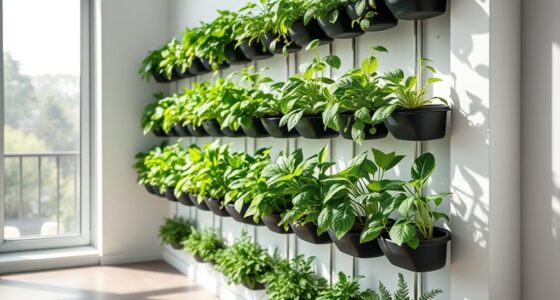

To build an indoor vertical garden wall, start by choosing a sturdy frame or panel system that suits your space. Select plants that match your lighting conditions, like low-light pothos or herbs for brighter spots. Use a hydroponic or soil-based system, and install proper grow lights, such as LED lamps, to promote healthy growth. Regular maintenance, including pruning and monitoring nutrients, guarantees your wall stays lush and vibrant. Keep exploring for detailed steps to create your perfect living wall.
Key Takeaways
- Select suitable plants based on indoor lighting and maintenance preferences.
- Choose an appropriate hydroponic system (NFT, DWC, or drip) for efficient soil-free gardening.
- Install proper LED grow lights and position them to ensure optimal plant growth.
- Set up a reliable water and nutrient delivery system with a reservoir and pump.
- Regularly monitor and maintain pH, nutrients, and plant health for a thriving vertical garden.
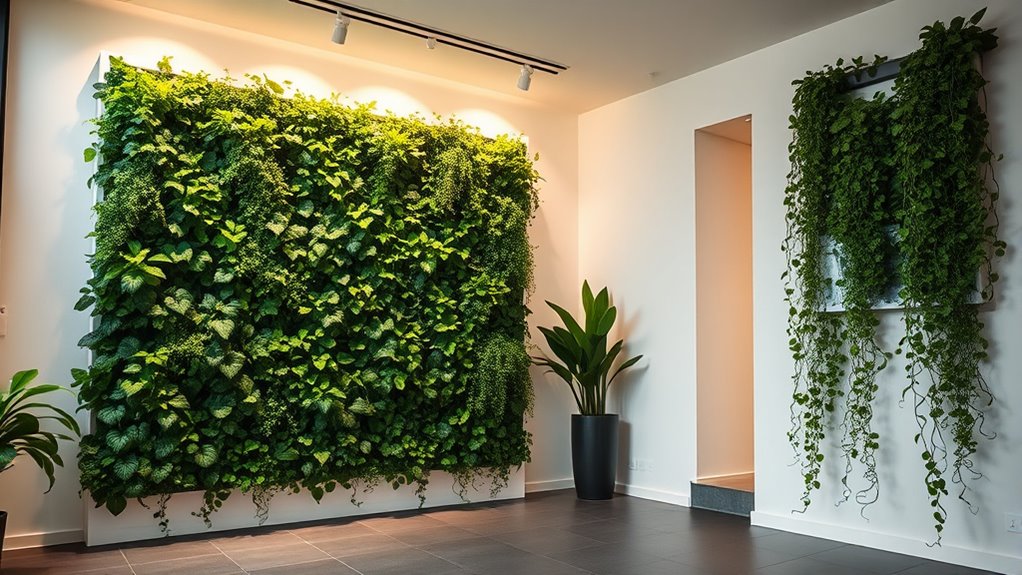
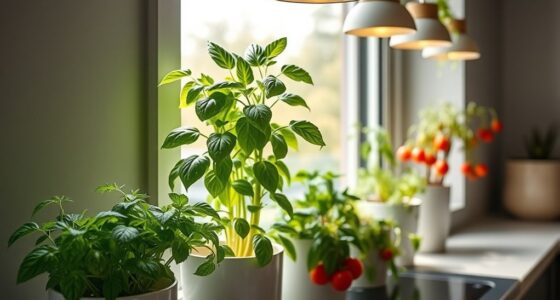
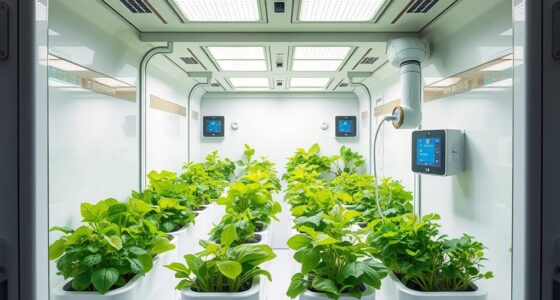
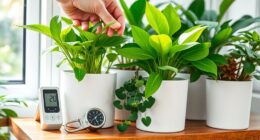
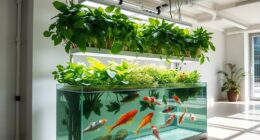
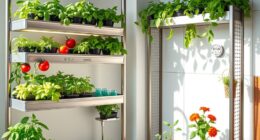
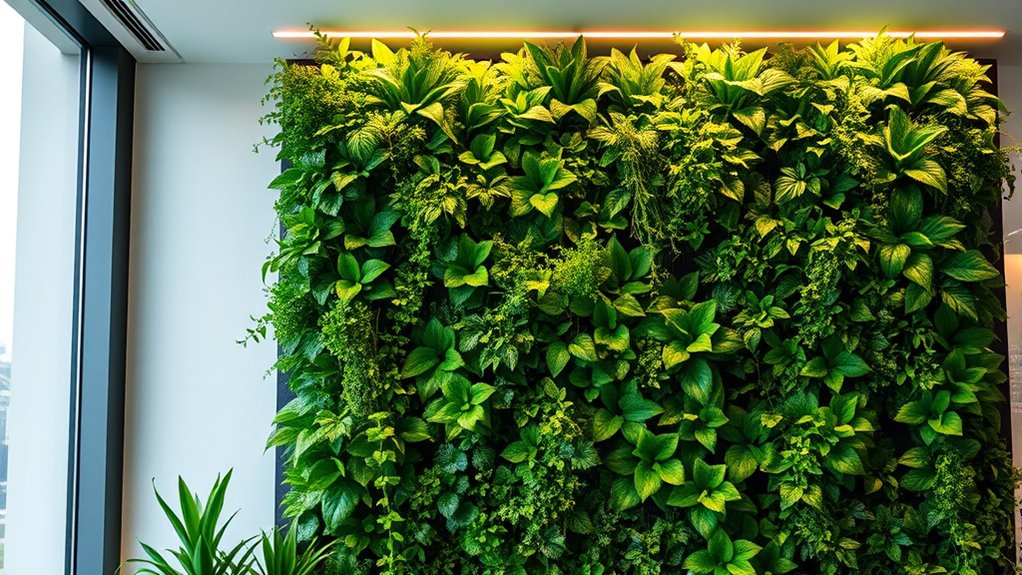
A vertical garden wall indoors transforms empty wall space into a lush, living centerpiece. It’s a smart way to bring nature inside, add visual interest, and even improve air quality. To succeed, you need to understand how to set up the right system, especially if you opt for hydroponic systems, which are popular for indoor vertical gardens. Hydroponic setups eliminate soil, instead relying on nutrient-rich water to feed your plants. They’re efficient, clean, and allow for a compact design, making them ideal for indoor walls. When choosing a hydroponic system, consider options like nutrient film technique (NFT), deep water culture (DWC), or drip systems, depending on your plant choices and space. Each system has its own maintenance needs and complexity level, so pick one that matches your experience and goals. Once installed, maintaining a consistent supply of nutrients is key. You’ll need a reliable water pump and a reservoir to keep your plants healthy. Regularly check pH levels and nutrient concentrations to guarantee ideal growth. Proper lighting is another essential aspect, as indoor plants need adequate light to thrive, especially in vertical setups. Indoor plants need adequate light to thrive, and this becomes even more critical when they’re in a vertical setup. Natural sunlight can be limited indoors, so you’ll likely need to supplement with artificial lighting. LED grow lights are popular because they’re energy-efficient, produce less heat, and can be customized to emit specific light spectrums needed for plant growth. Position your lights carefully; usually, they should be placed a few inches above your plants and adjusted as they grow. Most plants require about 12 to 16 hours of light daily, so consider using a timer to automate this process. Proper lighting not only helps your plants grow faster and healthier but also prevents issues like leggy growth or poor development. In addition to hydroponic systems and lighting, you should think about the layout and plant selection. Choose plants that suit your lighting conditions and maintenance level. Some thrive in low light, such as pothos or philodendrons, while others, like herbs or flowering plants, need more intense light. Regular pruning and monitoring for pests or diseases keep your vertical garden vibrant. With the right setup, consistent care, and proper lighting, your indoor vertical garden wall will flourish, turning your blank wall into a vibrant, living display that brightens your space every day.
Frequently Asked Questions
How Much Does a Vertical Garden Wall Typically Cost to Install?
A vertical garden wall typically costs between $500 and $2,500 for installation, depending on size, materials, and complexity. Your cost estimate includes expenses for panels, plants, and mounting hardware, plus installation fees if you hire professionals. To stay within budget, consider DIY options or pre-made kits. Keep in mind that higher-end materials and custom designs will increase your overall installation expenses.
What Are the Best Plants for Low-Light Indoor Environments?
Imagine a cozy corner where soft shadows dance on your wall—perfect for low-light plants. You should choose snake plants, pothos, or ZZ plants, as they thrive with minimal indoor lighting. This plant selection brings lush greenery without needing direct sunlight, creating a calming, vibrant atmosphere. By selecting these resilient varieties, your vertical garden wall will flourish even in the dimmest spots, transforming your space effortlessly.
How Often Should I Water Indoor Vertical Gardens?
You should water your indoor vertical garden wall about once a week, but always check your plants’ hydration needs first. Keep an eye on the soil—if it feels dry a couple of inches down, it’s time to water. Stick to a consistent watering schedule to prevent over- or under-watering. Proper plant hydration guarantees your plants stay healthy and vibrant, thriving in their vertical space.
Can I Install a Vertical Garden Wall Myself?
While DIY installation might seem straightforward, a vertical garden wall can be intricate, requiring precise measurements and secure mounting. You can certainly attempt it yourself, but for a flawless finish and safety, professional assistance guarantees proper setup. Weigh the complexity against your skills, and consider consulting experts if you’re unsure. With the right guidance, you’ll create a stunning, thriving indoor garden wall that transforms your space effortlessly.
What Maintenance Is Required to Keep the Wall Healthy?
To keep your vertical garden wall healthy, stick to a regular pruning schedule to prevent overgrowth and promote new growth. Check for pests frequently and manage them promptly with natural or chemical solutions as needed. Keep the plants well-watered and ensure proper drainage. Regularly inspect for signs of disease or stress, and clean the wall to remove dust and debris, helping your plants thrive indoors.
Conclusion
You might think building an indoor vertical garden wall is just for aesthetics, but it’s actually backed by science. Studies show that indoor plants can improve air quality, boost mood, and increase productivity. So, as you create your lush wall, you’re not just decorating—you’re enhancing your space’s health and your well-being. Don’t underestimate the power of green walls; they’re more than beautiful—they’re a smart, science-backed investment in your environment.