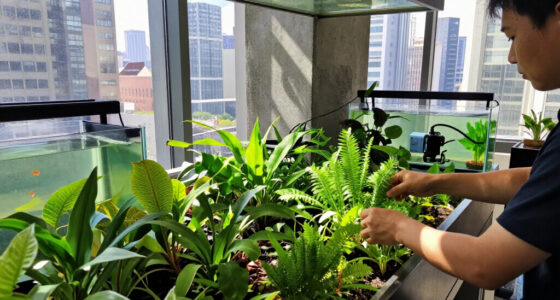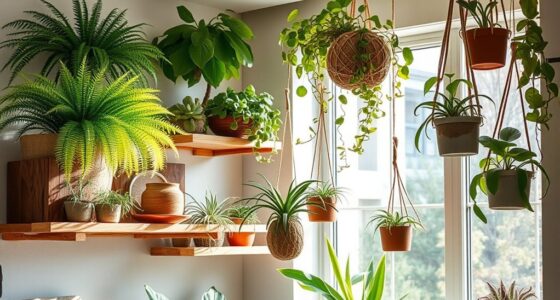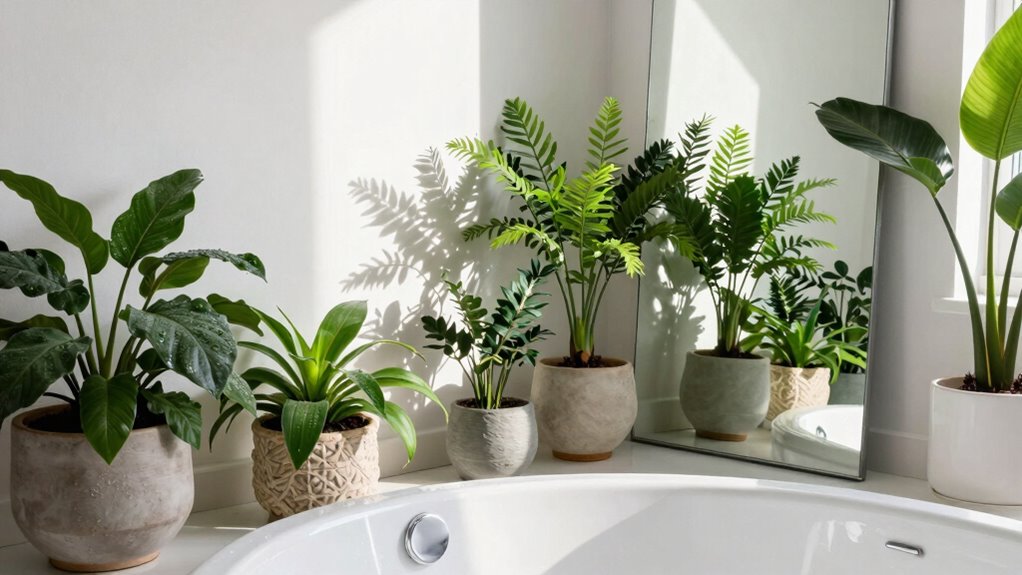

Using reflective surfaces in your indoor garden can boost plant growth by bouncing light around, making shadows softer and ensuring all plants get enough exposure. They also add visual depth and create a vibrant, inviting space. However, too much reflection can cause glare, heat buildup, or uneven watering, which may harm your plants. To learn how to use these surfaces effectively and avoid pitfalls, keep exploring this topic.

Get garden gear delivered free with Prime
- Fast, free delivery on millions of items
- Prime Video, Amazon Music and more included
- Member-only deals all year
Key Takeaways
- Reflective surfaces improve light distribution, boosting plant health, but excessive reflection can cause glare and heat buildup damaging plants.
- Proper placement enhances light exposure for shaded plants, yet too much reflection may create uneven watering and growth.
- They add aesthetic appeal and depth to indoor gardens, but overuse can lead to uncomfortable glare and visual chaos.
- Regular cleaning maintains effective reflection, while neglect can diminish benefits and impact plant vitality.
- Combining reflective surfaces with matte finishes can diffuse light softly, balancing illumination and reducing harsh glare.
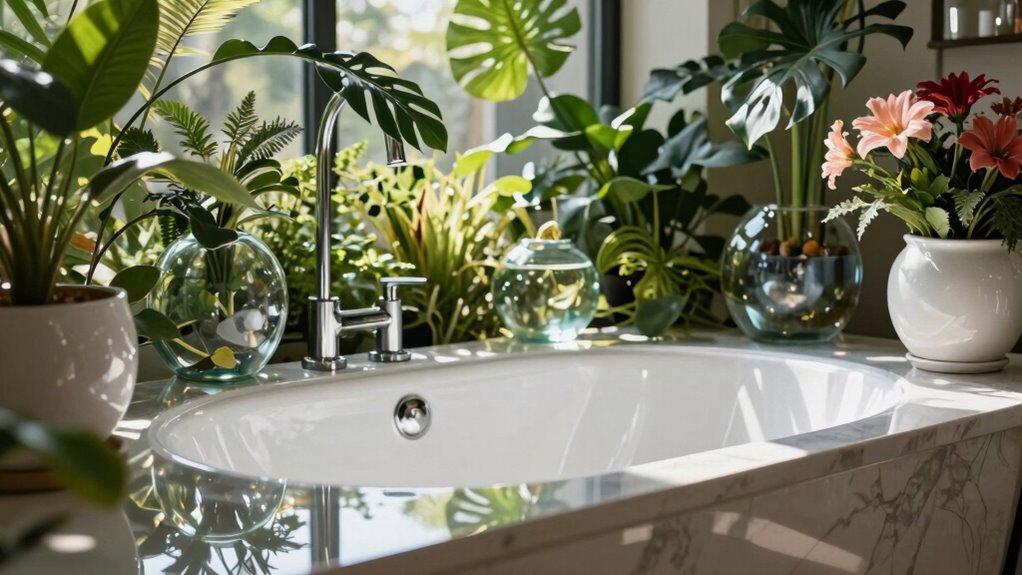
Reflective surfaces and indoor gardens are a perfect pairing that can transform any indoor space into a serene and visually mesmerizing environment. When used thoughtfully, they can dramatically enhance your plant display through lighting optimization and aesthetic enhancement. Reflective surfaces, such as mirrors, glass, or polished metal, bounce natural and artificial light around the room, guaranteeing your indoor garden receives more even illumination. This increased light exposure helps your plants thrive, especially those that require bright, indirect sunlight. By maximizing light, you reduce shadows and dark corners, which often hinder plant growth and make spaces feel less lively. You might notice that plants near reflective surfaces seem healthier, more vibrant, and grow more uniformly.
Reflective surfaces enhance indoor gardens by boosting light, promoting healthier, more vibrant plant growth and a more inviting space.
However, the key lies in understanding how much reflection is enough. Too much reflection can create glare, which can be harsh and uncomfortable, making your space feel overly bright or chaotic. This glare can also cause heat buildup in certain areas, potentially harming sensitive plants or causing uneven watering needs. Proper placement of reflective surfaces is essential—positioning them to direct light toward shaded parts of your indoor garden can help balance light distribution without overwhelming your plants or your eyes. Adjusting the angle of mirrors or choosing surfaces with matte finishes can diffuse light more softly, contributing to a calming atmosphere rather than a stark, overly bright environment. Additionally, understanding light reflection and how it influences plant health can help you optimize your indoor gardening setup. Paying attention to appropriate light levels ensures your plants receive the right amount of illumination without risking damage from excess glare or heat. Recognizing the importance of light diffusion can further help in creating a gentle, evenly lit environment for your plants.
Beyond lighting, reflective surfaces considerably contribute to aesthetic enhancement. They add depth and dimension, making your indoor garden feel larger and more immersive. The way plants are reflected can create a sense of symmetry and harmony, elevating the overall design. When you combine reflective surfaces with your greenery, you introduce an element of visual interest that draws the eye and creates a focal point. This interplay between reflection and plant life can evoke feelings of tranquility, making your space more inviting. Moreover, choosing the right reflective materials can help you fine-tune the balance between light and reflection, ensuring your garden remains both functional and beautiful.
But be cautious—if reflective surfaces are placed improperly or become cluttered with dust or smudges, they can distract from your garden’s natural beauty. Dirty or streaked mirrors diminish their reflective power and can create a chaotic or unkempt appearance. Regular cleaning is essential to maintain their clarity and ensure they serve as effective tools for lighting enhancement and aesthetic appeal. When used intentionally, reflective surfaces become more than just decorative elements. They act as crucial components in your indoor garden’s design, amplifying light, highlighting plant features, and creating a harmonious, visually pleasing environment.
As an affiliate, we earn on qualifying purchases.
Frequently Asked Questions
Can Reflective Surfaces Negatively Affect Plant Growth?
Yes, reflective surfaces can negatively affect plant growth if they cause uneven light diffusion, leading to inconsistent lighting for your plants. Over time, some surfaces may lose their reflectivity due to surface durability issues, reducing their effectiveness. You should choose durable, high-quality reflective materials that evenly distribute light, preventing hot spots or shadows. Properly maintained reflective surfaces enhance growth, but poor choices can hinder your indoor garden’s health.
What Materials Are Safest for Indoor Reflective Surfaces?
You should choose safe materials like reflective paint and mirrored tiles for indoor gardens. Reflective paint, specifically designed for indoor use, offers a non-toxic way to boost light reflection without harming your plants. Mirrored tiles are durable and easy to clean, providing excellent light reflection. Avoid cheap or unverified materials, as they might contain harmful chemicals. Always opt for non-toxic, plant-safe options to enhance your indoor garden effectively.
How Do Reflective Surfaces Impact Indoor Humidity Levels?
Reflective surfaces can influence your indoor garden’s humidity levels by bouncing heat and moisture, making humidity regulation trickier. They can increase surface durability, resisting moisture damage, but also cause uneven humidity pockets. To keep your plants thriving, monitor humidity carefully and choose durable, moisture-resistant materials. With thoughtful placement, reflective surfaces can enhance light, but they demand attention to humidity balance to protect your garden’s health and growth.
Are There Specific Plants That Benefit More From Reflection?
Certain plants, like ferns and shade-loving species, benefit more from reflection zones because they thrive in indirect, diffused plant light. Reflective surfaces help create even light distribution, reducing shadows and providing consistent illumination. You’ll notice these plants flourish with enhanced reflection zones, which maximize their light exposure without direct sunlight. By optimizing reflection, you support healthy growth and prevent overexposure, especially for sensitive or low-light plants.
How Often Should Reflective Surfaces Be Cleaned?
You should clean reflective surfaces at least once a month to keep your indoor garden thriving. Regular cleaning schedules prevent dust and grime buildup, ensuring ideal surface maintenance. Neglecting this routine could dull reflections, reducing light for your plants and risking their health. Stay vigilant—dirty surfaces might seem harmless, but they could secretly undermine your garden’s growth. Keep your reflective surfaces spotless, and watch your indoor plants flourish!
As an affiliate, we earn on qualifying purchases.
Conclusion
Reflective surfaces can be your indoor garden’s best friend or its worst enemy, like a mirror that either amplifies sunlight or creates harsh spots. When used wisely, they spread light evenly, helping your plants thrive. But if misused, they can cause uneven growth or scorching. Think of reflective surfaces as a gentle breeze—when balanced, they nurture growth; when unchecked, they can ruffle things up. Use them thoughtfully, and your garden will flourish like a well-tuned symphony.
plant grow lights with reflective panels
As an affiliate, we earn on qualifying purchases.
As an affiliate, we earn on qualifying purchases.
diffusing reflective garden surfaces
As an affiliate, we earn on qualifying purchases.
As an affiliate, we earn on qualifying purchases.
Fall Picks
fall essentials
As an affiliate, we earn on qualifying purchases.