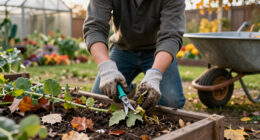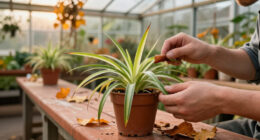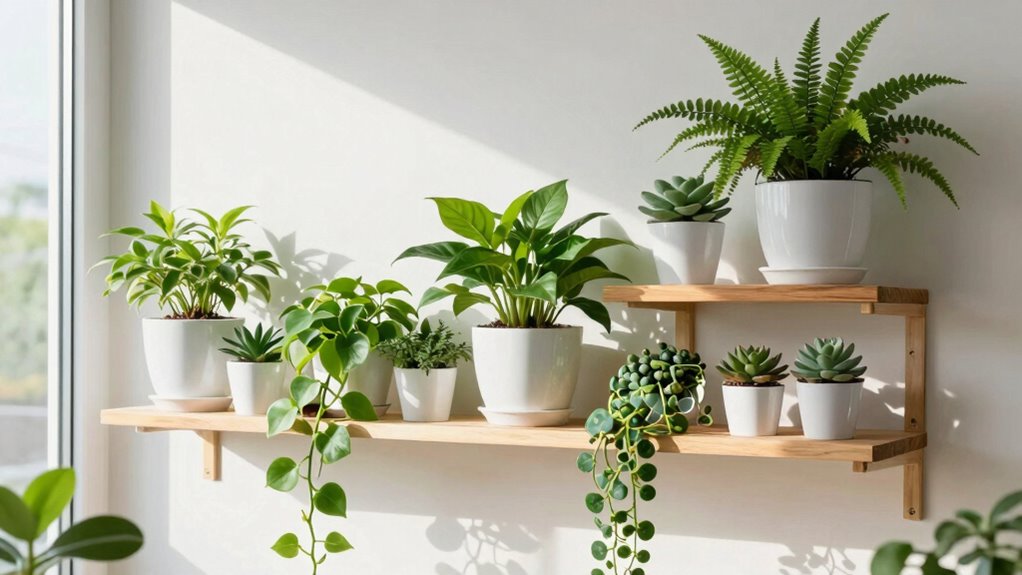
To make replanting less annoying, organize your indoor garden with adjustable shelves, grouping plants by their needs, and placing larger ones at the back for easy access. Use uniform containers with labels for quick identification, and keep tools nearby for efficiency. Arrange plants to avoid overcrowding, and plan for future growth. This setup reduces disturbances and saves time. Keep exploring, and you’ll discover even more tips to streamline your gardening system.

Get garden gear delivered free with Prime
- Fast, free delivery on millions of items
- Prime Video, Amazon Music and more included
- Member-only deals all year
Key Takeaways
- Use modular, adjustable shelves for easy access and reorganization as plants grow or change.
- Group plants by similar needs to simplify watering, pruning, and replanting tasks.
- Implement a clear labeling system and uniform containers for quick identification and minimal disturbance.
- Position frequently replanted or larger plants within easy reach to streamline maintenance.
- Design the layout to allow easy removal of individual plants without disturbing others.
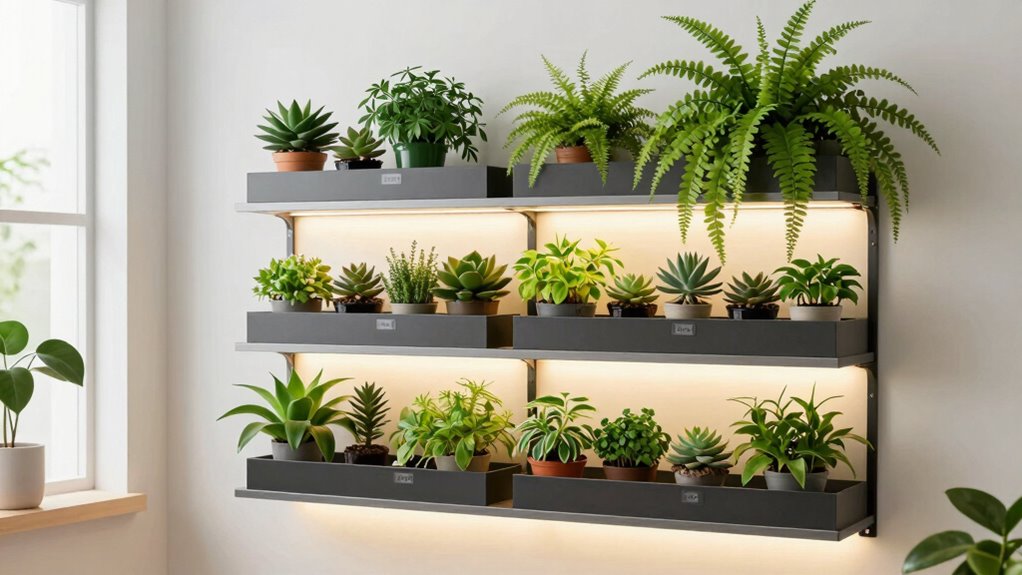
Creating an effective indoor garden shelf strategy begins with understanding how to maximize space and light for your plants. The way you arrange your plants on your shelves makes a huge difference when it comes to ease of replanting and overall garden health. To start, focus on plant placement—consider each plant’s size, light needs, and growth pattern. Place taller plants toward the back or on lower shelves, where they won’t overshadow smaller or light-loving plants. Use staggered arrangements to give each plant enough space and light exposure, preventing overcrowding that complicates replanting later. When planning your shelf organization, think of your setup as a system that’s easy to access and modify. Keep frequently replanted or larger plants within reach, and reserve less disturbed plants for higher shelves. This minimizes disturbance and makes replanting less of a hassle.
Shelf organization isn’t just about aesthetics; it’s about creating a logical flow that streamlines your gardening chores. Use uniform containers or labels so you can quickly identify plants needing attention, and group plants with similar water or light requirements together. This way, you’re not scrambling to find the right conditions for each plant every time you tend to them. When it’s time to replant, having a clear system makes the process smoother. You can easily pull out a plant without disturbing others, reducing stress for the plant and frustration for you. Keep tools, soil, and extra pots nearby in designated storage spots, so you don’t waste time hunting for supplies mid-replant. Additionally, understanding the importance of biodiversity can help you select a variety of plants that support each other’s growth and resilience, ultimately strengthening your indoor garden ecosystem. Incorporating space optimization techniques can further enhance your setup’s efficiency and adaptability.
Furthermore, considering plant health as part of your organization allows you to spot issues early and respond appropriately, minimizing overall maintenance. Additionally, adjustable shelves or modular units can help you adapt your setup as your garden grows or plants change. This flexibility means you can reorganize with minimal effort, shifting plants around or adding new shelves without disrupting your entire system. When arranging your plants, consider their mature size and future growth to avoid overcrowding later, which can lead to frequent replanting and unnecessary hassle. By keeping your shelf organization tidy and strategic, you create a workflow that makes replanting less annoying and more efficient. Proper plant placement and thoughtful organization can significantly reduce the time and effort required for maintenance tasks, making gardening more enjoyable.
In the end, a well-thought-out indoor garden shelf strategy isn’t just about aesthetics; it’s about making your life easier. Proper plant placement paired with smart shelf organization means less time searching for tools, fewer accidental root disturbances, and a garden that’s easier to maintain over time. When your setup is simple to navigate, replanting becomes a straightforward task rather than a chore, keeping your indoor garden thriving with less stress and more joy.
Products Worth Considering

Orbit B-hyve XR Smart Indoor/Outdoor Sprinkler Controller, 16 Zones
Orbit B-hyve XR 8-Zone Indoor/Outdoor Smart Sprinkler Controller

Orbit B-hyve Smart Indoor/Outdoor 12-Zone Sprinkler Controller
As an affiliate, we earn on qualifying purchases.
Frequently Asked Questions
How Often Should I Water My Indoor Garden Plants?
You should water your indoor garden plants when their moisture levels drop, usually once a week, but it depends on your watering schedule and plant types. Check the soil’s top inch; if it feels dry, it’s time to water. Keep in mind, overwatering can harm your plants, so adjust your watering schedule based on the moisture levels. Regularly monitoring helps maintain healthy growth and prevents root rot.
What Lighting Is Best for Indoor Garden Shelves?
The best lighting for your indoor garden shelves is a combination of artificial lighting and proper light placement. Use full-spectrum LED grow lights, which mimic natural sunlight and promote healthy growth. Position these lights about 12-18 inches above your plants, adjusting based on their needs. Guarantee even light distribution across all shelves to prevent uneven growth, and consider using timers to maintain consistent lighting schedules.
How Do I Prevent Pests on Indoor Plants?
You can prevent pests on indoor plants by implementing proactive pest control and preventative measures. Regularly inspect your plants for signs of pests, and isolate new plants before introducing them to your collection. Keep leaves clean and avoid overwatering, which attracts pests. Using natural repellents like neem oil or introducing beneficial insects can also help. Consistent care and early detection are key to keeping pests at bay and your indoor garden healthy.
Can I Grow Herbs on an Indoor Shelf?
Yes, you can grow herbs on an indoor shelf. Use herb container choices that provide good drainage and enough space for roots to grow. Follow indoor planting techniques like placing herbs near a sunny window or providing grow lights if sunlight is limited. Keep the soil moist but not waterlogged. Regularly harvest to promote healthy growth. This approach makes herb gardening efficient and enjoyable even in small indoor spaces.
What Materials Are Best for Indoor Garden Shelves?
You should choose materials with high durability and aesthetic appeal for your indoor garden shelves. Solid wood or metal are excellent options, as they withstand moisture and support plant weight, reducing the risk of damage. Some worry about maintenance, but these materials are easy to clean and long-lasting. These choices not only keep your garden sturdy but also enhance your space’s look, making replanting less frustrating.
Conclusion
With this indoor garden shelf strategy, replanting becomes so effortless, you’ll think you’ve revealed a secret gardening superpower! Say goodbye to chaos, mess, and endless frustration—your plants will practically thank you. This simple setup transforms your space into a lush paradise, making replanting feel like a breeze on a sunny day. Get ready to conquer your indoor jungle with confidence, because nothing’s more satisfying than having your plants thriving effortlessly on your new, genius shelf!