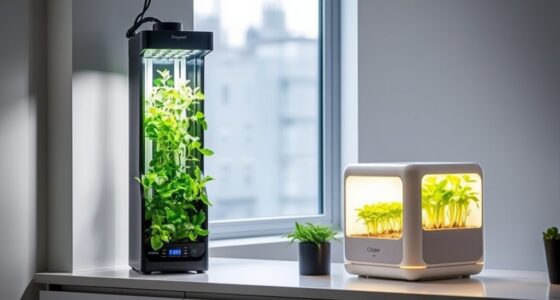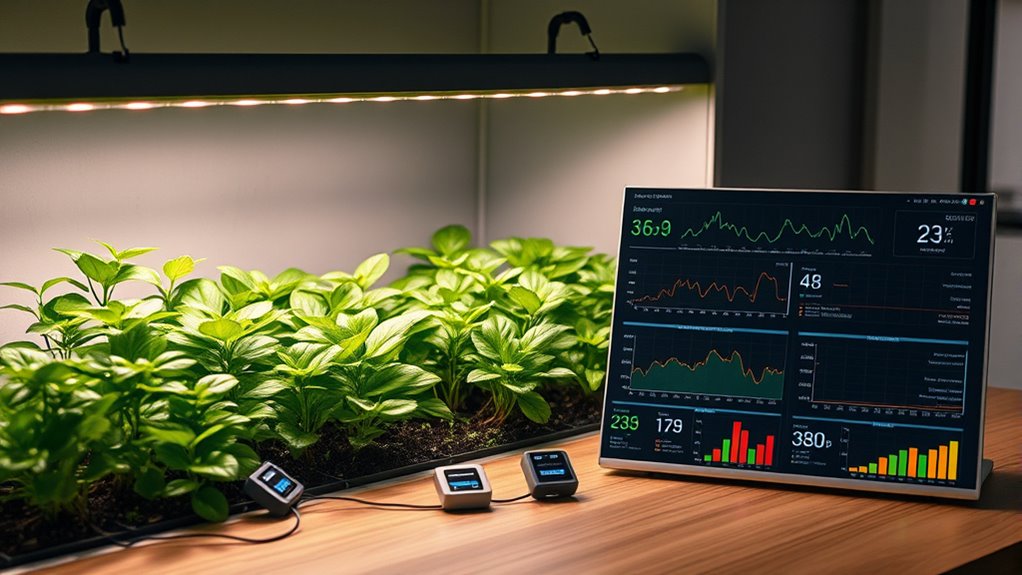
Remote monitoring tools for indoor gardens help you easily manage environmental conditions, water quality, and light levels from anywhere. They provide real-time data, automate adjustments, and send alerts if issues arise, making plant care more efficient and less manual. With features like light spectrum tracking and environmental sensors, you can optimize growth conditions effortlessly. Keep exploring to discover how these tools can revolutionize your indoor gardening experience.
Key Takeaways
- Provides real-time data on environmental factors like temperature, humidity, light, and nutrient levels for optimal plant growth.
- Automates adjustments of lighting, watering, and nutrient delivery based on sensor feedback.
- Enhances garden management efficiency by centralizing control of multiple parameters remotely.
- Alerts gardeners to environmental deviations, enabling swift corrective actions.
- Supports integration with smart systems for data-driven decision-making and energy-efficient operations.

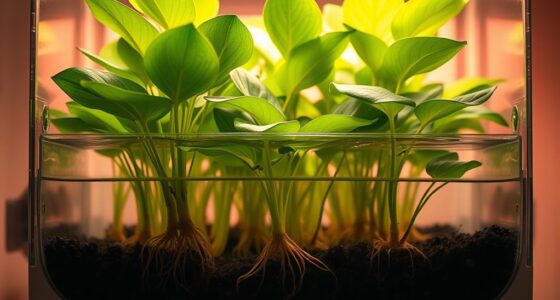
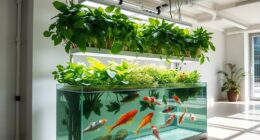
Managing an indoor garden can be challenging without the right tools, but remote monitoring devices make it easier to keep everything in check. Whether you’re growing herbs, vegetables, or decorative plants, maintaining ideal conditions is key to healthy growth. If you’re using hydroponic systems, these tools become even more valuable, allowing you to oversee water quality, nutrient levels, and plant health without constantly being on-site. Hydroponic setups rely on precise control of variables, and remote monitoring devices give you real-time data, so you can make adjustments instantly. This way, you avoid issues like nutrient deficiencies or overwatering, which can stunt growth or harm your plants.
One of the most significant advantages of remote monitoring tools is their ability to help you fine-tune light spectrum adjustments. Light plays a critical role in plant development, and different growth stages require specific light spectrums. With remote sensors, you can track light intensity and spectrum in real time, ensuring your plants receive the right wavelengths at the right moments. Whether you’re using LED grow lights or natural sunlight, these devices let you adjust settings remotely, saving time and reducing guesswork.
Additionally, many remote monitoring systems come with integrated controls that automate light spectrum adjustments based on sensor readings. For instance, if your sensors detect insufficient light during a cloudy day or a change in natural sunlight, the system can automatically increase artificial light or modify spectrum settings. This automation helps create a stable environment for your plants, reducing stress and improving yields. It also minimizes energy waste, as lights aren’t left on longer than necessary.
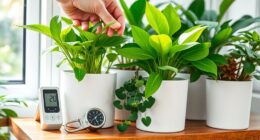
Beyond light, these devices often monitor temperature, humidity, and nutrient levels, offering a detailed view of your indoor garden’s health. You can receive alerts if conditions drift outside the ideal range, allowing you to respond swiftly. This real-time feedback loop enables you to maintain perfect conditions consistently, which is especially important when managing delicate hydroponic systems that are sensitive to environmental changes.
Furthermore, the integration of remote monitoring tools aligns with industry trends toward automation and smart gardening, making your setup more efficient and less labor-intensive. You can control multiple aspects of your indoor garden from a single device, streamlining your workflow and ensuring optimal growth conditions at all times.
In short, remote monitoring tools empower you to manage your indoor garden more effectively, especially when working with hydroponic systems. They simplify complex tasks like light spectrum adjustments, ensuring your plants get the right light at the right time without constant manual intervention. By leveraging these technologies, you not only improve your plants’ health and growth but also enjoy greater convenience and confidence in your indoor gardening efforts.
Frequently Asked Questions
How Do Remote Monitoring Tools Impact Energy Consumption?
Remote monitoring tools boost your indoor garden’s energy efficiency by optimizing lighting, watering, and climate control. When you use these tools, you can adjust settings in real-time, preventing unnecessary energy use. This leads to significant cost savings over time, as you avoid wasteful practices and run equipment only when needed. With better control, your energy consumption decreases, making your indoor gardening more sustainable and economical.
Are Remote Monitoring Devices Compatible With All Indoor Garden Types?
You’ll be pleased to know that most remote monitoring devices are compatible with various indoor garden types. Over 80% of these tools feature sensor versatility, allowing you to monitor soil moisture, temperature, and humidity regardless of your setup. Device compatibility has improved markedly, making it easier to customize your system. So, whether you grow herbs or tropical plants, these tools adapt seamlessly to your indoor garden, enhancing your growing experience.
What Is the Average Lifespan of Remote Monitoring Sensors?
You can expect remote monitoring sensors to last around 1 to 3 years, depending on their build quality and usage. Sensor durability varies, so high-quality sensors tend to last longer. Regular calibration is key; you should calibrate your sensors every 6 to 12 months to maintain accuracy. Proper maintenance and avoiding harsh conditions can extend their lifespan, ensuring your indoor garden stays healthy and well-monitored.
How Secure Is the Data Collected by These Tools?
You can feel confident that the data collected by these tools is generally secure, thanks to strong cybersecurity measures like encryption and regular updates. However, always stay vigilant about data privacy, as vulnerabilities can exist if security settings aren’t properly configured. By choosing reputable brands and keeping your software current, you help protect your indoor garden data from potential breaches or unauthorized access.
Can Remote Monitoring Tools Be Integrated With Existing Home Automation Systems?
Yes, remote monitoring tools can often be integrated with your existing home automation systems. While integration challenges may arise, many tools offer robust customization options to fit your setup. You’ll need to verify compatibility and possibly update your system’s firmware or software. With some effort, you can seamlessly connect these tools, enabling you to manage your indoor garden efficiently alongside other smart devices in your home.
Conclusion
By using remote monitoring tools, you can effortlessly keep your indoor garden thriving. Imagine checking your plants’ humidity and temperature from your phone after a long day, ensuring ideal growth. For example, Sarah installed a smart system and caught a humidity drop early, saving her delicate orchids. With these tools, you stay connected and proactive, turning gardening into a stress-free, rewarding experience. Embrace remote monitoring and watch your indoor garden flourish effortlessly.