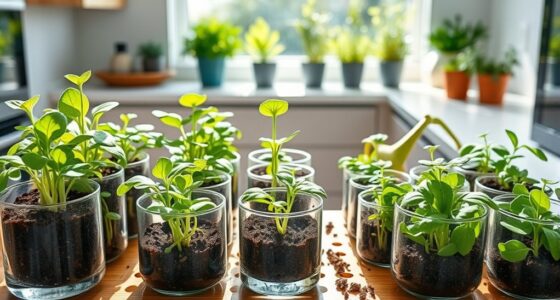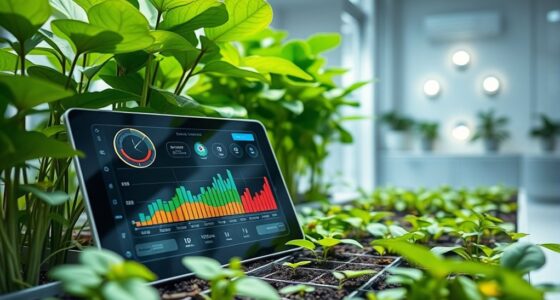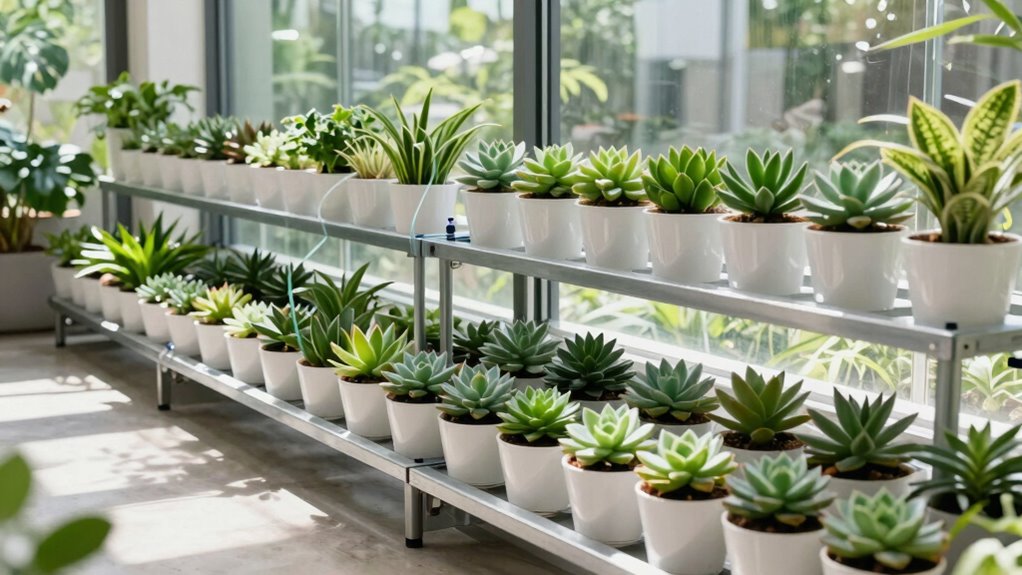

Organizing your indoor garden with a thoughtful layout makes daily care faster by ensuring plants are easy to access and well-spaced for proper air circulation. Grouping plants by light needs, positioning taller plants to avoid shading smaller ones, and adjusting your lighting setup create even coverage that promotes healthy growth. Regularly inspecting pests and maintaining airflow become simpler tasks, reducing clutter and saving time. Keep exploring for more tips to make your gardening routine even more efficient.

Get garden gear delivered free — and shop member deals
- Fast, free delivery on millions of items
- Access to Prime Big Deal Days deals on October 6–7
- Prime Video, Amazon Music and more included
Key Takeaways
- Organize plants by similar light and care needs to streamline daily maintenance tasks.
- Space plants properly to improve airflow and reduce pest risks, simplifying inspections.
- Reposition grow lights for even coverage, minimizing light adjustments and troubleshooting.
- Design a clear, accessible layout to facilitate watering, pruning, and pest inspection.
- Reduce clutter to enhance light penetration and airflow, speeding up routine chores.
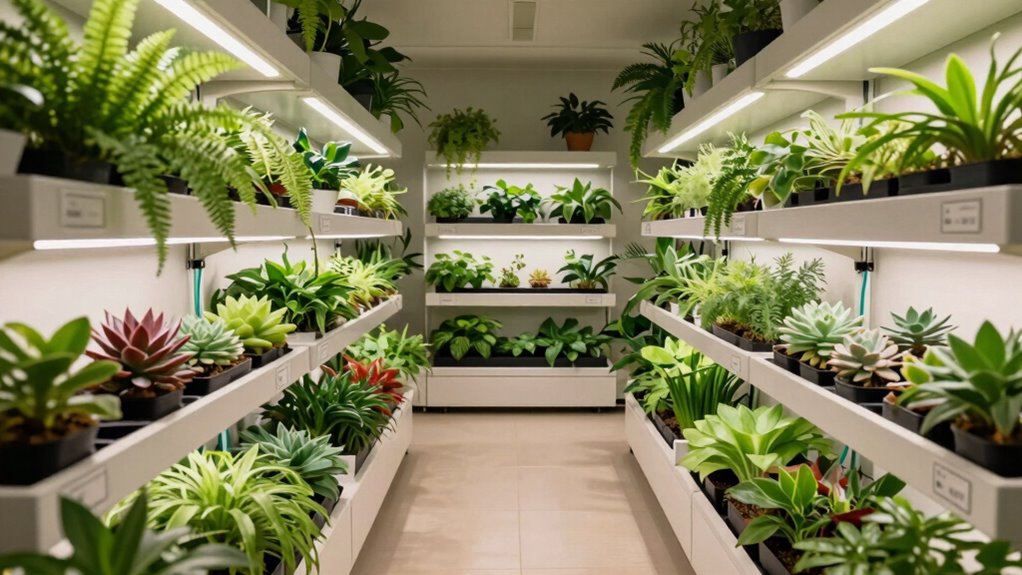
If your indoor garden feels overcrowded or unevenly spaced, it might be time for a layout fix. Overcrowding makes it harder to care for your plants efficiently and can lead to issues like poor air circulation or uneven light distribution. When you rearrange your garden thoughtfully, you create a space that’s easier to maintain, improves plant health, and speeds up daily care. Start by evaluating your current setup and identifying which plants need more light or space. Group plants with similar light requirements together and position taller plants where they won’t shade smaller ones. This way, each plant gets the appropriate amount of plant lighting, reducing the need for constant adjustments and making watering and pruning more straightforward.
Next, consider the placement of your lighting sources. Proper plant lighting is critical, especially in smaller indoor gardens. If some plants aren’t thriving, you may need to reposition your grow lights or add supplemental lighting to ensure even coverage. When you optimize your lighting layout, plants grow more uniformly, and you spend less time troubleshooting weak spots or adjusting lights daily. A well-planned light layout also minimizes the risk of overexposure or underexposure, which can cause stress and make plants more susceptible to pests. Ensuring proper plant lighting can also encourage healthier root development and overall growth.
Speaking of pests, a good layout can considerably improve pest control efforts. When plants are tightly packed, pests can spread rapidly, and spotting early signs becomes difficult. By spacing your plants properly and providing clear pathways, you make it easier to inspect for pests regularly. A more organized layout helps you identify issues early—whether it’s aphids, spider mites, or other pests—and act quickly before they spread. Also, increasing airflow between plants through strategic spacing discourages pest infestations and reduces humidity levels, which pests love. Additionally, using SWIFT codes and bank identification details can help streamline the logistics of purchasing supplies or managing financial aspects related to your garden setup. Incorporating plant health monitoring practices into your routine further enhances your ability to catch issues early and keep pests at bay.
Furthermore, a tidy, well-thought-out layout reduces clutter and minimizes the time you spend on daily chores. Proper plant spacing enhances airflow and light penetration, which are essential for healthy growth. You can more easily access each plant for watering, pruning, and pest inspection, speeding up your routine. With better spacing, you also avoid accidental damage when moving around your garden. Overall, rethinking your indoor garden’s layout isn’t just about aesthetics; it’s about making plant care faster and more effective. When your plants receive proper plant lighting, are spaced correctly, and pest control becomes simpler, you’ll find your daily gardening routine becomes less stressful and more rewarding.
As an affiliate, we earn on qualifying purchases.
Frequently Asked Questions
How Often Should I Rotate Plants for Even Growth?
You should rotate your plants every couple of weeks to promote growth consistency. Regular plant rotation helps guarantee all sides get equal light exposure, preventing uneven growth. Keep an eye on your plants’ health and adjust the frequency if you notice one side lagging. By sticking to a routine, you’ll maintain balanced growth, making your indoor garden look vibrant and healthy while simplifying your care routine.
What’s the Best Way to Prevent Pests Indoors?
You can prevent pests indoors by practicing pest control with natural remedies. Regularly inspect your plants for signs of pests and isolate affected ones immediately. Use natural remedies like neem oil, insecticidal soap, or garlic spray to keep pests at bay. Keep your indoor garden clean, remove dead leaves, and maintain proper humidity and airflow. These steps help create a pest-resistant environment, making plant care easier and more effective daily.
How Do I Choose the Right Lighting for My Plants?
To choose the right lighting for your plants, consider their specific needs for plant growth and light intensity. For leafy greens and herbs, opt for full-spectrum LED or fluorescent lights with high light intensity. Flowers and fruiting plants may require more powerful, specialized grow lights. Guarantee the light is positioned at the right distance to prevent stress or stretch, and adjust as your plants grow to keep them healthy and thriving.
What Soil Types Are Best for Indoor Gardens?
Did you know that using the right soil can boost plant growth by up to 30%? For your indoor garden, opt for well-draining soil mixes with organic matter. Consider soil amendments to improve nutrient content and adjust pH balance, ensuring your plants thrive. Loamy soils are ideal because they retain moisture yet drain well, providing the perfect environment for roots to flourish. Always test your soil to maintain ideal pH levels.
How Can I Monitor Humidity Levels Effectively?
You can monitor humidity levels effectively by using humidity sensors placed in your indoor garden. These sensors provide real-time data, so you know when humidity is too high or low. Additionally, moisture meters help you check soil moisture, ensuring plants get the right amount of water. Regularly checking these tools will help you maintain ideal humidity, making plant care faster and more precise every day.
plant watering can with long spout
As an affiliate, we earn on qualifying purchases.
As an affiliate, we earn on qualifying purchases.
Conclusion
Think of your indoor garden as a well-tuned orchestra, where each element plays in harmony. By fixing your layout, you’re fundamentally fine-tuning the instruments, making daily care effortless and efficient. With a clear, organized plan, tending your plants becomes as smooth as a gentle melody. This simple fix transforms your space into a symphony of growth, saving you time and frustration. Now, you can enjoy the beauty of your garden without missing a beat.
As an affiliate, we earn on qualifying purchases.
air circulation fan for indoor plants
As an affiliate, we earn on qualifying purchases.
As an affiliate, we earn on qualifying purchases.
Fall Picks
fall essentials
As an affiliate, we earn on qualifying purchases.