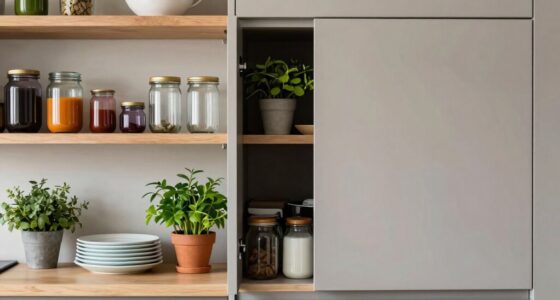
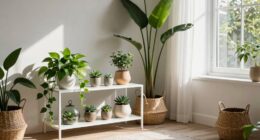
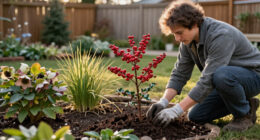
Organizing your indoor garden with a thoughtful layout can make harvesting much easier. Group plants by type and growth needs, and arrange them for quick access, so you don’t have to chase after ripe ones. Place watering stations close to your plants and create clear pathways to reduce effort. This setup not only minimizes bending and stretching but also helps you spot ripe produce quickly. If you keep these tips in mind, you’ll discover even more ways to make gardening simpler and more enjoyable.

Get garden gear delivered free with Prime
- Fast, free delivery on millions of items
- Prime Video, Amazon Music and more included
- Member-only deals all year
Key Takeaways
- Organize plants for easy reach and minimal bending during harvest.
- Group similar plants together to streamline identification of ripeness.
- Place watering stations close to plants to reduce movement during maintenance.
- Design the layout to facilitate quick access to ripe plants, reducing harvesting time.
- Ensure sufficient space between plants for effortless harvesting and maintenance tasks.

Creating an attractive indoor garden isn’t just about choosing the right plants; it’s also about how you arrange them. The way you organize your plants can considerably impact your overall gardening experience, especially when it comes to harvesting. One clever trick to make harvesting less annoying is to implement a thoughtful layout that simplifies access and maintenance. This means planning your space so that every plant is easy to reach without disturbing others. By doing this, you reduce the hassle of bending, stretching, or moving multiple plants just to pick ripe vegetables or herbs. When your garden is laid out with accessibility in mind, you save time and effort, making the entire process more enjoyable.
Another key to streamlining harvesting is establishing a consistent watering schedule. When you keep your watering routine predictable, your plants grow uniformly and healthily, which means you’ll know exactly when they’re ready for harvest. Plus, a regular watering schedule helps prevent overwatering or underwatering, both of which can delay ripening or damage your plants. When your plants are healthy and on a steady growth pattern, harvesting becomes straightforward—you simply pick what’s ripe without second-guessing. Incorporating your watering schedule into your garden layout also helps you avoid unnecessary movement around your space. You can set up your watering station close to your planting area, reducing the time spent hauling watering cans or adjusting hoses. This small change makes a big difference in keeping your garden manageable. Additionally, plant placement strategies can help maximize your space and make maintenance even easier.
Furthermore, understanding the importance of space optimization can significantly improve your layout, ensuring each plant has enough room to thrive while keeping your garden organized. When your plants are organized by type and need, you can rotate them more efficiently, ensuring each plant gets the nutrients it needs while keeping pests at bay. Incorporating plant grouping strategies can further optimize your layout and boost your garden’s productivity. When it’s time to harvest, you’ll appreciate having a well-thought-out layout that guides your hand naturally to the ripe plants, rather than stumbling around your garden trying to remember which plants are ready.
Products Worth Considering

Solo Stove Bonfire 2.0 Smokeless Wood-Burning Fire Pit with Stand, Silver

Orbit B-hyve Smart Indoor/Outdoor 12-Zone Sprinkler Controller

Orbit B-hyve XR Smart Indoor/Outdoor Sprinkler Controller, 16 Zones
As an affiliate, we earn on qualifying purchases.
Frequently Asked Questions
What Tools Are Best for Maintaining This Layout?
You’ll want essential tools like an adjustable grow light for lighting adjustments and a pest control spray to keep pests at bay. A handy pair of pruning shears helps with maintenance, while a moisture meter guarantees proper watering. Regularly inspect your plants for pests and adjust the lighting as needed to promote healthy growth. Using these tools makes maintaining your indoor garden easier and more effective, ensuring a bountiful harvest.
How Often Should I Rotate Plants in This Setup?
Think of your indoor garden like a busy dance floor; plants need to change partners to stay vibrant. You should rotate your plants every 2-3 weeks, ensuring each gets equal light exposure and prevents uneven growth. This plant rotation keeps your garden lively and healthy, balancing light exposure and nutrient uptake. Regular rotation helps avoid pests and diseases, making your harvest more abundant and your garden more resilient over time.
Does This Trick Work for All Types of Indoor Plants?
Yes, this trick works for most indoor plants, but you should consider specific lighting needs and watering routines. Plants needing bright, consistent light benefit most from this layout, making harvesting easier. Adjust your watering schedule based on each plant’s requirements, ensuring they stay healthy and productive. By tailoring lighting considerations and watering routines, you’ll maximize the effectiveness of this layout trick across different plant types.
Can This Layout Be Adapted for Small Spaces?
You can definitely adapt this layout for small spaces. Space optimization is key, so you’ll want to choose compact plants that fit well together, ensuring plant compatibility. By stacking or using vertical shelving, you maximize limited areas without sacrificing access or health. This approach makes harvesting easier and keeps your indoor garden manageable, even in tight spots. With thoughtful arrangement, you’ll enjoy a thriving, accessible garden regardless of your space constraints.
What Are Common Mistakes to Avoid With This Trick?
You should avoid overwatering your plants and neglecting proper lighting tips, as these are common mistakes. Make sure you’re providing adequate plant care by checking soil moisture and adjusting lighting to match each plant’s needs. Don’t forget to space plants properly to prevent overcrowding, which can hinder growth. Regularly monitor your indoor garden to catch issues early, and remember that consistent care and correct lighting are key to a thriving, hassle-free harvest.
Conclusion
By implementing this simple indoor garden layout trick, you’ll find harvesting becomes quicker and less frustrating. It’s a game-changer for busy gardeners, helping you maximize space and efficiency. Did you know that organized garden layouts can boost your yield by up to 30%? So, give this trick a try, and enjoy the satisfaction of a more streamlined, productive gardening experience. Your plants—and your patience—will thank you!