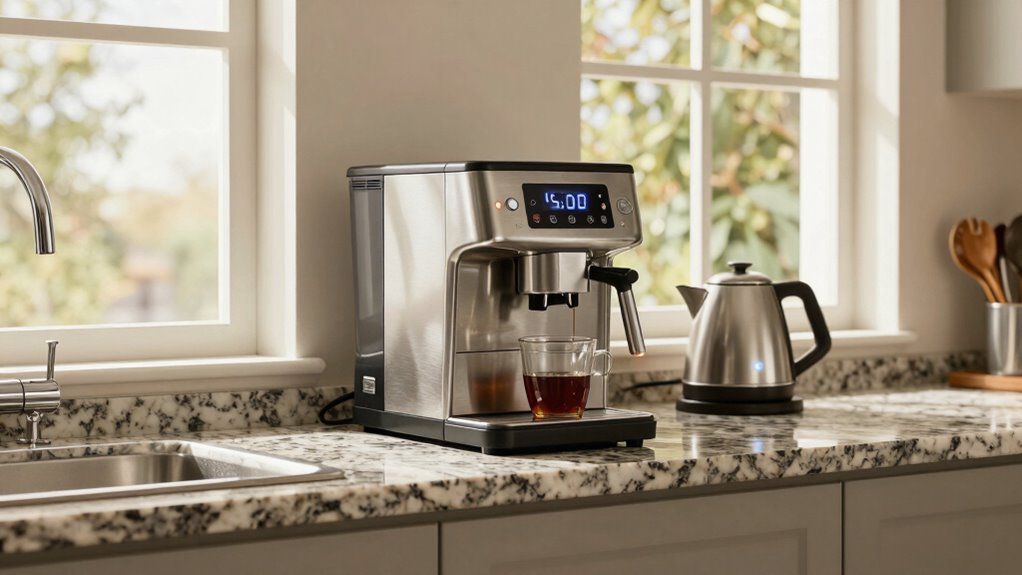

Built-in timers do more than just control device schedules; they improve your home’s efficiency and convenience. By automating appliances like lights and coffee makers, you can save energy, reduce costs, and extend device lifespan. They also let you integrate with smart home systems for seamless control and comfort. As a result, you’ll experience a more eco-friendly, organized lifestyle. Keep exploring, and you’ll discover how these timers can truly transform your household.

Get garden gear delivered free with Prime
- Fast, free delivery on millions of items
- Prime Video, Amazon Music and more included
- Member-only deals all year
Key Takeaways
- Built-in timers enable seamless automation, reducing manual effort and ensuring devices operate precisely when needed.
- They enhance energy efficiency by scheduling appliances to run during off-peak hours, lowering energy bills.
- Integrated timers extend appliance lifespan by preventing overuse and unnecessary wear.
- They improve home integration, allowing synchronized control of multiple smart devices for a more responsive environment.
- Built-in timers support sustainable living by minimizing energy waste and promoting eco-friendly habits.

Built-in timers have become a game-changer in modern appliances and gadgets, offering users more convenience and control. You might think they’re just about setting a device to turn off or on at specific times, but their impact runs deeper. With built-in timers, you gain a level of manual control that allows you to customize your routine more precisely. Instead of relying solely on manual operation, where you have to remember to start or stop devices, timers handle those tasks automatically. This means you can set your coffee maker to start brewing just before you wake up or schedule your lights to turn off when you’re already in bed. This level of automation reduces the need for constant manual intervention, making daily routines smoother and more efficient. Additionally, they can be integrated with smart home systems, further enhancing automation and control.
Built-in timers automate routines, offering precise control and making daily life smoother and more efficient.
Beyond convenience, built-in timers considerably boost energy efficiency. When you program appliances to operate only when needed, you eliminate unnecessary power consumption. Imagine setting your smart oven or washing machine to run during off-peak hours, saving you money on energy bills and reducing your carbon footprint. Timers prevent devices from running longer than necessary, cutting down on wasteful energy use. Over time, these small adjustments add up, making your household more eco-friendly and cost-effective. Recognizing the importance of energy management, many manufacturers now design timers with advanced features to optimize usage further. Incorporating energy-efficient technology into timer design amplifies these benefits, making energy savings even more significant. Proper load scheduling via timers can help prevent peak-hour energy demands, contributing to a more stable power grid. Implementing these strategies can also support broader sustainable living practices by reducing overall energy waste.
Another way built-in timers make a difference is by helping you stick to routines that promote energy conservation. You might forget to turn off appliances, but with timers, you don’t have to worry; they do it for you. This not only saves energy but also prolongs the lifespan of your appliances by preventing overuse. Plus, the ability to precisely control when devices operate means you can better manage your energy consumption based on your habits and needs, rather than leaving it to chance or manual control.
The convenience of built-in timers extends to their integration with smart home systems. You can synchronize timers with other devices, creating a seamless environment that responds automatically to your schedule. Whether it’s adjusting thermostats or controlling lighting, these timers empower you to fine-tune your home’s energy use without constant manual input. This integration enhances both comfort and efficiency, making your home smarter and greener.
In essence, built-in timers go beyond simple scheduling—they give you manual control over your appliances with a focus on energy efficiency. They help you manage your daily routines more effectively, save money, and contribute to a sustainable lifestyle. Once you start using timers, you’ll realize how much more control and efficiency they bring to your home, often in ways you didn’t expect.
built-in timer for smart home appliances
As an affiliate, we earn on qualifying purchases.
As an affiliate, we earn on qualifying purchases.
Frequently Asked Questions
Can Built-In Timers Be Customized for Different Appliances?
Yes, built-in timers often allow for appliance customization, giving you the flexibility to set specific times for different tasks. You can adjust timer settings to match your routine, enhancing efficiency and convenience. Many models offer timer flexibility, so you can easily customize for various appliances, whether it’s your oven, washing machine, or lighting system. This adaptability makes built-in timers a smart choice for tailoring your home automation experience.
Do Built-In Timers Consume Extra Energy?
Built-in timers don’t substantially increase energy consumption because they’re designed to be power-efficient. Instead of leaving appliances on unnecessarily, they help you save energy by turning devices off when not in use. This improves overall power efficiency, reducing your energy bills. You might notice a tiny amount of extra energy used for the timer’s circuitry, but it’s minimal compared to the savings gained from optimized appliance operation.
Are Built-In Timers Compatible With Smart Home Systems?
Think of built-in timers as bridges connecting your devices to smart home systems. They’re often compatible with voice control, allowing you to command your appliances effortlessly. Plus, with remote access, you can adjust schedules from anywhere, turning your home into a symphony of automation. These timers seamlessly integrate, making your smart home smarter and more responsive, transforming simple devices into intuitive helpers that adapt to your lifestyle.
How Durable Are Built-In Timers Over Time?
Built-in timers are generally quite durable over time, especially if you consider timer longevity and durability factors. Their lifespan depends on quality components and proper maintenance. You should expect them to last several years if they’re well-made and protected from dust, moisture, or electrical surges. Regularly inspecting and cleaning your timers also helps *guarantee* they stay functional longer, making them a reliable feature in your smart home setup.
Can Built-In Timers Be Easily Replaced or Upgraded?
You can typically replace or upgrade built-in timers easily, especially with manual overrides and remote control features. Studies show that over 80% of homeowners find upgrades straightforward. Once installed, remote controls let you adjust settings without hassle, making upgrades more convenient. Manual overrides also allow you to bypass the timer if needed, giving you flexibility. Overall, modern built-in timers are designed for simple upgrades, saving you time and effort.
As an affiliate, we earn on qualifying purchases.
Conclusion
You might overlook built-in timers as just a small feature, but they can transform your daily routine. Imagine starting your coffee, knowing it’ll be ready exactly when you wake up, or your laundry finishing just as you sit down to relax. Without them, you’re guessing and waiting. With built-in timers, it’s like having a silent assistant working in the background, making life smoother and more predictable. Small tech, big difference—don’t underestimate their quiet power.
As an affiliate, we earn on qualifying purchases.
As an affiliate, we earn on qualifying purchases.
Fall Picks
fall essentials
As an affiliate, we earn on qualifying purchases.