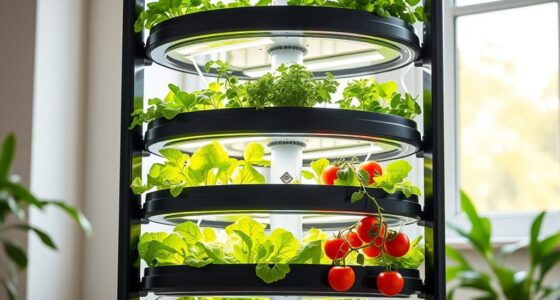
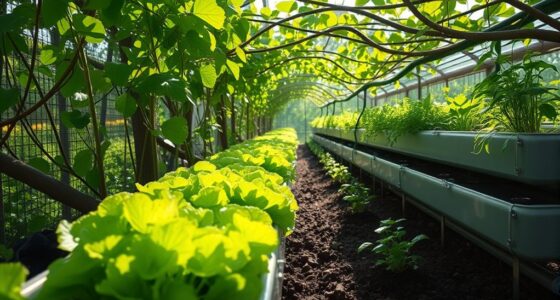
Recirculating DWC systems need more planning because maintaining water chemistry and flow is more complex than in standard setups. You must constantly monitor pH, EC, and nutrient levels to avoid imbalances that can harm plants. Water flow must be carefully designed to prevent dead zones and ensure oxygen reaches roots effectively. Temperature control and ongoing cleaning are essential to prevent issues like root rot or pathogen buildup. If you want to get these details right, continue exploring the key factors involved.
Key Takeaways
- Recirculating systems require complex water chemistry management to prevent imbalances and ensure consistent nutrient delivery.
- Proper system design is critical to maintain efficient water flow and oxygenation throughout the entire system.
- Regular monitoring and testing are essential to detect and correct nutrient, pH, and contamination issues early.
- Maintenance protocols must be more thorough to prevent clogging, pathogen buildup, and equipment failures.
- Temperature and oxygen levels must be carefully controlled to avoid root diseases and system instability.

Recirculating Deep Water Culture (DWC) is an efficient hydroponic system that requires careful planning to maximize its benefits. Unlike standard DWC setups, which often operate on straightforward principles, recirculating systems demand a higher level of attention to detail. The key reason is that you’re continuously cycling nutrient-rich water through the system, making nutrient management and system maintenance more complex. The water’s chemistry constantly changes as plants uptake nutrients and water evaporates or is lost through transpiration, which makes nutrient monitoring essential for healthy plant growth. You need to regularly monitor and adjust the nutrient concentrations to guarantee your plants receive the right balance. This involves testing pH levels, electrical conductivity (EC), and nutrient concentrations frequently. Unlike standard DWC, where you might top off the water occasionally, recirculating systems require you to fine-tune nutrient mixes to prevent deficiencies or toxicities. A misstep here can lead to stunted growth, nutrient lockouts, or even root diseases caused by imbalanced water conditions. Additionally, understanding water chemistry is vital to prevent issues that can arise from imbalances or contamination. Proper system design is also crucial, as it helps facilitate efficient water flow and reduces the risk of dead zones where nutrients and oxygen might not circulate effectively. Implementing monitoring protocols can help catch potential problems early before they escalate. System maintenance is equally critical and more demanding for recirculating DWC. Because water is continuously circulated, any buildup of algae, pathogens, or mineral deposits can quickly clog pumps or pipes. You need to implement a rigorous cleaning schedule, check for leaks, and ensure your pumps and aeration systems are functioning properly. Regularly changing or filtering your water helps prevent pathogen buildup and keeps oxygen levels ideal for your roots. Failing to maintain your system properly can lead to oxygen deprivation, root rot, and overall plant stress. It’s also essential to keep an eye on the reservoir’s temperature, as warmer water can accelerate the growth of harmful organisms and reduce oxygen solubility. Proper water chemistry management is crucial for maintaining a healthy system and ensuring consistent plant growth. Being proactive with your system checks can significantly reduce the risk of problems developing unexpectedly.

VIVOSUN DWC Hydroponics Grow System with Top Drip Kit, 5-Gallon Deep Water Culture, Recirculating Drip Garden System with Multi-Purpose Air Hose, Air Pump, and Air Stone (4 Buckets + Top Drip Kit)
- Top Drip Irrigation Design: Ensures water circulation and nutrient absorption
- Powerful Air Pump: Provides ample bubbles to promote root growth
- Faster Growth and Higher Yields: Independent units for versatile plant cultivation
As an affiliate, we earn on qualifying purchases.
As an affiliate, we earn on qualifying purchases.
Frequently Asked Questions
How Does Recirculating DWC Affect Nutrient Stability?
Recirculating DWC influences nutrient stability by maintaining consistent nutrient concentration and minimizing pH fluctuations. Since the system recycles water, nutrients are evenly distributed, reducing sudden changes that could stress plants. However, you need to monitor pH regularly because fluctuations can occur due to ongoing nutrient uptake and waste buildup. Proper planning ensures you balance nutrient levels and pH, keeping your plants healthy and thriving in a recirculating setup.
What Are the Best Pump Options for Recirculating Systems?
Choosing the right pump for your recirculating DWC system is like finding a trusty steed—reliable and efficient. Look for pumps with high efficiency to keep energy costs low and consistent flow. Submersible pumps are popular for their ease of installation, but consider their durability for system maintenance. A well-chosen pump guarantees smooth circulation, stable nutrient levels, and reduces downtime, making your grow healthier and more manageable.
How Often Should I Inspect My Recirculating DWC System?
You should inspect your recirculating DWC system at least once a week. During inspections, check water temperature to guarantee it stays within ideal ranges, preventing root diseases. Also, monitor pH fluctuations closely, as they can impact nutrient absorption. Regularly inspecting helps you catch issues early, maintain stable conditions, and assure your plants thrive. Consistent monitoring is key to successful recirculating DWC gardening.
Can Recirculating DWC Be Scaled for Large Operations?
Think of recirculating DWC as a growing river — yes, it can scale for large operations, but system design becomes more complex, requiring careful planning. Scalability challenges include maintaining consistent water flow, managing oxygen levels, and preventing clogs. You’ll need to adapt components and monitor closely to guarantee the system remains balanced. With thorough planning and robust infrastructure, you can successfully expand your recirculating DWC for bigger yields.
What Are Common Signs of System Imbalance in Recirculating DWC?
You’ll notice system imbalance in recirculating DWC if you see pH fluctuations or signs of oxygen deficiency. pH swings indicate nutrient uptake issues, while oxygen deficiency often causes roots to turn brown or develop mold. If your plants show stunted growth or leaves start yellowing despite proper feeding, it’s a clear sign the system needs adjustment. Regular monitoring helps catch these issues early and keeps your system balanced.

EZTOCH Hydroponic pH EC Meter, Water pH TDS PPM Meter
- Simultaneous Multi-Parameter Display: Displays pH, EC, Temp or PPM at once
- Lock Function for Easy Readings: Locks measurements for convenient recording
- Suitable for Hydroponic Use: Measures pH and conductivity of nutrient solutions
As an affiliate, we earn on qualifying purchases.
As an affiliate, we earn on qualifying purchases.
Conclusion
Think of recirculating DWC as tending a delicate garden pond—each lily pad, fish, and pebble must be carefully placed and balanced. With more planning, you’re not just creating a simple pond; you’re designing a vibrant ecosystem that thrives in harmony. When you map out every detail, your system blossoms like a well-tended garden, ensuring lush growth and steady success. Remember, a thoughtfully planned recirculating DWC is the mirror of your patience and dedication.

General Hydroponics Ph Control Kit
- Complete pH Testing Kit: Includes all necessary components
- Accurate and Reliable Results: Fast, precise, easy-to-read measurements
- All-in-One Hydroponic pH Solution: Contains pH Up, pH Down, test indicator, and accessories
As an affiliate, we earn on qualifying purchases.
As an affiliate, we earn on qualifying purchases.

VIVOSUN 800GPH Submersible Fountain Water Pump for Pond, Aquarium, Statuary
- Dimensions: 4.33 x 3.5 x 4.1 inches
- Maximum Flow Rate: 800 GPH (3000 L/H)
- Lift Height: Up to 10 feet
As an affiliate, we earn on qualifying purchases.
As an affiliate, we earn on qualifying purchases.