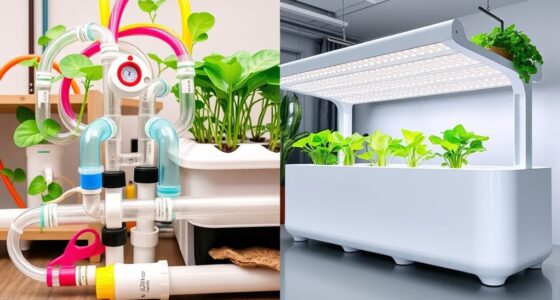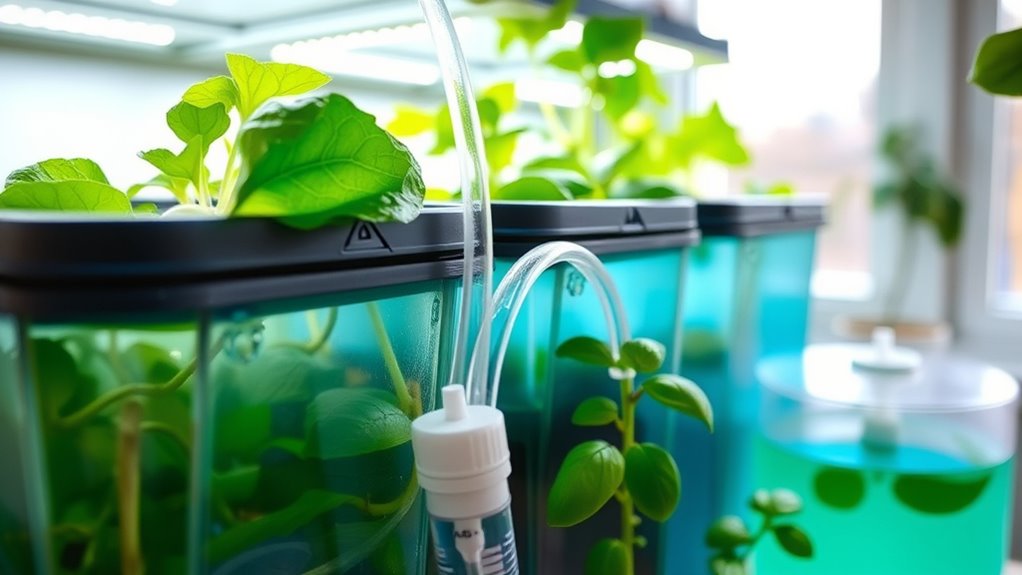

To build your own hydroponic kit without breaking the bank, start with repurposed household items like plastic containers and old buckets. Use affordable components such as a small water pump, air stones, and nutrient solutions, which are widely available online or at gardening stores. DIY systems allow customization and troubleshooting ease, saving money long-term. Keep experimenting and upgrading your setup, and you’ll discover even more ways to grow fresh produce affordably.

Get garden gear delivered free with Prime
- Fast, free delivery on millions of items
- Prime Video, Amazon Music and more included
- Member-only deals all year
Key Takeaways
- Use repurposed household items like plastic containers and buckets to minimize costs.
- Source affordable components such as water pumps and air stones from gardening stores or online.
- Follow DIY guides and tutorials to assemble customized hydroponic systems tailored to your space and needs.
- Reuse parts and upgrade incrementally to reduce ongoing expenses and improve system efficiency.
- Experiment with different designs like NFT, DWC, or wick systems to maximize learning and savings.
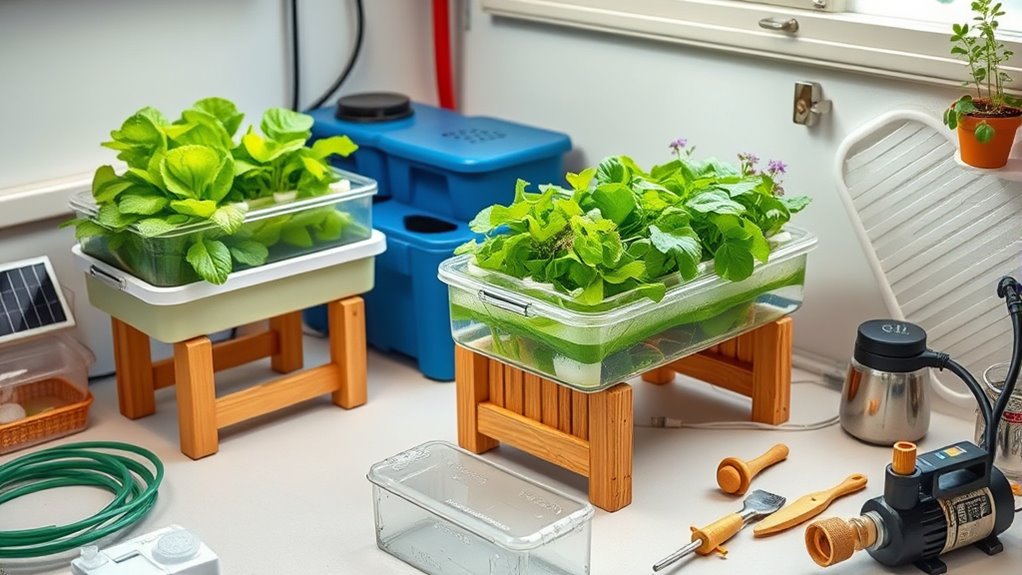
Building your own hydroponic kit is a rewarding way to grow plants efficiently at home, even if you’re new to gardening. Creating a DIY setup allows you to customize your system to fit your space, budget, and plant preferences, making it a practical and affordable project. When starting out, the key is to keep costs low without sacrificing quality or effectiveness. A DIY setup typically involves repurposing common household items and inexpensive materials, which helps you avoid the hefty price tags of commercial hydroponic systems. For example, using plastic containers, old buckets, or PVC pipes can serve as your growing chambers, reducing initial expenses considerably.
A cost comparison shows that building your own hydroponic kit can save you hundreds of dollars compared to buying a pre-made system. Commercial units often start at several hundred dollars for small setups and can go up sharply depending on size and complexity. In contrast, assembling your own can cost as little as $50 to $100, especially if you already have some materials on hand. You’ll mainly pay for essentials like a water pump, air stones, nutrient solutions, and growing media, all of which are readily available at gardening stores or online. The flexibility of a DIY setup means you can scale it up or down based on your budget, adding more components as you learn what works best for your plants.
Building your own hydroponic kit also offers the advantage of learning about each component’s function and how they work together. This hands-on approach not only saves money but deepens your understanding of plant growth and system maintenance. You can experiment with different designs, such as nutrient film technique (NFT), deep water culture (DWC), or wick systems, tailoring your project to your specific needs. Plus, many DIY guides and online tutorials provide step-by-step instructions, making the process straightforward even for beginners. Additionally, understanding the components of a hydroponic system can help you troubleshoot and optimize your setup more effectively.
In terms of ongoing costs, DIY systems tend to be more economical because you control the quality and quantity of nutrients and supplies you buy. You can reuse containers and parts, further cutting costs over time. Plus, if you face any issues, fixing or upgrading your system is simple and inexpensive, unlike replacing a commercial unit. Overall, a DIY hydroponic kit offers an affordable, educational, and customizable way to grow fresh produce at home without breaking the bank. It’s a smart choice for anyone looking to get started with soilless gardening while keeping expenses in check.
As an affiliate, we earn on qualifying purchases.
Frequently Asked Questions
What Are the Essential Components for a DIY Hydroponic Kit?
You need a few key components for a DIY hydroponic kit. Start with a container for your plants and nutrient solutions. Choose suitable hydroponic lighting options to guarantee proper growth. You’ll also need a water pump, air stone, and tubing. Don’t forget to prepare DIY nutrient solutions to keep plants healthy. These essentials make your setup functional and cost-effective, helping you grow plants efficiently at home.
How Much Space Do I Need for a Small Hydroponic System?
For a small hydroponic system, you’ll need to take into account space requirements and container sizing. Typically, a compact setup fits on a countertop or windowsill, needing about 1 to 2 square feet. Choose containers that allow enough room for plant roots to grow comfortably, usually around 6-12 inches deep. You don’t need much space—just enough to accommodate your plants and ensure proper airflow and maintenance.
Can I Grow All Types of Plants With Hydroponics?
Imagine a knight in shining armor—hydroponics can be your modern-day quest. You wonder if all plants thrive this way? Well, plant compatibility varies, and growth limitations depend on the plant type. Leafy greens flourish easily, but some root vegetables may struggle. While hydroponics offers versatility, not every plant is suited for it. Do your research and select compatible plants for a successful, thriving garden.
What Are the Common Mistakes to Avoid When Building a Kit?
When building your hydroponic kit, avoid common mistakes like neglecting pest prevention and lighting optimization. Failing to control pests can ruin your plants, so set up barriers or natural repellents early. Guarantee your lighting provides the right spectrum and intensity for healthy growth. Don’t overlook proper drainage or nutrient balance. Planning ahead and staying attentive to these details helps you create a successful, budget-friendly hydroponic setup.
How Do I Troubleshoot Nutrient Deficiencies in My System?
When troubleshooting nutrient deficiencies, start by checking your nutrient monitoring regularly to spot imbalances early. *Make sure* your pH adjustment is correct, as improper pH levels can lock out nutrients. Look for signs like yellowing leaves or stunted growth, then adjust nutrient levels accordingly. Keep a close eye on your system’s pH and nutrient concentrations, and make adjustments as needed to promote healthy plant development and prevent deficiencies.
small water pump for hydroponics
As an affiliate, we earn on qualifying purchases.
As an affiliate, we earn on qualifying purchases.
Conclusion
Building your own hydroponic kit is affordable and rewarding. For instance, imagine growing fresh herbs on your windowsill, saving money and enjoying farm-to-table freshness. By repurposing household items and following simple steps, you can create a system tailored to your needs. Whether you’re a beginner or looking to expand, DIY hydroponics offers a sustainable way to cultivate plants with minimal expense. Start small, experiment, and watch your green thumb thrive without breaking the bank.
air stones for hydroponic systems
As an affiliate, we earn on qualifying purchases.
As an affiliate, we earn on qualifying purchases.
As an affiliate, we earn on qualifying purchases.
Halloween Picks
halloween
As an affiliate, we earn on qualifying purchases.