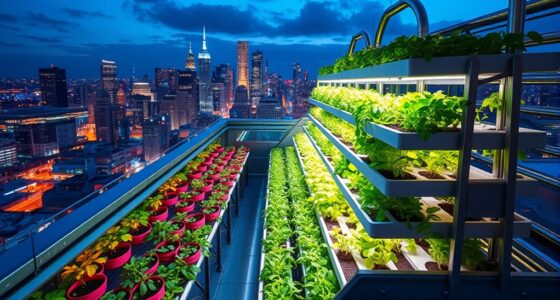
To keep hydroponic wall garden maintenance manageable, focus on consistent monitoring and balancing of nutrient levels, along with controlling pests naturally. Maintain cleanliness by regularly removing debris and applying physical barriers like netting to prevent pests before they become a problem. Use natural pest control methods and adjust nutrient solutions based on regular tests to prevent issues. Staying proactive with these practices can greatly simplify upkeep, and you’ll find even more tips if you continue exploring.
Key Takeaways
- Implement a consistent nutrient management schedule, regularly testing and adjusting EC and pH levels.
- Use physical barriers and beneficial insects to control pests naturally and reduce chemical interventions.
- Conduct frequent visual inspections for early pest or disease detection to enable targeted, minimal treatment.
- Keep the garden clean and debris-free to minimize pest habitats and promote plant health.
- Maintain biodiversity with beneficial plants and insects to enhance ecosystem resilience and reduce maintenance needs.

Have you ever wondered what it takes to keep a hydroponic wall garden thriving? The key lies in establishing a simple, effective rule that minimizes your maintenance workload while ensuring your plants stay healthy. One of the most important principles is to focus on integrated plant nutrition and pest control strategies. When you get these right, you’ll find that regular upkeep becomes more manageable, and your garden remains vibrant and productive.
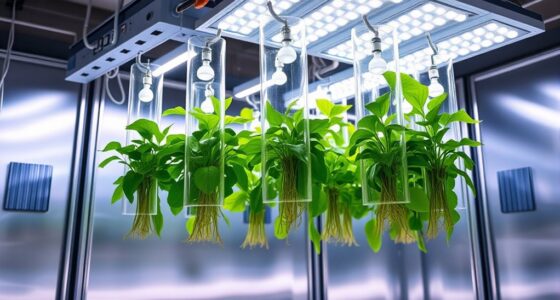
First, prioritize plant nutrition. In a hydroponic setup, nutrients are delivered directly to the roots via water, so maintaining a consistent and balanced nutrient solution is crucial. You want to keep an eye on the electrical conductivity (EC) and pH levels regularly, adjusting as needed to provide the ideal environment for your plants. Overfeeding can lead to nutrient buildup, which can cause root damage and attract pests, while underfeeding stalls growth. By sticking to a routine of testing and adjusting your nutrient mix, you prevent deficiencies and excesses that could complicate maintenance. This consistency reduces the chances of pests and diseases taking hold because healthy plants are naturally more resistant. Regularly monitoring nutrient levels helps to maintain this balance and promotes overall plant health. Incorporating proper water management techniques also supports this effort by preventing issues like root rot or nutrient imbalances.
Pest control is another critical aspect that influences how much effort your garden demands. A fundamental rule is to keep your garden clean and inspect your plants frequently. Remove any fallen leaves or debris, as they can become breeding grounds for pests and fungi. Using physical barriers like netting or sticky traps can catch pests early before they become a problem. Biological pest control methods, such as introducing beneficial insects, can also keep pest populations in check without chemical interventions. When pests are detected early, you can target them precisely, preventing widespread infestations that demand more labor-intensive treatments later. Avoid the temptation to overuse pesticides, as they can harm your plants and beneficial organisms, making pest control more complicated in the long run.
The overarching rule that keeps maintenance reasonable is to establish a routine of regular monitoring and early intervention. By consistently checking your plant nutrition levels and inspecting for pests, you can catch issues before they escalate. This proactive approach means you spend less time on emergency fixes and more time enjoying your lush, thriving garden. Keep your nutrient solution balanced, stay vigilant for pests, and maintain cleanliness. Additionally, understanding the importance of biodiversity in pest management can enhance your garden’s resilience. Incorporating diverse beneficial insects and plants can create a balanced ecosystem that naturally suppresses pest outbreaks and reduces the need for chemical controls. When you follow this straightforward rule, your hydroponic wall garden remains a manageable, rewarding project rather than a demanding chore. Ultimately, the secret to low-maintenance gardening lies in prevention and early action, making your garden a source of joy without the hassle.

Awesome Plant 4-in-1 pH Meter TDS EC Meter for Hydroponics Growing System, Digital Water pH Tester for Hydroponic Nutrient Plant Food Solution, DWC Setup and Indoor Garden, Compatible with Aerogarden
pH Tester for Growers: Optimal pH range for most hydroponic plants is 5.3-6.5. If the pH is too…
As an affiliate, we earn on qualifying purchases.
As an affiliate, we earn on qualifying purchases.
Frequently Asked Questions
How Long Does It Take for Plants to Mature in a Hydroponic Wall?
Plant growth in a hydroponic wall typically takes about 2 to 4 weeks for seedlings to reach maturity, depending on the plant type. The maturation timeline varies: leafy greens like lettuce mature faster, within 3-4 weeks, while herbs may take around 4-6 weeks. You can anticipate quicker growth compared to soil gardening, as nutrient delivery is optimized. Regular monitoring ensures healthy plant development and timely harvests.
What Is the Most Cost-Effective Hydroponic Wall System?
You’ll find that a DIY drip irrigation system offers the most cost-effective hydroponic wall setup. It simplifies plant support and minimizes pest control issues, reducing ongoing costs. By using readily available parts, you avoid unnecessary expenses and guarantee easy maintenance. This approach allows your garden to flourish with less intervention, making it an efficient choice for those seeking affordability while keeping plant support and pest control manageable.
Can I Grow All Types of Plants Vertically?
You can’t grow all types of plants vertically because plant height and root space matter. Tall plants like tomatoes or beans need more vertical room, while root-heavy plants like carrots or potatoes require more root space that might be limited in a wall system. Choose plants suited to your wall’s height and available root space, or select smaller varieties to guarantee healthy growth and easy maintenance.
How Often Should Nutrient Solutions Be Replaced?
You should replace nutrient solutions every two to three weeks to maintain ideal plant health. During this time, regularly check nutrient concentration and pH balancing to guarantee plants receive the right nutrients and avoid deficiencies. Replacing the solution prevents salt buildup and maintains a balanced environment. Monitoring these factors helps keep your hydroponic wall garden thriving and reduces the risk of root problems or nutrient imbalances.
Is Special Lighting Required for Indoor Hydroponic Walls?
Yes, special lighting is typically needed for indoor hydroponic walls. You should use LED lighting because it’s energy-efficient and customizable. Focus on providing the right plant spectrum, especially full-spectrum LEDs that mimic natural sunlight. This guarantees your plants get the necessary light for photosynthesis and growth. With proper LED lighting, your hydroponic wall thrives, staying healthy and vibrant while keeping energy costs low and maintenance manageable.

Kate's Home & Garden Peppermint Oil Spray for Bugs, Ants, Insects, Spiders, Roaches, Stink Bug. Pesticide and Insecticide Indoor Repellent Pest Control with Cedar Oil (16oz, Natural, Non Toxic)
PEPPERMINT SPRAY FOR BUGS: This natural bug repellent for home is made with peppermint and cedarwood oil for…
As an affiliate, we earn on qualifying purchases.
As an affiliate, we earn on qualifying purchases.
Conclusion
To keep your hydroponic wall garden healthy and hassle-free, follow the fundamental rule of regular, reliable maintenance. Maintain a mindful method—monitor moisture, manage nutrients, and clear clogs—so your garden grows gracefully with little fuss. By balancing your basic procedures, you’ll foster a flourishing, fuss-free fortress of foliage. Remember, consistent care cultivates a colorful, mesmerizing canopy, transforming your space into a lush, lively landscape—an effortless oasis that rewards your routine with radiant results.

ORIMERC 12 Pack 3 inch Net Cups Pots with 12 feet Hydroponics Self Watering Wick & 12 Plant Labels Aquaponics Mason Jar Bucket Insert Orchid kratky Vegetable Garden Growing Netted Basket Slotted Mesh
Package Includes: 12 pcs Net Pots, 12 feet self-watering capillary wick cord, and 12 pcs plant labels. With…
As an affiliate, we earn on qualifying purchases.
As an affiliate, we earn on qualifying purchases.

Live Beneficial Nematodes Hb+Sc+Sf – Kills Over 200 Different Species of Soil Dwelling and Wood Boring Insects. (5 Million_Nematodes)
Check the "Guide" under images to determine which nematodes you need
As an affiliate, we earn on qualifying purchases.
As an affiliate, we earn on qualifying purchases.