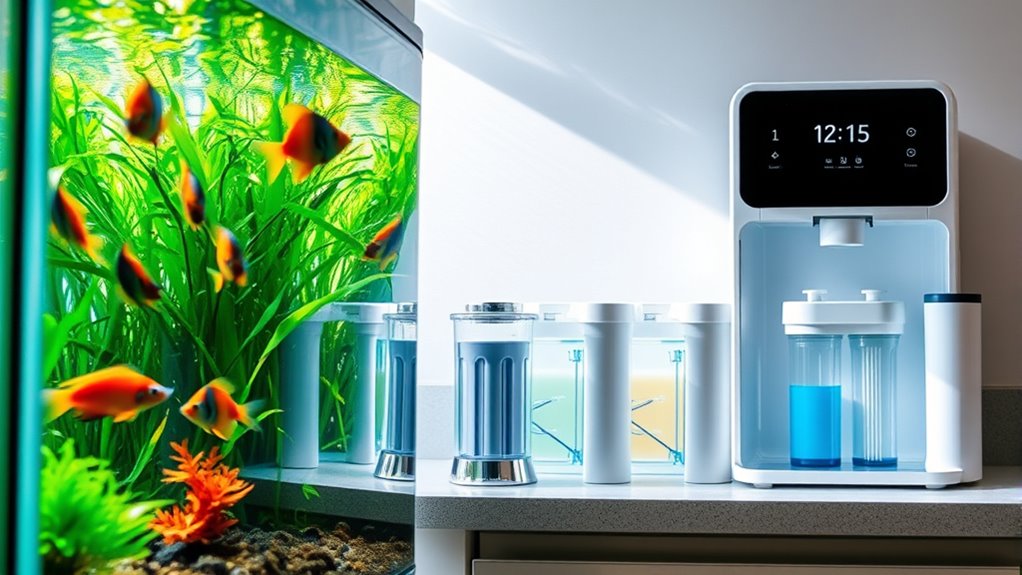

To keep your water systems healthy, change the water regularly based on the setup. For freshwater aquariums, aim for weekly changes of 10-20%, or more if the tank is heavily stocked or tests show elevated toxins. Household features like ponds or fountains may need top-offs or partial changes every week or two, especially in warmer weather. Monitoring water quality and noticing visual cues help you decide when to act. Keep going to learn how to fine-tune your maintenance schedule for each system.
Key Takeaways
- Follow weekly water change routines of 10-20% for freshwater aquariums, increasing frequency if heavily stocked or toxins rise.
- Regularly test water parameters like ammonia, nitrite, nitrate, and pH to determine if more frequent changes are needed.
- Observe visual cues such as cloudiness, foul odors, and fish behavior to identify water quality issues requiring prompt changes.
- Adjust water change frequency for household features based on debris buildup, algae growth, and clarity, especially in warmer months.
- Increase water change frequency in systems with high bioload, heavy algae, or signs of poor water quality to maintain a healthy environment.
Changing the water regularly is vital to keeping your aquarium or household water features healthy and safe. Consistent water changes help prevent the buildup of toxins, reduce algae growth, and support a balanced ecosystem. If you’re serious about maintaining a thriving aquarium, you’ll want to develop a routine that includes regular water changes, but how often depends on your system’s size, stocking levels, and filtration efficiency.
A key part of effective aquarium maintenance is water quality testing. This allows you to monitor parameters like ammonia, nitrite, nitrate, and pH levels. When these levels start to drift outside of ideal ranges, it’s a clear sign that more frequent water changes are needed. For most freshwater tanks, a weekly change of about 10-20% of the water is recommended, but if your aquarium is heavily stocked or if water quality testing indicates elevated toxins, you might need to increase this to 25-30% every week. Saltwater systems often require more careful monitoring, but similar principles apply—regular testing and partial water changes are vital for maintaining stability and preventing issues like coral stress or pathogen buildup.
In addition to testing, paying attention to the visual health of your water and the behavior of your aquatic inhabitants can guide your schedule. Cloudy water, foul odors, or fish showing signs of stress are indicators that you should perform water changes sooner rather than later. Proper water quality management is essential for a healthy aquatic environment. For household water features such as fountains or ponds, the frequency depends on factors like debris accumulation, algae growth, and water clarity. These systems may require weekly or bi-weekly top-offs and partial changes, especially during warmer months when algae blooms tend to develop rapidly.

enomol Gravel Vacuum for Aquarium Water Changer Fish Tank Cleaning Tools,Siphon Universal Quick Pump Aquarium Water Changing (30ft)
- Quick Water Change System: Requires two valves and a long hose
- No Buckets or Spills: Easy to install and operate without mess
- Noiseless Gravel Cleaning: Built-in filter with gentle agitation
As an affiliate, we earn on qualifying purchases.
As an affiliate, we earn on qualifying purchases.
Frequently Asked Questions
Does Water Change Frequency Differ Between Indoor and Outdoor Systems?
Yes, water change frequency differs between indoor and outdoor systems. You should change water more frequently in indoor systems because they tend to accumulate contaminants faster due to limited ventilation and controlled environments. Outdoor systems, however, can often go longer between changes because they’re exposed to natural elements, which help keep the water cleaner. Regularly check water quality in both systems to determine the best schedule for changing it.
Are There Health Risks Associated With Infrequent Water Changes?
Yes, infrequent water changes can pose health risks. Waterborne pathogens may grow if you neglect to refresh water regularly, increasing the chance of illness. Chemical buildup from stagnant water can also cause harmful effects. To protect your health, you should change water according to system recommendations, ensuring it stays clean and safe. Regular maintenance minimizes these risks, keeping your environment healthier and reducing exposure to contaminants.
How Does Water Quality Impact the Rate of Change Needed?
You might notice that poor water quality speeds up the need for change. When water contamination or chemical buildup occurs, it directly impacts how often you should change it. Dirty or chemically imbalanced water accelerates system wear and increases health risks. To keep things safe and efficient, monitor water quality closely, and change it more frequently when contamination or buildup becomes evident. Staying proactive ensures ideal system performance and safety.
Can Using Water Additives Reduce the Need for Frequent Changes?
Using water additives can reduce how often you need to change water, but they shouldn’t completely substitute regular maintenance schedules. Additives help control bacteria, algae, and mineral buildup, extending the time between water changes. However, you still need to follow recommended maintenance routines to ensure water quality stays high. Relying solely on additives isn’t enough; combine them with proper maintenance to keep your system running smoothly.
What Are Signs Indicating It’s Time to Change the Water Sooner?
You should change the water sooner if you notice water discoloration or a foul odor. These signs indicate buildup of bacteria, algae, or debris, which can harm your system and reduce water quality. Don’t ignore these cues—promptly replacing the water helps prevent problems and keeps your system running smoothly. Regular monitoring allows you to catch these issues early, ensuring a healthier, cleaner environment.

API FRESHWATER MASTER TEST KIT 800-Test Freshwater Aquarium Water Master Test Kit, White, Single, Multi-colored
- Kit Contents: Includes test kit, solutions, color card, and tubes
- Water Quality Monitoring: Helps detect harmful water issues
- Vital Parameters Tested: Measures pH, high pH, ammonia, nitrite, nitrate
As an affiliate, we earn on qualifying purchases.
As an affiliate, we earn on qualifying purchases.
Conclusion
Remember, keeping water fresh is key to avoiding a modern-day Pandora’s box of problems. Whether you’re using a fish tank, humidifier, or garden pond, follow the recommended schedule to prevent algae, bacteria, and foul odors. Don’t let your water turn into a swamp like the infamous swamps of the Everglades. Regular changes keep everything running smoothly, so your system stays healthy and pristine. Stay vigilant, and your water will thank you for it!

API TAP WATER CONDITIONER Aquarium Water Conditioner 16-Ounce Bottle
- Product Quantity: 16-Ounce Bottle of Conditioner
- Chemical Neutralization: Neutralizes chlorine, chloramines, and chemicals
- Fish Safety: Prevents gill damage and tissue irritation
As an affiliate, we earn on qualifying purchases.
As an affiliate, we earn on qualifying purchases.

API POND CHLORINE & HEAVY METAL NEUTRALIZER Pond Water Neutralizer 32-Ounce Bottle
- Product Quantity: 32-ounce bottle
- Chemical Removal: Removes chlorine and heavy metals
- Safety Feature: Makes tap water safe for fish
As an affiliate, we earn on qualifying purchases.
As an affiliate, we earn on qualifying purchases.