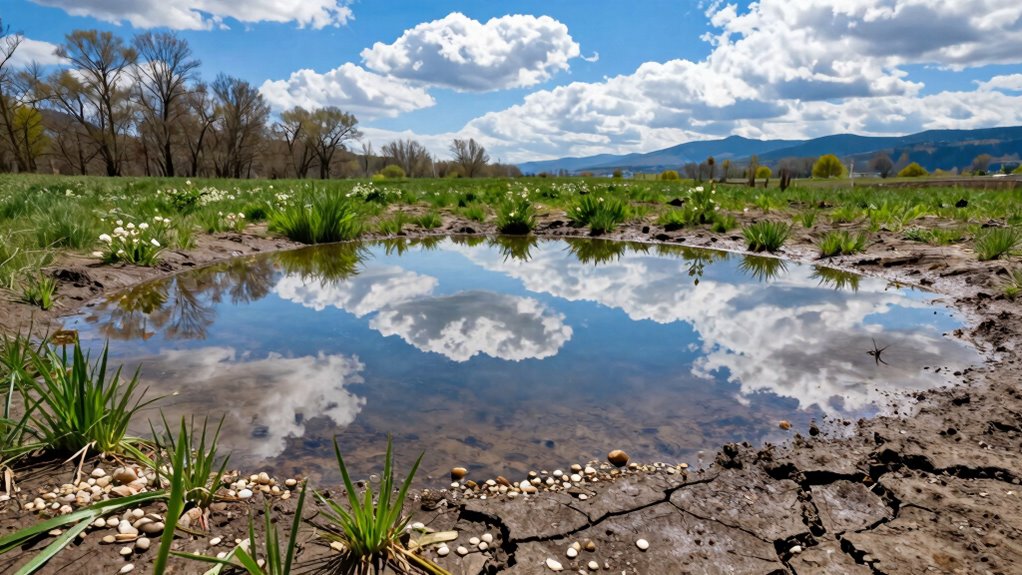

In spring and summer, higher temperatures increase evaporation from lakes, rivers, and reservoirs, causing water levels to drop faster. Reduced rainfall during these seasons means less water replenishes what’s lost, and dry, exposed land accelerates evaporation even more. Wind and sunlight also make water evaporate quicker, especially when the land is dry. If you want to understand how these factors work together and affect water resources, keep exploring this important topic.

Get garden gear delivered free with Prime
- Fast, free delivery on millions of items
- Prime Video, Amazon Music and more included
- Member-only deals all year
Key Takeaways
- Higher temperatures increase evaporation, causing water to escape more rapidly from lakes and reservoirs.
- Reduced spring and summer rainfall limits natural water replenishment, accelerating water level decline.
- Warm weather and dry land conditions amplify evaporation rates beyond rainfall input.
- Short, intense storms often do not offset the faster evaporation during warmer months.
- Seasonal climate patterns naturally lead to faster water level drops in spring and summer.

As spring and summer arrive, you may notice water levels in lakes, rivers, and reservoirs dropping more quickly than usual. This change happens because of several natural factors, primarily evaporation rates and rainfall impact. As temperatures rise, water naturally evaporates faster, leaving less behind to sustain the water bodies you see. The heat causes water molecules to escape into the air more rapidly, increasing evaporation rates *considerably* compared to cooler months. You might also observe that during these warmer seasons, the water disappears from surface areas faster than it can be replenished, creating a noticeable drop in water levels.
Rainfall plays a *vital* role in this seasonal decline, but its impact can vary. In some regions, spring and summer bring less frequent or less intense rainfall, which means less new water enters lakes, rivers, and reservoirs. When rainfall is scarce, the natural replenishment process slows down or stops altogether. Without enough rain, the existing water keeps evaporating, and the water level drops even more quickly. On the other hand, if you live in an area with heavy summer storms, you might think rainfall would offset evaporation losses. However, even during rainy periods, evaporation rates can outpace rainfall, especially if the storms are brief or localized, which means overall water levels still tend to decline.
You might also notice that the combination of increased temperatures and decreased rainfall creates a *compounding* effect. Higher temperatures boost evaporation, while reduced rainfall means less new water coming into the system. This synergy accelerates the drop in water levels, leaving lakes and reservoirs shallower than they were in spring. This process is further influenced by the condition of the surrounding land—dry, cracked soil and sparse vegetation can contribute to faster evaporation by exposing more water surface to direct sunlight and wind.
Understanding these natural dynamics helps explain why your local water bodies seem to shrink faster during spring and summer. The interplay of evaporation rates and rainfall impact is central; as temperatures climb, evaporation accelerates, and if rainfall doesn’t keep up, the water levels decrease. This pattern highlights the importance of seasonal weather patterns and climate factors in managing water resources. It’s a reminder that, during these warmer months, you should be mindful of water conservation, as natural forces work against maintaining high water levels.
water level measurement tools for lakes
As an affiliate, we earn on qualifying purchases.
As an affiliate, we earn on qualifying purchases.
Frequently Asked Questions
How Does Evaporation Specifically Increase During Warmer Months?
During warmer months, evaporation speeds up because of increased solar radiation and higher temperatures. The sun’s rays provide more energy, causing water molecules to move faster and escape into the air. As temperatures rise, this process accelerates, leading to faster water loss from ponds or reservoirs. You’ll notice this effect more in spring and summer, when the heat is strongest, and the sun’s radiation is at its peak.
Are There Regional Differences in Water Level Drops?
Yes, regional differences affect water level drops. In areas with a dry regional climate, water levels decline faster due to higher evaporation rates and limited rainfall. Conversely, regions with lush local vegetation tend to retain water longer because plants help stabilize moisture and reduce evaporation. Your local environment plays a significant role in how quickly water levels drop, with climate and vegetation working together to influence these changes.
Can Plant Growth Impact Water Levels in Reservoirs?
A healthy plant is a healthy ecosystem, but it can also impact water levels. When plants grow in aquatic ecosystems, they absorb water, which can lower reservoir levels, especially during spring and summer when growth peaks. This highlights the importance of water conservation, as lush plant growth can accelerate water loss. Staying mindful of how plant activity affects reservoirs helps you appreciate the delicate balance that sustains our water supply.
How Do Human Activities Affect Water Level Fluctuations?
Human activities directly influence water level fluctuations through industrial pollution and urbanization effects. When industries discharge waste into water bodies, it contaminates and reduces water quality, leading to decreased usable water. Urbanization increases runoff from paved surfaces, causing water levels to fluctuate more rapidly and often lowering overall reserves. These activities strain water sources, making it essential for you to support sustainable practices to maintain healthy water levels.
What Role Does Groundwater Depletion Play in Water Level Drops?
Groundwater depletion is critically important to water level drops, especially during dry seasons. When you overuse groundwater, aquifer recharge can’t keep up, causing levels to fall. Reduced surface runoff means less water infiltrates into aquifers, worsening the depletion. As a result, wells dry up sooner, and the overall water supply diminishes. Managing surface runoff and supporting aquifer recharge are essential to maintaining stable groundwater levels and preventing further depletion.
water conservation devices for reservoirs
As an affiliate, we earn on qualifying purchases.
As an affiliate, we earn on qualifying purchases.
Conclusion
As spring and summer arrive, you might notice your water level drops faster, but it’s not just about the season. Think of your water supply like a sponge—when temperatures rise, evaporation speeds up, soaking up more water. Even if you’re careful about usage, the heat and sunlight work against you. By understanding these natural processes, you can better plan and conserve, ensuring your water lasts longer through the warmer months.
evaporation reduction products for ponds
As an affiliate, we earn on qualifying purchases.
As an affiliate, we earn on qualifying purchases.
As an affiliate, we earn on qualifying purchases.
Fall Picks
fall essentials
As an affiliate, we earn on qualifying purchases.