To prevent algae and keep water crystal clear in your hydroponic system, control light exposure by covering tanks and blocking UV rays. Use high-quality, opaque containers and guarantee proper sealing. Improve filtration with UV sterilizers and promote good water circulation to prevent stagnant areas. Regularly test water pH and nutrients, clean filters, and remove debris. Incorporate natural algae preventatives like beneficial bacteria. Keep these strategies in mind, and you’ll master algae control in your system.

Get garden gear delivered free with Prime
- Fast, free delivery on millions of items
- Prime Video, Amazon Music and more included
- Member-only deals all year
Key Takeaways
- Control light exposure by using opaque covers and UV-resistant materials to prevent algae growth.
- Maintain proper water filtration, circulation, and regular cleaning to reduce debris and stagnant zones.
- Choose UV-resistant, opaque containers and seal openings tightly to block light and prevent algae entry.
- Regularly test water pH and nutrients, and perform system maintenance to prevent algae-promoting conditions.
- Incorporate natural algae suppressants like beneficial bacteria or barley straw extract for ongoing prevention.
Control Light Exposure to Limit Algae Growth
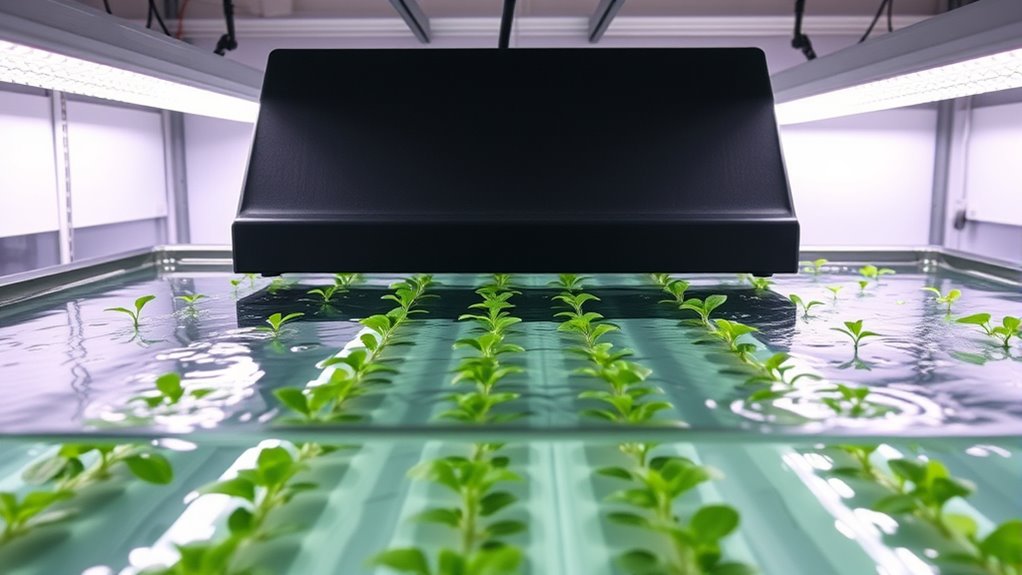
Since algae thrive in light, managing light exposure is essential for preventing their growth in hydroponic systems. UV light, in particular, can promote algae spores’ activation and proliferation. To minimize this, guarantee your system is covered or shielded from direct sunlight, especially UV rays, which can penetrate clear containers. Use opaque or UV-resistant materials for tanks and covers to block harmful light. Keep lights away from water surfaces or install shields to prevent unnecessary exposure. Additionally, controlling the light spectrum can influence algae growth and help maintain water clarity. By controlling the amount and type of light reaching your hydroponic setup, you reduce the chances of algae spores germinating and multiplying. Consistent light management helps maintain clear water and a healthy growing environment, making algae prevention more effective and manageable.
Use Proper Water Filtration and Circulation Techniques
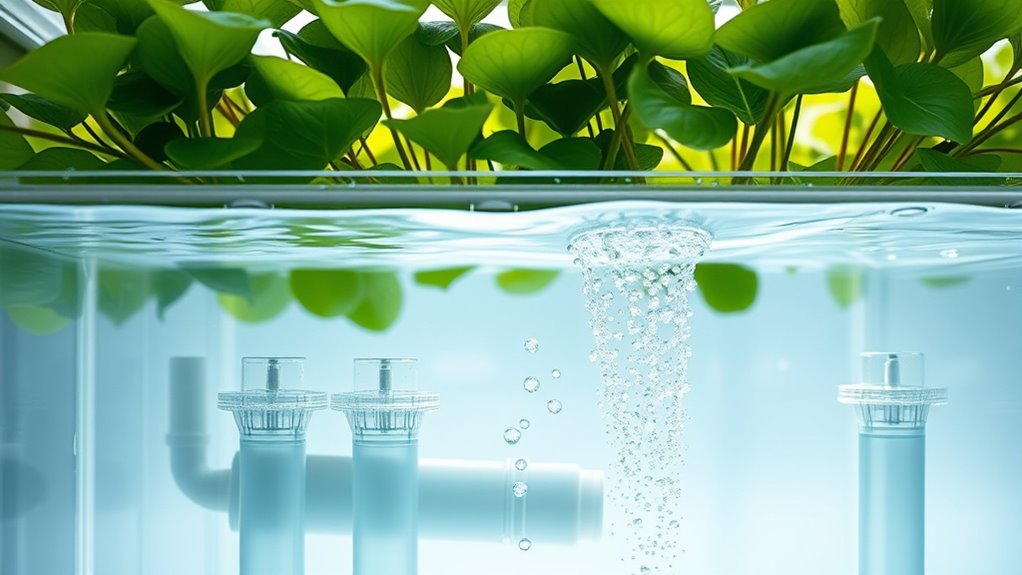
Proper water filtration and circulation are essential in preventing algae growth in your hydroponic system. Using a high-quality filter helps remove debris and organic matter that algae feed on, keeping water clean. Incorporate UV sterilization to kill algae spores and pathogens, ensuring your system remains clear and healthy. Good circulation prevents stagnant zones where algae can thrive by evenly distributing nutrients and oxygen throughout the water. Additionally, maintaining beneficial bacteria promotes a balanced microbial environment that naturally outcompetes algae for resources. Regularly cleaning and monitoring your water flow minimizes dead spots and reduces the chances of algae taking hold. Implementing Volkswagen TDI Tuning techniques can also improve water system efficiency by optimizing pump performance and energy use. By combining effective filtration, UV sterilization, and proper circulation, you create a hostile environment for algae, maintaining crystal-clear water for your hydroponic plants.
Select the Right Container Materials and Cover Openings
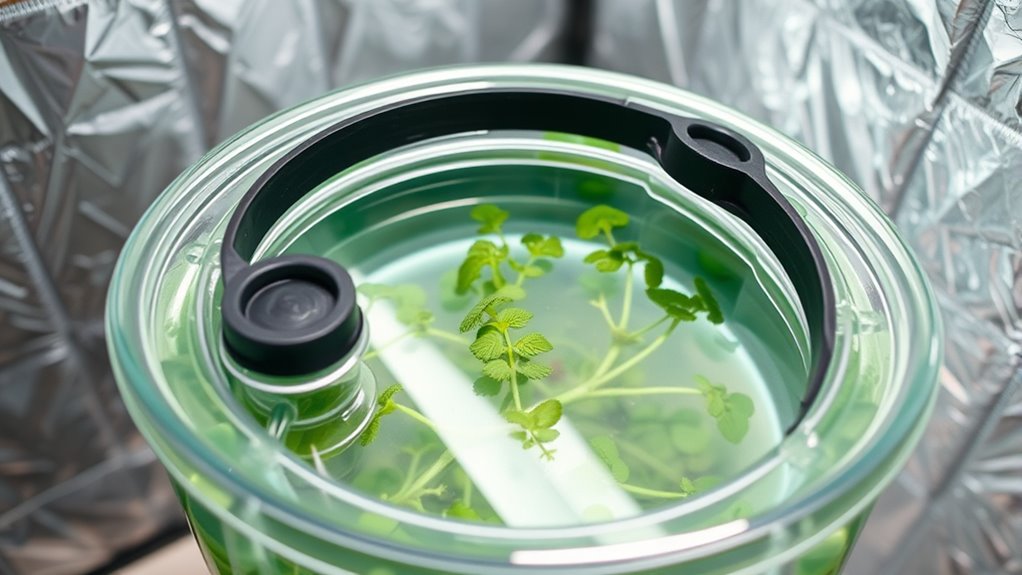
Choosing the right container materials and cover openings is essential for preventing algae from establishing in your hydroponic system. Opt for containers made from durable materials like high-quality plastic or UV-resistant materials that withstand sunlight without degrading. Avoid containers that easily crack or warp, as compromised durability can lead to cracks where algae can grow. Material transparency is also crucial; opaque containers block light from reaching algae spores, reducing their chance to thrive. Cover openings should fit tightly to prevent light infiltration and minimize debris entry. Proper sealing keeps algae at bay and maintains water clarity. Additionally, understanding algae prevention strategies can further enhance your system’s resistance to contamination. By selecting sturdy, opaque containers with secure covers, you create a less inviting environment for algae to develop, helping you maintain crystal-clear water in your system.
Regular Maintenance and Water Testing Practices
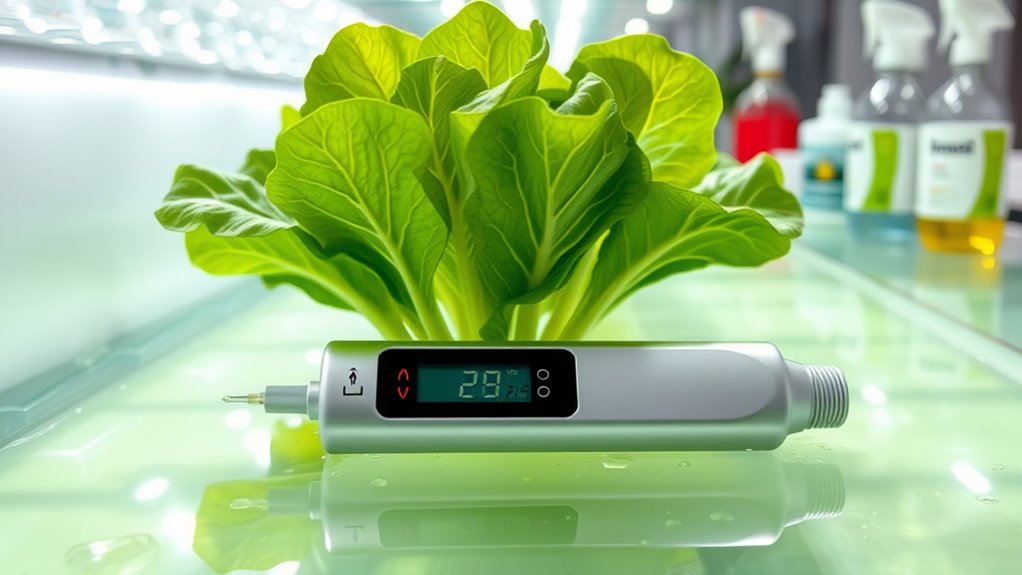
Regular maintenance and water testing are essential for keeping your hydroponic system healthy and algae-free. Consistently monitoring pH levels and nutrient balancing ensures ideal plant growth and prevents algae buildup. By checking water parameters regularly, you catch imbalances early, reducing the risk of algae proliferation. Establish a routine to clean filters, remove debris, and inspect components. Use the following table to understand the emotional impact of diligent care:
| Routine Checks | Water Quality | Plant Health |
|---|---|---|
| Confidence in growth | Clear, algae-free water | Thriving, vibrant plants |
| Peace of mind | Balanced nutrients | Healthy roots and leaves |
| Satisfaction | Consistent yields | Joy in successful gardening |
Staying vigilant helps you maintain a pristine, algae-free environment, ensuring your hydroponic success. Proper filtration HEPA filtration and regular filter replacement play crucial roles in maintaining water clarity and preventing algae growth.
Incorporate Natural Algae Suppressants and Preventative Products
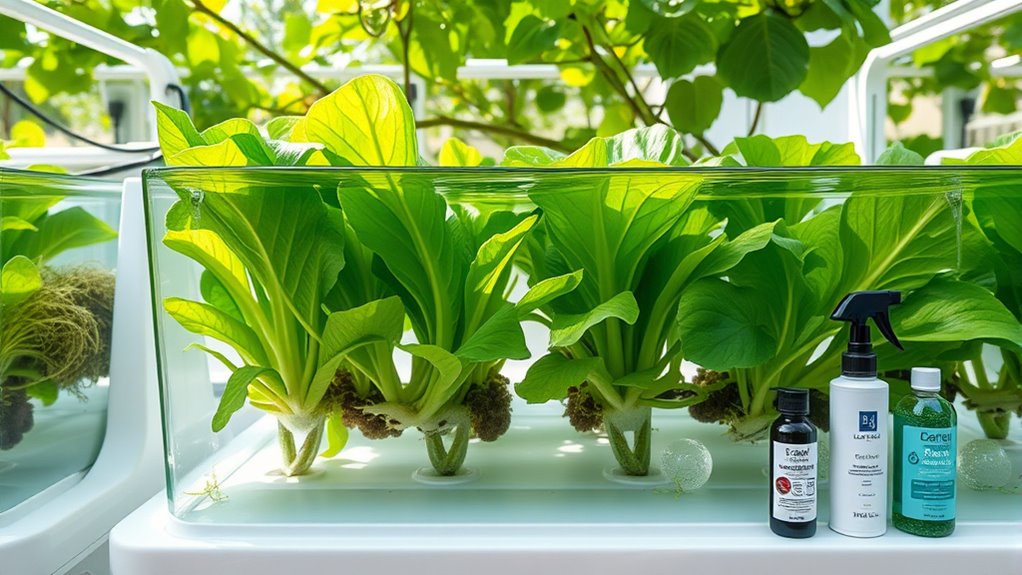
Incorporating natural algae suppressants and preventative products into your hydroponic system offers an effective way to keep algae at bay without relying on harsh chemicals. Natural deterrents like barley straw extract or beneficial bacteria can inhibit algae growth by competing for nutrients and disrupting algae development. Algae inhibitors such as copper-based solutions or plant-based oils can also be used carefully to prevent algae from establishing. These products work proactively to create an environment less favorable for algae, reducing the need for frequent cleaning. Always choose natural options compatible with your system’s plants and monitor their effects regularly. Implementing sustainable practices can further enhance your system’s health and maintain crystal-clear water more effectively.
Frequently Asked Questions
How Does Temperature Affect Algae Growth in Hydroponic Systems?
Temperature affects algae growth in your hydroponic system by influencing its metabolic rate. When temperatures are too high, algae thrive due to faster growth, especially with increased light exposure. Proper temperature regulation slows algae development, keeping your water clear. You should monitor and maintain ideal temperatures, reduce excessive light exposure, and guarantee good circulation. Doing so helps prevent algae from taking over, ensuring healthy plants and crystal-clear water.
Can Certain Nutrients Promote or Inhibit Algae Development?
Certain nutrients can either promote or inhibit algae development. An imbalance, especially excess nutrients like nitrogen and phosphorus, encourages algae growth. Conversely, maintaining proper nutrient levels and limiting light exposure helps suppress algae. You should regularly check your nutrient solution, avoid over-fertilizing, and control light exposure to prevent algae from thriving. Proper management of nutrients and light reduces algae risks, keeping your hydroponic system clean and clear.
What Are the Signs That Algae Has Begun to Infest the System?
Ever wondered how to spot algae early? Algae detection starts with noticing water discoloration—green, cloudy, or slimy water signals its presence. You might also see surface films or tiny filaments in your system. Regularly inspecting your water helps catch algae infestations fast, preventing it from spreading. Keep an eye out for these signs, and you’ll maintain clean, healthy hydroponic systems with crystal-clear water.
Are There Specific Hydroponic System Types More Prone to Algae?
Some hydroponic system types are more prone to algae because of their design and light exposure. Systems with open designs or those that allow light to reach nutrient-rich water encourage algae growth. For instance, flood-and-drain or NFT systems with minimal cover are more vulnerable. To reduce algae, you should minimize light exposure by covering tanks and choosing designs that prevent light from reaching the water, keeping your system clear and healthy.
How Often Should I Replace Water to Prevent Algae Buildup?
Did you know that untreated hydroponic water can develop algae within just a few days? To keep algae prevention high and maintain water quality, you should replace your water every 1 to 2 weeks. Regular water replacement prevents nutrient buildup and limits algae growth. Consistent maintenance guarantees your system stays clean, healthy, and crystal clear, giving your plants the best environment to thrive without algae interference.
Conclusion
By following these simple steps, you’re well on your way to crystal-clear water and healthier plants. But don’t let your guard down — algae can still sneak in when you least expect it. Stay vigilant, keep monitoring, and be ready to act at the first sign of trouble. The secret to algae-free hydroponics isn’t just prevention; it’s staying one step ahead. Will you be prepared when the next challenge arises?
Halloween Picks
halloween
As an affiliate, we earn on qualifying purchases.