TL;DR
A Planet Natural guide identifies three red flags that should make gardeners delay fall tree planting until spring: a poorly draining site, too little time for roots to establish before frost, and nursery stock that is already stressed or root bound. Healthy container-grown trees in workable, well-drained soil can still be planted successfully in early fall.
Fall can be an excellent season for planting trees — but only when the site, the tree, and the calendar cooperate, according to a newly published guide from gardening resource Planet Natural. The report identifies three red flags that should prompt gardeners to delay planting until spring: a site that does not drain, too little time for roots to establish before the ground freezes, and nursery stock that is already stressed or root bound.
The first red flag is poor site drainage. Planet Natural advises against planting a tree into a hole that holds water long after rain or irrigation, because roots need oxygen as well as moisture and a saturated planting hole can act as a “bathtub around the root ball”. The guide recommends testing the site by observing it after a storm, and cautions that adding gravel to the bottom of a hole does not correct an entire poorly drained soil profile. Correct planting technique still applies: set the root flare at or slightly above grade, backfill with native soil, and mulch broadly while keeping mulch away from the trunk.
The second red flag is insufficient root-establishment time, what the guide calls “too little runway.” A large tree planted late in a short season, or at a high-elevation site, may not experience enough mild soil conditions to begin settling in before a freeze. The same risk applies to marginally hardy species or trees placed in wind-exposed, south- or west-facing stress sites. The guide notes that a late calendar date is not automatically safe just because the soil is not frozen on a given day, and that establishment commonly takes years, especially for larger stock.
The third red flag is stressed nursery stock. The guide recommends inspecting trees before buying: intact bark, season-appropriate foliage, a visible root flare, and no signs of pest, disease, or drought stress. Where nurseries allow it, buyers should slide a container tree partly from its pot to check the roots. Healthy fine roots are generally firm and light colored, while a dense mass of circling roots, black slimy roots, or roots escaping every drainage hole signals a plant needing correction or replacement. Circling roots should be corrected before planting by teasing, vertical cuts, or shaving the outer root mass — and the guide states plainly: “Never plant a tree still inside a plastic nursery pot.”
Why the Plant-or-Wait Decision Matters
The decision determines whether a tree survives its first winter at all. According to the guide, the root environment and aftercare — not the planting date — decide whether a tree gets the healthy spring start it was purchased for. A stressed, marginally hardy, root-bound tree placed in a wet site in late fall represents a materially different risk than a healthy container-grown tree in workable soil planted in early fall.
For gardeners, the practical stakes are financial and seasonal: a failed fall planting means losing both the cost of the tree and a full growing season. The guide’s framework gives buyers a way to evaluate risk before committing, and it offers a fallback — holding a container tree in a protected location — that preserves the option to plant in spring without abandoning a fall purchase.
How to Hold a Tree Until Spring
When red flags make spring the safer choice, the guide says a container-grown tree can often be held temporarily in a protected outdoor location, out of drying wind and strong afternoon sun. The root ball should be checked frequently and watered as it begins to dry, because container media can dry much faster than garden soil. The tree should not stand in a saucer or be covered so tightly that water cannot drain.
For longer delays, the guide recommends asking the supplying nursery for species-specific overwintering advice. It warns that a tree’s hardiness rating does not automatically protect its containerized root ball, since containers expose roots to colder temperatures than roots in the ground. In some climates, heeling a container or root ball into protected mulch or soil is appropriate; in others, a nursery can overwinter the tree more reliably.
What the Guide Leaves to Judgment
The guide offers a decision framework rather than fixed rules, and several calls remain site- and species-specific. It does not specify exact planting cutoff dates, noting instead that safe timing depends on local first-freeze patterns, elevation, and microclimate. Whether to plant a marginal case is left to the gardener’s judgment, with the guide recommending consistent watering and a mulch ring if planting proceeds.
It also does not resolve which overwintering method suits a given climate, directing readers to nurseries for species-specific advice. The report is guidance from a single gardening resource; it does not cite regional field trials or university extension data to support its thresholds.
Steps Before the Ground Freezes
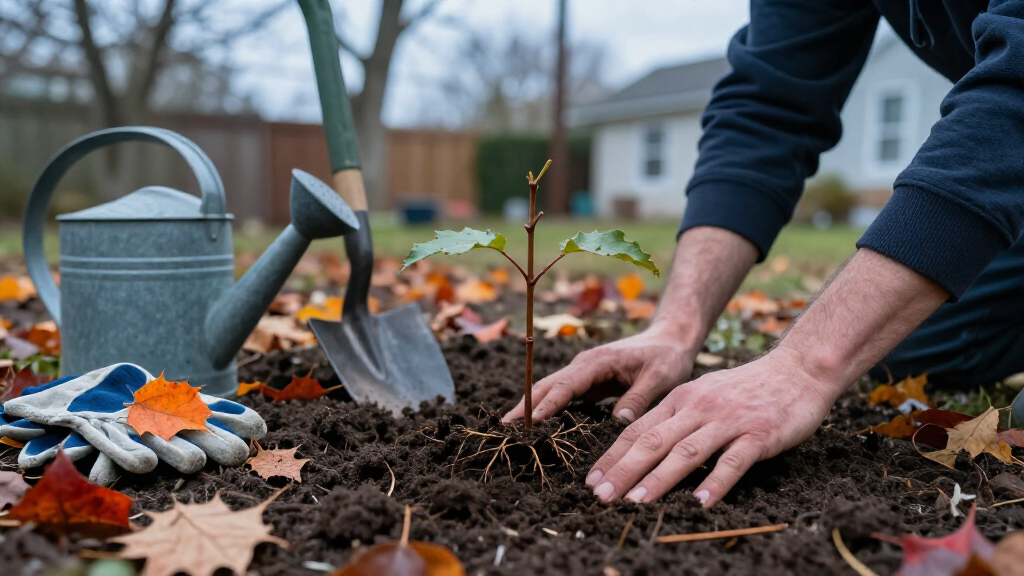
Gardeners who proceed with fall planting should dig a hole no deeper than the root ball and wide enough for roots to expand into loosened surrounding soil, water deeply to settle the soil, and apply a 2 to 4 inch mulch ring that does not touch the bark. The guide advises checking the root ball separately from surrounding soil, since container mixes dry differently than native soil, and continuing to water through dry fall weather until the ground freezes — without keeping the tree constantly saturated.
Gardeners who wait should set up their holding plan now: a sheltered spot, routine root-ball checks, and nursery overwintering advice where needed. In both cases, the guide notes that newly planted trees may need aftercare well beyond the first fall, with establishment commonly taking years for larger stock.
Key Questions
Is fall actually a good time to plant trees?
Yes, in the right conditions. According to the Planet Natural guide, fall often works well because air is cooler while soil can still support root growth. A healthy container-grown tree in workable, well-drained soil can be planted successfully in early fall.
How do I test whether my planting site drains properly?
The guide recommends observing the site after a storm or irrigation. A hole that holds water long after rain signals a drainage problem that should be corrected before planting, or the species and location changed. Gravel in the bottom of the hole does not fix a poorly drained soil profile.
What should I look for when inspecting a tree at the nursery?
Look for intact bark, healthy foliage appropriate to the season, a visible root flare, and no signs of pests, disease, or drought stress. If allowed, slide the tree partly from its pot: healthy fine roots are firm and light colored, while circling, black, or slimy roots are warning signs.
Can I keep a purchased tree alive until spring?
Often, yes. Container-grown trees can be held in a protected outdoor spot out of wind and strong afternoon sun, with the root ball watered as it begins to dry. Because container roots face colder temperatures than in-ground roots, ask the nursery about species-specific overwintering or heeling the container into protected mulch.
How long does a newly planted tree take to establish?
According to the guide, establishment commonly takes years, especially for larger stock, and aftercare may extend well beyond the first fall. Consistent watering until the ground freezes and a proper mulch ring are part of that care.
Source: rss