TL;DR

Get garden gear delivered free with Prime
- Fast, free delivery on millions of items
- Prime Video, Amazon Music and more included
- Member-only deals all year
A Gardener’s Path guide recommends leaving most coreopsis stems and foliage standing through winter to help insulate the plant’s crown. It also advises a 3- to 4-inch layer of organic mulch and weekly deep watering until the first hard freeze, while warning against fall fertilizer and compost.
Gardener’s Path advises gardeners to leave most coreopsis stems and foliage standing over winter, rather than cutting plants to the ground in fall, because the remaining growth can help insulate the crown. The guide also recommends organic mulch and continued watering until the first hard freeze to support perennial plants through cold weather.
The guide says coreopsis, also known as tickseed, should generally be left uncut after it dies back. Its stems and foliage provide a measure of protection for the crown, the part of the plant from which new growth emerges. The source cautions that cutting the plant too low before winter may increase the risk of losing it in harsh conditions. For gardeners who prefer a tidier winter bed, it suggests cutting stems to 4 to 6 inches above the ground, but not lower.
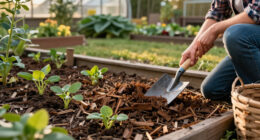
For added insulation, the report recommends spreading 3 to 4 inches of organic mulch, such as chopped leaves, bark chips or straw, around the plant. In places where the ground freezes for long periods, it advises adding another 2 to 3 inches. If stems have been cut back, leaves or straw can also be placed over the plant; that extra covering should be removed in spring after frost danger has passed.
Fall care also includes watering. The guide recommends a deep watering once a week until the first hard freeze if rainfall has not kept the soil moist. Gardeners can check the soil about an inch down and water if it is dry. The report advises against applying compost or fertilizer in fall: coreopsis can grow well in average, well-draining soil, and late-season fertilizing may encourage growth that frost can damage.
Protecting the Crown Through Winter
Coreopsis is a perennial in suitable growing conditions, but its ability to return depends in part on protecting the plant through the cold season. Leaving stems in place and insulating the soil with mulch offers a practical alternative to a heavy fall cutback, while maintaining enough moisture helps plants enter winter without dry soil. The advice also helps gardeners avoid a common impulse to improve beds with fall fertilizer or compost, which the guide says is unnecessary for this plant.
The recommendations may be useful to people deciding how to balance winter garden appearance with plant protection. Leaving foliage standing can provide insulation and retain its seasonal color and texture, while a limited cutback offers a tidier look without removing all protective stems. The trade-off is that the standing material must be cut down in spring.
Products Worth Considering

EGO POWER+ Cordless Electric Leaf Blower 530 CFM with Battery (LB5302)

Greenworks 40V Cordless Leaf Blower/Vacuum, 505 CFM, with 5.0Ah Battery and Charger

EGO POWER+ LB6151 Cordless Leaf Blower with 2.5Ah Battery and Charger
As an affiliate, we earn on qualifying purchases.
Hardiness Varies by Variety
Coreopsis includes annual and perennial species and cultivars, and winter survival depends on the variety and local climate. The source report says many wild species and cultivars, including ‘Moonbeam,’ ‘Sun Up’ and ‘Zagreg,’ are suited to USDA Hardiness Zones 4 to 9. It says some newer, more colorful cultivars are hardy in Zones 6 to 9 and may not survive colder winters. Coreopsis can also be grown as an annual.
The guide notes that many varieties reseed readily. Allowing flowers to go to seed in fall may produce new plants and blooms the following summer, though seedlings are not a guarantee that a particular cultivar will return true to type. The report’s winter-care steps focus on established perennial plants; gardeners should check the hardiness information for the variety they grow and account for local conditions.
Local Conditions Shape Winter Care
The source offers general guidance rather than location-specific instructions. It does not establish whether every cultivar will survive a given winter, and results can depend on local temperatures, drainage, snow cover and the length of frozen conditions. Its hardiness-zone ranges are not a guarantee for an individual garden.
The report also does not specify a single watering schedule that applies everywhere; it ties watering to rainfall and soil dryness. Gardeners should monitor their own soil and consult the plant’s label or a local horticultural resource for cultivar-specific hardiness. The source does not provide trial data comparing survival rates for different cutback or mulch methods.
Spring Cleanup After Frost
Once the ground has thawed and the danger of frost has passed, the guide recommends cutting standing dead stems to about 2 to 3 inches above the ground so new growth can emerge. Remove any extra leaves or straw placed over the plant for winter protection. The source says spring is also the appropriate time to fertilize if a gardener chooses to do so, though it says coreopsis does not require fertilizer.
Until then, gardeners can keep checking soil moisture during dry autumn weather, maintain the mulch layer and avoid a close fall cutback. Whether plants return will depend on their variety and winter conditions.
Key Questions
Should I cut coreopsis back before winter?
For perennial coreopsis, the Gardener’s Path guide recommends leaving stems and foliage standing to help insulate the crown. If you want a neater bed, cut stems to 4 to 6 inches high, not to the ground.
How much mulch should I put around coreopsis?
The guide recommends a 3- to 4-inch layer of organic mulch, such as chopped leaves, bark chips or straw. In places with long periods of frozen ground, it suggests adding another 2 to 3 inches.
Should I water coreopsis in fall?
Yes. Water deeply about once a week until the first hard freeze if rainfall has not kept the soil moist. Check the soil about an inch below the surface and water when it is dry.
Can I fertilize coreopsis in autumn?
The report advises against fall fertilizer and compost. It says coreopsis grows in average, well-draining soil and that late-season feeding can encourage growth vulnerable to frost. If you choose to fertilize, the guide says to do so in spring.
Source: gardenerspath.com