TL;DR

Get garden gear delivered free with Prime
- Fast, free delivery on millions of items
- Prime Video, Amazon Music and more included
- Member-only deals all year
An Ideal Home gardening report says mulching can help protect plants from frost and heavy rain, retain soil moisture, and improve soil health. Experts quoted in the report also describe benefits for wildlife, while noting that results depend on the material and how it is used.
Ideal Home has published a guide setting out six potential benefits of mulching, including frost protection, reduced soil erosion, moisture retention and improved soil structure. The report cites gardening and wildlife experts, but it does not present independent trial results or quantify how much each benefit varies by material, weather or garden conditions.
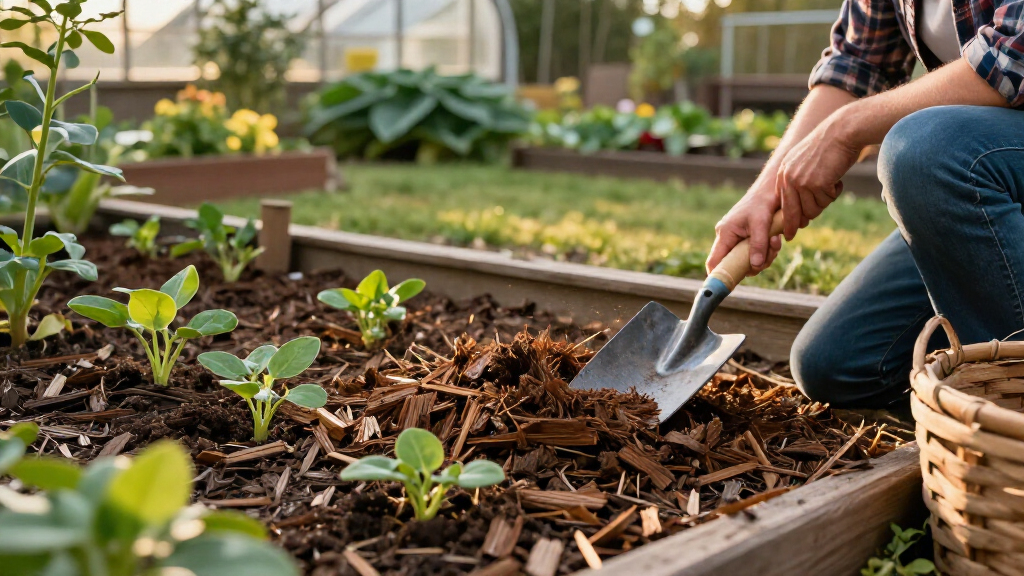
Mulching means applying a layer of organic material to soil in garden beds, borders or containers. The report says the layer can help insulate soil during cold spells and limit the effects of heavy rain, which can wash nutrients away or compact exposed ground. Landscape gardener Carl Jones recommends organic mulch to protect roots and reduce erosion; these are expert recommendations rather than measured outcomes in the article.
Other benefits described include keeping soil damp for longer in hot weather and gradually adding organic matter as mulch breaks down. Grow-your-own author Huw Richards advises a layer about 5–7 centimetres (2–3 inches) deep. He says decomposition feeds soil organisms and that regular mulching may improve soil structure and reduce the need to dig. The report does not say that every mulch contains the same nutrients or is suitable for every plant.
The article also presents mulch as a potential source of food and shelter for garden wildlife. Green Feathers wildlife expert James Ewens says compost, leaf mould and bark chippings can encourage invertebrates, which in turn provide food for birds, hedgehogs, frogs and toads. Mulch can also shelter slugs and snails, the report notes; Ewens says they are part of the food web, rather than a concern that automatically makes mulching unsuitable.
How Mulch Can Help Garden Beds
For gardeners preparing beds for colder or wetter weather, the report’s main practical point is that mulch may serve several purposes at once: covering bare soil, buffering temperature and rain, and supplying organic matter over time. That can make it relevant both to plant care and to reducing some routine work, such as watering or digging, although the scale of any savings is not established in the article.
The wildlife argument broadens the decision beyond plant health. A layer that supports invertebrates may also contribute to food available to birds and other animals. At the same time, gardeners should treat this as a general ecological benefit, not a promise that mulching will attract particular species or control pests in every garden.
Products Worth Considering

EGO POWER+ Cordless Leaf Blower, 765 CFM, with 5.0Ah Battery (LB7654)

EGO POWER+ Cordless Electric Leaf Blower 530 CFM with Battery (LB5302)

Greenworks 40V Cordless Leaf Blower/Vacuum, 505 CFM, with 5.0Ah Battery and Charger
As an affiliate, we earn on qualifying purchases.
The Report’s Seasonal Advice
The source is an Ideal Home gardening-advice report titled “Is mulching worth it? 6 surprising reasons to tackle this garden task now – from frost protection to healthier soil.” It recommends mulching as a task ahead of winter while also describing benefits in hot weather, making the case for use across seasons rather than as a single-purpose winter treatment.
The six reasons it gives are frost protection, protection from heavy rain, soil enrichment, moisture retention in warm weather, better soil structure and support for wildlife. The report cites Ewens, Richards and Jones for expert views. It also mentions products sold by retailers, but those listings are not evidence of comparative performance, and this article does not rely on the product recommendations as independent findings.
“A layer of mulch acts like a blanket to protect the soil from frost.”
— James Ewens, wildlife expert at Green Feathers, as quoted by Ideal Home
What the Advice Does Not Measure
The report does not provide trial data showing how much mulch changes frost damage, soil moisture, erosion, harvests or watering needs. It also does not compare different mulch materials under the same conditions. The outcomes are presented as expert guidance, so effects will depend on the garden, the material, its depth and local weather.
It is also not clear from the report how much mulch a typical garden needs, how often it should be replaced, or which plants may need different treatment. The article discusses possible benefits and trade-offs, including shelter for slugs and snails, but does not offer a universal recommendation for every bed or container.
Choosing and Applying Mulch
Gardeners considering the task can use the report’s 5–7 centimetre depth as a general starting point from Richards, while checking that the chosen material suits the plants and site. The source suggests organic options such as compost, leaf mould, bark chippings, straw, leaves or grass clippings. For compost used to protect roots in winter, Richards recommends covering it with straw, leaves or grass clippings.
The advice does not set a date for a follow-up assessment or identify a new study. The practical next step is to observe how the covered soil and plants respond through the season, while remembering that mulch supplements rather than replaces care suited to local conditions. Gardeners should avoid treating the article’s benefits as guaranteed outcomes.
Key Questions
What does mulching mean?
Mulching is placing a layer of material over soil in beds, borders or containers. The Ideal Home report focuses on organic materials such as compost, leaf mould, bark, straw, leaves and grass clippings.
How deep should mulch be?
Grow-your-own author Huw Richards advises a layer about 5–7 centimetres (2–3 inches) deep, according to the report. It does not give separate depth recommendations for different plants or materials.
Can mulch protect plants from frost?
The experts quoted by Ideal Home say a mulch layer can help insulate soil and protect roots during cold weather. The report does not quantify the protection, and it may vary with the material and conditions.
Does mulch help with watering?
The report says mulch can help soil retain moisture for longer in hot weather, which may mean watering less often. It gives no measured water savings, so the effect will depend on the garden and weather.
Does mulch attract slugs?
Mulch can provide shelter for slugs and snails, the report says. Ewens also notes that these animals are food for wildlife such as hedgehogs, frogs and song thrushes; the article does not claim mulch will control slug numbers.
Source: idealhome.co.uk