TL;DR

Get garden gear delivered free with Prime
- Fast, free delivery on millions of items
- Prime Video, Amazon Music and more included
- Member-only deals all year
Choosing a greenhouse heater requires balancing heat loss, crop temperature needs, and safety. Start by insulating your structure to reduce energy demand, then select a thermostatically controlled system sized for your specific volume and climate. Always prioritize ventilation for combustion heaters and weatherproofing for electric units.
You wake up to a frosty morning, check your thermometer, and realize your seedlings are shivering. The sun is out, but that warmth won’t last past sunset. This is the moment every gardener dreads: the gap between what you want to grow and what your current setup can sustain.
Buying a greenhouse heater seems like a simple fix, but it’s actually a complex calculation. A unit that works in a small, insulated hobby house might fail miserably in a large, drafty Victorian structure. The wrong choice wastes money, damages plants, or worse, creates a fire hazard.
This guide cuts through the marketing noise. We’ll help you choose a heater based on your plants, climate, greenhouse size, insulation, fuel access, and budget. You’ll learn why reducing heat loss often matters more than buying a bigger unit, and how to keep your plants alive without overheating your electricity bill.
Reduce heat loss first: Seal gaps and add insulation before buying a larger heater.
Size by volume and temperature delta, not just floor area.
Never use unvented combustion heaters in sealed greenhouses due to carbon monoxide risks.
Use thermostats and zoning to target heat where plants actually need it.
Electric heaters are safest for small, damp structures; gas is better for large, well-ventilated spaces.
Why Your Greenhouse Loses Heat Faster Than You Think
Greenhouses are designed to trap solar energy, but they are also excellent radiators of heat loss. Once the sun dips below the horizon, that stored warmth escapes rapidly through glass, polycarbonate, and gaps in the frame. If your structure is small or uninsulated, the temperature can drop 20 degrees Fahrenheit or more in a single night.
Heating isn’t just about comfort; it’s about survival. Most crops have specific temperature thresholds. Tropical plants like peppers and tomatoes suffer at night temperatures below 50°F (10°C). Seedlings need consistent warmth for germination. Without heat, you lose the season. With poor heat management, you lose your money.
Consider a standard 6×8-foot polycarbonate greenhouse in a temperate climate. Without insulation, it might lose 5,000 BTUs per hour on a cold night. A 1,500-watt electric heater produces roughly 5,100 BTUs. On paper, it looks like a match. In reality, wind chill, leaks, and the thermal mass of the soil mean that heater might run continuously, never quite catching up.
Before you buy a heater, fix the leaks. A $20 tube of silicone caulk can save you hundreds in energy costs by sealing gaps around doors and vents.
Products Worth Considering

Husqvarna 330LK Gas String Trimmer

EVERECO Polycarbonate Greenhouse Panels, 8 ft × 4 ft × 0.24 in, 6-Pack
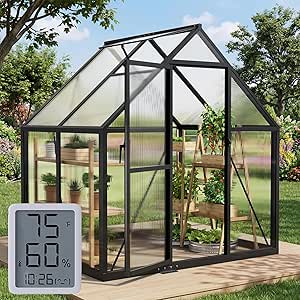
Sylviera 6 x 4 ft Polycarbonate Greenhouse with Hygrometer
As an affiliate, we earn on qualifying purchases.
Electric vs. Gas: Which Heater Fits Your Setup?
The two main contenders in the home greenhouse market are electric and combustion (gas/propane/paraffin) heaters. Neither is universally “better.” It depends on your infrastructure and risk tolerance. Electric units are clean and easy to control but can be expensive to run. Gas units heat fast and are cheaper per BTU but require strict ventilation and maintenance.
Imagine you have a small, well-insulated lean-to attached to your garage. You have mains electricity. An electric fan heater with a thermostat is likely your best bet. It’s silent, produces no fumes, and plugs right in. Now, imagine a large, detached greenhouse in a rural area with limited electrical capacity. A propane heater might be the only viable option to keep a large volume warm during a freeze.
| Feature | Electric Fan Heater | Gas/Propane Heater |
|---|---|---|
| Installation | Plug-and-play (if outlet is suitable) | Requires tank, lines, and ventilation |
| Safety | Low fire risk if rated for damp areas | High risk of CO buildup if unvented |
| Operating Cost | High (depends on local electricity rates) | Variable (depends on propane prices) |
| Moisture | Neutral (does not add humidity) | Adds water vapor (can cause mold) |
Hydronic (hot water) systems offer steady, gentle heat for permanent structures but require a boiler and complex piping. They are rarely cost-effective for small hobbyists unless you already have a boiler system nearby.
How to Size a Heater Without Wasting Money
Most people guess their heater size based on floor area. This is a mistake. Heat loss is determined by volume, surface area, and the temperature difference between inside and outside. A tall, narrow greenhouse loses more heat than a squat, wide one with the same footprint because it has more surface area exposed to the cold air.
To get this right, follow these steps:
- Calculate Volume: Multiply length x width x average height.
- Estimate Heat Loss: Use a rough rule of thumb: for a single-glazed glass greenhouse, assume 10-15 watts per cubic foot for every 10°F difference between inside and outside temperatures. For double-walled polycarbonate, halve that number.
- Check Manufacturer Specs: Compare your calculated need against the heater’s rated output at the specific temperature drop you expect.
For example, if you have a 1,000 cubic foot greenhouse and want to keep it 20°F warmer than outside, a single-glazed house might need 2,000-3,000 watts of heat. A 1,500-watt heater will struggle. Oversizing is dangerous if you don’t have a good thermostat; undersizing is frustrating because the plants never reach the target temp.
Never rely on a simple “one heater per greenhouse” rule. Always use a heat-loss calculation or the manufacturer’s sizing chart for your specific glazing type.
The Safety Risks You Can’t Ignore
Greenhouses are hostile environments for electronics and combustion appliances. They are damp, dusty, and filled with flammable materials like plastic mulch, dry leaves, and fuel cans. A standard household space heater is not safe for greenhouse use. It lacks the necessary IP (Ingress Protection) rating to handle moisture and condensation.
If you use electric heaters, ensure they are rated for damp locations. Keep them off the floor where water pools. Use GFCI (Ground Fault Circuit Interrupter) outlets to prevent shock hazards. If you use gas or paraffin heaters, ventilation is non-negotiable. Combustion consumes oxygen and produces carbon monoxide (CO) and water vapor. Without adequate vents, CO levels can rise to deadly concentrations in minutes, especially in a sealed structure.
Keep a three-foot clearance around any heater. Plants wilt and die if placed too close to a radiant source, and plastic covers can melt and catch fire. Install a carbon monoxide alarm if you use any fuel-burning device. It’s a small cost for peace of mind.
Combustion heaters add humidity to the air. In a cold greenhouse, this moisture condenses on glass and leaves, creating a perfect breeding ground for fungal diseases like botrytis.
Smart Controls Save More Money Than Better Heaters
A heater without a thermostat is a money pit. It runs continuously, overheating your plants during mild spells and failing to keep up during cold snaps. A simple mechanical thermostat is a good start, but digital controllers offer precise management. They can maintain temperatures within one degree, preventing the stress of temperature swings.
Consider zoning. If you only need warmth for seedlings on a bench, don’t heat the entire greenhouse. Use a heat mat or a small radiant heater focused on that area. This targeted approach can cut energy costs by 50% or more. For larger setups, smart plugs and Wi-Fi thermostats allow you to monitor temperatures from your phone. You’ll get alerts if the temperature drops unexpectedly, giving you time to react before your plants freeze.
Thermal mass can also help smooth out temperature fluctuations. Large water jugs or dark-colored barrels filled with water absorb heat during the day and release it at night. This isn’t a replacement for a heater in severe cold, but it reduces the workload on your system and stabilizes the environment.
When to Consider Heat Pumps and Renewables
As energy costs rise, many growers are looking beyond standard electric resistance heaters. Heat pumps transfer heat from the outside air into the greenhouse rather than generating it. They can deliver three to four units of heat for every unit of electricity consumed. This makes them significantly cheaper to run in moderate climates.
However, heat pumps lose efficiency as outdoor temperatures drop. In deep freezes, they may struggle to maintain target temperatures. They also require a more complex installation than a plug-in heater. Solar power is another option, but remember that solar generation peaks when you don’t need heat (daytime) and drops to zero when you do (nighttime). You need battery storage or a grid-tie system to make solar viable for heating.
For most hobbyists, the best approach is a hybrid: insulate heavily, use a small electric heater for frost protection, and invest in smart controls. This balances upfront cost with long-term reliability.
Frequently Asked Questions
What is the best heater for a small greenhouse?
For small, well-insulated greenhouses with access to mains electricity, a thermostatically controlled electric fan heater rated for damp locations is usually the best choice. It is safe, easy to install, and provides precise temperature control without adding humidity or fumes.How many watts do I need for my greenhouse?
There is no single answer because heat loss depends on insulation, glazing type, volume, and the temperature difference between inside and outside. Use a heat-loss calculator or manufacturer sizing charts rather than relying on floor area alone. A rough estimate for a single-glazed glass house is 10-15 watts per cubic foot for every 10°F temperature drop.Can I use a regular household space heater?
No, you should not use a standard indoor space heater in a greenhouse. These units are not rated for damp or wet conditions and pose a significant electrical shock and fire hazard. Always use heaters specifically designed and rated for greenhouse or outdoor use.Are gas or paraffin heaters safe for plants?
They can be safe if used correctly, but they release combustion by-products like carbon monoxide, nitrogen dioxide, and water vapor. These gases can harm plants and people. You must provide adequate ventilation according to the manufacturer’s instructions and never use unvented combustion heaters in a sealed space.Do I need to heat my greenhouse at night?
Only if your crops require it. Many cool-season crops tolerate night temperatures down to 40-45°F (4-7°C). Use a thermostat to maintain only the minimum temperature needed for your specific plants, rather than keeping the greenhouse at comfortable room temperature.Conclusion
Choosing the right greenhouse heater isn’t about buying the most powerful unit on the shelf. It’s about understanding your specific environment. Start by plugging the leaks in your structure, then calculate the heat loss based on your climate and glazing. Select a heater that matches that load, and control it with a reliable thermostat.
Remember, the goal is a stable environment, not a tropical rainforest. By focusing on efficiency and safety, you’ll keep your plants thriving through winter without draining your wallet. Go check your greenhouse seals tonight—your future self will thank you.