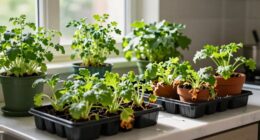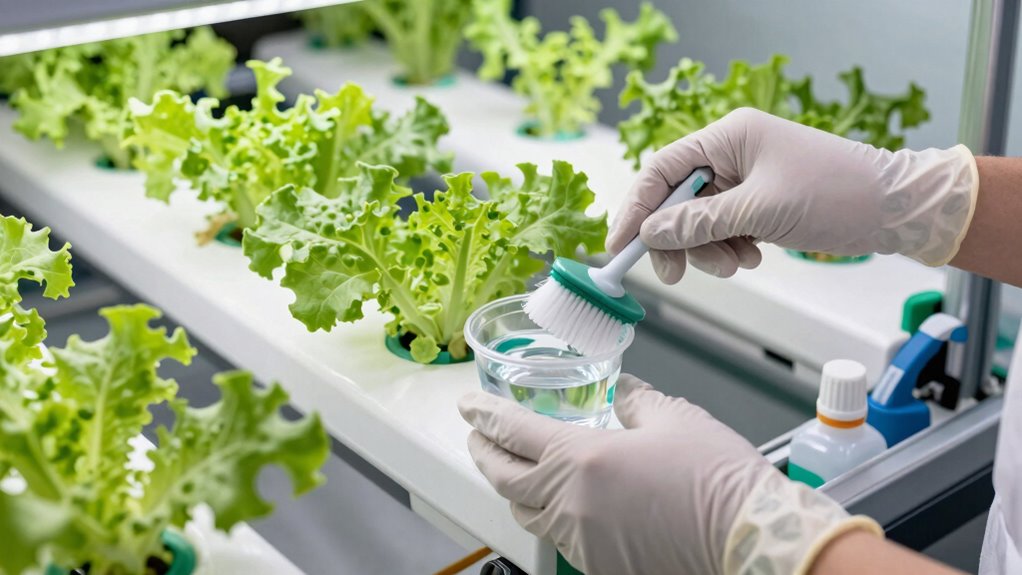
Start by turning off your pump and draining the nutrient solution to protect your equipment. Remove all trays, net pots, and plant-holding parts, then rinse and gently scrub them to remove buildup. Next, empty and clean the main reservoir with a mild solution or vinegar, checking and flushing the plumbing. Disinfect all parts with hydrogen peroxide or bleach, then thoroughly rinse, dry, and inspect for damage. Properly reassemble and test your system to guarantee maximum performance—continue for more detailed tips.

Get garden gear delivered free with Prime
- Fast, free delivery on millions of items
- Prime Video, Amazon Music and more included
- Member-only deals all year
Key Takeaways
- Turn off equipment, drain nutrient solution, and remove all plant-holding components for thorough cleaning.
- Clean and scrub trays, net pots, and system parts with water and a soft brush to remove debris and buildup.
- Empty, scrub, and disinfect the main reservoir and plumbing using vinegar, hydrogen peroxide, or diluted bleach.
- Rinse all parts thoroughly, dry completely, and inspect for damage or wear before reassembling.
- Reassemble the system, verify secure connections, and perform a system test before planting again.
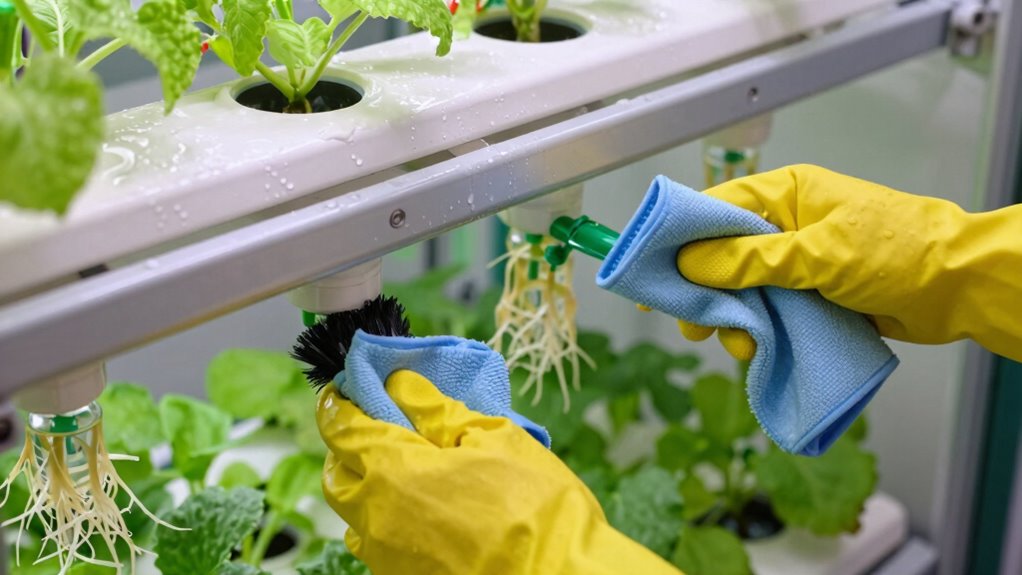
Have you ever wondered why regular cleaning is essential for your hydroponic system’s health? Consistent maintenance isn’t just about keeping things tidy; it’s about ensuring your plants thrive by maintaining optimal conditions. A clean system helps prevent disease, algae buildup, and blockages, which can compromise plant nutrient management and reduce yields. To keep everything running smoothly, establishing and sticking to system maintenance schedules is key. These schedules guide you through cleaning routines, making sure no part of your setup is overlooked and that your plants get the best environment possible.
When you start your cleaning process, it’s best to turn off your pump and drain the nutrient solution. This step prevents damage to equipment and makes cleaning safer and more effective. Remove all trays, net pots, and other components that hold your plants, and set them aside for thorough cleaning. Begin by rinsing these parts with water to remove any residual nutrients, algae, or debris. Scrubbing them gently with a soft brush helps dislodge stubborn buildup, ensuring no residues remain that could harbor pathogens or interfere with plant nutrient management. Regularly inspecting and maintaining system components can further prevent unexpected issues during growth. Incorporating preventive maintenance practices can also extend the overall lifespan of your equipment.
Next, focus on cleaning the main reservoir and plumbing. Empty and drain the nutrient tank, then scrub its interior with a mild, non-toxic cleaning solution or a vinegar-water mixture. This helps eliminate mineral deposits, algae, and bacteria. Check the tubing for clogs or blockages, and flush them with clean water to restore proper flow. Remember, clean system components prevent nutrient imbalances and promote healthy plant growth. Incorporating regular system maintenance routines also helps prevent the buildup of residues and ensures the longevity of your equipment.
Once all parts are cleaned and rinsed thoroughly, disinfect everything with a safe solution, such as hydrogen peroxide or a diluted bleach mixture, to kill any lingering pathogens. Be sure to rinse all parts again to remove any residual disinfectant. After drying, inspect your system carefully for any signs of wear or damage, replacing parts as needed to maintain your system’s integrity. Proper inspection and timely replacement of worn parts can prevent future failures and safeguard your crop health. Regular checks of system health can help catch issues early before they affect your plants.
Plant nutrient management is directly affected by how well your system is maintained. Proper cleaning prevents buildup that could alter pH levels or block nutrient delivery, ensuring your plants receive a consistent and balanced supply of nutrients. Incorporate these cleaning steps into your regular schedule—weekly, biweekly, or monthly, depending on your setup—to keep your hydroponic system in top shape. By adhering to a disciplined maintenance routine, you’ll create a healthier environment for your plants, maximize yields, and extend the lifespan of your equipment. Regular cleaning isn’t just routine; it’s an investment in the success of your hydroponic garden.
As an affiliate, we earn on qualifying purchases.
Frequently Asked Questions
How Often Should I Clean My Hydroponic System?
You should clean your hydroponic system every 2 to 4 weeks to prevent nutrient buildup and pest issues. Regular cleaning guarantees ideal plant growth, keeps algae and bacteria at bay, and prevents pests from establishing themselves. If you notice slow plant growth or algae buildup sooner, increase cleaning frequency. Consistent maintenance helps maintain a healthy environment, making sure your plants thrive while reducing the risk of pests and nutrient imbalances.
What Cleaning Products Are Safest for Hydroponic Systems?
You should prioritize safe cleaning products like diluted hydrogen peroxide, vinegar, or food-grade sanitizers for your hydroponic system. Follow proper cleaning protocols by thoroughly rinsing to remove residues, and use sterilization methods like UV light or heat when possible to eliminate bacteria. Avoid harsh chemicals, and always guarantee all components are completely dry before reassembling, which helps prevent mold and disease while maintaining a healthy system.
Can I Use Vinegar to Clean My Hydroponic System?
Vinegar is a powerful ally in hydroponic cleaning, but it’s not a sterilization miracle! You can use vinegar for hydroponic cleaning to remove mineral deposits and algae, thanks to its natural acidity. For sterilization, it’s best to combine vinegar with other methods, like hydrogen peroxide or commercial cleaners, to guarantee your system stays safe and pathogen-free. Don’t rely solely on vinegar for total sterilization, but it’s great for regular maintenance.
How Do I Prevent Algae Growth During Cleaning?
To prevent algae growth during cleaning, you should regularly maintain a strict cleaning schedule, ideally weekly. Use a combination of gentle scrubbing and a mild disinfectant, like hydrogen peroxide or vinegar, to remove algae spores. Keep the system dry between cleanings, and make certain your water is filtered and clear. Algae prevention also involves controlling light exposure and avoiding excess nutrients, so stay vigilant to keep your hydroponic system algae-free.
What Are Signs That My System Needs a Deep Clean?
You’ll know your system needs a deep clean if you notice nutrient buildup on the surfaces, which can clog the system, or if your plants show signs of poor growth and nutrient deficiencies. Additionally, look for equipment corrosion or mineral deposits, indicating the need for thorough cleaning. Addressing these signs promptly helps prevent blockages, maintains ideal nutrient flow, and keeps your hydroponic system functioning smoothly.
hydroponic nutrient reservoir cleaner
As an affiliate, we earn on qualifying purchases.
As an affiliate, we earn on qualifying purchases.
Conclusion
Now that you know the best order to clean your hydroponic system, you’re well-equipped to keep it running smoothly. Regular cleaning can boost plant growth by up to 20%, preventing diseases and ensuring ideal nutrient delivery. Remember, neglecting cleaning can lead to algae buildup and system failures. Stay consistent with your maintenance routine, and your hydroponic garden will thrive all year round. Keep it clean, and watch your plants flourish!
As an affiliate, we earn on qualifying purchases.
hydroponic net pot cleaning brushes
As an affiliate, we earn on qualifying purchases.
As an affiliate, we earn on qualifying purchases.
Fall yard work Picks
leaf blowers
As an affiliate, we earn on qualifying purchases.