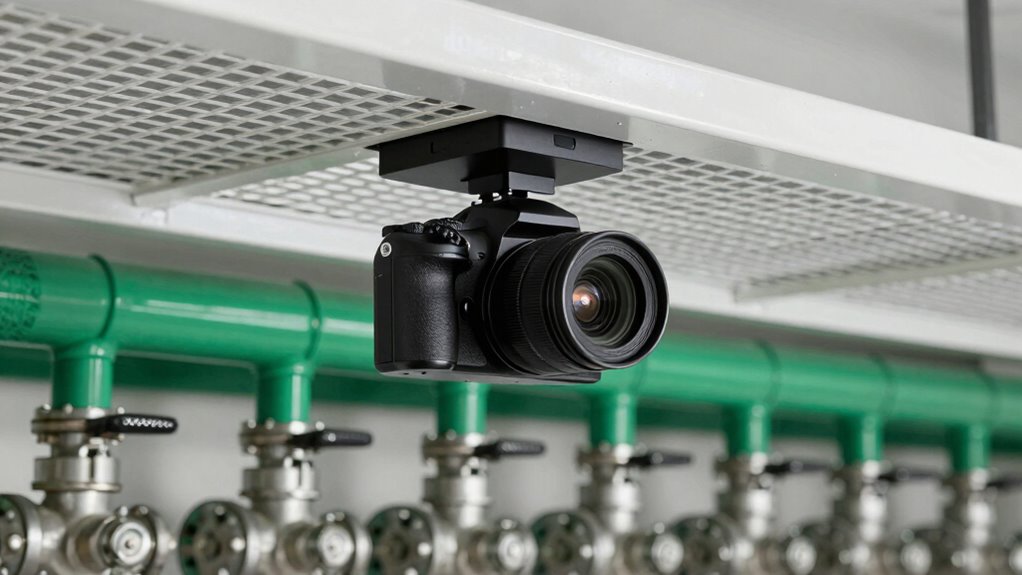

Camera systems in plant rooms are mainly focused on maintaining operational consistency rather than security. They help you monitor equipment health, detect issues early, and support routine inspections without disruptions. Remote access and predictive analytics enable proactive management, reducing costs and downtime. These cameras act as an ongoing oversight tool to guarantee reliable performance. Want to discover how these systems can optimize your plant’s efficiency and future-proof your operations? Keep exploring to find out more.

Get garden gear delivered free with Prime
- Fast, free delivery on millions of items
- Prime Video, Amazon Music and more included
- Member-only deals all year
Key Takeaways
- Camera systems enable continuous monitoring of equipment to ensure consistent operation and early detection of potential issues.
- They facilitate routine inspections without disrupting plant processes, promoting operational stability.
- Remote access and predictive analytics improve maintenance planning and reduce unexpected failures.
- Cameras provide detailed documentation for audits, safety verification, and accountability, supporting compliance.
- The focus shifts from security to maintaining equipment health, efficiency, and minimizing operational risks.

Camera systems for plant rooms excel at providing continuous oversight, which is essential for equipment maintenance. They help you identify anomalies early—whether it’s an overheating motor or a leak that could escalate into a costly problem. By catching these issues promptly, you avoid the chaos of unexpected failures and reduce costly repairs. This proactive approach ensures your plant operates with maximum efficiency and reliability. Furthermore, these cameras support routine inspections without the need for disruptive shutdowns or manual checks. You can schedule periodic reviews or access footage on-demand, making maintenance more streamlined and less invasive. Incorporating remote monitoring into your operations enhances your ability to maintain consistent performance and respond proactively. Additionally, integrating these systems with predictive maintenance technologies can further optimize your operational stability. Leveraging advanced analytics can also help identify patterns and potential failures before they occur, adding another layer of operational insight. Embracing digital transformation in plant management ensures these systems evolve to support smarter, data-driven decisions.
The focus on consistency means you’re less likely to encounter sudden equipment failures that disrupt production. Instead, you maintain a steady, predictable environment where potential problems are flagged before they become major setbacks. This consistency is what makes camera systems indispensable—not only for security but for the overall health of your plant operations. They serve as a constant eye, providing documentation that can be useful during audits or troubleshooting. The footage can verify that maintenance tasks are performed correctly or confirm that safety procedures are followed, adding an extra layer of accountability.
In essence, camera systems for plant rooms shift the emphasis from security to operational stability. They’re about ensuring your equipment functions uninterrupted and efficiently. You gain peace of mind knowing that you can monitor critical systems remotely, respond swiftly to issues, and plan maintenance proactively. This approach reduces risks, saves costs, and enhances overall productivity. As technology advances, these systems will become even more integrated, giving you smarter, more reliable ways to keep your plant running smoothly. Ultimately, it’s about creating a resilient environment where continuous oversight isn’t just an ideal—it’s an everyday reality.
As an affiliate, we earn on qualifying purchases.
Frequently Asked Questions
How Do Camera Systems Improve Plant Room Maintenance?
You can improve plant room maintenance with camera systems by enabling remote monitoring, which allows you to keep an eye on equipment performance and detect issues early. This proactive approach helps prevent downtime, saving you money. Plus, cameras support energy efficiency by identifying inefficient practices or faulty systems, ensuring peak operation. With real-time insights, you can address problems quickly, maintaining smooth plant operations and reducing costly repairs.
Can Cameras Detect Equipment Malfunctions Automatically?
Can cameras detect equipment malfunctions automatically? Absolutely. Think of automated fault detection and real-time anomaly monitoring as your vigilant guardians, constantly scanning for irregularities. These advanced camera systems analyze data patterns, alerting you instantly if something’s off. They don’t just watch—they actively identify issues, enabling quick responses. With this technology, you gain a proactive edge, preventing minor glitches from turning into costly failures, all while maintaining smooth plant operations.
What Are the Best Camera Types for Plant Room Environments?
You should choose cameras with good low-light performance, like infrared or thermal cameras, to handle varying lighting conditions in plant rooms. Focus on strategic sensor placement to monitor critical equipment without blind spots. Fixed dome cameras work well for consistent coverage, while PTZ cameras offer flexibility for larger areas. Prioritize cameras that are durable and easy to maintain, ensuring continuous monitoring despite challenging environmental factors.
How Do Camera Systems Integrate With Existing Plant Management?
You can integrate camera systems with your existing plant management by enabling remote monitoring, allowing you to oversee operations from anywhere. Data integration helps streamline your processes by automatically syncing camera footage with your management software, providing real-time insights. This setup guarantees you stay informed about system performance, quickly identify issues, and maintain consistent operation, all while reducing the need for on-site oversight and enhancing overall efficiency.
Are There Privacy Concerns With Plant Room Cameras?
Privacy risks and surveillance ethics are valid concerns with plant room cameras. You might worry about sensitive information being captured or misused. To address this, guarantee cameras are only focused on necessary areas, and access is restricted. Be transparent with staff about surveillance policies, and follow legal regulations. Balancing operational needs with respect for privacy helps maintain trust while ensuring consistent monitoring of plant room conditions.
remote monitoring security cameras
As an affiliate, we earn on qualifying purchases.
As an affiliate, we earn on qualifying purchases.
Conclusion
In the end, investing in camera systems for plant rooms isn’t just about security—it’s about ensuring consistent operations. Did you know that 85% of facility managers report fewer downtime incidents after installing monitoring cameras? By keeping a watchful eye, you can catch issues early, maintain ideal conditions, and boost efficiency. So, don’t overlook the power of these systems—they’re your key to smoother, more reliable plant room management.
As an affiliate, we earn on qualifying purchases.
industrial equipment surveillance camera
As an affiliate, we earn on qualifying purchases.
As an affiliate, we earn on qualifying purchases.
Columbus Day / Indigenous Peoples' Day Picks
long weekend sales
As an affiliate, we earn on qualifying purchases.