
TL;DR
A gardening guide recommends November mulch for six groups that can be vulnerable to cold or freeze-thaw cycles: newly planted perennials, roses, young hydrangeas, spring bulbs, strawberries and hardy mums. It advises using loose organic materials, keeping mulch away from stems and adjusting depth to the plant and local winter conditions.
A seasonal gardening guide recommends mulching six plant groups in November to help protect roots as temperatures fall: newly planted perennials, roses, young hydrangeas, spring-flowering bulbs, strawberries and hardy garden mums. The guide focuses on reducing exposure to cold and repeated freezing and thawing, while warning gardeners to keep mulch clear of plant stems and to adapt the amount to the plant and local conditions.

Get garden gear delivered free with Prime
- Fast, free delivery on millions of items
- Prime Video, Amazon Music and more included
- Member-only deals all year
The guide says newly planted perennials are more exposed to winter stress because their roots may not yet be established. It recommends applying 3 to 4 inches (8 to 10 centimeters) of loose mulch around them as the soil begins to freeze, with particular attention to varieties that are only marginally hardy in the local growing region.
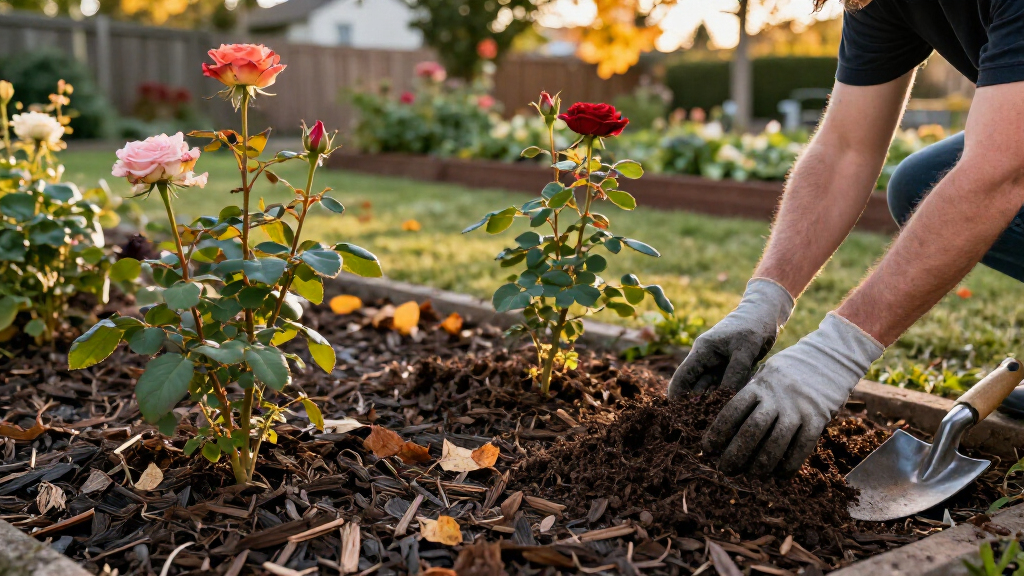
For roses, the guide suggests a deeper covering: 8 to 12 inches (20 to 30 centimeters) of compost, organic mulch or loose, light soil around the base. It says to keep the material a couple of inches from the stems to limit moisture collecting against them. Young hydrangeas may receive 2 to 6 inches (5 to 15 centimeters), depending on winter severity, according to the guide; established, reliably hardy plants may not need the same protection.
For spring bulbs such as tulips, crocuses, daffodils and hyacinths, the guide suggests 2 to 3 inches (5 to 8 centimeters) of light, loose mulch once the soil begins to freeze. It says bulbs planted late in fall can be mulched after planting. For strawberries, it recommends 3 to 4 inches (8 to 10 centimeters) of loose organic material, such as weed-free straw. The guide advises pulling straw back when new growth appears in spring, while leaving some between rows or around the edges.
The guide says hardy chrysanthemums, often called garden mums, may also benefit from a few inches of loose organic mulch. It advises leaving their foliage intact and spreading mulch beneath and around the leaves. These recommendations concern hardy mums grown as perennials, not necessarily varieties treated as seasonal annuals.
Mulch six vulnerable plant groups as winter approaches
A November gardening guide recommends loose organic mulch to help protect roots from cold and freeze-thaw cycles. Timing and depth depend on the plant and local conditions.
Six groups to consider
New plantings and vulnerable roots may benefit from a loose protective layer.
Perennials
Roots may not be established; apply 3–4 inches as soil begins to freeze.
Roses
Use 8–12 inches around the base, keeping mulch a couple of inches from stems.
Hydrangeas
Use 2–6 inches depending on winter severity; established hardy plants may need less.
Flowering bulbs
Tulips, crocuses, daffodils and hyacinths can receive 2–3 inches after soil begins freezing.
Strawberries
Cover with 3–4 inches of loose organic material such as weed-free straw.
Garden mums
Spread a few inches beneath and around intact foliage.
Choose loose, natural materials
Undyed organic mulch can protect soil and add organic matter as it breaks down.
Apply with care
Use plant needs and local weather to guide the work.
For several plants, time mulching as the ground begins to freeze rather than by a fixed date.
Avoid piling mulch against stems, where moisture can collect.
Adapt depth to plant type and local conditions; pull strawberry straw back when new growth appears in spring.
Protecting Roots Through Winter
The gardening guide says mulch can moderate changes in soil temperature and reduce the effects of repeated freezing and thawing, which can heave roots upward or expose them to cold. It identifies newly established plants, shallow-rooted plants and those grown near the limits of their hardiness as potential beneficiaries. The guide links this protection to better chances of plants resuming growth in spring, but provides no trial data or estimate of how much mulch improves survival.
The guide’s recommendations vary by plant: its suggested depths differ substantially, and it notes that established hydrangeas may not need mulch while younger plants can benefit. It also warns that placing mulch too close to stems can hold moisture there, making placement important as well as material choice.
According to the guide, natural, undyed materials such as compost, shredded leaves, bark or straw can add organic matter as they break down. It also lists weed suppression and covering bare beds as potential benefits, while cautioning against applying the same layer to every border. Gardeners should consider plant type, soil conditions and expected cold when following the advice.
Products Worth Considering

Husqvarna Automower 410iQ Wire-Free Robotic Lawn Mower

Orbit B-hyve 12-Zone Indoor/Outdoor Wi-Fi Sprinkler Controller

Orbit B-hyve XR 8-Zone Indoor/Outdoor Smart Sprinkler Controller
As an affiliate, we earn on qualifying purchases.
Timing Mulch Around Soil Freeze
The guide frames its advice as late-fall preparation, when plants may have died back and the ground is beginning to freeze. It does not give one calendar date for all regions, noting that November conditions differ and that timing depends on soil and weather rather than the month alone. For spring bulbs, the guide says to apply mulch after the soil begins freezing, rather than in a way that could encourage early growth during a mild spell.
The guide favors loose organic materials, including homemade or purchased compost, shredded leaves, bark and straw. It recommends undyed mulch and says mulch binder or glue is not needed. It also notes that protection needs vary: some well-established plants may tolerate local winters, while newly planted or less hardy specimens can require more protection.
Local Conditions Shape the Advice
The recommendations come from a general gardening guide, not a location-specific forecast or a reported study. The guide does not identify a particular region, provide experimental evidence for the suggested depths, or explain how to adjust for soil drainage, snow cover or unusually wet winters. Its depth ranges are general guidance, not a guarantee of survival.
The guide also does not specify which varieties of roses, hydrangeas and mums its advice will suit in every climate. Hardiness, establishment and local winter patterns affect the need for protection. Gardeners should consult regional growing advice for their plant varieties, particularly where a thick layer could retain excess moisture or winters are mild.
Check Beds as Winter Sets In
As soil temperatures fall, gardeners can identify recent plantings and vulnerable crops, then apply loose mulch without piling it against stems, following the guide’s advice. The guide’s suggested amounts should be adjusted to the specific plant and local winter conditions. For strawberries, it advises pulling straw back when new growth appears while keeping some between rows.
Gardeners can also monitor plants through winter for heaving or exposed roots and reassess protection in spring. The source material includes no further announcement or follow-up study; where the general recommendations do not fit a garden’s conditions, the practical next step is to consult local horticultural guidance.
Key Questions
Which plants does the guide recommend mulching in November?
The guide lists newly planted perennials, roses, young hydrangeas, spring-flowering bulbs, strawberries and hardy garden mums. The need varies by plant age, variety and local conditions.
How much mulch should I put around these plants?
The guide recommends 3 to 4 inches for new perennials, 8 to 12 inches around rose bases, 2 to 6 inches for hydrangeas, 2 to 3 inches over spring bulbs, and 3 to 4 inches over strawberries. For hardy mums, it suggests a few inches. These are general ranges, not region-specific prescriptions.
What kind of mulch should I use?
The guide favors loose, natural, undyed materials, including compost, shredded leaves, bark and weed-free straw. It says mulch binder or glue is unnecessary.
When should I mulch, and when should I remove it?
For several plants, the guide ties application to soil beginning to freeze, rather than a fixed date. For strawberries, it recommends pulling straw back when new growth appears in spring, while leaving some between rows or around the bed edges.
Source: gardeningknowhow.com