TL;DR

Get garden gear delivered free with Prime
- Fast, free delivery on millions of items
- Prime Video, Amazon Music and more included
- Member-only deals all year
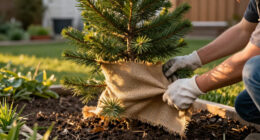
A Country Living gardening report outlines four fall planting errors that can leave trees and shrubs struggling: failing to correct circling roots, planting too deeply, insufficient establishment watering and piling mulch against the trunk. It recommends exposing the root flare, watering according to soil moisture and keeping mulch shallow and away from bark.
A Country Living gardening report identifies four mistakes that can make newly planted trees and shrubs struggle after fall planting: leaving circling roots untreated, planting too deeply, failing to provide enough water during establishment and piling mulch against the trunk. The advice matters because problems at planting can affect root growth and tree health over time, even when a plant initially appears fine.
The report says roots that circle inside a nursery container may keep growing in that pattern after planting if they are not loosened. Over time, this can contribute to stunted growth, nutrient problems or roots girdling the trunk. It advises checking the root ball, loosening surrounding soil and gently spreading healthy roots outward. Large, tight roots that pose a problem may need to be cut.
A second risk is burying the root flare—the point where the trunk widens into the roots. Country Living recommends clearing soil and mulch from the base to locate it, then planting so the flare remains visible at or slightly above the soil line. The report advises digging a hole twice as wide as the root ball, but no deeper, and keeping the bottom firm to reduce the chance the plant will sink.
Newly planted trees and shrubs need a thorough initial watering and continued moisture while their roots establish. Rather than assuming rainfall is sufficient or following a fixed schedule, the report advises checking soil near the root ball and watering slowly and deeply when it is drying out. Soil should be moist, not waterlogged. It also recommends a two- to three-inch layer of mulch over the root zone, kept several inches from the trunk so the bark and root flare remain exposed.
Planting Choices Shape Root Health
These recommendations address problems that can be difficult to spot from above ground. A tree or shrub may look healthy soon after planting while roots are constrained, buried too deeply or receiving too little moisture. Correcting planting conditions at the outset can help roots grow outward and keep the trunk base exposed, while poorly placed mulch or soil may conceal warning signs.
The guidance is relevant to homeowners planting in fall, when cooler weather may make outdoor work more comfortable and warm soil can give roots time to settle before winter. But the report does not suggest that fall planting alone guarantees successful establishment. Site conditions and ongoing soil moisture still matter, and the recommended checks are intended to help gardeners respond to the plant rather than rely on a calendar or appearance alone.
Products Worth Considering

Traeger Woodridge Pro Wood Pellet Grill and Smoker, 970 sq. in., WiFIRE

Solo Stove Bonfire 2.0 Smokeless Wood-Burning Fire Pit with Stand, Silver

VEVOR Walk-In Tunnel Greenhouse with Watering System, 15 x 7 x 7 ft
As an affiliate, we earn on qualifying purchases.
Four Errors in Fall Planting
The article frames fall as a potentially suitable season for planting trees and shrubs, citing cooler air and soil that may remain warm enough for root establishment. Its focus is not a new scientific study or a change in official guidance; it is practical advice from a Country Living report on avoiding four common planting errors.
The four issues are connected: circling roots can restrict growth, planting too deeply can bury the root flare, inadequate watering can leave a new root system dry, and a mound of mulch can retain moisture against bark while hiding the trunk base. The report’s central approach is to inspect the root ball and root flare, plant at the right depth, monitor soil moisture and keep mulch away from the trunk.
“Think of a doughnut, not a volcano.”
— Country Living report
Conditions Vary by Planting Site
The report offers general gardening guidance, but it does not specify how watering frequency should change with local rainfall, soil type, plant species, root-ball size or temperature. It advises checking moisture near the root ball, but the right interval will vary with conditions. The source also does not identify a particular tree or shrub species to which every recommendation applies.
No study results, named horticultural expert or quantified estimate of how often these mistakes cause long-term damage are provided in the supplied material. The potential effects described are general risks, not a prediction that every plant with circling roots, deep planting or excess mulch will fail.
Check Roots, Soil and Mulch
For gardeners preparing a fall planting, the report’s next steps are practical checks: inspect the root ball before planting, locate the root flare, set the plant so that flare remains visible, and keep the base of the hole firm. After planting, monitor soil near the root ball and water slowly when it begins to dry.
Mulch should be spread in a thin, even layer about two to three inches deep across the root zone, with several inches of space around the trunk. The report does not provide a follow-up schedule or a forecast for any specific planting; gardeners will need to continue checking their plants and adjust watering to local conditions.
Key Questions
What are the four fall planting mistakes?
The report lists untreated circling roots, planting too deeply, insufficient watering while roots establish and piling mulch against the trunk.
How can I tell where the root flare is?
Gently clear away soil and mulch at the plant’s base until the trunk widens into the roots. The report says the root flare should remain visible at or slightly above the soil line.
How often should a newly planted tree be watered?
The source does not give a fixed schedule. Check soil near the root ball: water slowly and deeply if it is drying out, and wait if it remains wet. Aim for moist, not waterlogged, soil.
How should mulch be placed around a new tree?
Spread mulch about two to three inches deep over the root zone and keep it several inches away from the trunk. Do not cover the root flare or press mulch against the bark.
Source: countryliving.com