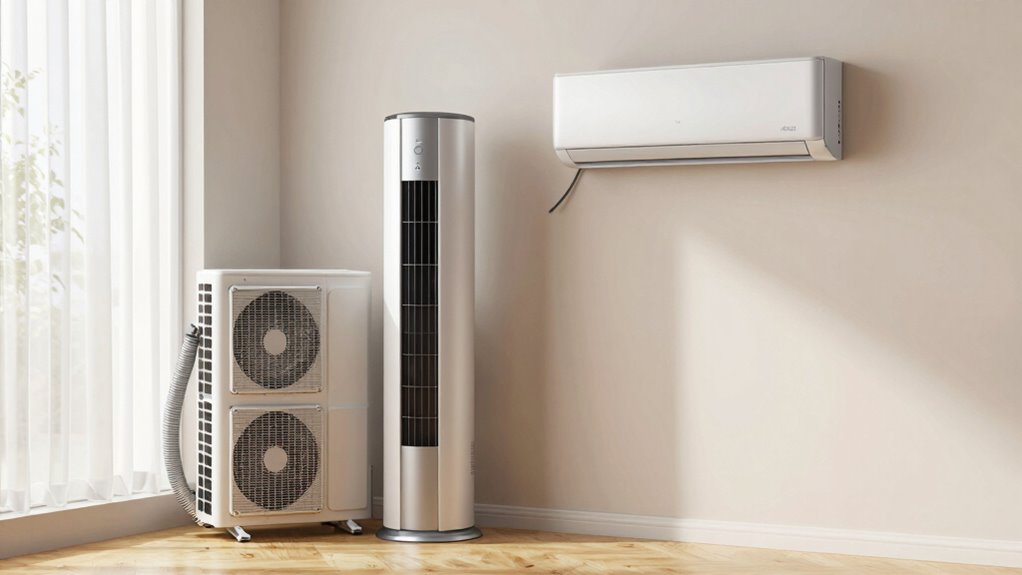

If you’re looking for a quick, portable solution for temporary cooling, a portable AC is ideal, especially if you’re renting or only need it occasionally. However, if you plan to stay long-term and want better energy efficiency, a mini split system is your best bet, despite the higher upfront cost and installation effort. To discover which option suits your situation best, explore the details further—you’ll find practical insights to help you decide.
Key Takeaways
- Portable ACs are ideal for short-term, temporary cooling needs or renters due to easy setup and mobility.
- Mini splits suit long-term residents seeking energy efficiency, quieter operation, and potential home value increase.
- Initial costs are lower for portable units, but mini splits offer better long-term savings through reduced energy consumption.
- Mini splits require professional installation and a higher upfront investment, suitable for those committed to long-term use.
- Portable ACs provide quick, flexible cooling, while mini splits offer more consistent, zoned cooling for permanent solutions.
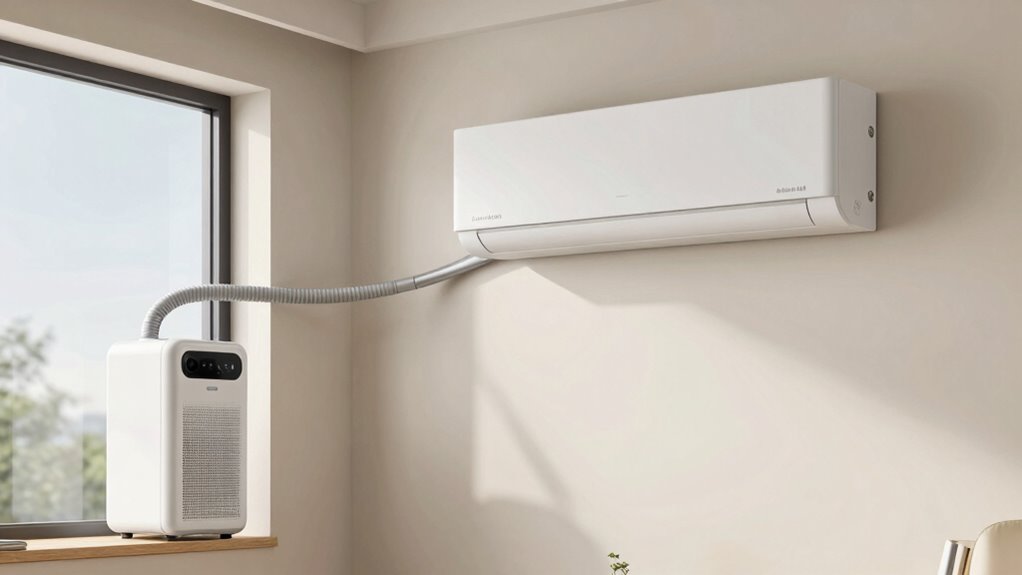
When it comes to cooling your space efficiently, choosing between a portable AC and a mini split system depends largely on how committed you are to the installation process and long-term use. If you’re looking for a quick, temporary fix, a portable AC might seem appealing. It’s easy to move around, requires no permanent installation, and can cool a room relatively quickly. However, when it comes to energy efficiency, portable units generally fall short. They tend to consume more power for the same cooling output compared to more integrated systems, which can lead to higher energy bills over time. Plus, their design often results in less effective cooling, especially in larger or poorly insulated spaces.
On the other hand, a mini split system requires a more involved installation process. It involves mounting an indoor unit, running refrigerant lines through the wall, and setting up an outdoor condenser. This installation complexity can be a hurdle if you’re not comfortable with DIY projects or don’t want to hire a professional. But in the long run, a mini split offers significant advantages. Its design allows for zoned cooling, meaning you can target specific rooms or areas, which improves overall energy efficiency. Because mini splits operate more efficiently than portable units, they typically use less electricity to produce the same cooling effect, saving you money on energy bills. Additionally, mini splits tend to provide more consistent and quieter performance, making them a better choice if you want a long-term, low-maintenance solution. Investing in a mini split system may also increase your home’s overall value, especially if energy savings and comfort are priorities.
Choosing the right cooling method also depends on your commitment level, as installations like mini splits require more initial effort but offer greater benefits over time. If you’re renting or only need to cool a space temporarily, a portable AC might be enough, despite its lower energy efficiency. But if you’re settling into a home or planning to stay for several years, investing in a mini split system could pay off through lower operating costs and more reliable cooling. Keep in mind that the initial investment for a mini split is higher, but the improved energy efficiency and comfort often justify the cost over time. Ultimately, it comes down to weighing your willingness to handle installation and your priorities for efficiency and long-term savings. If you’re willing to put in the effort, a mini split can provide a more effective, energy-efficient cooling solution that adapts to your needs over the years. Additionally, considering proper insulation can further enhance the efficiency of whichever system you choose.

Portable Air Conditioner, 3-in-1 8500 BTU AC Unit with Fan & Dehumidifier – Quiet Cooling for Bedroom, Home Office up to 450 sq.ft, Includes Complete Window Mount Kit
8500 BTU Powerful Cooling – Cools Up to 450 sq.ft in 8–15 Minutes: This portable air conditioner delivers…
As an affiliate, we earn on qualifying purchases.
As an affiliate, we earn on qualifying purchases.
Frequently Asked Questions
Which Option Is More Energy-Efficient Long-Term?
A mini split is more energy-efficient long-term because it has lower energy consumption than portable AC units. While the initial cost is higher, it offers better cost savings over time due to its efficiency and ability to target specific areas. Portable ACs tend to use more energy, leading to higher electricity bills. If you’re committed to saving money and reducing energy use, a mini split is the smarter choice.
Can I Install a Mini Split Myself?
Think of installing a mini split like planting a delicate seed—careful hands are essential. While DIY installation might seem tempting, it’s complex and requires precise wiring and refrigerant handling. You could try it, but for a healthy, long-lasting system, professional assistance is your best bet. They bring expertise, ensuring your mini split thrives and functions efficiently, saving you future headaches and energy costs.
How Noisy Are Portable AC Units?
Portable AC units can be quite noisy, with noise levels often ranging from 50 to 70 decibels, comparable to a conversation or background music. If you want quieter operation, consider sound insulation around the unit to reduce noise transmission. Keep in mind, placement impacts noise levels—placing the unit on a stable, insulated surface can help minimize the sound. Overall, portable ACs aren’t the quietest options, but strategic setup makes a noticeable difference.
Are There Any Maintenance Differences?
Think of maintenance like tending a garden: mini splits require regular filter cleaning, refrigerant checks, and professional service, making them akin to a well-kept landscape. Portable AC units demand less effort, mostly filter cleaning and drain clearing. Installation complexity and aesthetic considerations matter—mini splits need professional setup and blend seamlessly, while portables are easy to move but may look bulky. Your commitment level dictates which option fits best.
What’s the Lifespan of Each System?
A mini split typically lasts 12 to 15 years, thanks to its durable components, while portable AC units usually last 5 to 10 years. Considering cost comparison and installation complexity, mini splits have a higher upfront cost but offer longer lifespan and efficiency. Portable units are cheaper and easier to install but tend to wear out sooner. Your choice depends on how long you’re willing to invest and your setup preferences.

Albott Mini Split Air Conditioner and Heater, 12,000 BTU, SEER2 18, 115V Inverter Energy-Efficient AC with Self-Cleaning, Remote and APP Control, Easy Installation, Cools up to 750 Sq.Ft.
All-in-One Comfort Control: This mini split AC/heating system provides cooling, heating, dehumidifying, and fan modes with 61°F–90°F settings,…
As an affiliate, we earn on qualifying purchases.
As an affiliate, we earn on qualifying purchases.
Conclusion
Ultimately, choosing between a portable AC and a mini split hinges on your commitment level. If you’re just testing the waters or need flexibility, a portable unit might seem like the obvious choice. But as you realize how much more consistent and energy-efficient a mini split can be, it becomes clear that your initial coincidence—discovering the right solution—could turn into a long-term investment. Sometimes, the best choice just feels right once you see the difference.

MEPTY 12000BTU Mini Split AC/Heating System, 19 SEER2 Energy Efficient Mini Split Air Conditioner with Heat Pump, 110V Cools Up to 750sq.ft, Ductless Inverter AC Unit with Pre-Charged Condenser
⭐Advanced Energy Saving: Advanced inverter technology with leading 19 SEER2 rating delivers superior performance through ensuring that the…
As an affiliate, we earn on qualifying purchases.
As an affiliate, we earn on qualifying purchases.
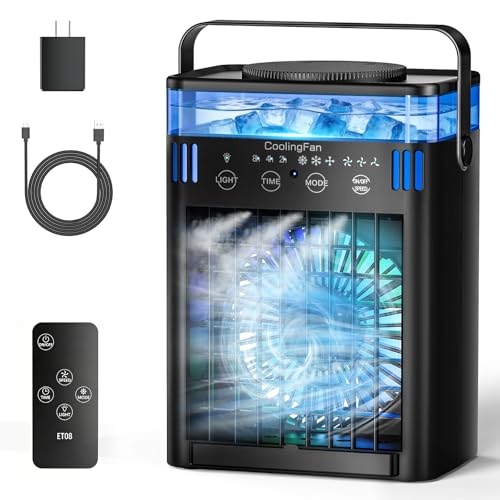
Portable Air Conditioner, Mini Air Conditioner Portable AC Unit with Remote, 3 Speeds & 3 Mist, 2-8H Timer & 7 Light, Evaporative Air Cooler Fan for Room Office Desk Home Dorm
【Powerful 4-in-1 Functionality】 This portable air conditioning fan combines cooler, fan, humidifier, and night light in one compact…
As an affiliate, we earn on qualifying purchases.
As an affiliate, we earn on qualifying purchases.