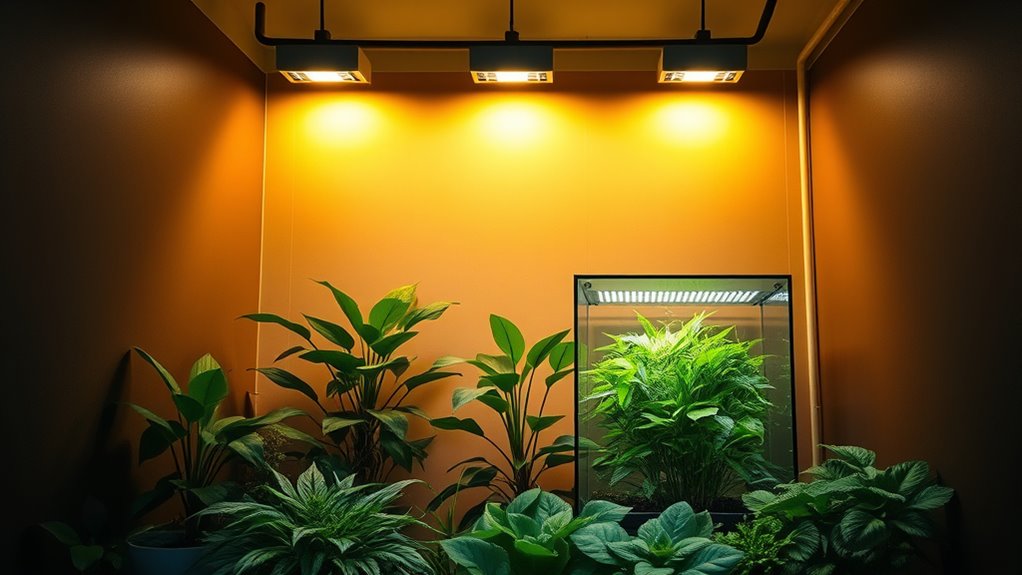

To manage light pollution from indoor gardens, choose energy-efficient LED lights with warm tones and install fixtures that direct light downward. Use shields, timers, and motion sensors to limit unnecessary illumination. Position lights thoughtfully to avoid spilling into windows or neighboring areas, and incorporate plants or furniture to block excess light. Small adjustments can markedly reduce light pollution, helping preserve the night sky and protect local ecosystems. If you want to learn more, there’s simple strategies to further improve your indoor gardening lighting.
Key Takeaways
- Use full cut-off fixtures and shielded lights to direct indoor garden illumination downward and prevent light spill.
- Implement timers and motion sensors to control light exposure duration and reduce unnecessary brightness.
- Choose energy-efficient LED bulbs with warm color temperatures to minimize skyglow and ecological disruption.
- Position indoor garden lights away from windows and property boundaries to limit light leakage into surrounding areas.
- Incorporate landscape features or interior barriers to absorb or block excess light and enhance light management.

Have you ever wondered how excess artificial light affects our night skies and daily lives? It’s a common concern, especially as more people bring indoor gardens into their homes. While these green spaces offer numerous benefits, they can also contribute to light pollution if not managed properly. To minimize this impact, focusing on sustainable lighting and outdoor light control is essential. When you choose sustainable lighting, you prioritize fixtures that are energy-efficient and produce less glare, helping reduce unnecessary light spill. Using LED bulbs with warm color temperatures not only conserves energy but also diminishes skyglow, which is the brightening of the night sky caused by artificial lights. It’s important to select lighting that directs light downward where it’s needed, rather than allowing it to scatter into the sky or neighboring areas. This is where outdoor light control plays a pivotal role.
Implementing outdoor light control involves using shielding, timers, and motion sensors to regulate when and where light is emitted. For example, installing downward-facing fixtures with full cut-off shields prevents light from escaping horizontally or upward, effectively containing illumination within your garden space. Timers and motion detectors help ensure lights are only on when necessary, reducing overall light pollution and saving energy. Additionally, adjusting the intensity and spectrum of your garden lights can make a significant difference. Softer, low-intensity lighting reduces the glow that escapes into the night sky, while warmer-colored lights are less disruptive to nocturnal wildlife and human sleep cycles. When you’re mindful of these choices, you’re actively contributing to a more sustainable outdoor lighting environment. Incorporating light pollution mitigation strategies can significantly enhance your efforts.
Another practical step is to position your garden lights thoughtfully, avoiding placement near windows or areas where they might spill into neighboring properties or public spaces. Incorporate landscape elements like trees, shrubs, or fences to block or absorb excess light, further controlling light spill. If your indoor garden has outdoor elements, such as patio or balcony gardens, ensure that any lighting installed is aimed and shielded properly. It’s about creating a balance—illuminating your garden for safety and enjoyment without contributing to the broader problem of light pollution. By adopting sustainable lighting practices and exercising outdoor light control, you help preserve the natural darkness of the night sky, protect nocturnal ecosystems, and maintain a peaceful environment for everyone. Small changes in how you light your indoor garden can have a profound impact on managing light pollution effectively.
energy-efficient LED garden lights
As an affiliate, we earn on qualifying purchases.
As an affiliate, we earn on qualifying purchases.
Frequently Asked Questions
What Are the Best Types of Lights to Minimize Pollution?
You should choose LED lights with high efficiency and a balanced light spectrum to minimize pollution. LED efficiency guarantees you get bright, effective lighting without wasting energy, reducing unnecessary light spill. Select LEDs with a full-spectrum or warm light spectrum, which minimizes blue light emissions that contribute most to light pollution. By using these lights, you create a healthy indoor environment while keeping external light pollution to a minimum.
How Can Indoor Garden Lighting Affect Local Wildlife?
Like a lighthouse piercing the night, your indoor garden lighting can disrupt local wildlife, especially nocturnal creatures. Bright or poorly directed lights may interfere with their natural behaviors, causing wildlife disruption and altering their routines. You can prevent this by choosing fixtures that minimize spillover, use dimmer settings, and turn lights off at night. This way, you protect the delicate balance of local ecosystems while enjoying your indoor garden.
Are There Regulations for Indoor Garden Lighting in Residential Areas?
You should check local building codes and regulations, as some residential areas have specific rules about indoor garden lighting. While there aren’t widespread laws, excessive or poorly shielded lights can lead to nuisance complaints from neighbors. To stay compliant, use properly directed, dimmable lights, and avoid overly bright or flashing fixtures. By doing so, you’ll minimize disturbances and adhere to community standards, ensuring your indoor gardening doesn’t cause issues.
How Do Seasonal Changes Impact Indoor Light Pollution Management?
Seasonal light variation affects your indoor light management by requiring you to adjust your lighting setup as days get longer or shorter. You might need to dim grow lights during summer to prevent excess light, while increasing intensity in winter to compensate for shorter daylight hours. By actively monitoring outdoor light changes, you can make indoor light adjustments, minimizing light pollution and creating a balanced environment for your indoor garden year-round.
Can Smart Lighting Systems Help Reduce Indoor Garden Light Pollution?
Yes, smart lighting systems can help reduce indoor garden light pollution. You can program these systems to adjust light intensity and timing, ensuring your plants get enough light without excess that causes pollution. With automation, you avoid unnecessary illumination, minimizing light pollution and enhancing energy efficiency. By using smart lighting, you gain better control over your indoor garden’s lighting, promoting healthier plants and a more environmentally conscious space.
full cut-off outdoor light fixtures
As an affiliate, we earn on qualifying purchases.
As an affiliate, we earn on qualifying purchases.
Conclusion
So, as you fill your home with lush indoor gardens, remember that your bright, thriving plants might be turning your space into a mini satellite dish for the night sky. Ironically, in trying to bring nature inside, you could be contributing to the very light pollution that dims the stars above. By managing your indoor lighting wisely, you’ll not only protect your plants but also help keep the night sky clear for everyone to enjoy.
As an affiliate, we earn on qualifying purchases.
As an affiliate, we earn on qualifying purchases.