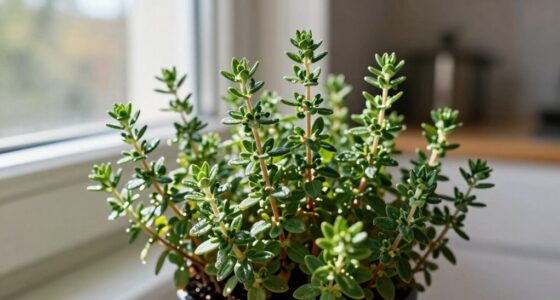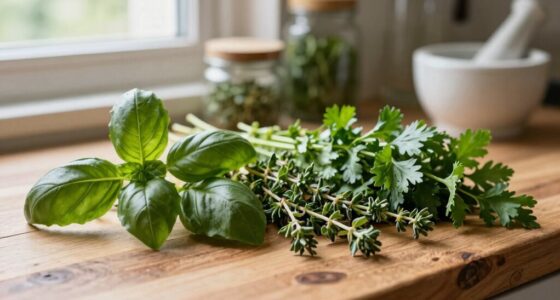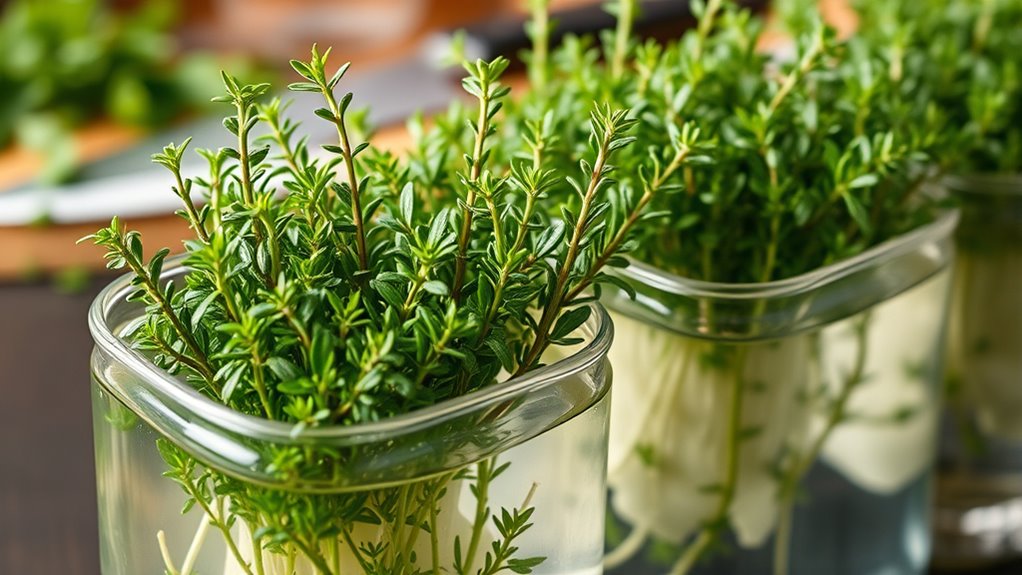
Growing thyme hydroponically lets you enjoy fresh, aromatic herbs all year without soil or mess. With an efficient system, you control nutrients, pH, and moisture to promote faster growth and vibrant foliage. This method reduces pests and diseases while providing a continuous supply for culinary uses. Whether for seasoning recipes or herbal remedies, hydroponic thyme is easy to maintain. Stick around, and you’ll discover the best tips for successful cultivation and flavorful harvests.
Key Takeaways
- Hydroponic thyme provides fresh, aromatic herbs year-round with minimal mess and faster growth compared to soil cultivation.
- Use a nutrient-rich hydroponic system with proper pH levels (6.0–7.0) for optimal nutrient absorption and plant health.
- Regularly monitor and maintain nutrient solutions to ensure thyme receives essential macro and micronutrients for robust growth.
- Harvest thyme by snipping sprigs directly from the system for culinary use, ensuring continuous supply of fresh herbs.
- Hydroponic thyme enhances flavor and aroma, making it ideal for culinary dishes, herbal teas, and garnishes.
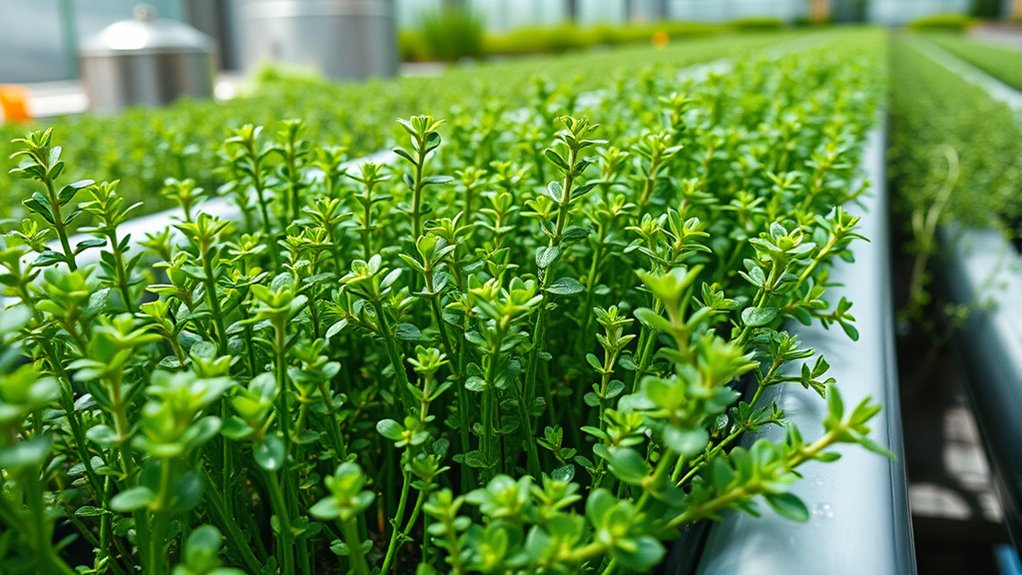
Have you ever considered growing thyme hydroponically? If you’re into indoor gardening, this method offers a fantastic way to cultivate fresh herbs year-round without the mess of soil. Hydroponic thyme is not only rewarding but also incredibly efficient, giving you a constant supply of fragrant leaves right in your own space. When you set up your hydroponic system, one of the most important aspects is choosing the right nutrient solutions. These solutions supply essential minerals and nutrients directly to the roots, guaranteeing healthy and vigorous growth. Unlike traditional soil gardening, hydroponics allows you to precisely control what your thyme receives, leading to faster growth and higher yields.
Growing thyme hydroponically ensures fresh herbs year-round with efficient nutrient control and minimal mess.
Starting with a good hydroponic setup, you’ll need a container or grow tray that can hold water and nutrients, along with a system to deliver the nutrient solution to the plants’ roots. You might opt for deep water culture, nutrient film technique, or flood-and-drain systems—each suitable for herbs like thyme. Once your system is in place, you’ll fill it with a carefully balanced nutrient solution formulated specifically for herbs or leafy greens. These solutions contain a blend of macro and micronutrients such as nitrogen, phosphorus, potassium, calcium, magnesium, and trace elements. Regularly monitoring and adjusting the pH of your nutrient solution is vital to keep the thyme thriving; most herbs prefer a slightly acidic pH of around 6.0 to 7.0.
Growing thyme hydroponically offers several advantages. First, it drastically reduces pests and diseases common in soil-based gardening. Second, it allows you to grow thyme indoors, regardless of your local climate or season. You’ll find that hydroponic thyme matures faster than soil-grown plants, often ready for harvest in just a few weeks. Additionally, maintaining your system is straightforward—just make certain your nutrient solution remains fresh and properly balanced. As your thyme grows, you’ll notice lush, vibrant foliage with a strong aroma, perfect for culinary uses. Harvesting becomes simple since you can snip fresh sprigs directly from your setup, ensuring maximum flavor and freshness.
Incorporating hydroponic thyme into your indoor gardening routine means you get access to fresh herbs whenever you want, with minimal effort and mess. The key is selecting high-quality nutrient solutions tailored for herbs and maintaining your system diligently. With the right approach, you’ll enjoy a continuous supply of aromatic thyme perfect for seasoning dishes, garnishing salads, or making herbal teas—all from the comfort of your home.

Ahopegarden Indoor Garden Hydroponics Growing System: 10 Pods Plant Germination Kit Herb Vegetable Growth Lamp Countertop with LED Grow Light – Hydrophonic Planter Grower Harvest Lettuce
- High Planting Efficiency: Faster, healthier growth with hydroponic system
- 10 Pods & Water Level Window: Includes 10 planting stations and water indicator
- Dual Growing Modes: Switch between vegetable and flower/fruit lighting
As an affiliate, we earn on qualifying purchases.
As an affiliate, we earn on qualifying purchases.
Frequently Asked Questions
How Long Does Hydroponic Thyme Typically Last?
Hydroponic thyme usually lasts around 1 to 2 weeks once harvested if stored properly. To maximize its plant lifespan, keep it in a damp paper towel or airtight container in the fridge. Guarantee you trim the stems regularly and avoid excess moisture to prevent spoilage. With proper storage tips, you can enjoy your fresh thyme longer, maintaining flavor and aroma for culinary uses.
Can Hydroponic Thyme Be Grown Indoors Year-Round?
Yes, you can grow hydroponic thyme indoors year-round. Many think limited space or lack of sunlight makes indoor gardening impossible, but with proper LED grow lights and a small setup, you can enjoy fresh thyme anytime. Indoor cultivation provides control over environment and pests, ensuring healthy plants year-round. So, if you love cooking with fresh herbs, indoor gardening makes it easy to have hydroponic thyme at your fingertips regardless of the season.
What Are Common Pests for Hydroponic Thyme?
You should watch out for pests like aphids, spider mites, and whiteflies when growing hydroponic thyme. To prevent infestations, practice pest prevention by keeping your growing area clean and maintaining proper humidity. Use organic controls such as neem oil or insecticidal soap to manage pests if they appear. Regularly inspect your plants, and act quickly to keep your hydroponic thyme healthy and pest-free.
How Often Should I Harvest Hydroponic Thyme?
You should harvest hydroponic thyme when the plant reaches about 4 to 6 inches tall, typically every 2 to 3 weeks. For maximum plant regrowth, trim the stems just above the woody base, encouraging new growth. Regular harvesting keeps the plant healthy and productive, and you can harvest often, but avoid overdoing it to ensure the thyme remains vigorous and continues to flourish.
Is Hydroponic Thyme More Nutrient-Dense Than Soil-Grown?
Hydroponic thyme isn’t necessarily more nutrient-dense than soil-grown thyme, but it often has controlled nutrient levels that promote healthier growth. In terms of growth comparison, hydroponic systems can produce faster, more consistent yields because you can maximize nutrient delivery. While the nutrient content might be similar, the controlled environment ensures your thyme receives ideal nutrients, leading to vibrant flavor and better overall quality.
Ahopegarden Indoor Garden Hydroponics Growing System: 10 Pods Plant Germination Kit Herb Vegetable Growth Lamp Countertop with LED Grow Light – Hydrophonic Planter Grower Harvest Lettuce
- High Planting Efficiency: Faster, healthier growth with hydroponic system
- 10 Pods & Water Level Window: Includes 10 planting stations and water indicator
- Dual Growing Modes: Switch between vegetable and flower/fruit lighting
As an affiliate, we earn on qualifying purchases.
As an affiliate, we earn on qualifying purchases.
Conclusion
Growing hydroponic thyme is like tending a lively garden inside your home—fresh, fragrant, and ready to enhance your dishes. With simple care and a bit of attention, you can enjoy this versatile herb year-round, straight from your indoor setup. Its vibrant aroma and flavor bring your cooking to life, making every meal feel like a fresh harvest. Embrace hydroponic thyme, and let your culinary creativity flourish like a blooming garden.

Liquid Plant Food for use in AeroGarden, IDOO and Hydroponic Growing Systems, Liquid Fertilizer 8 oz (250mL)
- Compatible with AeroGarden systems: Supports AeroGarden and similar units
- Promotes healthy plant growth: Encourages steady growth and strong roots
- Balanced hydroponic nutrients: Provides essential nutrients for indoor hydroponic plants
As an affiliate, we earn on qualifying purchases.
As an affiliate, we earn on qualifying purchases.

Bluelab PENCON Conductivity Pen and Digital TDS Meter, Water Tester for Temperature and Nutrient (CF, EC, PPM 500, PPM 700), TDS Testing Kit for Hydroponic System and Indoor Plant Grow
- Nutrient Monitoring: Tests and monitors TDS levels for plants
- Versatile Use: Suitable for pools, aquariums, and brewing
- Automatic Temperature Compensation: Provides consistent readings despite temperature changes
As an affiliate, we earn on qualifying purchases.
As an affiliate, we earn on qualifying purchases.