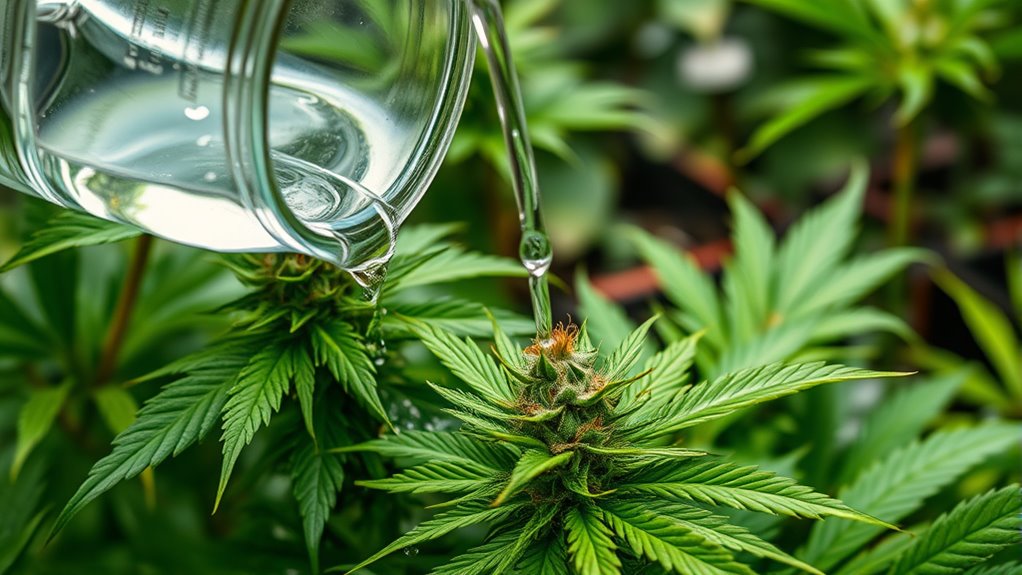

To flush your plants before harvest, start about a week early by watering thoroughly with plain, pH-balanced water (around 6.0-6.5 for soil). Continue until runoff, ensuring you wash away excess nutrients, salts, and residues that can affect flavor, potency, and overall quality. Focus on rinsing the medium and roots rather than just heavy watering. Proper flushing improves plant health and final bud quality—if you want to learn more, keep going.
Key Takeaways
- Start flushing about one week before harvest with plain, pH-balanced water to remove excess nutrients.
- Water thoroughly until runoff indicates nutrients are being washed out of the medium.
- Maintain proper pH levels (6.0-6.5 for soil, slightly lower for hydro) during flushing to support nutrient movement.
- Focus on rinsing the entire growing medium, not just watering heavily, to ensure complete nutrient removal.
- Continue flushing until the runoff shows minimal nutrients, promoting cleaner, better-tasting final buds.
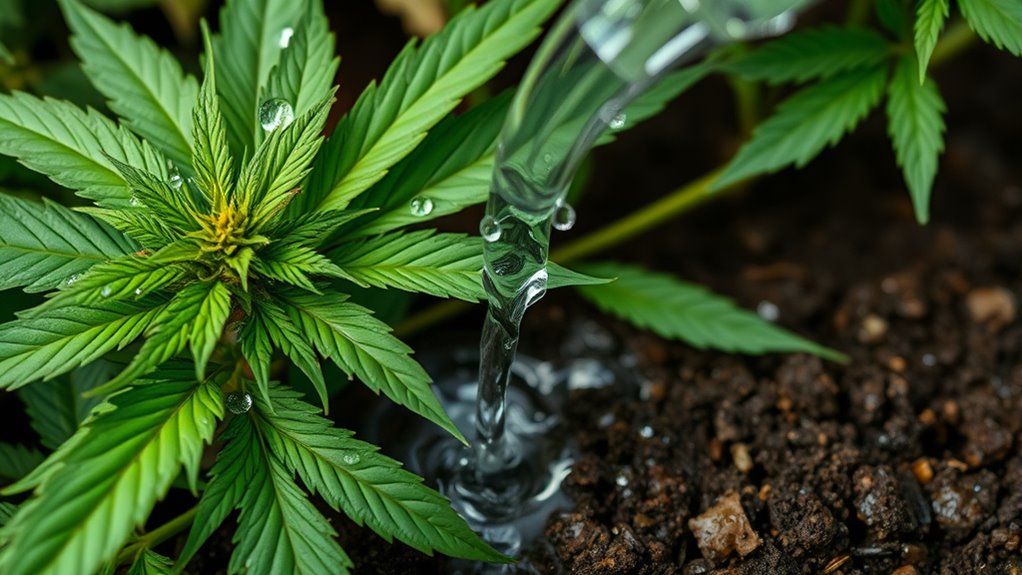
Flushing your plants before harvest is a crucial step to guarantee a clean, smooth, and high-quality final product. When you flush correctly, you remove excess nutrients, salts, and residues that can compromise flavor, potency, and overall quality. This process is especially important if your plants show signs of nutrient deficiency, as lingering nutrients can cause uneven ripening or harsh tastes. Additionally, flushing helps prevent pest issues by reducing the likelihood of pests being attracted to leftover nutrients or organic matter that might remain in the plant tissues. Proper flushing ensures that your buds are as pure and safe as possible, making your harvest more enjoyable and healthier.
To start, you need to understand that flushing isn’t just about watering heavily; it’s about rinsing the growing medium thoroughly. You should begin about a week before harvest, giving your plants enough time to clear out excess nutrients. Use plain, pH-balanced water—around 6.0 to 6.5 for soil-grown plants or slightly lower for hydroponic setups—and water until you see runoff. This runoff indicates that nutrients and salts are being washed away from the roots and medium. Keep a close eye on the pH to ensure the water is accessible for nutrient uptake, but at this stage, you want to push out what’s left inside the plant. Proper flushing also supports nutrient uptake regulation, ensuring your plants are prepared for harvest.
If your plants are showing signs of nutrient deficiency, flushing can help reset their nutrient balance. Sometimes deficiencies are caused by overfeeding, so flushing can prevent nutrient lockout and promote healthier, more even maturation. When you flush, you’re essentially clearing out excess fertilizer salts that might obscure deficiencies or cause uneven ripening. This makes it easier to assess the plant’s true health and maturity as harvest approaches. Additionally, flushing acts as pest prevention by removing residual organic matter and nutrients that pests are attracted to, reducing their chances of thriving in your crop during the final stages.

General Hydroponics Ph Control Kit
General Hydroponics pH Control Kit contains everything you need to measure pH levels of your hydroponic grow reservoirs
As an affiliate, we earn on qualifying purchases.
As an affiliate, we earn on qualifying purchases.
Frequently Asked Questions
How Long Should I Flush My Plants Before Harvest?
You should flush your plants for about 1-2 weeks before harvest to prevent nutrient buildup and guarantee the best flavor. During this period, use plain water to gradually remove excess nutrients, which helps improve taste and potency. Keep an eye on your plants and consider harvest timing; wait until the buds look healthy and trichomes are cloudy. Proper flushing enhances overall quality and maximizes your harvest potential.
Can Flushing Improve the Taste of My Cannabis?
Flushing is like hitting the reset button for your plants, clearing out nutrient buildup that can cloud flavor. When you flush properly, you improve the taste of your cannabis by reducing chemical residues, making it smoother and more enjoyable. This process also promotes better plant health, allowing the plant to focus on developing quality buds. So yes, flushing can notably enhance the flavor profile of your harvest.
What Signs Indicate I Need to Flush My Plants?
You should flush your plants when you notice nutrient deficiency symptoms like yellowing leaves or unusual spots, or if there’s a pest infestation that’s difficult to control. These signs indicate your plants are overloaded with nutrients or chemicals, which can affect flavor and safety. Flushing helps remove excess nutrients and pests, ensuring a cleaner, smoother harvest. Keep an eye out for these indicators to determine the right time to flush.
Is Flushing Necessary for All Types of Plants?
Think of your plants as delicate symphonies that rely on balanced notes. Flushing isn’t necessary for all plants, but it’s essential when you want nutrient removal to reduce plant stress. If your plant has accumulated excess nutrients, flushing helps clear the way for a cleaner, smoother harvest. Not every plant needs this, but understanding its role can prevent issues and guarantee you end on a harmonious note.
Are There Risks Associated With Over-Flushing?
Yes, over-flushing can lead to risks like nutrient deficiency and plant stress. When you flush too much, you wash away essential nutrients, which can weaken your plant and reduce yield quality. It’s important to flush carefully and monitor your plant’s response. Proper timing and technique help prevent these issues, ensuring your plant stays healthy and produces a better harvest without unnecessary stress or deficiencies.

Quicksilver 44357Q2 Through Gear Case Flushing Kit for Select Mercury Outboards and Sterndrive Engines
Semi-universal outboard and sterndrive flushing kit makes quick work of protecting your engine and drive from the harmful…
As an affiliate, we earn on qualifying purchases.
As an affiliate, we earn on qualifying purchases.
Conclusion
Now that you know how to flush your plants before harvest, you’re like a gardener wielding a gentle but decisive brush, ready to clear away any lingering nutrients. This simple step guarantees your plants taste pure and smooth, like a crisp morning breeze. Remember, patience and careful flushing are your best allies in achieving a flawless harvest. So, stay attentive and trust the process—your plants will thank you with their best flavor yet.

Hydroponics Nutrients for Aerogarden(800ml in Total), Plant Food A & B Hydroponics Supplies, Indoor Plant Fertilizer for Hydroponics Growing System, Hydroponic Solution for Vegetables Thrive
【8 Pack A & B Hydroponic Plant Food】Our hydroponics supplies plant food is equipped with 2 bottles and…
As an affiliate, we earn on qualifying purchases.
As an affiliate, we earn on qualifying purchases.

Chlorophyll Meter, Nitrogen Meter – Plant Nutrition Tester with 0.0-99.9 SPAD Measurement, Leaf Temperature & Humidity, Portable, Data Storage & PC Software for Agriculture and Research
Maximize Fertilization Efficiency: Optimize fertilization strategies with precise chlorophyll (0.0-99.9 SPAD) and nitrogen content (0.0-99.9 mg/g) measurements. Streamline…
As an affiliate, we earn on qualifying purchases.
As an affiliate, we earn on qualifying purchases.