The best holly plants depend on the space you need to fill, your climate, and whether you want berries or a narrow evergreen shape. I name Ilex glabra Gem Box my best overall pick for its compact form, while Sky Pencil Holly suits tight vertical spaces and Nellie R. Stevens offers a stronger fit for privacy planting. The main tradeoffs are mature size, berry production, pollination needs, and whether you prefer a larger established plant or a smaller starter. Some hollies stay tidy with less pruning; others need room to grow. Read on for the full breakdown of all 15 options and help matching a plant to your garden.

Get garden gear delivered free with Prime
- Fast, free delivery on millions of items
- Prime Video, Amazon Music and more included
- Member-only deals all year
Complete the kit


Key Takeaways
- Gem Box Inkberry Holly leads for compact, structured planting, while a larger Nellie R. Stevens plant better suits buyers prioritizing a ready-to-grow screen.
- Sky Pencil Holly is the lineup’s clearest choice for narrow spaces, but its upright form is not a substitute for a broad hedge.
- Berryific is listed in two container sizes and pairs male and female plants in one pot, a useful distinction for buyers focused on berries.
- The roundup ranges from small 1-gallon and 4-inch starter plants to a 7-gallon Nellie Stevens and a 20-plant bundle; container size changes how much establishment time to expect.
- Dwarf Yaupon, Soft Touch, and Dwarf Burford serve compact planting needs, while larger Nellie Stevens and Oakleaf selections are better matched to screening or landscape structure.
| Ilex glabra Gem Box (Inkberry Holly) Evergreen, 2-Gallon Container |  | Best Compact Holly for Shade | Plant type: Evergreen shrub | Listed size: 24–36 inches H × 24–36 inches W | Container: 2-gallon | VIEW LATEST PRICE | See Our Full Breakdown |
| Dwarf Burford Holly Shrub, Dark Green Evergreen, 3 Gallon, Drought Tolerant for Garden Landscape |  | Best for Low-Water Gardens | Plant type: Dwarf evergreen holly shrub | Container: 3-gallon | USDA hardiness zones: 6–10 | VIEW LATEST PRICE | See Our Full Breakdown |
| Ilex X meserveae ‘Berryific’ Holly – Evergreen Male & Female in Same Pot, #3 Size Container |  | Best for Red Berries Without a Separate Pollinator | Plant type: Ilex × meserveae holly; male and female in the same pot | Container: No. 3 size | USDA hardiness zones: 5–8 | VIEW LATEST PRICE | See Our Full Breakdown |
| 2 Oak Leaf Holly Bushes Ready to Plant, 6-12″ Tall in 4″ Pot |  | Best Two-Plant Starter Set | Plant type: Oak Leaf Holly evergreen bushes | Quantity: 2 bushes | Plant size: 6–12 inches tall | VIEW LATEST PRICE | See Our Full Breakdown |
| Brighter Blooms Soft Touch Holly Shrub, 1 Gallon |  | Best for Easygoing Outdoor Planting | Plant type: Soft Touch Holly | Container: 1 gallon | Use: Outdoor | VIEW LATEST PRICE | See Our Full Breakdown |
| Nellie R. Stevens Holly Shrub – 6-12 inches tall live plant in a 3-inch pot |  | Best for Seasonal Berry Color | Plant type: Holly shrub | Height: 6–12 inches | Pot size: 3 inches | VIEW LATEST PRICE | See Our Full Breakdown |
| Live Oak Leaf Holly Plant, 6-12 inches Tall in 4-inch Pot, Evergreen Shrub for Outdoor Landscape |  | Best for Distinctive Foliage | Plant type: Evergreen shrub | Height: 6–12 inches | Container size: 4 inches | VIEW LATEST PRICE | See Our Full Breakdown |
| Sky Pencil Holly Shrub, Dark Green, Drought Tolerant, Outdoor, Well-Draining Soil, USDA Zones 6-10 (1-Gallon) |  | Best for Narrow Spaces | Growth habit: Columnar | Expected height: Up to 5 feet | Foliage: Dark green, glossy | VIEW LATEST PRICE | See Our Full Breakdown |
| Nellie R. Stevens Holly – 20 Live Plants – Evergreen Privacy Trees |  | Best for Large Hedge Projects | Plant variety: Nellie R. Stevens Holly | Unit count: 20 plants | Plant type: Evergreen shrub and hedge plant | VIEW LATEST PRICE | See Our Full Breakdown |
| Ilex X meserveae ‘Berryific’ Holly Live Plant – 2 Gallon Container |  | Best for a Larger Cold-Hardy Specimen | Plant type: Shrub | Variety: ‘Berryific’ (Ilex × meserveae) | Container size: 2 gallons | VIEW LATEST PRICE | See Our Full Breakdown |
| Southern Living 3 Gal. Oakland Holly Shrub |  | Best for Oak-Shaped Foliage | Plant type: Holly shrub | Container size: 3 gallon | Mature height: 15–20 feet | VIEW LATEST PRICE | See Our Full Breakdown |
| Christmas Jewel Holly Live Evergreen Shrub, 3 Gallon |  | Best for Holiday Berries | Botanical name: Ilex x ‘HL10-90’ PP14477 | Container size: 3 gallon | USDA zones: 6–9 | VIEW LATEST PRICE | See Our Full Breakdown |
| Nellie R. Stevens Holly (Ilex) Shrub, 7 Gallons |  | Best for Faster Landscape Impact | Botanical name: Ilex x ‘Nellie R. Stevens’ | Container size: 7 gallons | Shipping height: 36–45 inches | VIEW LATEST PRICE | See Our Full Breakdown |
| Nellie Stevens Holly 1 Gal. Pot | Fast Growing Privacy Evergreen with Glossy Green Foliage |  | Best for Privacy Screening | Plant type: Evergreen shrub | Container size: 1 gallon | Expected height: Up to 25 feet | VIEW LATEST PRICE | See Our Full Breakdown |
| Dwarf Yaupon Holly Shrub, Live Plant, 1 Gallon Container |  | Best Compact Holly | Container size: 1 gallon | Plant type: Shrub | Growth height: 3–5 feet | VIEW LATEST PRICE | See Our Full Breakdown |
| holly plant | Plant type | Sunlight | USDA hardiness zones | Container size |
|---|---|---|---|---|
| Ilex glabra Gem Box | Evergreen shrub | — | 5–9 | — |
| Dwarf Burford Holly Shrub | Dwarf evergreen holly shrub | — | 6–10 | — |
| Ilex X meserveae ‘Berryific’ H | Ilex × meserveae holly; male and female in the same pot | — | 5–8 | — |
| 2 Oak Leaf Holly Bushes Ready | Oak Leaf Holly evergreen bushes | — | 6–9 | — |
| Brighter Blooms Soft Touch Hol | Soft Touch Holly | — | — | — |
| Nellie R. Stevens Holly Shrub | Holly shrub | Partial sun | — | — |
| Live Oak Leaf Holly Plant | Evergreen shrub | Full sun listed; description also allows partial sun | 6–9 | 4 inches |
| Sky Pencil Holly Shrub | — | — | 6–10 | 1 gallon |
| Nellie R. Stevens Holly | Evergreen shrub and hedge plant | Full sun listed; description says adaptable to sun and shade | — | — |
| Ilex X meserveae ‘Berryific’ H | Shrub | Full sun or partial shade | 5–8 | 2 gallons |
| Southern Living 3 Gal. Oakland | Holly shrub | Full sun to part shade | — | 3 gallon |
| Christmas Jewel Holly Live Eve | — | Full sun to partial shade | — | 3 gallon |
| Nellie R. Stevens Holly | — | Full sun to partial shade | 6–9 | 7 gallons |
| Nellie Stevens Holly 1 Gal. Po | Evergreen shrub | Full sun or shade | — | 1 gallon |
| Dwarf Yaupon Holly Shrub | Shrub | Sun to partial shade | — | 1 gallon |
More Details on Our Top Picks
Ilex glabra Gem Box (Inkberry Holly) Evergreen, 2-Gallon Container
Gem Box is the most space-conscious pick here: its dwarf, naturally rounded form and branching down to the ground suit low borders and containers where a taller screen would overwhelm the space. Compared with the Dwarf Burford Holly, it is better suited to partial shade and a contained shape, while Burford offers berries and drought tolerance. This inkberry’s foliage stays evergreen, but the supplied plant has no male plants available for fruiting, so buyers should not count on berries. It also asks for moist, acidic soil; that is a narrower fit than the more adaptable Soft Touch Holly. Choose Gem Box for a tidy, small-scale planting rather than a low-water site or a berry display.
Pros:- Dwarf, dense habit fits small borders and containers
- Branches close to the ground, reducing bare lower stems
- Tolerates partial shade
- Evergreen foliage provides year-round structure
Cons:- No male plants are available with this option for fruiting
- Needs moist, acidic soil for best growth
- Hardiness is limited to USDA zones 5–9
Best for: Gardeners wanting a compact, rounded evergreen for a partly shaded border or container, with moist acidic soil available.
Not ideal for: Buyers seeking winter berries, a drought-tolerant shrub, or a holly for soil that is not moist and acidic.
- Plant type:Evergreen shrub
- Listed size:24–36 inches H × 24–36 inches W
- Container:2-gallon
- USDA hardiness zones:5–9
- Expected height:14 inches
- Soil:Moist, acidic
- Light:Partial shade
- Water needs:Average
Our verdict“Choose Gem Box for a compact, shade-tolerant holly if you can provide acidic soil and do not need berries.”
Dwarf Burford Holly Shrub, Dark Green Evergreen, 3 Gallon, Drought Tolerant for Garden Landscape
Dwarf Burford is the practical choice for gardeners who want seasonal interest without frequent watering. Its low-to-medium moisture needs and drought-tolerant description give it an advantage over Gem Box, which calls for moist, acidic soil. Burford also offers spring flowers and winter red berries, whereas Gem Box’s listing says male plants are unavailable for fruiting. That combination makes this a stronger fit for a sunny-to-partly-shaded border where birds and winter color matter. The tradeoff is that drought tolerance does not remove the need for upkeep: regular pruning is listed to maintain its shape, and the provided expected-height figure of 5 inches is unclear for a shrub. Its USDA zones 6–10 also exclude colder gardens suited to the zone-5 Berryific holly.
Pros:- Drought-tolerant with low-to-medium moisture needs
- Evergreen foliage provides year-round garden structure
- Described as producing spring flowers and winter red berries
- Compact habit suits borders and smaller landscapes
Cons:- Regular pruning may be needed to maintain its shape
- Listed expected height of 5 inches is unclear for a shrub
- Hardiness is limited to USDA zones 6–10
Best for: Gardeners in USDA zones 6–10 who want a compact evergreen with seasonal berries and lower watering demands.
Not ideal for: Gardeners in colder zone-5 climates or anyone wanting a clearly specified mature size and a shrub that needs little shaping.
- Plant type:Dwarf evergreen holly shrub
- Container:3-gallon
- USDA hardiness zones:6–10
- Expected plant height:5 inches (as listed)
- Soil:Well-draining
- Moisture needs:Low to medium
- Light:Partial shade
- Features:Drought tolerant; described as producing white flowers and red berries
Our verdict“Pick Dwarf Burford for a berry-producing, lower-water holly in zones 6–10 if you are willing to prune it.”
Ilex X meserveae ‘Berryific’ Holly – Evergreen Male & Female in Same Pot, #3 Size Container
Berryific has the clearest berry advantage in this group: the male and female plants share one pot, so the listing says no separate pollinator is needed for its red berries. That makes it a better fit for a single-plant berry display than Gem Box, whose listing says male plants are unavailable for fruiting. The 3-gallon plant is fully rooted and ready to plant, and its zone 5–8 range includes colder areas than the Dwarf Burford Holly can serve. The tradeoff is scale: an expected height of 10–12 feet calls for space and future planning, unlike Gem Box’s dwarf habit. It is also described as suited to partial sun and moderate watering, not as a drought-tolerant choice.
Pros:- Male and female plants in one pot are described as supporting berry production without a separate pollinator
- Red berries add late-fall and winter color
- Fully rooted and ready to plant
- Zone 5–8 hardiness includes colder climates than Dwarf Burford
Cons:- Expected mature height of 10–12 feet requires substantial space
- Moderate watering needs offer less drought flexibility than Dwarf Burford or Soft Touch
- Planting is not recommended during frigid winter or drought conditions
Best for: Gardeners in USDA zones 5–8 who want a red-berry holly and have room for a shrub that may reach 10–12 feet.
Not ideal for: Small-space gardeners, or buyers seeking a low-water holly or a plant suited to zones outside 5–8.
- Plant type:Ilex × meserveae holly; male and female in the same pot
- Container:No. 3 size
- USDA hardiness zones:5–8
- Expected height:12 feet (listing also describes 10–12 feet)
- Light:Partial sun
- Soil:Loam
- Water needs:Moderate
- Berry season:Late fall and winter
Our verdict“Choose Berryific when red berries are the priority and your garden has room for a tall holly.”
2 Oak Leaf Holly Bushes Ready to Plant, 6-12″ Tall in 4″ Pot
This pair is the standout for buyers who want two plants and distinctive foliage, rather than one established shrub. Deeply lobed leaves give Oak Leaf Holly a different look from the smoother foliage of Gem Box and Dwarf Burford, while its upright, pyramidal habit suits a border or early privacy planting. The supplied plants are only 6–12 inches tall in 4-inch pots, so they need time to fill in; Berryific is the more direct option for shoppers prioritizing a specified berry display. Oak Leaf is listed for full sun and regular watering, which makes it less suitable for a dry garden than Dwarf Burford or Soft Touch. Its zone 6–9 range also misses the colder zone-5 edge available with Gem Box and Berryific.
Pros:- Two bushes are included
- Deeply lobed leaves provide a distinctive oak-like appearance
- Upright pyramidal habit adds structure to borders and screens
- Listed as cold-hardy in USDA zones 6–9
Cons:- Small 6–12-inch plants will take time to establish as a screen
- Regular watering is specified
- Listed for full sun and zones 6–9, limiting its fit for some sites
Best for: Gardeners who want two young, architectural holly plants for a sunny border and are comfortable waiting for them to grow.
Not ideal for: Buyers wanting an immediately mature screen, a drought-tolerant plant, or a holly for USDA zone 5.
- Plant type:Oak Leaf Holly evergreen bushes
- Quantity:2 bushes
- Plant size:6–12 inches tall
- Pot size:4 inches
- USDA hardiness zones:6–9
- Light:Full sun
- Moisture needs:Regular watering
- Growth habit:Upright, pyramidal
Our verdict“Choose this pair for distinctive foliage and a two-plant start, not for instant screening or low-water planting.”
Brighter Blooms Soft Touch Holly Shrub, 1 Gallon
Soft Touch is the most flexible pick for gardeners who want a manageable, lower-water holly without Gem Box’s specific moist, acidic soil preference. It is described as drought tolerant and adaptable to various soils, making it a more forgiving choice than the regular-watering Oak Leaf Holly pair. The glossy evergreen foliage, spring blooms, and black berries offer seasonal interest, though the berries differ from the red display described for Berryific and Dwarf Burford. At one gallon, this is a smaller starting plant than the 3-gallon Berryific, and the product data gives no mature size or growth rate. I would choose it for a lower-maintenance landscape accent, not when a defined screening height, berry color, or cold-hardiness range is needed.
Pros:- Drought tolerant according to the product data
- Described as adaptable to various soils
- Glossy evergreen foliage adds year-round color
- Spring blooms and black berries provide seasonal interest
Cons:- Mature size and growth rate are not provided
- No USDA hardiness range is listed
- Shipping restrictions are listed for Alaska, Arizona, Hawaii, and Oregon
Best for: Gardeners seeking a one-gallon outdoor holly for a sunny site, especially where watering may be intermittent.
Not ideal for: Buyers who need a stated mature size, a specified USDA hardiness range, or red winter berries.
- Plant type:Soft Touch Holly
- Container:1 gallon
- Use:Outdoor
- Light:Full sun
- Soil:Sandy soil listed; description says adaptable to various soils
- Moisture needs:Drought tolerant
- Foliage color:Green
- Seasonal features:Spring blooms and black berries in colder months
Our verdict“Pick Soft Touch for a drought-tolerant, sunny-site accent if a missing mature-size and hardiness profile is acceptable.”
Nellie R. Stevens Holly Shrub – 6-12 inches tall live plant in a 3-inch pot
I’d choose this young Nellie R. Stevens Holly for its combination of glossy evergreen leaves and bright red berries, which can bring winter color to a garden and provide cuttings for wreaths. Its 3-inch pot and 6–12-inch height make it a small starting plant, not an instant privacy screen; the 20-plant Nellie R. Stevens package is a better fit when the goal is to cover a long boundary. This single shrub instead suits buyers who want to add one specimen and are willing to wait for it to grow. It prefers partial sun, and birds may eat the berries, so the display can vary. The compact size also means its mature form and screening impact will depend on time and care.
Pros:- Bright red berries offer seasonal color and can attract birds.
- Glossy evergreen foliage adds year-round greenery.
- Small plant size suits gardeners starting a planting gradually.
- Can serve as an outdoor shrub or provide decorative cuttings.
Cons:- A 6–12-inch plant will not create a privacy screen quickly.
- Partial sun is specified for optimal growth, limiting placement choices.
- Birds may consume berries before they can be used for decoration.
Best for: Gardeners adding a single young evergreen for future berry color, seasonal cuttings, or a small landscape planting.
Not ideal for: Buyers who need immediate privacy or want a larger established shrub; at 6–12 inches tall in a 3-inch pot, it needs time to fill out.
- Plant type:Holly shrub
- Height:6–12 inches
- Pot size:3 inches
- Foliage:Evergreen
- Berry color:Bright red
- Sunlight:Partial sun
- Maintenance:Low
- Use:Outdoor planting and indoor decorative cuttings
Our verdict“Choose this small Nellie R. Stevens Holly for a single, berry-bearing evergreen to grow over time, not for quick screening.”
Live Oak Leaf Holly Plant, 6-12 inches Tall in 4-inch Pot, Evergreen Shrub for Outdoor Landscape
The Oak Leaf Holly is the foliage-led choice here: its deeply lobed leaves give it a different look from the glossy-leaved Nellie R. Stevens Holly, while its upright pyramidal shape can suit a border or standalone planting. At 6–12 inches tall in a 4-inch pot, it arrives small, so buyers should plan for establishment rather than an immediate screen. Compared with the Sky Pencil Holly, which is selected for narrow vertical growth, this plant’s appeal is its oak-like leaf shape and broader landscape flexibility. The listing gives a USDA zone range of 6–9 and calls for regular watering, so it may ask more of the gardener than the drought-tolerant Sky Pencil once established. Full sun is listed, though the description also mentions partial sun; confirm the site conditions before planting.
Pros:- Deeply lobed leaves provide a distinctive alternative to standard glossy holly foliage.
- Upright pyramidal habit suits borders, screens, or a standalone landscape feature.
- Listed as cold-hardy for USDA zones 6–9.
- Established in a 4-inch pot and described as low maintenance.
Cons:- Small starting size means it will take time to make a substantial screen.
- Regular watering and well-draining soil are specified.
- Sunlight guidance is mixed between full sun and partial-to-full sunlight.
Best for: Gardeners in USDA zones 6–9 who want an outdoor holly with unusual, oak-shaped leaves for a border or specimen spot.
Not ideal for: Buyers seeking a large, ready-made privacy hedge or a plant with clearly specified berry performance; this arrives only 6–12 inches tall and the listing offers limited bloom details.
- Plant type:Evergreen shrub
- Height:6–12 inches
- Container size:4 inches
- Foliage:Deeply lobed, oak-like leaves
- Growth habit:Upright pyramidal
- USDA hardiness zones:6–9
- Sunlight:Full sun listed; description also allows partial sun
- Moisture needs:Regular watering
Our verdict“Pick this Oak Leaf Holly for its unusual leaf shape and zone 6–9 hardiness, provided you can wait for a small plant to fill in.”
Sky Pencil Holly Shrub, Dark Green, Drought Tolerant, Outdoor, Well-Draining Soil, USDA Zones 6-10 (1-Gallon)
For a tight planting strip or a vertical accent, I’d favor the Sky Pencil Holly over the broader screening intent of the Nellie R. Stevens options. Its columnar habit can add height without demanding much width, making it useful beside an entry, along a border, or in a small garden. The 1-gallon plant is a more substantial starting point than the 3-inch-pot Nellie R. Stevens, though its listed height of up to 5 feet describes potential growth, not the size on arrival. It is described as drought tolerant once established and hardy in zones 6–10, but needs well-draining soil and is best suited to shade or partial shade. Skip it if you need a broad hedge or a sunny-site holly; its narrow form and light preferences are specific tradeoffs.
Pros:- Columnar growth uses little horizontal space.
- Dark green glossy foliage remains evergreen year-round.
- Drought tolerant once established, with low-to-medium moisture needs.
- Listed for USDA zones 6–10.
Cons:- Well-draining soil is required.
- Best suited to shade or partial shade rather than full sun.
- Up-to-5-foot height is a growth potential, not a stated arrival size.
Best for: Homeowners with narrow beds or small yards who want a vertical evergreen accent and can provide shade or partial shade.
Not ideal for: Buyers seeking a broad privacy hedge, a plant already close to 5 feet tall, or a holly for a fully sunny planting site.
- Growth habit:Columnar
- Expected height:Up to 5 feet
- Foliage:Dark green, glossy
- USDA hardiness zones:6–10
- Container size:1 gallon
- Soil:Well-draining
- Moisture needs:Low to medium; drought tolerant once established
- Planting period:Spring or fall
Our verdict“Choose Sky Pencil Holly for a narrow, shaded planting space where vertical form matters more than broad screening.”
Nellie R. Stevens Holly – 20 Live Plants – Evergreen Privacy Trees
When the project calls for a line of hollies rather than one specimen, this 20-plant Nellie R. Stevens package has a clearer purpose than the single young Nellie R. Stevens Holly in a 3-inch pot. Dense branching and red berries make the variety suited to a living screen that can also bring winter interest and wildlife activity. The tradeoff is the work of planting and tending a batch: the listing specifies moderate watering, sandy soil, and a winter planting period, and growth of 2–3 feet per year may call for pruning as the hedge develops. Berry production may also be stronger with a male holly nearby, so buyers should not treat the package as a guaranteed berry display. I’d choose this for a planned boundary, not for someone who wants one easy accent shrub.
Pros:- Twenty plants are suited to building a continuous hedge or screen.
- Dense branching supports privacy as the shrubs mature.
- Red berries add seasonal color and can attract wildlife.
- Nellie R. Stevens is described as adaptable to sun and shade.
Cons:- Planting and caring for 20 shrubs takes more space and effort than buying a single plant.
- The listing specifies winter planting and moderate watering.
- Berry production may benefit from a nearby male holly, and the stated growth rate can mean regular pruning.
Best for: Homeowners planning a long hedge or privacy screen who have space and time to plant and maintain multiple shrubs.
Not ideal for: Small-yard gardeners or buyers wanting a single low-effort accent; a 20-plant set requires substantial planting space and ongoing hedge care.
- Plant variety:Nellie R. Stevens Holly
- Unit count:20 plants
- Plant type:Evergreen shrub and hedge plant
- Sunlight:Full sun listed; description says adaptable to sun and shade
- Planting period:Winter
- Soil type:Sandy soil
- Moisture needs:Moderate watering
- Growth rate:2–3 feet per year
Our verdict“Buy this 20-plant set for a substantial hedge project, but choose a single Nellie R. Stevens plant if you only need one accent.”
Ilex X meserveae ‘Berryific’ Holly Live Plant – 2 Gallon Container
This 2-gallon ‘Berryific’ Holly is the larger-container choice among these five, making it a more substantial starting point than the 6–12-inch Oak Leaf Holly or Nellie R. Stevens plants. Its pyramidal shape and seasonal red berries suit a specimen planting, mass planting, or barrier, while the stated USDA zones 5–8 give it a wider cold-climate range than the Sky Pencil Holly’s zones 6–10 at the colder end. The listing describes the plant as a combination of ‘Blue Prince’ and ‘Blue Princess’ and lists its color as male/female, but buyers should check the nursery’s exact plant configuration rather than assume a single plant will reliably produce berries. It also needs well-drained soil and may reach 10–12 feet, so this is not a compact holly for a tight bed.
Pros:- Two-gallon container offers a larger starting point than the small-pot shrubs in this group.
- Pyramidal evergreen form pairs with seasonal red berries.
- Listed for USDA zones 5–8, including colder zones than the Sky Pencil Holly.
- Suitable for full sun or partial shade.
Cons:- Expected height of 10–12 feet can demand space management.
- Well-drained soil is specified.
- The listing’s male/female wording may need clarification for buyers counting on berries.
Best for: Gardeners in USDA zones 5–8 who want a larger-container holly for a specimen planting, mass planting, or barrier and have room for a tall shrub.
Not ideal for: Small-space gardeners seeking a naturally compact plant, or buyers unwilling to verify berry-producing plant configuration and provide well-drained soil.
- Plant type:Shrub
- Variety:‘Berryific’ (Ilex × meserveae)
- Container size:2 gallons
- Expected height:10–12 feet
- USDA hardiness zones:5–8
- Sunlight:Full sun or partial shade
- Soil type:Well-drained
- Water needs:Low
Our verdict“Choose ‘Berryific’ for a larger-starting, cold-hardy holly with room to grow, after confirming the plant configuration if berries are a priority.”
Southern Living 3 Gal. Oakland Holly Shrub
I’d choose the Oakland Holly when distinctive foliage matters as much as a screening or accent plant: its oak-shaped bright green leaves set it apart from the glossy, more conventional look of Nellie R. Stevens Holly. It stays evergreen and can add red berries in late winter, giving the garden seasonal interest beyond its leaf shape. Its 15–20-foot mature height suits buyers with room for a substantial shrub, while full sun to part shade offers placement flexibility. The tradeoff is scale and upkeep: compared with the compact Dwarf Yaupon Holly, Oakland needs far more space and may need regular pruning and watering. I’d skip it for a small bed or a planting plan that calls for a naturally short holly.
Pros:- Oak-shaped bright green foliage gives it a distinct look beside conventional glossy-leaved hollies.
- Evergreen foliage provides year-round structure.
- Red berries can add winter interest.
- Tolerates full sun to part shade.
Cons:- A 15–20-foot mature height can exceed the space available in small gardens.
- Regular watering and pruning may be needed.
- Moderate water needs make it less suited to gardeners seeking a hands-off, drought-adapted choice.
Best for: Gardeners in zones 6–9 who want a large evergreen accent or screen with distinctive oak-shaped leaves and space for a tall shrub.
Not ideal for: Small-yard gardeners or anyone seeking a compact, low-pruning holly; its listed mature height is 15–20 feet and regular watering and pruning may be needed.
- Plant type:Holly shrub
- Container size:3 gallon
- Mature height:15–20 feet
- Sunlight:Full sun to part shade
- Hardiness zones:6–9
- Soil type:Loam
- Water needs:Moderate
- Expected blooming period:Winter
Our verdict“Choose Oakland Holly if you have room for a tall evergreen and want oak-shaped foliage; choose Dwarf Yaupon Holly for a smaller planting.”
Christmas Jewel Holly Live Evergreen Shrub, 3 Gallon
Christmas Jewel Holly is the berry-focused pick for buyers who want winter color without needing a separate pollinator: it is listed as self-pollinating, unlike holly options that may require a male plant for berry production. Its glossy dark green foliage, vivid red berries, and upright, column-shaped habit suit a hedge, a holiday display, or a roomy container. Compared with the broader Nellie R. Stevens Holly, its 6–8-foot width is a more defined fit for narrow planting areas, though it still reaches 10–12 feet tall. Growth is described as slow, so it is a poor match if you need a quick screen. I’d also check shipping eligibility first, since the listing excludes several states.
Pros:- Self-pollinating habit avoids the need to pair it with a male plant.
- Red berries and dark glossy leaves offer strong winter interest.
- Upright form is narrower than the broad habit of Nellie R. Stevens Holly.
- Can serve as a hedge, holiday feature, or large container plant.
Cons:- Slow growth can delay the formation of a screen.
- At 10–12 feet tall and 6–8 feet wide, it still needs substantial space.
- Shipping is unavailable to several listed states.
Best for: Gardeners in eligible states who want an upright evergreen with red winter berries and prefer not to plant a separate male holly for pollination.
Not ideal for: Buyers who need fast screening, have limited vertical space, or live in a state excluded from shipment.
- Botanical name:Ilex x ‘HL10-90’ PP14477
- Container size:3 gallon
- USDA zones:6–9
- Mature height:10–12 feet
- Mature width:6–8 feet
- Growth habit:Column-shaped, upright
- Sunlight:Full sun to partial shade
- Soil:Well-drained
- Watering:Moderate
Our verdict“Pick Christmas Jewel for self-pollinating winter berries and an upright shape, provided its slow growth and shipping limits work for you.”
Nellie R. Stevens Holly (Ilex) Shrub, 7 Gallons
For buyers who want a substantial plant with a head start, this 7-gallon Nellie R. Stevens Holly is the strongest choice in this group. The listed shipping height is 36–45 inches, and its vigorous growth can build landscape presence faster than the slow-growing Christmas Jewel Holly. Glossy evergreen leaves, white spring flowers, and red fall berries give it interest across seasons; its broad pyramidal form also suits an anchor planting or a larger screen. That size and vigor come with a real space commitment: the stated mature height is 240 inches, and pruning may be needed to keep its shape. Compared with the 1-gallon Nellie R. Stevens, this larger container is better suited to a buyer seeking a more established starting plant, but it is less convenient for a tight budget of space or effort.
Pros:- Listed shipping height of 36–45 inches provides a larger starting plant.
- Vigorous growth can establish landscape presence faster than slow-growing Christmas Jewel Holly.
- Evergreen foliage, spring flowers, and fall berries provide seasonal interest.
- Broad pyramidal habit suits an accent or screen.
Cons:- Mature height of 240 inches calls for substantial vertical and lateral space.
- Pruning may be needed to maintain its form.
- Moderate watering and sandy-soil preference may not match every planting site.
Best for: Homeowners in zones 6–9 who want a larger starting holly for a landscape accent or screen and have room for a vigorous, tall shrub.
Not ideal for: Small-property gardeners or buyers who want a naturally compact plant; its mature height is listed at 240 inches and it may need shaping.
- Botanical name:Ilex x ‘Nellie R. Stevens’
- Container size:7 gallons
- Shipping height:36–45 inches
- Expected mature height:240 inches
- Growth habit:Broad pyramidal evergreen
- USDA hardiness zones:6–9
- Sunlight:Full sun to partial shade
- Watering needs:Moderate
- Soil type:Sandy soil
Our verdict“Choose the 7-gallon Nellie R. Stevens if you want a larger, vigorous holly and can accommodate its eventual size.”
Nellie Stevens Holly 1 Gal. Pot | Fast Growing Privacy Evergreen with Glossy Green Foliage
This 1-gallon Nellie Stevens Holly is the screen-minded choice for gardeners who want dense evergreen growth and can wait for a small container plant to fill in. It combines glossy foliage with white spring flowers and red fall berries, while its listed mature size—up to 25 feet tall and 15 feet wide—gives it room to form a substantial privacy planting. Compared with the 7-gallon Nellie R. Stevens, this smaller pot is a lighter starting point, but it is not the better pick for immediate coverage. Its stated tolerance for full sun or shade gives it broader placement flexibility than Christmas Jewel Holly, though regular watering and pruning may still be needed. Birds may also eat the berries, which can leave mess near paths or patios.
Pros:- Dense, fast-growing habit is suited to privacy planting.
- Evergreen foliage adds year-round screening.
- White spring flowers and red fall berries add seasonal detail.
- Listed for full sun or shade, offering flexible placement.
Cons:- The 1-gallon pot is a smaller starting plant than the 7-gallon Nellie R. Stevens.
- Mature size can require regular pruning and significant space.
- Regular watering may be needed, and birds attracted to berries can create mess.
Best for: Homeowners planning a long-term privacy hedge who can plant multiple shrubs, allow time for them to grow, and manage watering and pruning.
Not ideal for: Anyone needing an established screen right away, or gardeners with little room for a shrub that may reach 25 feet tall and 15 feet wide.
- Plant type:Evergreen shrub
- Container size:1 gallon
- Expected height:Up to 25 feet
- Expected width:Up to 15 feet
- Hardiness zones:6–9
- Soil type:Loam
- Water needs:Regular watering
- Sunlight:Full sun or shade
- Foliage color:Glossy green
Our verdict“Choose this 1-gallon Nellie Stevens for a flexible, long-term privacy planting, not for instant coverage or a compact garden.”
Dwarf Yaupon Holly Shrub, Live Plant, 1 Gallon Container
If a towering screen is the wrong fit, the Dwarf Yaupon Holly offers the compact scale this lineup otherwise lacks. Its dense, dark green evergreen foliage forms a mound about 3–5 feet tall, making it a better candidate for small gardens, low hedges, and containers than Oakland Holly or either Nellie R. Stevens option. The plant is described as low maintenance and adaptable to sun and partial shade, which makes it an approachable choice for gardeners who want year-round structure without a large shrub. The tradeoff is limited detail: the listing gives no soil preference, hardiness zones, or berry information, so it is harder to match to a specific site than Christmas Jewel Holly. Pruning may also be needed to keep the mound tidy.
Pros:- Compact 3–5-foot size suits smaller gardens and containers.
- Dense evergreen foliage supplies year-round greenery.
- Mounded habit works for low hedges and landscape borders.
- Described as low maintenance and adaptable to sun and partial shade.
Cons:- Too short for buyers seeking a tall privacy screen like Nellie R. Stevens Holly.
- Soil preferences and hardiness zones are not provided.
- Pruning may be needed to maintain its shape.
Best for: Small-yard gardeners and container growers who want a compact evergreen holly for a low hedge or year-round structure.
Not ideal for: Buyers seeking a tall privacy screen, confirmed berry production, or detailed growing guidance on soil and hardiness.
- Container size:1 gallon
- Plant type:Shrub
- Growth height:3–5 feet
- Foliage:Evergreen, dense, dark green
- Growth habit:Compact, mounded
- Sunlight:Sun to partial shade
- Maintenance:Low maintenance; pruning may be needed
Our verdict“Choose Dwarf Yaupon for a compact evergreen mound; choose Nellie R. Stevens if your priority is a tall privacy screen.”
How We Picked
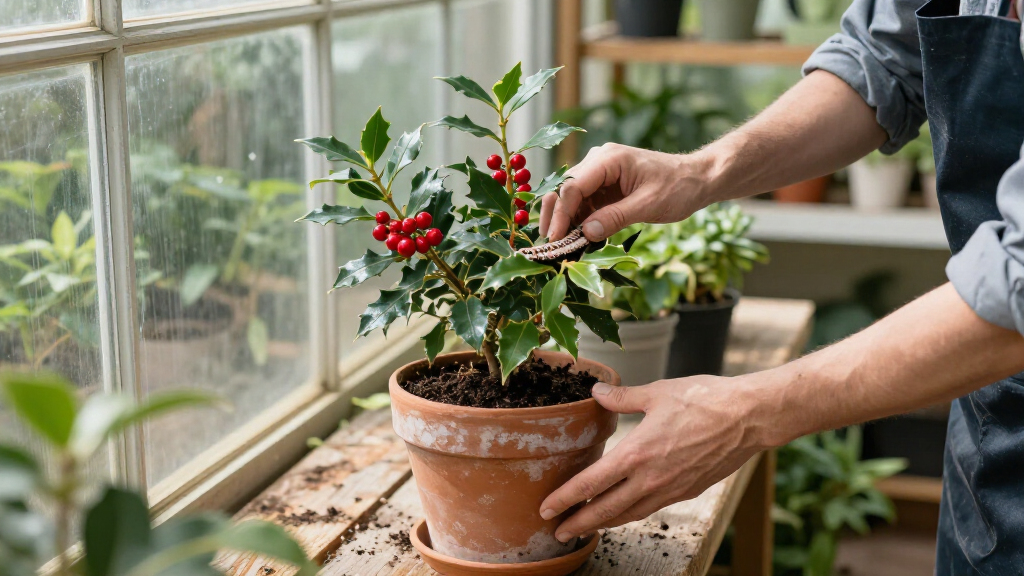
I compared the 15 listings by the decisions that shape a holly purchase: growth habit, stated plant size, intended use, and likely care demands. Compact selections such as Gem Box, Dwarf Yaupon, and Soft Touch rank well for smaller gardens, while Sky Pencil earns a distinct place for narrow vertical planting. Privacy-focused Nellie Stevens options are judged against the space and plant quantity they offer, rather than treated as interchangeable with dwarf shrubs.
I also considered container size, berry and pollination information, and how clearly each listing signals its role. A larger container can reduce the wait for a substantial planting but is not automatically the better fit; climate compatibility and mature dimensions matter more than starting size alone. The ranking favors useful role clarity and flexibility, with tradeoffs called out where a listing has limited size, site, or pollination information.
Factors to Consider When Choosing Best Holly Plants
Before choosing a holly, match the plant’s eventual form to the job you need it to do. These listings vary widely in habit, starting size, and intended use, so the right comparison is not simply one plant against another.
Match Mature Shape to the Space
Holly labels can describe plants that grow as compact mounds, broad shrubs, or narrow upright columns. Measure the planting area by its eventual width as well as its current footprint, and check the mature dimensions for the exact variety before ordering. A narrow plant such as Sky Pencil may fit beside a path, but it will not create the same visual screen as a fuller shrub. Compact hollies can still outgrow a small container or border if their mature size is ignored. A common mistake is pruning a naturally broad plant into a tight shape year after year; choose a naturally compact or columnar form instead.
Choose Plants for Your Climate and Site
Hardiness-zone claims are only a starting point: drainage, wind exposure, summer heat, and winter conditions all affect establishment. Compare the listed zone range with your local conditions and check whether the chosen site receives the sun and soil drainage the variety prefers. Holly roots can struggle in persistently wet ground, so improving drainage or choosing another location may matter more than adding fertilizer. A plant described as drought tolerant still needs regular watering while its roots establish. Avoid selecting a variety from a broad label alone when the listing gives little site-specific guidance.
Decide Whether Berries Matter
Berry production is not a guaranteed feature of every holly purchase: many hollies have separate male and female plants, and fruiting depends on a compatible pollinator nearby. The Berryific listing specifically describes male and female plants in one pot, which makes its pollination arrangement clearer than listings that say little about fruiting. Ask whether the plant is self-fruiting or needs another variety, and check flowering overlap and spacing advice for your region. If berries are not a priority, choose based on foliage, form, and site fit instead. Do not assume that an evergreen plant will produce berries simply because the product name or photos emphasize them.
Balance Starting Size Against Establishment Time
Small starter plants take less room to ship and can be easier to position, but they need time to reach a useful hedge or focal-point size. Larger containers, such as the listed 7-gallon Nellie Stevens, start with more established growth but require a suitable planting hole and careful watering after planting. A 20-plant bundle can make sense for a long screen, though it calls for more preparation and consistent care across the whole row. Container size alone does not guarantee plant health or a particular growth rate. Choose based on how soon you need coverage, how much planting work you can manage, and the growing space available.
Plan for Pruning and Long-Term Maintenance
Holly form affects the amount and type of pruning a garden will need. A naturally compact shrub may need occasional shaping, while a hedge planted for privacy calls for a plan to maintain its width and height as it matures. Columnar selections suit limited-width sites, but regular trimming cannot turn every broad-growing variety into a permanently slim plant without ongoing work. Check whether the plant is intended as a specimen, a low border, or a screen before setting spacing. Leave enough room for airflow and access so routine maintenance does not become difficult.
Compare the Planting Job, Not Just the Plant
For a single accent, one larger shrub may be easier to place than a bundle of small plants; for a long boundary, uniformity and spacing across the row may matter more. Small pots can require more patience and protection during establishment, while larger plants may be harder to handle and can still suffer if watered poorly. Check the product’s stated container and plant dimensions, and confirm whether the listing describes one plant or multiple plants. Account for soil preparation, watering access, and the final distance between plants before ordering. These practical details can outweigh small differences in foliage or product naming.
Frequently Asked Questions
Which holly from this roundup is best for a narrow planting strip?
Sky Pencil Holly is the most clearly suited to a narrow, upright space because its stated role is a columnar form. It is a better fit where width is limited than a broad privacy shrub, but it will not fill a wide gap as quickly as a fuller-growing plant. Check the variety’s mature width and height before planting, since the listing’s 1-gallon size describes its starting container rather than its eventual dimensions. Also confirm that your local climate falls within the stated growing range.
Do I need to buy a male and female holly to get berries?
Many hollies have separate male and female plants, so a female may need a compatible male nearby to set fruit. The Berryific listing stands apart by describing male and female plants in the same pot, while several other listings do not spell out pollination details. Before buying for berries, confirm the variety’s pollination requirements and whether a suitable partner already grows nearby. If fruit is not a priority, foliage and mature form can guide the choice without adding a pollinator.
Should I choose a small starter plant or a larger container?
A small plant can be a practical choice when you are planting several hollies or can wait for them to fill in. A larger container, such as the 7-gallon Nellie Stevens listing, gives you a more established starting point but is heavier to handle and still needs attentive watering after planting. Compare the plant’s actual height and root condition information when available, not just the gallon size. For a screen, also consider how many plants you need and how long you can wait for coverage.
Can I use a dwarf holly for a privacy hedge?
Dwarf hollies such as Gem Box, Dwarf Yaupon, and Soft Touch are better suited to compact borders or lower planting than a tall privacy screen. They may provide a neat evergreen edge, but their size and growth habit can make them a poor match when the goal is visual separation at eye level. For screening, compare the Nellie Stevens listings and the 20-plant option, then check mature dimensions and spacing recommendations. Choosing a dwarf plant for a tall hedge often leads to a longer wait or repeated replacements.
Which listing makes the most sense for planting a long privacy row?
The 20-plant Nellie R. Stevens listing is the most directly aimed at buyers planting a longer evergreen screen, while individual Nellie Stevens options let you choose a different starting size. A bundle can simplify variety matching, but it also means preparing space for many plants and keeping watering consistent along the row. Calculate the number needed from mature spread and recommended spacing rather than planting them close together for instant coverage. If you only need a short screen, one larger plant or a small number of individually sized shrubs may be easier to manage.
Conclusion
For a compact, adaptable landscape shrub, I recommend Ilex glabra Gem Box as the best overall. Buyers seeking value for a simple low planting can start with a smaller Dwarf Yaupon or Soft Touch listing, while the 7-gallon Nellie Stevens is my premium pick for a larger starting plant. For beginners, Dwarf Burford is a straightforward landscape choice when its eventual size and local growing conditions fit. Choose Sky Pencil for narrow vertical space, Berryific when its paired male-and-female setup suits your berry plans, and the 20-plant Nellie Stevens bundle for a longer privacy row. The best choice is the one whose mature form, pollination needs, and climate fit your site—not simply the largest plant in the listing.
Halloween Picks
halloween
As an affiliate, we earn on qualifying purchases.