The best vegetable gardening kits split into two very different camps: hydroponic countertop systems that grow greens indoors year-round with LED lights, and seed starter kits that stock you with dozens of heirloom varieties for outdoor beds. My top pick overall is the Ahopegarden 12-Pod Hydroponics System with LCD Control Panel, because its automated lighting and water circulation remove the two biggest failure points for new growers. For sheer seed variety and long-term value, the Groundio Heirloom Kit with 37 varieties is the strongest traditional option, while the Spade To Fork Organic Starter Kit is the easiest all-in-one entry point for complete beginners. The main tradeoff to weigh is convenience versus scale: hydroponic kits produce fast salads but limited volume, while seed kits cost less per plant but demand outdoor space, soil, and patience. Keep reading for the full breakdown of all 12 kits and which one fits your space, budget, and ambition.

Get garden gear delivered free — and shop member deals
- Fast, free delivery on millions of items
- Access to Prime Big Deal Days deals on October 6–7
- Prime Video, Amazon Music and more included
Complete the kit



Key Takeaways
- Hydroponic kits (Ahopegarden) and seed kits serve different goals: the former grows leafy greens indoors in weeks, the latter builds a full outdoor garden over a season — no single kit does both well.
- Seed count is a misleading metric: kits like the 37-Variety 20,000+ Seed pack advertise volume, but germination quality and seed freshness matter more than raw quantity, and older bulk kits often underperform smaller curated ones.
- All-in-one starter kits with pots and soil disks (Spade To Fork, Indoor Lettuce Kit) consistently offer the smoothest first-time experience, trading variety for a higher success rate.
- Survival-oriented vaults such as Gardeners Basics prioritize storage life and hardy staples over culinary diversity — great for preparedness buyers, less appealing for everyday salad gardeners.
- The 12-pod Ahopegarden beats its 10-pod sibling on capacity and automation for a modest step up, making pod count and control features the deciding factors when choosing between hydroponic models.
| Ahopegarden Indoor Hydroponic Growing System, 10-Pod Kit with LED Grow Light |  | Best for Countertop Hydroponic Growing | Brand: Ahopegarden | Pod capacity: 10 pods | Light: Full-spectrum LED | VIEW LATEST PRICE | See Our Full Breakdown |
| 75-Variety Vegetable and Greens Seed Starter Kit |  | Best for Seed Variety | Seed varieties: 75 | Seed type: Non-GMO heirloom vegetables and greens | Growing locations: Indoor and outdoor gardens | VIEW LATEST PRICE | See Our Full Breakdown |
| Groundio Heirloom Seeds Kit, 37 Vegetable, Herb, and Fruit Varieties |  | Best for Seed Storage | Varieties: 37 | Seed count: Over 40,000 | Seed type: Non-GMO heirloom | VIEW LATEST PRICE | See Our Full Breakdown |
| Indoor Lettuce Garden Starter Kit – Romaine, Buttercrunch, Spinach, Arugula & Kale Heirloom Seeds with Pots, Soil Disks & Plant Markers |  | Best for Beginner Leafy Greens | Seed varieties: Romaine, Buttercrunch lettuce, spinach, arugula, and kale | Seed type: Heirloom, non-GMO, open-pollinated | Seed origin: USA | VIEW LATEST PRICE | See Our Full Breakdown |
| B&KM Farms Non-GMO Heirloom Seed Kit, 30 Fruit & Vegetable Varieties |  | Best for Long-Term Seed Storage | Brand: B&KM Farms | Product type: Heirloom seed kit | Seed type: Non-GMO | VIEW LATEST PRICE | See Our Full Breakdown |
| Ahopegarden Hydroponics Growing System Kit – 12 Pods with LCD Control Panel |  | Best Compact Hydroponic Kit | Brand: Ahopegarden | Model: HSXC4 | Capacity: 12 pods | VIEW LATEST PRICE | See Our Full Breakdown |
| 37-Variety Heirloom Vegetable Seed Kit, 20,000+ Non-GMO Seeds |  | Best for Variety | Varieties: 37 | Seed count: Over 15,000 in description; title claims 20,000+ | Seed type: Heirloom, non-GMO, non-hybrid | VIEW LATEST PRICE | See Our Full Breakdown |
| 43 Assorted Heirloom Vegetable and Herb Seed Packets |  | Best for a Broad Seed Assortment | Seed packets: 43 | Seed count: Over 10,000 | Seed types: Assorted vegetables and herbs | VIEW LATEST PRICE | See Our Full Breakdown |
| Tomsons Heirloom Fruit and Vegetable Seed Kit, 33 Varieties, 18,000+ Seeds |  | Best for Flexible Garden Setups | Brand: Tomsons | Product type: Heirloom seed collection | Seed count: 18,000+ | VIEW LATEST PRICE | See Our Full Breakdown |
| Gardeners Basics Survival Seed Vault Kit, 35 Vegetable Varieties |  | Best Seed Kit with Plant Markers | Seed varieties: 35 | Total seeds: 16,000+ | Seed type: Non-GMO, non-hybrid, open-pollinated heirloom | VIEW LATEST PRICE | See Our Full Breakdown |
| Spade To Fork Organic Indoor Vegetable Garden Starter Kit |  | Best Organic Certification | Seed types: Early cherry tomato, butterhead lettuce, carrot, Cherry Belle radish, bush bean | Seed certification: USDA Organic, Non-GMO | Included pots: 5 OMRI certified compostable peat pots | VIEW LATEST PRICE | See Our Full Breakdown |
| Vegetable & Fruit Seeds Variety Pack, 32 Packs, Non-GMO, 15,000+ Seeds |  | Best Seed Volume for the Money | Brand: Open Seed Vault | Pack count: 32 | Total seed count: 15,000+ | VIEW LATEST PRICE | See Our Full Breakdown |
| vegetable gardening kit | Seed type |
|---|---|
| Ahopegarden Indoor Hydroponic | — |
| 75-Variety Vegetable and Green | Non-GMO heirloom vegetables and greens |
| Groundio Heirloom Seeds Kit | Non-GMO heirloom |
| Indoor Lettuce Garden Starter | Heirloom, non-GMO, open-pollinated |
| B&KM Farms Non-GMO Heirloom Se | Non-GMO |
| Ahopegarden Hydroponics Growin | — |
| 37-Variety Heirloom Vegetable | Heirloom, non-GMO, non-hybrid |
| 43 Assorted Heirloom Vegetable | — |
| Tomsons Heirloom Fruit and Veg | — |
| Gardeners Basics Survival Seed | Non-GMO, non-hybrid, open-pollinated heirloom |
| Spade To Fork Organic Indoor V | — |
| Vegetable & Fruit Seeds Variet | Heirloom, Non-GMO |
More Details on Our Top Picks
Ahopegarden Indoor Hydroponic Growing System, 10-Pod Kit with LED Grow Light
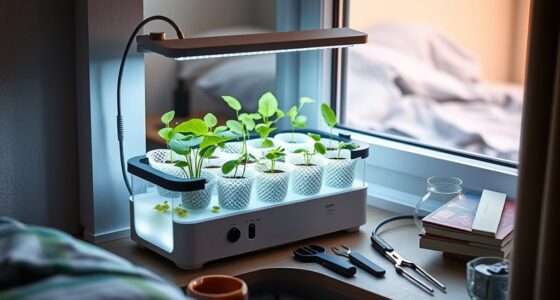
The Ahopegarden 10-pod system is the pick for growing vegetables and herbs indoors without starting with pots and soil. Its reservoir, circulation system, and 16-hour automatic light timer handle much of the daily routine, while the water-level window makes it easier to see when the reservoir needs attention. Compared with the Indoor Lettuce Garden Starter Kit, this setup gives plants built-in light and water circulation, but it offers fewer seed-starting supplies and does not include seeds. The two light modes add flexibility for different crops, though the 14.5-inch height limit rules out taller plants as they mature. I’d choose it for a kitchen with room for a dedicated growing unit; gardeners seeking a broad outdoor seed collection should look at the seed kits instead.
Pros:- Ten pod positions allow several compact plants to grow in one unit.
- Automatic light timer reduces the need to switch the LEDs on and off each day.
- Water-level window makes reservoir checks straightforward.
- Two light modes support vegetables as well as flowers and fruit.
Cons:- Plants are limited to 14.5 inches of growing height.
- Requires ongoing water and nutrient supplies.
- The countertop unit may take up too much space in a small kitchen.
Best for: Apartment cooks who want to grow several compact herbs or vegetables indoors with an integrated light and reservoir.
Not ideal for: Gardeners growing tall crops or seeking a soil-based starter set with seeds, pots, and planting instructions.
- Brand:Ahopegarden
- Pod capacity:10 pods
- Light:Full-spectrum LED
- Light modes:Vegetable; Flower/Fruit
- Timer:16 hours on, 8 hours off
- Maximum plant height:14.5 inches
- Included growing accessories:8 baskets, 8 sponges, 9 growth domes, A & B fertilizer, and other accessories
- Color:Black
Our verdict“Choose this system if you want a compact, soil-free indoor setup for several short plants and have counter space to spare.”
75-Variety Vegetable and Greens Seed Starter Kit
For gardeners who want to choose among many crops, the 75-variety seed kit offers the broadest selection in this batch. Its non-GMO heirloom vegetable and greens seeds suit indoor or outdoor gardens, and the included dispenser, mini tools, gloves with claws, and wooden storage box make it more of a ready-to-organize seed bundle than a packet-only collection. By comparison, the Groundio Heirloom Seeds Kit lists 37 varieties and more than 40,000 seeds, along with resealable waterproof packets and planting instructions. This kit wins on stated variety count and accessory range, but its description does not specify seed quantities, packet storage details, or planting guidance. I’d pick it for gardeners who enjoy experimenting across many crops; beginners who want crop-specific instructions may prefer a more focused starter kit.
Pros:- Includes 75 varieties of non-GMO heirloom vegetables and greens.
- Seed dispenser and mini tools add practical planting accessories.
- Wooden box provides a dedicated place to store the kit.
- Designed for indoor and outdoor gardens.
Cons:- The provided product details do not state the quantity of seeds in each packet.
- Planting instructions are not listed among the included items.
- The wide selection may be more than a small garden or casual grower can use.
Best for: Gardeners with indoor or outdoor space who want a wide selection of vegetable and greens varieties plus basic tools.
Not ideal for: First-time growers who need detailed planting instructions or buyers who want listed seed counts and storage specifications.
- Seed varieties:75
- Seed type:Non-GMO heirloom vegetables and greens
- Growing locations:Indoor and outdoor gardens
- Included accessories:Seed dispenser, gloves with claws, mini garden tool set, pH test strips, UV-protective cap
- Storage:Wooden box
- Seed quantity:Not specified in the provided product details
Our verdict“Pick this kit if variety and bundled tools matter more to you than documented seed counts or detailed planting guidance.”
Groundio Heirloom Seeds Kit, 37 Vegetable, Herb, and Fruit Varieties
The Groundio Heirloom Seeds Kit pairs a sizable seed supply with packets made for storage: it lists 37 varieties and over 40,000 seeds, each in an individual resealable, waterproof packet. That makes it a strong fit for gardeners who want vegetables alongside herbs and fruit, and who expect to keep unused seed packets between planting sessions. The included indoor and outdoor instructions also give it a practical advantage over the 75-Variety Vegetable and Greens Seed Starter Kit, whose supplied details do not list planting guidance or packet protection. Groundio’s tradeoff is a narrower stated variety range, and its description gives no specific germination rates. I’d favor it when packet durability and seed volume matter more than maximizing the number of listed varieties.
Pros:- Includes 37 varieties across vegetables, herbs, and fruit.
- More than 40,000 seeds are listed in total.
- Resealable waterproof packets help protect seeds between planting sessions.
- Planting instructions cover indoor and outdoor gardening.
Cons:- The product details do not provide specific germination rates.
- Growing results can vary by seed variety and conditions.
- Its 37 varieties are fewer than the 75 listed for the 75-Variety Vegetable and Greens Seed Starter Kit.
Best for: Home gardeners who want a large selection of vegetables, herbs, and fruit seeds in packets designed for repeated storage.
Not ideal for: Buyers who want the widest possible variety selection or need stated germination rates before choosing a kit.
- Varieties:37
- Seed count:Over 40,000
- Seed type:Non-GMO heirloom
- Included plants:Vegetables, herbs, and fruit
- Packet type:Individual resealable, waterproof packets
- Freshness period:Up to 2 years
- Growing locations:Indoor and outdoor
- Instructions:Planting instructions included
Our verdict“Choose Groundio if you want a high stated seed count, varied crops, and packets suited to storage more than the largest variety list.”
Indoor Lettuce Garden Starter Kit – Romaine, Buttercrunch, Spinach, Arugula & Kale Heirloom Seeds with Pots, Soil Disks & Plant Markers
The Indoor Lettuce Garden Starter Kit keeps the first planting focused: its five seed varieties are all leafy greens, and the eight pots, biodegradable soil disks, markers, and packet-by-packet instructions give beginners a clear starting setup. Compared with the Ahopegarden 10-pod system, it asks the grower to supply suitable indoor light and manage soil, but it comes with seeds and basic planting materials rather than a hydroponic reservoir and LED. Its USA-grown, open-pollinated heirloom seeds may also appeal to gardeners who value those traits. The narrow crop selection is useful for a greens-focused plan but less adaptable than the broad seed kits. Indoor results still depend on light and temperature, and the listed plastic pots may not hold up as well as sturdier containers.
Pros:- Includes five leafy-green seed varieties, eight starter pots, soil disks, and markers.
- Each seed packet has planting instructions.
- Seeds are listed as non-GMO, open-pollinated, heirloom, and USA grown.
- The focused crop selection makes it easier to plan a greens garden.
Cons:- Indoor growing depends on having suitable light and temperature conditions.
- The listed plastic pots may be less durable than sturdier containers.
- Five varieties provide less crop range than the Groundio or 75-variety kits.
Best for: New indoor gardeners who want to start a small leafy-greens crop with pots, growing medium, markers, and instructions included.
Not ideal for: Growers seeking a broad mix of vegetables or an indoor kit with its own grow light and controlled watering system.
- Seed varieties:Romaine, Buttercrunch lettuce, spinach, arugula, and kale
- Seed type:Heirloom, non-GMO, open-pollinated
- Seed origin:USA
- Starter pots:8
- Soil disks:8 biodegradable disks
- Plant markers:8
- Skill level:Beginner to expert
- Growing location:Indoor
Our verdict“Choose this kit for a guided start with indoor leafy greens when you can provide the right growing conditions.”
B&KM Farms Non-GMO Heirloom Seed Kit, 30 Fruit & Vegetable Varieties
The B&KM Farms kit is aimed at gardeners who want a stored seed reserve as well as a home-growing collection. Its 30 fruit and vegetable varieties come in Mylar pouches inside a resealable pail, a packaging setup designed to keep the packets together for longer-term storage. The listed average germination rate is 80% or higher, and an online guide covers growing, harvesting, and seed saving. Compared with the Groundio Heirloom Seeds Kit, B&KM Farms offers a pail and seed-saving guidance, while Groundio lists more varieties, over 40,000 seeds, and individual waterproof packets. The tradeoff here is limited crop detail: the provided information does not name the varieties, and the guide requires online access. Its bulk format may also exceed a casual gardener’s needs.
Pros:- Includes 30 non-GMO heirloom fruit and vegetable varieties.
- Mylar pouches and a resealable pail organize seeds for storage.
- Lists an average germination rate of 80% or higher.
- Online guide covers growing, harvesting, and seed saving.
Cons:- The provided details do not identify the exact varieties included.
- The full planting guide requires internet access.
- The bulk kit may provide more seed than a casual gardener needs.
Best for: Gardeners building a stored supply of varied fruit and vegetable seeds who are comfortable using an online growing guide.
Not ideal for: Casual growers who need a small, specific seed selection or buyers who want the included varieties listed before choosing.
- Brand:B&KM Farms
- Product type:Heirloom seed kit
- Seed type:Non-GMO
- Number of varieties:30
- Average germination rate:80% or higher
- Packaging:Mylar seed packets in a resealable plastic pail
- Included resources:100+ page online planting guide
- Country of packaging:United States
Our verdict“Choose B&KM Farms if organized seed storage and seed-saving guidance matter more than a published crop list.”
Ahopegarden Hydroponics Growing System Kit – 12 Pods with LCD Control Panel
I’d choose this 12-pod indoor system when counter space and year-round access to herbs or leafy greens matter more than growing a wide range of crops. Its adjustable 17-inch light gives taller plants room to grow, while the 5L tank and circulating pump reduce daily fuss in an apartment or office. Compared with the 43 Assorted Heirloom Vegetable and Herb Seed Packets, this kit supplies the growing hardware and controls but offers far less variety and depends on an indoor hydroponic setup. The LCD panel and two light modes make adjustments more direct, though the stated 22-hour mode may not suit every crop. I’d skip it for sprawling vegetables or anyone who wants a soil garden; the tank still needs refilling and the system is best suited to herbs and greens.
Pros:- 12 planting pods fit a compact indoor growing setup
- Adjustable 17-inch light accommodates taller plants
- 5L tank and circulating pump support root growth between refills
- LCD controls and dual light modes simplify adjustments
Cons:- The tank still requires periodic refilling
- Best suited to herbs and leafy greens, limiting crop choice
Best for: Apartment gardeners who want a tidy indoor supply of herbs and leafy greens with adjustable lighting.
Not ideal for: Gardeners aiming to grow a broad mix of outdoor crops or larger fruiting plants in soil.
- Brand:Ahopegarden
- Model:HSXC4
- Capacity:12 pods
- Water tank:5L
- Grow light:Adjustable, 17 inches
- Light modes:Dual modes and 22-hour mode
- Water pump:Quiet, 30-minute cycle
- Included components:Nutrient solution, 12 planting baskets, 12 sponges, 13 seedling covers, and 6 hole covers
Our verdict“Choose this kit for compact indoor herbs and greens; pick a seed collection such as the 43 Assorted Heirloom Vegetable and Herb Seed Packets for broader garden variety.”
37-Variety Heirloom Vegetable Seed Kit, 20,000+ Non-GMO Seeds
I’d pick this collection for gardeners who want to try many crops from one set of packets. Its 37 heirloom varieties span vegetables and herbs, and the indoor-or-outdoor guidance gives beginners a starting point for planning sowing. Compared with the Tomsons Heirloom Fruit and Vegetable Seed Kit, it names several example crops and specifies protective individual packets, while Tomsons lists 33 varieties without identifying them in the supplied details. There is a count mismatch to resolve: the title claims 20,000+ seeds, while the description says over 15,000, so I would not choose it based on the larger figure. Packets are described for storage up to two years in cool, dry conditions, but actual viability depends on storage and growing conditions. This is a seed assortment, not a kit with pots or planting equipment.
Pros:- 37 varieties include a broad mix of vegetables and herbs
- Non-GMO, non-hybrid heirloom seeds sourced in the USA
- Individual waterproof, lightproof packets support organized storage
- Instruction guide covers planting and germination
Cons:- Seed total is inconsistent between the title and description
- Storage life and germination depend on conditions and are not independently verified
- No pots or other growing hardware are listed
Best for: Curious home gardeners who want a broad mix of named vegetable and herb types for indoor starts and outdoor beds.
Not ideal for: Buyers who need dependable seed-count details or want included containers, soil, or other growing hardware.
- Varieties:37
- Seed count:Over 15,000 in description; title claims 20,000+
- Seed type:Heirloom, non-GMO, non-hybrid
- Sourcing:USA
- Storage life:Up to 2 years in cool, dry conditions
- Packet packaging:Individual waterproof, lightproof bags
- Growing use:Indoor and outdoor
- Included guidance:Planting and germination instruction guide
- Example crops:Pepper, tomato, lettuce, bean, eggplant, okra, carrot, and cilantro, among others
Our verdict“Choose this for a broad, packet-organized heirloom assortment if you are comfortable with the unclear seed total and already have planting supplies.”
43 Assorted Heirloom Vegetable and Herb Seed Packets
This set makes sense when I want many separate packets of vegetables and herbs, with storage kept simple in the included Mylar bag. It lists 43 packets and over 10,000 seeds, giving it more packet variety than the Gardeners Basics Survival Seed Vault Kit, which has 35 vegetable varieties and adds plant markers. The tradeoff is that the varieties here are described as assorted, so the available details do not tell me exactly which crops are included. A stated 7–14 day germination time offers a rough planning window, not a guarantee across different seeds and conditions. The Mylar bag helps with storage, but packets still need a cool, dry place. I’d favor this collection for gardeners who value assortment and can check the packet contents; those who want named varieties and accessories may prefer Gardeners Basics.
Pros:- 43 packets cover an assortment of vegetables and herbs
- Over 10,000 seeds are included
- Heirloom and non-GMO seed types
- Mylar storage bag is included
Cons:- The supplied details do not identify the assorted varieties
- Seeds need cool, dry storage
- The stated germination window can vary by crop and conditions
Best for: Home gardeners who want many vegetable and herb packets and are comfortable choosing from an assorted selection.
Not ideal for: Buyers who need a specified crop list or want plant markers and other planting accessories included.
- Seed packets:43
- Seed count:Over 10,000
- Seed types:Assorted vegetables and herbs
- Variety:Heirloom
- Genetically modified:Non-GMO
- Germination time:7–14 days
- Storage:Mylar bag included; store in a cool, dry place
Our verdict“Choose this for a large packet assortment and Mylar storage; choose Gardeners Basics if named vegetable varieties and plant markers matter more.”
Tomsons Heirloom Fruit and Vegetable Seed Kit, 33 Varieties, 18,000+ Seeds
I’d put this collection on the shortlist for gardeners who move between containers, raised beds, and in-ground plots. The stated 33 fruit and vegetable varieties and 18,000+ seeds offer a substantial starting assortment, while indoor starting or outdoor sowing lets planting follow the season and available space. Compared with the 37-Variety Heirloom Vegetable Seed Kit, Tomsons has fewer listed varieties and the supplied details do not name specific crops; the other kit provides examples and describes packet storage. That missing crop list makes it harder to judge whether the collection fits a planned garden. The description says it suits both new and experienced growers, but success still depends on season and growing conditions. I’d choose it for flexibility across garden types, and skip it if I need a known crop mix before buying.
Pros:- 33 varieties cover fruits and vegetables
- More than 18,000 seeds are listed
- Suitable for containers, raised beds, and in-ground gardens
- Can be started indoors or sown outdoors
Cons:- Specific seed varieties are not detailed in the supplied information
- Planting success depends on season and growing conditions
Best for: Gardeners with containers, raised beds, or in-ground plots who want a mixed fruit and vegetable seed collection.
Not ideal for: Planners who need a named crop list to match specific recipes, bed layouts, or local planting schedules.
- Brand:Tomsons
- Product type:Heirloom seed collection
- Seed count:18,000+
- Varieties:33
- Plant types:Fruits and vegetables
- Growing options:Raised beds, container gardens, and in-ground planting
- Planting location:Indoor or outdoor
- Stated audience:Beginner and experienced gardeners
Our verdict“Choose Tomsons for a sizable collection that can suit several garden setups if the unspecified crop mix works for your plans.”
Gardeners Basics Survival Seed Vault Kit, 35 Vegetable Varieties
The included accessories give this kit a practical edge for organizing a vegetable plot: 35 labeled packets come with 35 plant markers and a resealable Mylar bag. That makes it easier to identify rows and store remaining seeds than with the 43 Assorted Heirloom Vegetable and Herb Seed Packets, whose listed extras are limited to its storage bag. Gardeners Basics lists 35 varieties and over 16,000 seeds, with non-GMO, non-hybrid, open-pollinated heirloom seed types. Its guidance points to full sun, regular watering, and spring-to-fall planting, but those broad conditions do not replace crop-specific timing or care. I’d choose it for a gardener who wants labeled packets and plot organization in one purchase. The tradeoff is that it is vegetable-focused and growing results still depend on local conditions and consistent care.
Pros:- 35 vegetable varieties and over 16,000 seeds are listed
- Seeds are non-GMO, non-hybrid, open-pollinated heirlooms
- Includes 35 plant markers for labeling rows
- Resealable Mylar bag supports seed storage
Cons:- Regular watering is required
- Crop needs and success vary with zone, season, soil, sunlight, and care
- The supplied details do not specify individual vegetable varieties
Best for: Vegetable gardeners who want labeled packets, one marker per variety, and a resealable bag for organizing seeds.
Not ideal for: Buyers seeking a named crop list in the supplied product details or a kit focused on herbs and fruit as well as vegetables.
- Seed varieties:35
- Total seeds:16,000+
- Seed type:Non-GMO, non-hybrid, open-pollinated heirloom
- Included accessories:35 plant markers and resealable Mylar storage bag
- Growing use:Indoor and outdoor
- Sunlight:Full sun
- Planting period:Spring to fall
- USDA hardiness zones:1–13
- Moisture:Regular watering
Our verdict“Choose Gardeners Basics if labeled packets and matching plant markers will help you organize a vegetable garden.”
Spade To Fork Organic Indoor Vegetable Garden Starter Kit
Most seed kits in this roundup claim non-GMO or heirloom status, but Spade To Fork goes a step further with full USDA Organic certification — not just on the seeds, but on the OMRI certified peat pots and soil discs too. That matters for gardeners who want their vegetables certified organic from seed to harvest, something the 75-Variety Seed Starter Kit and Groundio Heirloom kit can’t offer. This is also a true starter kit rather than a seed collection: compared with the 32-pack Open Seed Vault below, you get everything needed to begin — pots, soil, wood-burned markers, and a 26-page guide. The tradeoff is capacity. Five varieties is a small menu, and cherry tomatoes started indoors will need transplanting and consistent light to thrive. Compared with the Indoor Lettuce Garden Starter Kit, the variety here is broader but less foolproof.
Pros:- USDA Organic and Non-GMO certification covers seeds, pots, and soil — rare among kits in this category
- Complete starter package eliminates separate purchases of containers, soil, and markers
- 26-page growing guide is more instructional depth than most seed-only kits provide
- Sourced from a family-owned Oregon farm, adding traceability to the supply chain
Cons:- Only five vegetable varieties, far fewer than seed-vault style kits
- Cherry tomatoes and bush beans require transplanting, staking, and strong light to reach harvest
- Peat pots dry out quickly and can restrict root growth if seedlings are left in them too long
Best for: Organic-minded beginners and gift-givers who want a complete, certified-organic start-to-finish indoor growing setup in one box
Not ideal for: Gardeners who want variety or scale — five varieties with one sowing each is small compared with 30+ pack kits like the B&KM Farms collection
- Seed types:Early cherry tomato, butterhead lettuce, carrot, Cherry Belle radish, bush bean
- Seed certification:USDA Organic, Non-GMO
- Included pots:5 OMRI certified compostable peat pots
- Included soil:5 OMRI certified potting soil discs
- Included markers:5 custom wood-burned plant markers
- Growing guide:26 pages
- Origin:Family-owned farm in rural Oregon
Our verdict“This is the pick for buyers who want certified-organic vegetables from seed to plate without sourcing components separately, provided five varieties is enough.”
Vegetable & Fruit Seeds Variety Pack, 32 Packs, Non-GMO, 15,000+ Seeds
Where the Spade To Fork kit above delivers a polished five-variety experience, Open Seed Vault bets on sheer breadth: 32 heirloom varieties and more than 15,000 seeds for a fraction of the per-variety cost of boutique kits. This positions it against similar vault-style options like the Tomsons 33-variety kit and the 37-Variety Heirloom kit — the resealable, waterproof individual packets are the standout here, letting you store unused seed for successive plantings instead of committing everything at once. But volume comes with real compromises. There are no pots, soil, or markers included, so this is a kit only in the seed sense. And with 32 varieties sharing the total, each packet holds fewer seeds of any single crop than a focused kit like the Indoor Lettuce Garden Starter provides. The listed partial shade spec is also optimistic for fruiting vegetables like tomatoes and peppers, which need full sun.
Pros:- 32 heirloom, non-GMO varieties offer one of the widest crop ranges in this roundup
- 15,000+ seeds support multiple succession plantings across spring through fall
- Resealable waterproof packets protect seed viability between seasons
- Heirloom seeds can be saved and replanted year after year
Cons:- Seed quantity per individual variety is thinner than dedicated single-crop or small kits
- No pots, soil, or tools — purely a seed collection
- Partial shade labeling is misleading for sun-hungry fruiting vegetables like tomatoes and peppers
Best for: Budget-minded gardeners with an established outdoor bed who want maximum crop diversity across a full growing season
Not ideal for: First-time indoor growers expecting an all-in-one kit — there’s no equipment, and success depends on you supplying soil, containers, and conditions
- Brand:Open Seed Vault
- Pack count:32
- Total seed count:15,000+
- Seed type:Heirloom, Non-GMO
- Usage:Indoor, Outdoor
- Blooming period:Spring to Fall
- Planting period:Spring
- Packet features:Resealable, waterproof
Our verdict“Choose this when crop diversity and seed volume matter more than hand-holding — just plan to supply your own growing setup.”

How We Picked
I evaluated each kit against four questions a buyer actually asks: what does it grow, how hard is it to succeed, what does it cost per usable plant, and how long will it last. For hydroponic systems, I weighed pod capacity, automation (timers, water level indicators, adjustable lights), and whether the pump and lighting could sustain plants through a full growth cycle without constant intervention. For seed kits, I looked at variety selection, germination expectations from seed type and packaging, whether growing guides were included, and how well the mix matched a real kitchen garden rather than a novelty list.
The ranking reflects fit as much as quality. A 30-variety heirloom kit is a better buy than a 43-packet grab bag if the varieties are better curated and packaged for storage. Similarly, an automated 12-pod hydroponic system outranks its simpler 10-pod counterpart because the LCD control panel and larger capacity solve the problems that cause most indoor growing attempts to fail. Products ranked lower aren’t necessarily bad — they’re either narrower in scope, less forgiving for beginners, or duplicative of a stronger pick above them.
Factors to Consider When Choosing Best Vegetable Gardening Kits
Before choosing a kit, it helps to understand what actually separates a satisfying gardening season from an abandoned pile of pots. These are the factors that shaped my ranking — and the mistakes I see buyers make most often.Hydroponic or Soil: Match the Kit to Your Goal
This is the single biggest fork in the road, and picking wrong is the most common mistake. A hydroponic system like the Ahopegarden models answers the question “how do I grow fresh greens in my kitchen this winter?” — it’s fast, contained, and productive for lettuce, herbs, and bok choy, but it will never grow a tomato crop or a root vegetable. A seed kit answers “how do I start a real garden?” — it scales to beds and containers, covers dozens of crops, but requires outdoor space, seasonal timing, and months of patience. Buyers who buy a seed vault expecting winter salads, or a hydroponic pod expecting summer squash, are the ones who end up disappointed. Decide which question you’re answering before comparing anything else.
Seed Count Is Marketing — Germination Reality Is What Matters
Kits advertise “20,000+ seeds” because big numbers sell, but a lettuce packet containing 800 seeds is not eight times better than one with 100 — you’ll never plant them all before viability drops. Most vegetable seeds stay viable for one to five years depending on the variety, and bulk kits sometimes include older stock to hit those headline counts. What actually matters is packaging quality (individually sealed, moisture-proof packets), whether varieties are separated or mixed, and whether germination information is printed on the packet. A kit with 30 well-packaged varieties will outperform a 43-packet kit with mixed-age seeds almost every time. If storage matters to you, look for resealable mylar-style packaging — a hallmark of the survival vault kits.
Beginner Support: What’s Actually in the Box
The failure point for most first-time gardeners isn’t the seeds — it’s everything around them. Kits that include pots, soil disks, plant markers, and a printed growing guide dramatically raise success rates because they remove guesswork about planting depth, spacing, and timing. The Spade To Fork and Indoor Lettuce kits rank highly for exactly this reason: a beginner with soil disks and instructions has a much better outcome than one holding 40 loose seed packets and a link to a website. If you already garden confidently, those extras are dead weight and you can prioritize variety instead. Be honest about your experience level — overbuying capability is the quieter cousin of overbuying seeds.
Automation and Maintenance in Hydroponic Systems
Not all hydroponic kits automate equally, and the differences show up within weeks. A system with a programmable light timer, adjustable LED height, and water circulation can run nearly hands-free; a bare-bones unit demands daily attention and quickly becomes a chore. Check whether the light arm rises with plant growth — fixed-height lights cap your plants at six inches and waste the system’s potential. Also consider noise: pump-based systems hum, which matters on a kitchen counter but not in a basement. The gap between the Ahopegarden 10-pod and 12-pod models illustrates this well: the LCD control panel isn’t a gimmick, it’s what lets you set a schedule once and forget it.
Heirloom, Organic, and Non-GMO Labels — What They Actually Tell You
Nearly every kit in this category advertises “non-GMO,” which is technically true of almost all garden vegetable seed and tells you almost nothing. Heirloom means open-pollinated varieties you can save seeds from year to year — a real advantage if you want a self-sustaining garden, which is why survival vaults emphasize it. Organic certification refers to how the parent plants were grown and matters most to buyers following organic practices from seed to harvest. None of these labels guarantees germination rate or flavor. Prioritize heirloom if seed saving or preparedness matters to you; prioritize organic certification if it matches how you’ll grow; otherwise, judge kits on variety selection and packaging.
When to Pay More — and When Not To
Spending more makes sense in two scenarios: hydroponic systems, where build quality, pump reliability, and light output genuinely scale with price, and curated organic kits, where you’re paying for tested seed stock and packaging. Spending more rarely makes sense in the middle of the seed kit range — a $40 seed kit is not automatically better than a $25 one, and variety curation beats price almost every time. The premium move for seed buyers is buying a solid mid-range kit plus a few individual packets of crops you actually eat. For hydroponics, though, I’d caution against the cheapest systems: a failed pump or weak light four weeks in wastes the entire investment, seeds and all.
Frequently Asked Questions
Can a hydroponic kit grow tomatoes and peppers, or just salad greens?
Most countertop hydroponic kits can start tomatoes and peppers, but the results vary with the system’s height and light power. Compact models with short light arms will fruit poorly because determinate tomatoes and peppers need intense light and vertical space to produce — expect leggy plants and a handful of small fruits at best. Leafy greens, herbs, and bok choy are where these systems shine because they mature fast under LED light and can be harvested cut-and-come-again. If fruiting vegetables are your goal, a seed kit with outdoor containers will outperform any countertop hydroponic system. Treat hydroponics as a salad and herb machine, and you’ll set accurate expectations.
How long do the seeds in a starter kit stay viable?
It depends heavily on the vegetable and the storage conditions. Onions, leeks, and parsnips may drop below 50% germination after just one year, while tomatoes, peppers, and most brassicas can remain viable for four to six years if kept cool, dark, and dry. Large kits with 15,000–20,000 seeds are effectively multi-year supplies, so packaging matters — individually sealed packets stored in a jar in the refrigerator will dramatically outlast paper packets in a hot garage. Rotate your stock by planting the oldest varieties first, and do a quick paper-towel germination test on any packet older than two years before committing garden space. This is also why resealable, moisture-barrier packaging is a genuine feature rather than a gimmick.
Is a big variety count better, or should I choose a smaller kit?
Bigger is only better if you’ll actually grow the varieties — an unopened packet of kohlrabi is worthless if nobody in your house eats kohlrabi. Smaller curated kits tend to focus on popular, reliable crops with high germination rates, which is why first-time gardeners often have better experiences with 5–10 variety kits than with 40-packet grab bags. Large kits make sense for experienced gardeners with multiple beds, seed swappers, or buyers building a long-term seed reserve. A useful middle path: pick a mid-size kit covering crops your household eats weekly, then buy individual packets for anything unusual. Match the kit size to your actual garden space — 30 varieties won’t fit in a few patio containers.
Do I need grow lights for an indoor seed starting kit?
For starting seeds that will move outdoors, a bright south-facing windowsill works for some crops but produces leggy, leaning seedlings for most, because window light is weaker and one-directional compared to outdoor sun. A simple full-spectrum LED shop light hung a few inches above the trays will produce stockier, healthier transplants for a modest one-time cost, and it’s the difference between seedlings that thrive after transplanting and ones that stall. If you’re growing full plants indoors to harvest — not just starting them — then adequate grow lighting is non-negotiable, which is precisely why all-in-one hydroponic systems include built-in LEDs. For the indoor lettuce kits with soil disks, a supplemental light will roughly double your harvest. Budget for lighting as part of the kit, not an afterthought.
Are survival seed vault kits worth it for regular gardening?
They can be, but with clear caveats. Survival vaults like the Gardeners Basics kit are built around storage life, caloric staples, and hardy open-pollinated varieties — think beans, corn, squash, and storage crops rather than a balanced kitchen garden with fresh salads and herbs. For preparedness buyers, the long-shelf-life packaging and variety selection are exactly right. For everyday gardeners, the mix can feel heavy on storage crops and light on the greens, herbs, and quick harvests most home growers actually want week to week. My advice: buy a survival vault for its intended purpose, or buy a regular heirloom kit for eating — but don’t expect one to do the other’s job well.
Conclusion
The right pick depends entirely on what kind of grower you are. For the best overall choice, the Ahopegarden 12-Pod Hydroponics System with LCD Control Panel stands out because it removes the guesswork from indoor growing while producing a steady harvest you can actually eat. If value is your priority, the Groundio 37-Variety Heirloom Kit delivers the best cost-per-usable-plant in the lineup and doubles as a multi-year seed supply. Complete beginners should start with the Spade To Fork Organic Starter Kit or the Indoor Lettuce Garden Kit — the included pots, soil disks, and instructions matter more than variety when you’re learning. For the premium buyer who wants maximum indoor capacity and automation, the 12-pod Ahopegarden justifies its position over its 10-pod sibling. And for specific needs: the Gardeners Basics Survival Seed Vault suits preparedness planners, the 75-Variety Kit suits large-plot gardeners, and the Indoor Lettuce Kit suits apartment dwellers who want greens on a windowsill. Whichever direction you take, the biggest predictor of success isn’t the kit — it’s matching the kit to your space, season, and honest level of commitment.
Halloween Picks
halloween
As an affiliate, we earn on qualifying purchases.